How to Choose a Medical Assistant School Near Ashburn, VA
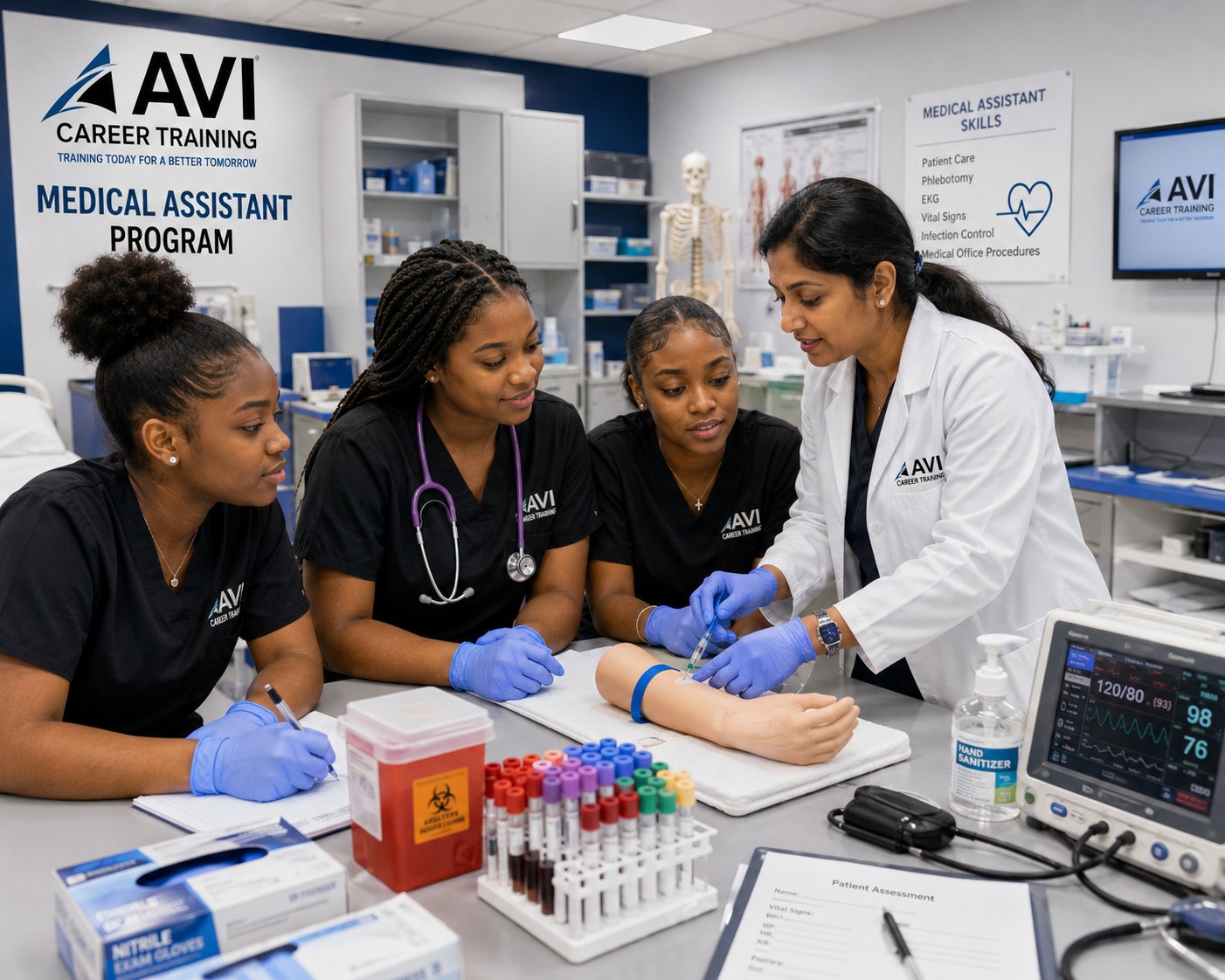
The right medical assistant school near Ashburn, VA will hold CAAHEP or ABHES programmatic accreditation, publish verifiable CMA exam pass rates, and provide structured externship placement — and evaluating those five factors before you sign anything is how you make a decision you won’t regret.
The Northern Virginia healthcare market is one of the most active in the mid-Atlantic. Urgent care clinics, physician offices, and outpatient facilities across Loudoun County, Fairfax County, and the broader DC metro area are actively hiring Medical Assistants (MAs). That demand is real. But not every school preparing students for those roles is equal — and the wrong choice can cost you time, money, and your shot at national certification.
This guide gives you a clear, honest framework for evaluating your options. No sales pitch. Just the criteria that matter.
- Virginia does not require state licensure for Medical Assistants — but most employers require national CMA or RMA certification
- Only graduates of CAAHEP- or ABHES-accredited programs are eligible to sit for the CMA (AAMA) exam
- Certificate programs in Northern Virginia typically run 9–12 months; associate degree programs run 18–24 months
- MA tuition in Virginia ranges from roughly $8,000 to $18,000 depending on school type and program length
- The BLS projects Medical Assistant employment to grow ~14% through 2032 — faster than average for all occupations
—
What Medical Assistants Actually Do — And Who This Career Is For
Medical Assistants are cross-trained healthcare professionals who handle both clinical and administrative responsibilities in outpatient settings. That dual skill set is exactly what makes the role valuable — and what makes choosing the right training program so important.
Clinical Responsibilities
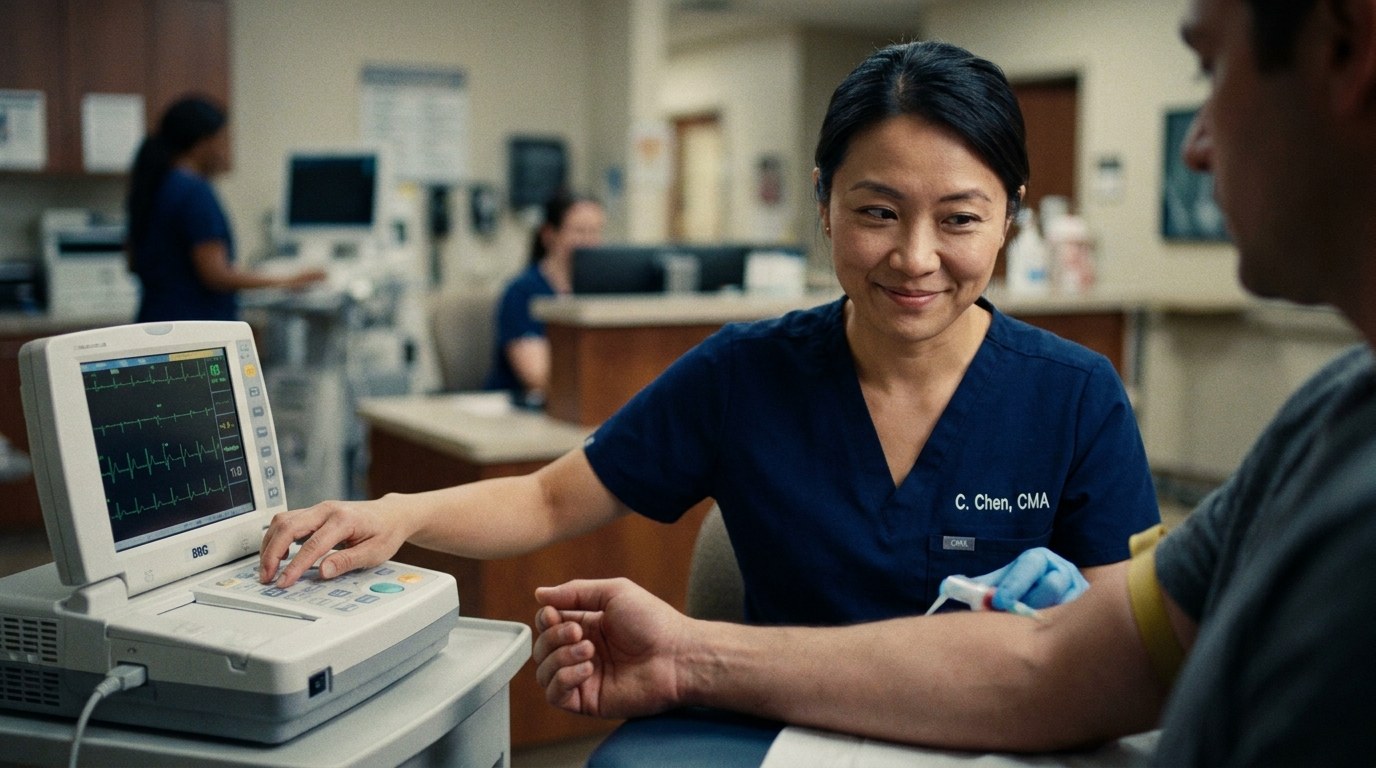
On the clinical side, MAs take patient vital signs, administer injections, perform basic phlebotomy (blood draws), prepare patients for examinations, assist physicians during procedures, perform EKGs, and handle specimen collection. These are hands-on, patient-facing skills that require structured lab training — not just online coursework.
Administrative Responsibilities
On the administrative side, MAs schedule appointments, manage patient records, process insurance billing, handle referrals, and support front-desk operations. Many practices expect MAs to rotate between both roles depending on daily staffing needs.
Where MAs Work
Most Medical Assistants in Northern Virginia work in physician offices, urgent care centers, outpatient clinics, and specialty practices. Loudoun County, in particular, has seen significant healthcare facility growth as the population along the Route 7 and Route 28 corridors has expanded — making the Ashburn area an active hiring zone for entry-level clinical staff.
A quick self-check: If you want patient interaction, practical clinical skills, and a career path you can enter without a four-year degree, the MA role is worth serious consideration. If you are weighing MA against other healthcare-adjacent careers, the final section of this article addresses that directly.
—
Virginia Certification Requirements: What to Know Before You Enroll
Virginia does not require Medical Assistants to hold a state license. This is confirmed by the Virginia Department of Professional and Occupational Regulation (DPOR) — MAs are not a DPOR-regulated profession in the Commonwealth.
That does not mean certification is optional in practice.
The overwhelming majority of Northern Virginia healthcare employers — particularly larger health systems and multi-site physician groups — require or strongly prefer candidates who hold national certification. The two most recognized credentials are:
- CMA (Certified Medical Assistant ) — issued by the American Association of Medical Assistants (AAMA)
- RMA (Registered Medical Assistant ) — issued by American Medical Technologists (AMT)
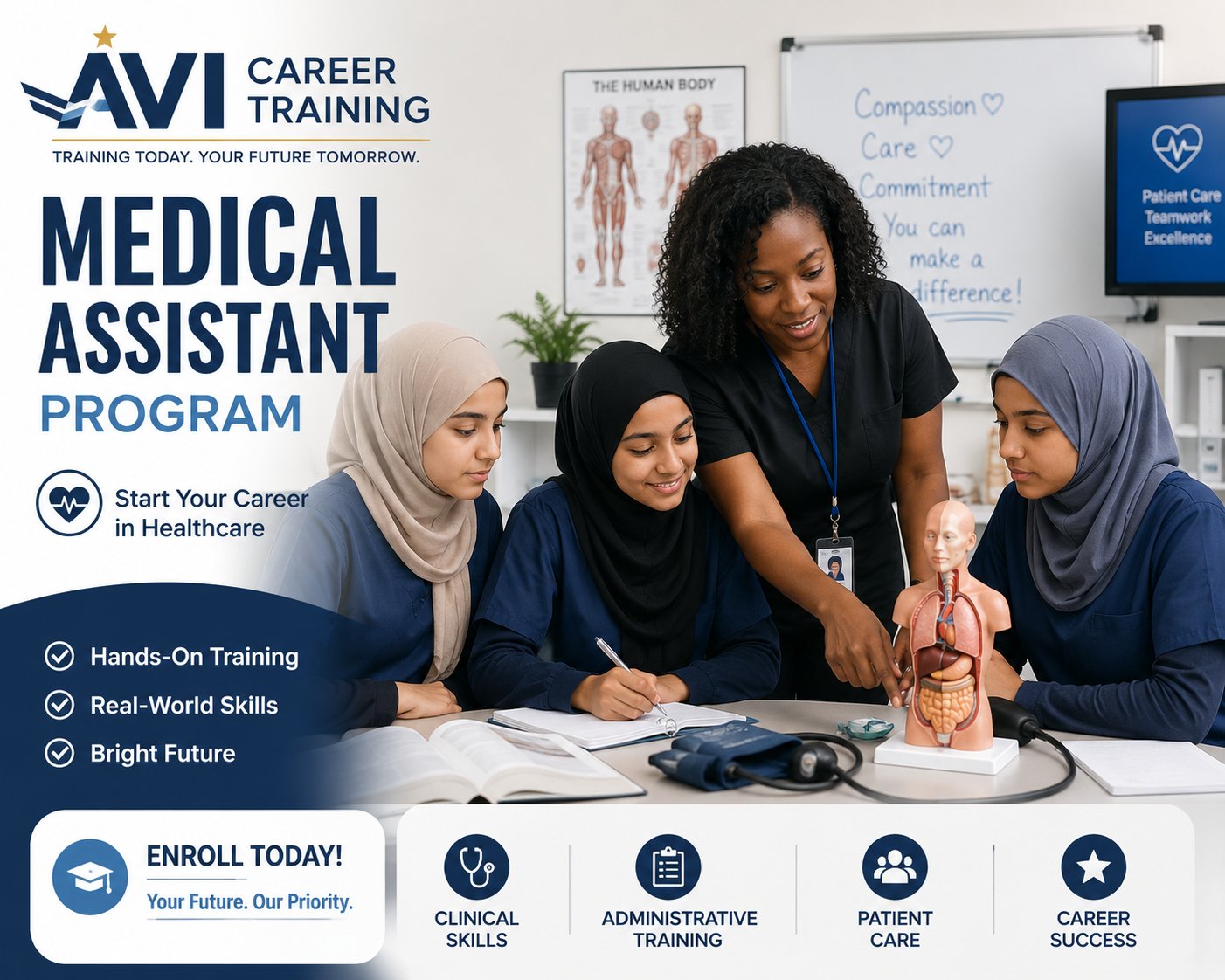
Here is the critical piece most prospective students miss: to sit for the CMA exam, you must have graduated from a program accredited by either CAAHEP (Commission on Accreditation of Allied Health Education Programs) or ABHES (Accrediting Bureau of Health Education Schools). If your school is not accredited by one of those two bodies, you cannot take the CMA exam through AAMA — period.
This single factor should be your first filter when comparing any medical assistant programs in Northern Virginia.
—
The 5 Criteria That Separate a Good MA School From a Great One
Every school in this region will tell you they offer excellent training. Here is how you cut through the marketing and evaluate what actually matters.
1. Programmatic Accreditation (CAAHEP or ABHES)
As covered above, this is non-negotiable if you want CMA exam eligibility. Ask every school directly: “Is your Medical Assistant program accredited by CAAHEP or ABHES?” If they cannot answer clearly, or if they pivot to general institutional accreditation, that is a red flag. Institutional accreditation and programmatic accreditation are not the same thing.
2. Certification Exam Pass Rates
A school’s CMA or RMA first-time pass rate tells you how well their curriculum actually prepares graduates for the real exam — not just for classroom tests. Ask admissions for the most recent reported pass rate. Anything below 75% warrants follow-up questions. Strong programs typically post pass rates in the 80–90% range or above.
3. Externship and Clinical Placement Quality
Classroom instruction alone does not make a competent Medical Assistant . Look for programs that include a structured externship — typically 160–200 hours in a real clinical setting. Ask where students are placed. Are externship sites actual physician offices and clinics in the area, or vague “partner facilities”? Do advisors assist with placement, or are students left to find their own sites?
4. Schedule Flexibility
If you are working while going to school — which many career-changers in Northern Virginia do — day-only programs may not be realistic. Ask whether the program offers evening, weekend, or hybrid options. Some community colleges in the region offer part-time tracks that stretch the program to 18 months but allow continued employment during training.
5. Financial Aid Access
Programs at accredited institutions — particularly community colleges and Title IV-eligible private career schools — may qualify for federal student aid (FAFSA/Pell Grant). This is a significant cost consideration. Confirm with admissions whether the specific MA program (not just the school) qualifies for Title IV federal financial aid. Program length directly affects eligibility in some cases.
—
Program Length, Cost, and Timeline Near Ashburn, VA
One of the most common questions from prospective students is simply: How long does medical assistant school take? The honest answer depends on the program type you choose.
9–12 months
Tuition: ~$8,000–$14,000
Fastest path to workforce entry
18–24 months
Tuition: ~$6,000–$18,000
Often qualifies for federal aid
$38,000–$52,000/year
Higher with CMA credential
Source: BLS (Northern VA MSA)
According to the Bureau of Labor Statistics Occupational Outlook Handbook, Medical Assistant employment is projected to grow approximately 14% through 2032 — significantly faster than the national average for all occupations. That growth is driven in part by an aging population and the continued expansion of outpatient care settings.
In Northern Virginia specifically, the concentration of healthcare facilities in Loudoun County, Fairfax County, Prince William County, and the greater Tysons Corner and DC metro corridor means local job prospects are strong relative to national averages.
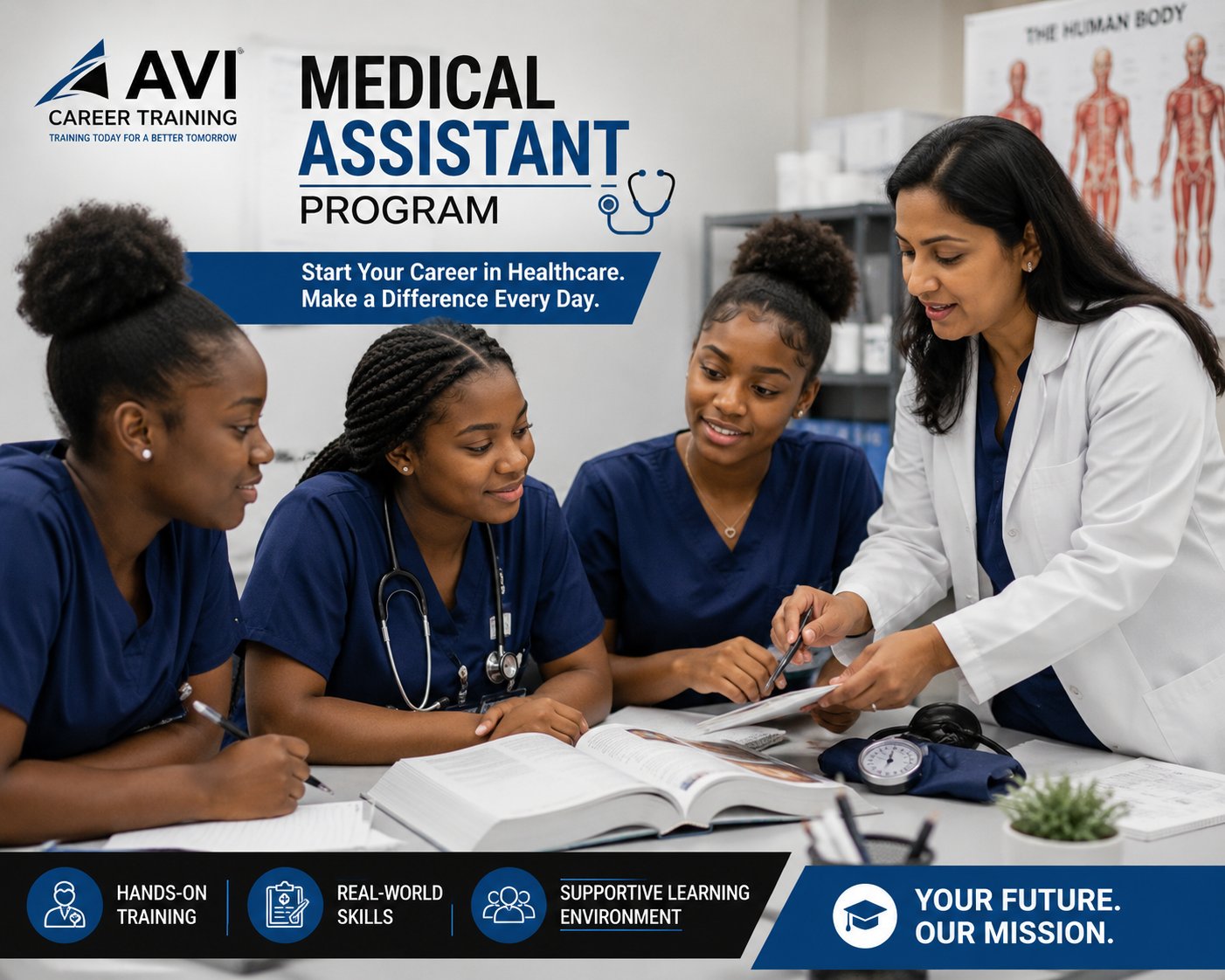
Community colleges in the region (such as Northern Virginia Community College) tend to offer lower per-credit tuition and federal aid eligibility for degree-track programs. Private career schools may offer accelerated timelines and more cohort-based structures, but costs and aid availability vary significantly — and must be verified program by program.
—
Questions to Ask Before You Enroll in Any School
Walk into any admissions conversation — or pick up the phone — armed with these questions. A program worth your time and money should answer every one of them clearly and specifically.
- “Is your MA program accredited by CAAHEP or ABHES?” — Not just the school. The specific program.
- “What is your most recent CMA (AAMA) first-time exam pass rate?” — Ask for the number, not a general claim.
- “How does externship placement work, and where are your current partner sites?” — Specific facility names carry weight.
- “Does this specific program qualify for federal Title IV financial aid (FAFSA/Pell Grant)?” — Program-level eligibility, not institution-level.
- “What is the total cost of the program, including fees, uniforms, and exam prep materials?” — Tuition headlines often omit significant additional costs.
- “What is your typical class size, and how much hands-on lab time do students get each week?” — Smaller cohorts and more lab hours generally mean better clinical preparation.
- “What career placement support do you offer after graduation?” — Resume help, job boards, employer connections, and alumni networks all matter.
- “Can I speak with a recent graduate?” — Legitimate programs welcome this. Hesitation here is a warning sign.
—
Medical Assistant vs. Other Allied Health Careers: Mapping Your Options
Some prospective students arrive at the MA search after exploring multiple healthcare-adjacent roles. If you are still mapping your options, here is a quick comparison of related entry-level healthcare careers available in Northern Virginia.
Medical Assistant vs. Clinical Nurse Assistant (CNA)
CNAs primarily work in long-term care, nursing homes, and hospital settings, providing direct patient care under RN supervision. MAs work predominantly in outpatient physician offices and clinics, with a broader scope that includes administrative duties. CNA training in Virginia is typically shorter (4–8 weeks) but has a narrower employment scope. MAs generally earn more over time and have more varied workplace settings.
Medical Assistant vs. Phlebotomy Technician
Phlebotomy technicians focus almost exclusively on blood collection — a subset of what MAs do. MA training is more comprehensive and typically opens more employment doors. If you enjoy clinical work beyond blood draws, the MA path offers broader career flexibility.
Healthcare-Adjacent Wellness Careers
Not everyone researching healthcare careers wants to work in a clinical setting. Some individuals drawn to helping others, improving wellbeing, and hands-on client interaction find that careers in wellness — such as massage therapy, esthetics, or cosmetic laser technology — align better with their goals and lifestyle. These careers offer comparable earning potential in Northern Virginia, shorter training timelines, and the ability to work in spa, wellness, and medical-adjacent environments without a clinical licensure structure.
If that description resonates with where you are in your decision-making, AVI Career Training — a COE-accredited, SCHEV-certified school in Vienna, Virginia — offers hands-on programs in Massage Therapy, Esthetics, Cosmetic Laser Technology, and more. It is worth exploring if your interest in healthcare comes more from the wellness and client-service angle than the clinical-procedural one.
—
Two Students Who Made the Right Call — For Very Different Reasons
Marcus, 31 — Sterling, VA
Marcus spent six years in retail management before deciding he wanted a career with more stability and a clear credentials path. He researched medical assistant programs near Ashburn for three months before enrolling. His deciding factor was simple: he called three schools and asked directly about CAAHEP accreditation and CMA pass rates. Only one gave him a specific pass rate number with documentation. He enrolled there, completed the 11-month certificate program, passed the CMA exam on his first attempt, and accepted a position at a multi-physician family practice in Leesburg within six weeks of graduating. “The accreditation question alone saved me from two schools that sounded great on paper but couldn’t give me a straight answer,” he said.
Danielle, 38 — Ashburn, VA
Danielle came to the MA search from a different angle. She had spent years as a stay-at-home parent and wanted to re-enter the workforce in a healthcare-related role — but realized midway through her research that her real interest was in skin health and client-facing wellness work, not clinical procedures. She pivoted her research toward esthetics training, enrolled in a Master Esthetics program at a local accredited wellness school, and now works at a medical spa in Tysons Corner performing advanced skin treatments. “I thought I wanted MA work until I actually sat down and read what the day-to-day looked like,” she said. “The research process helped me figure out what I actually wanted.” Her story is a reminder that doing your homework — even when it redirects you — is never wasted time.
—
Frequently Asked Questions
Q: How long does it take to become a medical assistant in Virginia?
A: Most certificate and diploma programs in Virginia run 9–12 months. Associate degree programs typically take 18–24 months. Program length depends on whether you attend full-time or part-time and the specific school’s curriculum structure.
—
Q: Does Virginia require medical assistants to be licensed or certified?
A: No. Virginia does not require state licensure for Medical Assistants, per the Virginia Department of Professional and Occupational Regulation (DPOR). However, most employers in Northern Virginia require or strongly prefer national certification — either the CMA (AAMA) or RMA (AMT).
—
Q: What is the average medical assistant salary in Northern Virginia?
A: According to Bureau of Labor Statistics data for the Northern Virginia/DC metro area, Medical Assistants typically earn between $38,000 and $52,000 per year. Certified MAs and those with several years of experience tend to land at the higher end of that range.
—
Q: What should I look for when choosing a medical assistant program ?
A: Prioritize CAAHEP or ABHES programmatic accreditation first — without it, you cannot sit for the CMA exam. Then evaluate certification pass rates, externship quality, schedule options, and total program cost including fees.
—
Q: Is financial aid available for medical assistant schools in Virginia?
A: It depends on the specific program. Community college MA programs that lead to an associate degree typically qualify for federal financial aid (FAFSA/Pell Grant). Some private career school programs also qualify if the school holds Title IV eligibility and the program meets minimum hour thresholds. Always confirm program-level aid eligibility — not just institutional eligibility — before enrolling.
—
Q: What is the difference between CAAHEP and ABHES accreditation for MA programs?
A: Both CAAHEP and ABHES are recognized accrediting bodies for Medical Assistant programs. Graduation from a program accredited by either one makes you eligible to sit for the CMA exam through AAMA. Both are legitimate — the distinction matters less than confirming your program holds one of them.
—
Q: Can I work as a medical assistant while still in school in Virginia?
A: Some students take part-time positions as patient service representatives or medical receptionists while completing MA training — these roles do not require clinical certification. Performing clinical tasks (injections, phlebotomy, EKGs) requires completion of your program and, in most employer settings, national certification.
—
Q: What if I’m interested in healthcare but prefer a wellness-focused career path?
A: Careers in massage therapy, esthetics, and cosmetic laser technology are healthcare-adjacent fields that involve working directly with clients on health and wellness goals — without the clinical licensure requirements of an MA role. These programs tend to be shorter, and schools like AVI Career Training in Vienna, Virginia offer accredited training in these fields for Northern Virginia residents.
—
—
The Bottom Line: How to Choose the Right School for You
Choosing a medical assistant school near Ashburn, VA is not complicated once you know the right filters. Start with accreditation — CAAHEP or ABHES, at the program level. Follow that with certification pass rates, externship quality, schedule fit, and a clear-eyed look at total cost and financial aid eligibility.
Every school in this region will make promises in admissions conversations. The ones worth your time will back those promises with specific numbers, documented outcomes, and clear answers to hard questions. The ones that deflect or generalize deserve more scrutiny before you commit.
If your research process is leading you toward a wellness-focused career path instead — or alongside — a clinical one, AVI Career Training in Vienna, Virginia offers accredited, hands-on programs in Massage Therapy, Esthetics, Cosmetic Laser Technology, Nail Technology, Cosmetology, and Electrolysis. We train students across the DMV area to build real, lasting careers in beauty and wellness. Call us at (703) 943-9841 to talk through your options with no pressure.