How to Choose the Best Esthetics School Near Vienna, VA
The best esthetics school near Vienna, VA is one that meets Virginia’s 600-hour training requirement, holds legitimate accreditation, and prepares you to serve every client who walks through the door — not just one type. If you’re weighing your options in Northern Virginia, the framework below will help you cut through the noise and make a confident decision.
Key Takeaways
- Virginia requires 600 hours of approved esthetics training before you can sit for the state board exam.
- Only students at SCHEV-certified institutions are completing state-approved training in Virginia.
- COE accreditation signals that a school meets nationally recognized standards for educational quality.
- Inclusive curriculum — training on all skin tones — is a concrete evaluation criterion, not a bonus.
- The Northern Virginia / DC metro market has strong demand in medical spas, wellness centers, and resort properties — making your license especially valuable here.
Choosing where to train is one of the most important career decisions you’ll make as an aspiring esthetician. The school you pick determines whether you’re eligible to sit for the Virginia State Board exam, whether your credential is recognized by employers, and whether you graduate ready to work on the full spectrum of clients you’ll actually encounter in this market. Start your application at AVI Career Training or keep reading to build your decision checklist.
—
Start With Virginia State Licensing Requirements
Virginia’s licensing rules are the first filter every esthetics school must pass — and they’re non-negotiable.
The Virginia Department of Professional and Occupational Regulation (DPOR) requires candidates to complete 600 hours of approved esthetics training at a SCHEV-certified institution before sitting for the state board exam. That exam has two parts: a written portion and a practical (hands-on) portion. Pass both, and you receive your Virginia esthetician license.
This matters to your school search in a direct, practical way. If a program isn’t SCHEV-certified, the hours you complete there will not qualify you to take the Virginia State Board exam. That means no license — regardless of how much you paid or how much you learned.
What SCHEV Certification Means for Students
The State Council of Higher Education for Virginia (SCHEV) certifies postsecondary schools to operate in Virginia. A SCHEV-certified school has met the state’s standards for curriculum, faculty qualifications, and institutional integrity. When you enroll at a SCHEV-certified institution, you know your 600 training hours count toward licensure.
Always verify SCHEV status before you enroll anywhere. Ask the admissions team directly: “Is this school SCHEV-certified?” A legitimate school will answer immediately and in writing.
The 600-Hour Timeline in Practice
Six hundred hours sounds like a lot until you do the math. Depending on how many hours per week your program runs, you could complete your training in as few as a few months. Once you finish your 600 hours, you apply to take the Virginia State Board exam through DPOR. Many students schedule their exam date before they graduate so there’s no gap between completing school and getting licensed.
Understanding this timeline helps you compare programs realistically. A school that stretches 600 hours over an unusually long period may not fit your schedule or financial goals. Ask each school how the schedule is structured and when graduates typically sit for the board.
—
What “Accreditation” Actually Means — and Why It Matters
Accreditation is not just a seal on a website — it’s a signal that an independent body has evaluated a school’s curriculum, faculty, facilities, and outcomes against established standards.
For esthetics schools in Northern Virginia, the most relevant accrediting body is the Council on Occupational Education (COE) — a nationally recognized accreditor for career and technical education institutions. COE accreditation tells you that a school has been reviewed by outside experts, meets defined quality benchmarks, and is held accountable for the education it delivers.
COE Accreditation vs. No Accreditation
A COE-accredited school has undergone a rigorous peer-reviewed evaluation process. An unaccredited school has not — and that gap has real consequences for students:
- Financial aid eligibility: Federal financial aid (Title IV / FAFSA) is only available at accredited institutions. Unaccredited schools cannot offer Pell Grants or federal student loans.
- Credential recognition: Employers in medical aesthetics, resort spas, and high-end wellness centers increasingly look for candidates trained at accredited schools.
- Transferability of training: If you ever want to advance your education, hours completed at an accredited school carry more weight.
The GI Bill® Question
If you’re a veteran or active-duty service member, GI Bill® benefits are only available at approved institutions. Before enrolling anywhere, confirm that the school is GI Bill® approved. This is a quick verification you can do on the VA’s comparison tool — and any school worth attending will have this information ready for you.
—
Curriculum That Prepares You for Every Client
A strong esthetics curriculum covers more than facial techniques and product knowledge. It prepares you for the full range of clients you will encounter in the real world.
This is where many esthetics programs in Northern Virginia fall short. The DMV area is one of the most diverse markets in the country. Your clients will have a wide range of skin tones, skin conditions, and cultural backgrounds. If your training only covered one skin type or one demographic, you will be underprepared from day one.
Why Inclusive Training Is a Practical Skill, Not a Checkbox
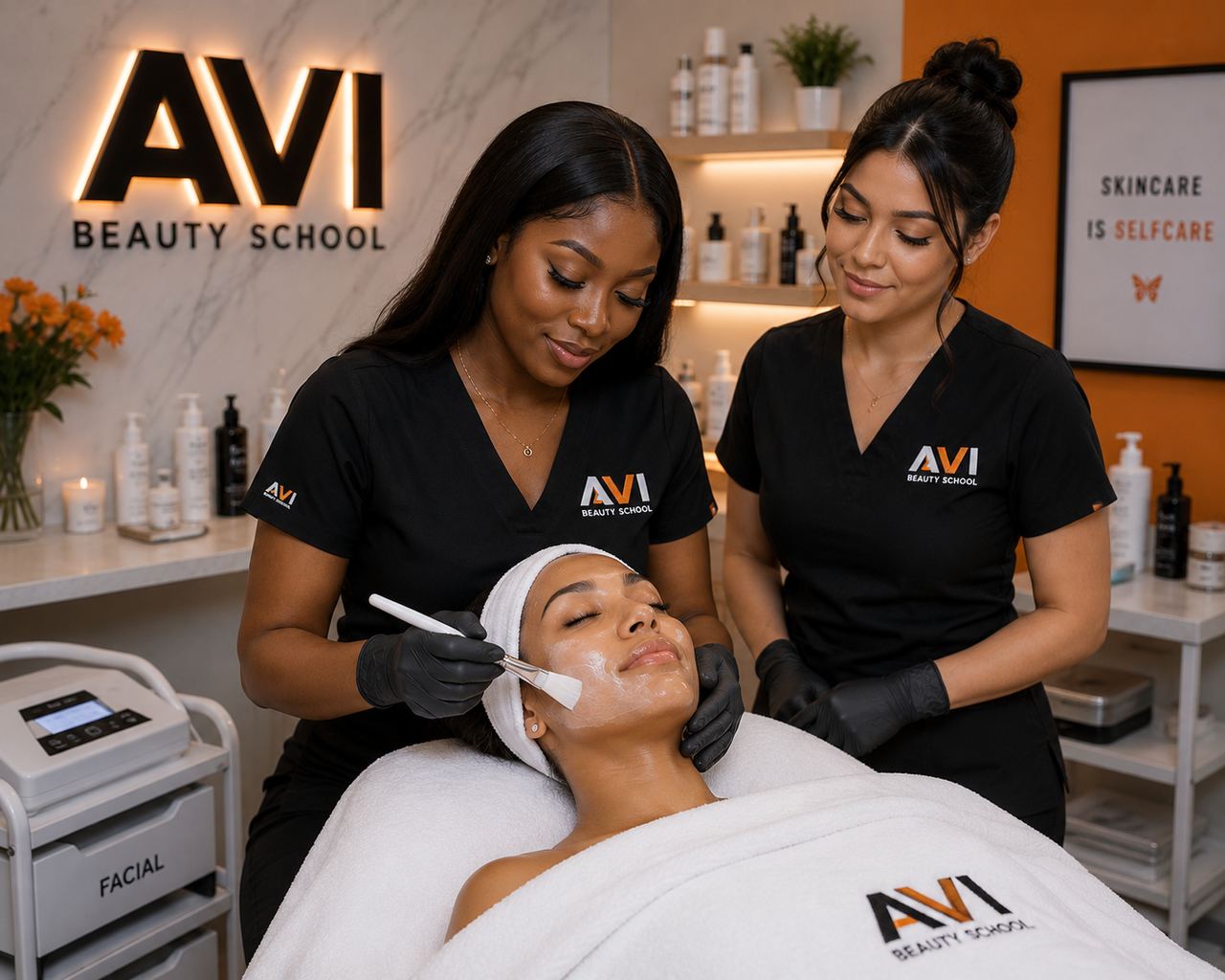
Inclusive skin training means learning how to assess and treat melanin-rich skin, understand how different skin tones respond to chemical exfoliants, lasers, and extractions, and recognize conditions that present differently across the Fitzpatrick scale. This is not a political stance — it’s clinical competence.
When evaluating a school’s curriculum, ask specific questions:
- Does the curriculum explicitly address diverse skin tones and the Fitzpatrick scale?
- Do students practice on a diverse client base during clinic hours?
- Are training materials and mannequins representative of different skin tones?
A school that can answer “yes” to all three is preparing you for the market you will actually work in.
Core Topics a Quality Esthetics Program Should Cover
Beyond inclusivity, a well-rounded esthetics program in Virginia should include:
- Skin anatomy and physiology
- Facial treatments, extractions, and massage techniques
- Chemical exfoliation and peel protocols
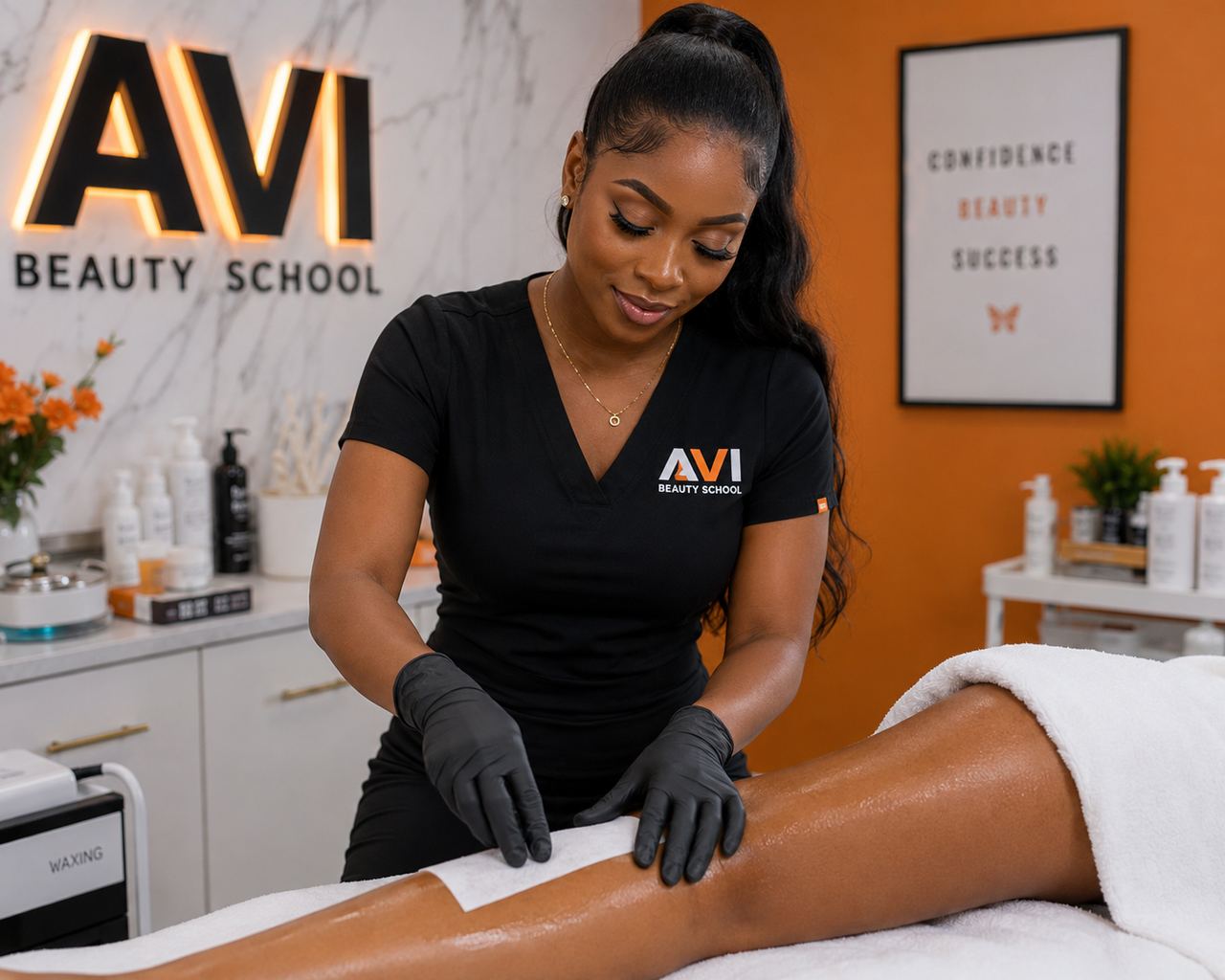
- Hair removal (waxing, threading)
- Makeup application
- Sanitation and infection control (a Virginia State Board priority)
- Business and client consultation skills
- State board exam preparation
If a program’s curriculum list is vague or incomplete, that’s a red flag. Ask to see the full course outline before you commit.
—
—
Practical Questions to Ask Before You Enroll
Before signing anything, treat your school visit like a job interview — except you’re the one asking the questions.
Here is a concrete checklist you can bring to any esthetics school in Northern Virginia or Fairfax County:
Accreditation & State Approval
- Is the school COE accredited?
- Is the school SCHEV-certified by the state of Virginia?
- Is the school approved for GI Bill® benefits?
- Can graduates sit for the Virginia State Board esthetician exam?
Program Structure
- How many training hours does the program include? (It must be at least 600 to meet Virginia requirements.)
- What is the class schedule, and how long does the program take to complete?
- What is the student-to-instructor ratio?
- How many of the 600 hours are hands-on clinic hours vs. classroom instruction?
Faculty & Facilities
- Are instructors licensed estheticians with active industry experience?
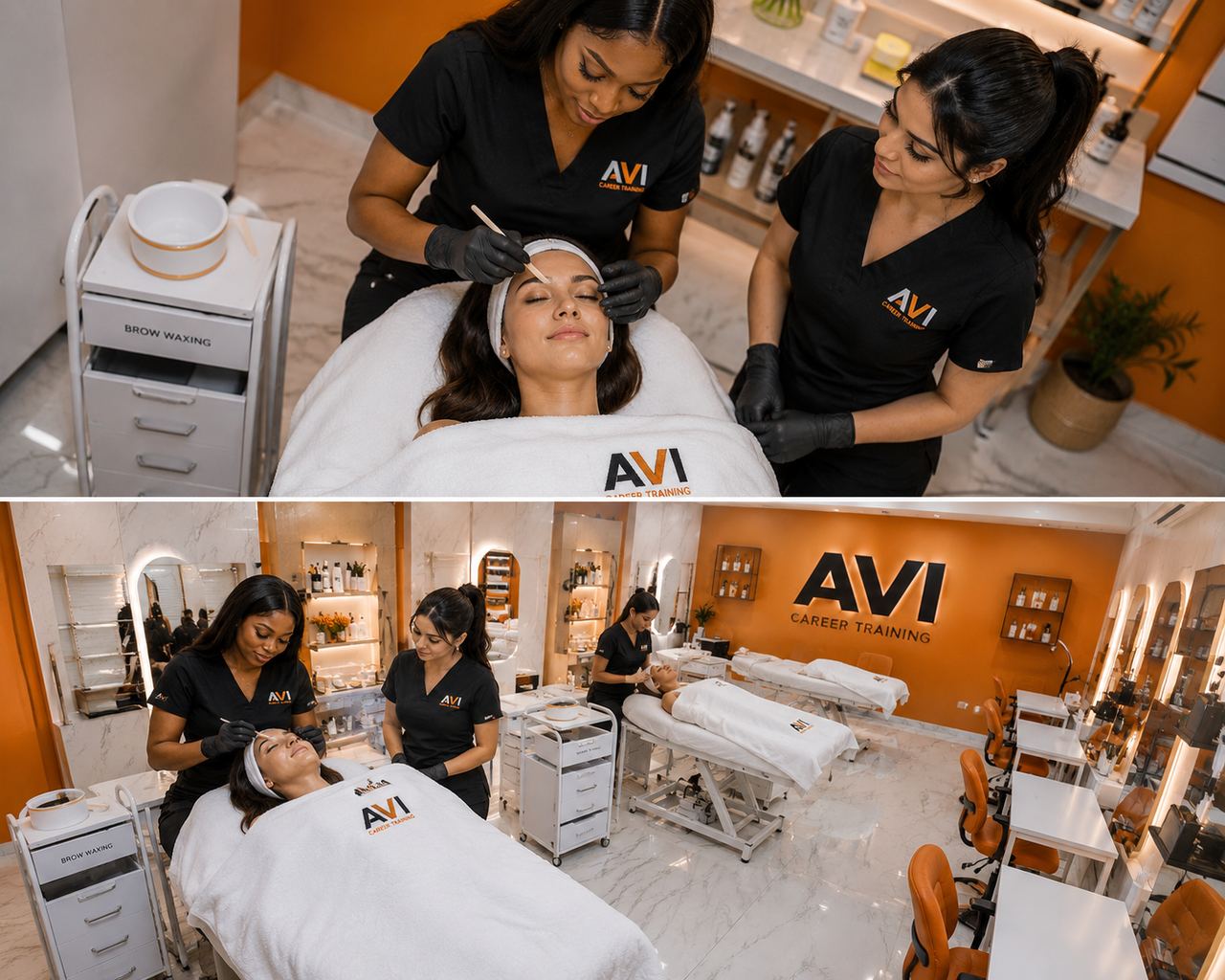
- What is the clinic environment like? Is it clean, well-equipped, and representative of a real spa setting?
- Does the school use professional-grade products?
Financial Aid & Payment
- Is financial aid available? (Remember: only available at accredited schools for eligible programs.)
- Does the school accept GI Bill® benefits?
- What payment plan options are available if financial aid does not fully cover tuition?
- Are there any additional fees beyond tuition (kit fees, exam fees, etc.)?
Career Support
- Does the school offer job placement assistance or employer connections?
- Does it have relationships with spas, clinics, or wellness centers in the Northern Virginia area?
- What do recent graduates say about their experience? (Look for reviews on Google and across social platforms.)
—
Why AVI Career Training Is Vienna’s Local Answer
Every criterion in the framework above points to the same place: AVI Career Training, located at 1595 Spring Hill Rd #720, Vienna, VA 22182 — in the heart of the Tysons Corner area.
AVI Career Training is the COE-accredited, SCHEV-certified esthetics school near Vienna, VA that checks every box on this list — not as a marketing claim, but as a verifiable fact.
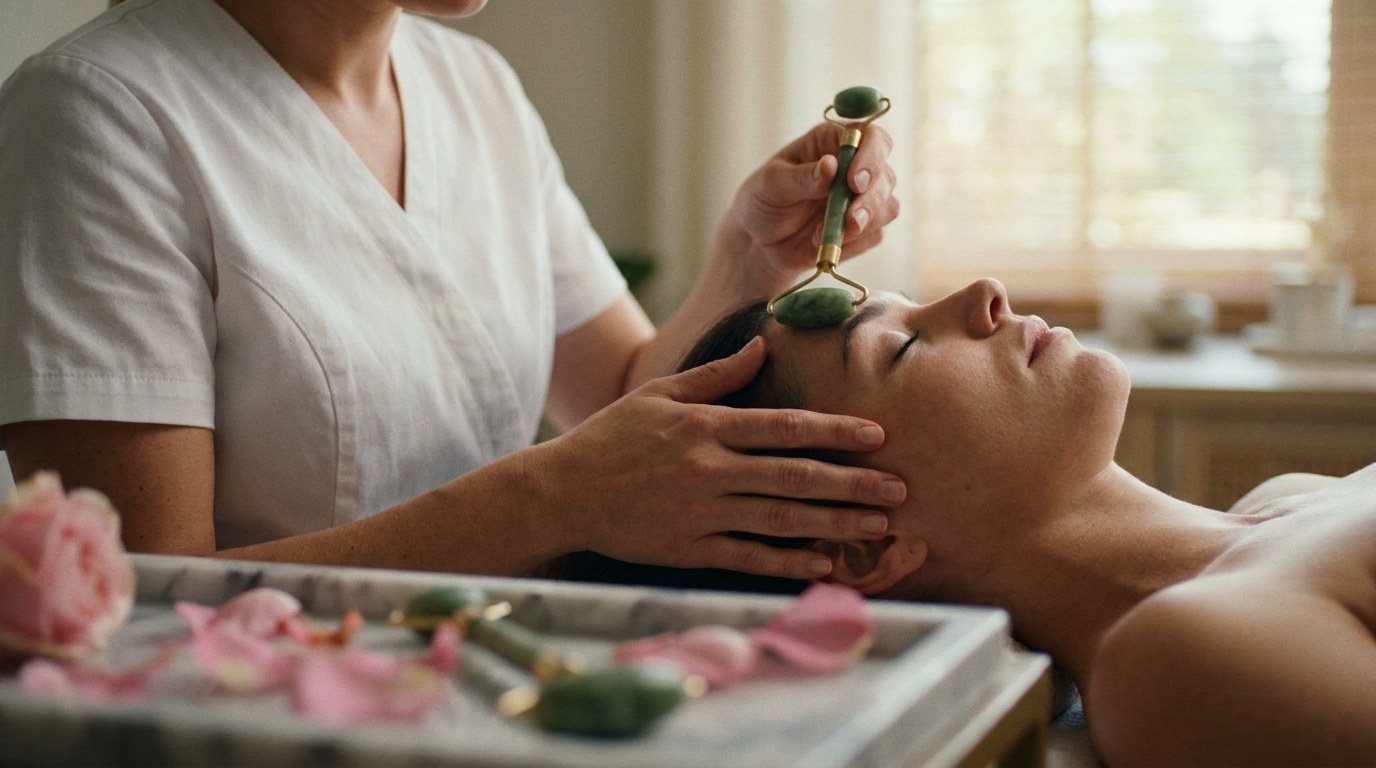
The AVI Esthetics Program at a Glance
AVI’s 600-hour Esthetics program meets Virginia’s state training requirement exactly. When you complete your 600 hours at AVI, you are eligible to sit for the Virginia State Board esthetician exam — written and practical. That’s the clear, direct path to your license.
Inclusive Training Built Into the Core Curriculum
AVI’s curriculum is built around one foundational belief: beauty education should train you to work beautifully on every skin tone. That’s not a tagline — it’s reflected in the techniques, products, and client base that AVI students work with throughout their 600 hours. In the Northern Virginia / DMV market, that preparation is a genuine competitive advantage.
Location That Puts You in the Right Market
Vienna, Virginia — just minutes from Tysons Corner — sits in one of the highest-demand markets for skincare professionals in the country. The density of medical spas, luxury wellness centers, hotel spas, and aesthetic clinics in the Fairfax County and DC metro corridor means that a Virginia esthetician license earned here opens doors to settings where earning potential consistently exceeds national averages. According to the U.S. Bureau of Labor Statistics, skincare specialists in Virginia earn a median wage that ranges from approximately $38,000 to $55,000+ annually, depending on the setting and experience level — with significant upside in commission-based and independent practice environments in high-income markets like Northern Virginia.
Financial Aid & GI Bill®
Financial aid is available at AVI Career Training, and the school accepts GI Bill® benefits for qualifying students. If you’re a veteran or active-duty service member, AVI’s admissions team can walk you through the approval process and help you understand what your benefits cover. Contact AVI at (703) 943-9841 or apply online to start the conversation.
—
Frequently Asked Questions
Q: How many hours do you need to become an esthetician in Virginia?
A: Virginia requires 600 hours of approved esthetics training at a SCHEV-certified institution. After completing those hours, you must pass the Virginia State Board esthetician exam — both the written and practical portions — to receive your license.
Q: How long does esthetics school take near Vienna, VA?
A: The length depends on your program’s schedule. AVI Career Training’s 600-hour esthetics program is structured so students can complete their training on a timeline that fits their life. Contact AVI directly at (703) 943-9841 for current schedule options.
Q: Is financial aid available for esthetics programs in Northern Virginia?
A: Financial aid is available at COE-accredited, SCHEV-certified schools like AVI Career Training. Federal financial aid (Pell Grants, federal loans) is only available at accredited institutions for eligible programs. GI Bill® benefits are also accepted at AVI. Ask AVI’s admissions team about your specific eligibility when you apply.
Q: What should I look for when choosing an esthetics school?
A: Start with SCHEV certification (required for Virginia licensure), then confirm COE accreditation, a full 600-hour curriculum, inclusive training on diverse skin tones, experienced licensed instructors, and hands-on clinic hours. Use the checklist in this article to evaluate every school you visit.
Q: What can I do with an esthetics license in Virginia?
A: A Virginia esthetician license qualifies you to work in day spas, medical spas, resort and hotel spas, plastic surgery and dermatology clinics, wellness centers, and as a self-employed or independent contractor. The Northern Virginia / DC metro area has particularly strong demand across all of these settings.
Q: Is AVI Career Training accredited?
A: Yes. AVI Career Training is accredited by the Council on Occupational Education (COE) and certified by the State Council of Higher Education for Virginia (SCHEV). The school is also approved for GI Bill® benefits.
Q: Where is AVI Career Training located?
A: AVI Career Training is located at 1595 Spring Hill Rd #720, Vienna, VA 22182 — in Fairfax County, near the Tysons Corner area. You can reach admissions at (703) 943-9841 or apply online here.
—
Ready to Start Your Esthetics Career in Northern Virginia?
AVI Career Training’s 600-hour, COE-accredited esthetics program in Vienna, VA gives you the credential, the skills, and the inclusive training to compete in one of the strongest skincare markets in the country. Financial aid available. GI Bill® accepted.
Apply Now — It’s Free to Start
Or call us at (703) 943-9841 — we’re happy to answer every question on your checklist.
—
About AVI Career Training
AVI Career Training is a COE-accredited (Council on Occupational Education), SCHEV-certified beauty and wellness school located at 1595 Spring Hill Rd #720, Vienna, VA 22182 — in Fairfax County’s Tysons Corner area, serving the greater Northern Virginia and DC metro region.
AVI offers hands-on career training in cosmetology, esthetics, massage therapy, electrolysis, cosmetic laser technology, and nail technology. The school’s curriculum is built on a foundational commitment to inclusive beauty education.