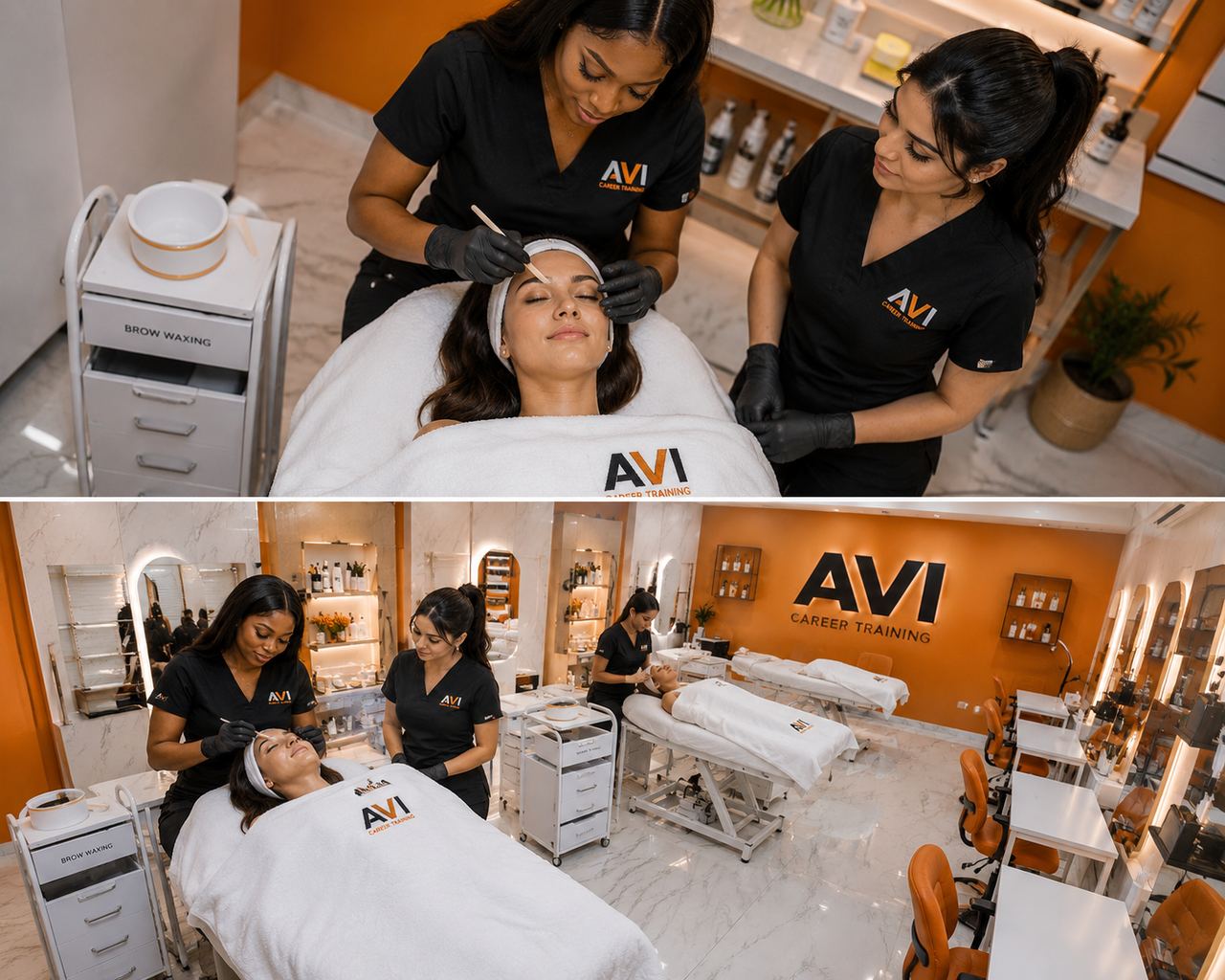
A medical esthetician (NO FINANCIAL AID FOR THIS PROGRAM) is a licensed esthetician who has added advanced clinical skills — laser treatments, chemical peels, microneedling, and more — to work in medical spas, dermatology offices, and plastic surgery clinics across Northern Virginia and the DC metro area.
If you’ve been researching healthcare-adjacent beauty careers and landed on this page, you’re in the right place. This guide walks you through exactly what a medical esthetician does, what Virginia requires for licensure, which advanced skills open the most doors in the NoVA market, and how long the path realistically takes from your first day of school to your first paycheck.
Key Takeaways
– Virginia requires 600 clock hours of esthetics training to sit for the State Board licensing exam
– Medical estheticians typically work in med spas, dermatology offices, and plastic surgery clinics — not just traditional day spas
– Laser technicians in Virginia need additional certification beyond a standard esthetics license
– Median annual wages for skin care specialists in the DC metro area range from $45,000 to $65,000+, depending on setting and specialization
– AVI Career Training in Vienna, VA offers both Esthetics and Cosmetic Laser Technician programs. Federal financial aid (FAFSA/Title IV) is NOT available for this program as it does not meet the minimum 600-hour requirement. AVI offers flexible payment plans and private financing options.
What Is a Medical Esthetician?
The title “medical esthetician” (NO FINANCIAL AID FOR THIS PROGRAM) isn’t a separate license in Virginia — it’s a career path. A medical esthetician is a state-licensed esthetician who works in a clinical environment and performs more advanced skin treatments than you’d typically find on a day spa menu.
Where a traditional esthetician might focus on facials, waxing, and basic extractions, a medical esthetician is likely performing:
- Chemical peels at higher concentrations, often under physician supervision
- Laser and light-based treatments for skin resurfacing, hair removal, or pigmentation correction
- Microdermabrasion and microneedling for texture and anti-aging results
- Pre- and post-operative skin care in plastic surgery or dermatology settings
The work environment is the biggest differentiator. Medical estheticians in Northern Virginia typically work in:
- Medical spas (med spas) — the fastest-growing segment of the beauty and wellness industry
- Dermatology offices — often handling patient prep, post-procedure care, and maintenance treatments
- Plastic surgery clinics — assisting with skin care before and after cosmetic procedures
- Laser and wellness centers — focused on body contouring, skin rejuvenation, and hair removal
In the NoVA/DC corridor specifically, demand is strong. The region has one of the highest concentrations of med spas per capita in the country, driven by a well-compensated, appearance-conscious professional population. If you want to work in clinical esthetics, this is one of the best markets in the nation to do it.
Ready to take the first step? Apply to AVI Career Training today or call (703) 943-9841 to speak with an admissions team member.
Virginia Licensing Requirements for Estheticians
Before you can call yourself a medical esthetician (NO FINANCIAL AID FOR THIS PROGRAM) in Virginia — or any kind of esthetician — you need a license issued by the Virginia Department of Professional and Occupational Regulation (DPOR).
Here’s what that path looks like.
Hour Requirements
Virginia requires 600 clock hours of esthetics training at a state-approved school to qualify for the licensing exam. Those hours must be completed at a SCHEV-certified institution (like AVI Career Training) and cover a structured curriculum that includes:
- Skin anatomy and physiology
- Facial treatments and massage techniques
- Hair removal methods
- Chemistry of skin care products
- Sanitation, infection control, and safety protocols
- Virginia state laws and regulations
The Licensing Exam
After completing your 600 hours, you’ll apply to take the Virginia State Board exam. The exam has two components:
- Written (theory) exam — tests your knowledge of skin science, product chemistry, safety, and state law
- Practical (hands-on) exam — demonstrates your technical skills on a live model
Pass both, pay the licensing fee, and you’re a licensed esthetician in Virginia — legally authorized to perform esthetics services in a salon, spa, or clinical setting.
What a Standard License Covers — and What It Doesn’t
A Virginia esthetics license lets you perform facials, waxing, basic chemical exfoliation, and other standard esthetics services. It does not automatically authorize you to operate laser equipment or perform certain medical-grade procedures.
For those, you’ll need additional training and certification — which we’ll cover in the next section.
Advanced Skills That Open Med Spa Doors
This is where your career trajectory in medical esthetics really gets shaped. Getting your 600-hour esthetics license is the foundation. But if you want to work in a med spa or clinical environment in Northern Virginia, you’ll want additional credentials on top of that.
Cosmetic Laser Technology
Laser and light-based treatments are the backbone of the med spa industry. Services like laser hair removal, IPL photofacials, laser skin resurfacing, and body contouring devices are among the more established — and highest revenue-generating — treatments on any med spa menu.
In Virginia, operating cosmetic laser equipment requires specialized training beyond a standard esthetics license.