
Pivot to Massage Therapy: Launch Your New Career in 30 Days
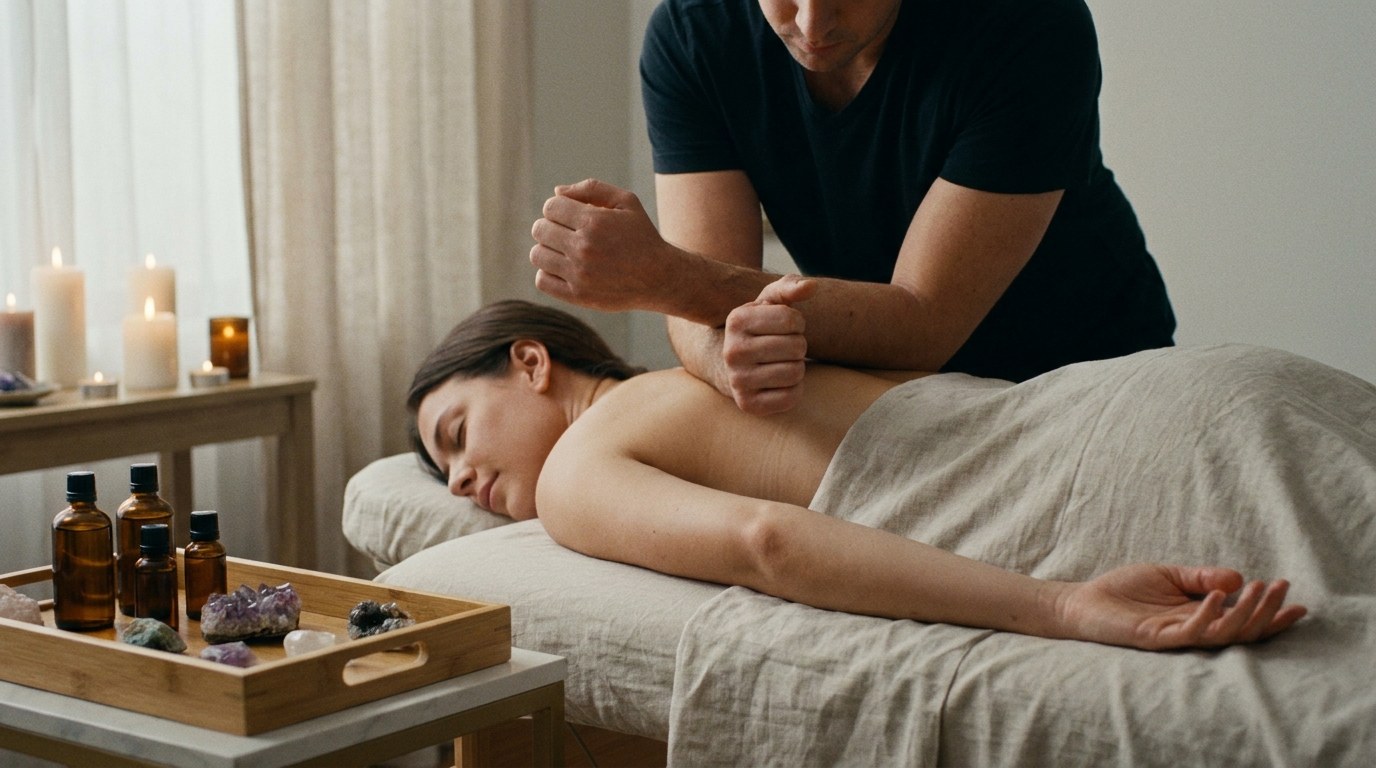
To become a licensed massage therapist in Virginia, you need to complete 625 hours of approved training, pass the MBLEx licensing exam, and submit your application to Virginia DPOR — and AVI Career Training in Vienna, Virginia makes it possible to get started within 30 days. If you’re ready for a career that’s hands-on, in high demand, and built around genuinely helping people, this guide walks you through every step: Virginia’s licensing requirements, what training looks like, what you can earn in the Northern Virginia market, and exactly how to apply.
🔑 Key Takeaways
—
Why Massage Therapy Is One of the Smartest Career Pivots Right Now
Massage therapy is one of the fastest-growing wellness careers in the country — and the Northern Virginia market is one of the best places to build that career.
The U.S. Bureau of Labor Statistics projects 19% employment growth for massage therapists through 2031, a rate that outpaces the vast majority of American occupations. That’s not a niche trend. It reflects a broader, sustained shift: Americans are investing in wellness, stress management, and physical recovery at record levels. The DC metro region — with its concentration of high-earning professionals, military families, and health-conscious communities — sits right at the center of that demand.
But the practical appeal runs deeper than market data. Massage therapy is a career where you use your hands, not a screen. You work in spas, chiropractic offices, wellness centers, and sports clinics — or eventually for yourself. You set a schedule that fits your life. And at the end of every session, you know exactly how you helped someone feel better.
For people coming out of desk jobs, retail, healthcare support roles, or military service, that combination of physical engagement, flexible scheduling, and genuine human connection is a powerful draw.
> Mini-Story #1: Marcus spent eight years as an IT project manager in Tysons Corner. He was good at his job and well-compensated — but by 35, he was exhausted in a way that felt permanent. He started researching alternatives that would let him work with people instead of dashboards. He found AVI Career Training’s Massage Therapy program, enrolled within a few weeks of his first inquiry, and completed his 625-hour training while still wrapping up contract work. Six months after graduating, he was fully booked at a sports recovery clinic in Arlington. “I didn’t think a career change could feel this fast,” he said. “But I’m doing work I actually look forward to.”
If you’re feeling a similar pull, the good news is that the path from where you are now to a licensed, working massage therapist is shorter than you think — and more structured than it might seem. Start your application at AVI Career Training today.
—
What Virginia Actually Requires to Get Your Massage Therapy License
Virginia’s massage therapy license requirements are clear, achievable, and designed around a structured training pathway — not a maze of prerequisites.
Licensure in Virginia is overseen by the Virginia Department of Professional and Occupational Regulation (DPOR) through the Virginia Board of Medicine. Here’s exactly what you need:
Step 1: Complete 500 Hours of Approved Training
Virginia requires applicants to complete a minimum of 500 hours of massage therapy training at a state-approved school. This is the core requirement — and it’s where your path begins. AVI Career Training’s Massage Therapy program (NO FINANCIAL AID FOR THIS PROGRAM) meets this requirement in full.
Those 625 hours cover anatomy and physiology, kinesiology, hands-on massage techniques, ethics, hygiene, and clinical practice. By the end, you’re not just familiar with these subjects — you’re trained and ready to work.
Step 2: Pass the MBLEx
After completing your training, you’ll need to pass the MBLEx (Massage & Bodywork Licensing Examination) — the nationally recognized licensing exam accepted by Virginia DPOR. The MBLEx tests your knowledge across key subject areas including anatomy, physiology, pathology, client assessment, and ethics.
AVI’s curriculum is built to prepare you for this exam. You won’t be studying for it alone.
Step 3: Submit Your Virginia DPOR Application
Once you’ve passed the MBLEx, you submit your licensure application to the Virginia Board of Medicine through DPOR. The application includes your training documentation, exam scores, and a background check. After approval, you’re a licensed massage therapist in Virginia — legally authorized to practice.
> Q: How long does it take to become a licensed massage therapist in Virginia?
> A: From enrollment to licensure, most students complete the process in several months. Virginia requires 500 hours of approved training. After completing the program, you’ll sit for the MBLEx licensing exam, then apply to DPOR. The total timeline depends on your schedule and program pace — but motivated career-changers who commit fully can move through the process efficiently.
> Q: What are the Virginia state requirements to get a massage therapy license?
> A: Virginia requires (1) completion of at least 500 hours of training at a state-approved school, (2) passing the MBLEx licensing examination, and (3) a successful application to the Virginia Department of Professional and Occupational Regulation (DPOR). No prior massage experience is required to enroll in a training program.
For the full, official requirements, visit the Virginia DPOR Board of Medicine licensing page.

—
What Your First 30 Days at AVI Career Training Look Like
AVI Career Training’s Massage Therapy program (NO FINANCIAL AID FOR THIS PROGRAM) gives you a clear, structured path from day one — no guessing, no wandering through prerequisite courses that have nothing to do with your goal.
Here’s what that first month actually looks like.
Week 1: Orientation and Foundations
Your first week is about grounding. You’ll get oriented to the AVI campus at 1595 Spring Hill Rd, Suite 720, Vienna, VA — a professional environment designed for hands-on learning. You’ll meet your instructors, who are licensed industry professionals — not theorists. You’ll start building foundational knowledge in anatomy and physiology: the structures your hands will work with every day.
The pace is engaging, not overwhelming. AVI’s class environment is intentionally welcoming — students come from all backgrounds, all ages, and all starting points. No one is expected to walk in already knowing anything.
Weeks 2–3: Hands-On Technique Begins
By week two, you’re working. You’ll begin practicing massage techniques in a supervised clinical setting, receiving feedback from instructors in real time. You’ll learn Swedish massage, study muscle groups, and start developing the tactile instincts that take experience to build — experience that starts now.
This is where most students have their first major “I can actually do this” moment. Feeling a technique click under your hands is different from reading about it.
Week 4: Building Competence and Confidence
By the end of your first month, you have a foundation. You understand the anatomy you’re working with. You can perform core techniques with growing confidence. And you understand exactly where you are in your 500-hour journey — and what comes next.
AVI’s curriculum is inclusive by design. Students are trained to work effectively on clients of all body types, backgrounds, and needs. That’s not an add-on — it’s embedded in how we teach.
> Mini-Story #2: Danielle had been a medical receptionist in Fairfax County for six years. She loved the healthcare environment but wanted to be the person doing the hands-on work. She was nervous about starting something new at 38. Her first week at AVI felt unfamiliar — but by week three, her instructor pulled her aside to tell her she had genuinely strong hands-on instincts. She graduated, passed her MBLEx, and is now working at a wellness center in the Tysons Corner area. “I wish I’d done it five years sooner,” she said. “The training was rigorous, but I never felt lost.”
Ready to see the campus for yourself? Apply now and take the first step.
—
How Much Can You Earn as a Licensed Massage Therapist in Northern Virginia?
Massage therapists in Northern Virginia and the DC metro area earn competitive wages — and the market consistently rewards those who build their skills and client base.

Employed Settings: Spas, Clinics, and Chiropractic Offices
Licensed massage therapists working in spas, wellness centers, chiropractic offices, and medical settings typically earn an hourly wage or per-session rate plus tips. The Northern Virginia and DC metro area — home to a large population of high-earning professionals, government employees, and military families — tends to support wages above the national median.
According to the U.S. Bureau of Labor Statistics, the national median annual wage for massage therapists is $52,880 (verify current figure at BLS.gov before publication). In high-cost-of-living metro areas like Washington DC, figures often run meaningfully higher. Confirm specific metro-level data using BLS Occupational Employment Statistics at time of publication.
Self-Employed and Independent Practice
Many experienced massage therapists eventually move into independent practice — renting a suite, building a loyal client base, and setting their own rates. Self-employed therapists often charge $90–$150+ per session in the Northern Virginia market, depending on specialization and clientele.
The trade-off is real: overhead costs (rent, supplies, insurance, scheduling software) come out of your pocket. But for those who build a strong book of clients, the income ceiling is significantly higher than an employed role.
Specialization Grows Your Earning Potential
Massage therapists who develop specializations — sports massage, prenatal massage, deep tissue, lymphatic drainage — often command higher rates and attract more consistent demand. Your 500-hour training at AVI builds the foundation. Continuing education builds the premium.
> Q: How much do massage therapists make in Northern Virginia?
> A: Massage therapists in the Northern Virginia / DC metro area typically earn above the national median, which the BLS reports at approximately $52,880 annually. The DC metro’s high cost of living and affluent client base support stronger per-session rates. Self-employed therapists in this market often charge $90–$150+ per session. Earnings grow with specialization and experience.
—
Who Can Enroll? No Experience Required.
You do not need prior massage experience — or any healthcare background — to enroll in AVI’s Massage Therapy program.
> Q: Can I become a massage therapist without any prior experience?
> A: Yes. No prior massage or healthcare experience is required to enroll in a massage therapy training program. AVI Career Training accepts students from all professional backgrounds. The 500-hour program is designed to take you from zero experience to career-ready — your instructors guide you through every technique and concept from the beginning.
> Q: Is massage therapy a good career to switch into in 2025?
> A: Yes — for the right person, it’s an excellent pivot. Demand is strong and growing (BLS projects 19% growth through 2031). The training pathway is direct and time-efficient compared to most career changes. In Northern Virginia specifically, the client base and earning potential are well above average. If you’re drawn to hands-on, people-centered work with flexible scheduling options, massage therapy is a realistic and rewarding pivot in 2025.
AVI’s student body reflects the full diversity of Northern Virginia. Career-changers in their 30s and 40s are common. Veterans transitioning out of military service find a welcoming environment and dedicated support. Students come from Fairfax County, Arlington, Tysons Corner, and across the DMV. Wherever you’re starting from, you’ll find people at AVI who started from a similar place.
Learn more about AVI Career Training’s accreditations and mission.
—
Tuition, Payment, and How to Apply Before the Month Is Over
AVI’s Massage Therapy program is designed to be accessible — and getting started is simpler than most people expect.
⚠️ Important: Financial Aid Availability for This Program
AVI Career Training’s Massage Therapy program (NO FINANCIAL AID FOR THIS PROGRAM) is under 600 hours and therefore qualifies for federal financial aid, including Title IV / FAFSA funding, Pell Grants, or federal student loans.
The GI Bill® is not applicable to this program due to the program’s length.
Payment options available:
For questions about payment options, call (703) 943-9841 or apply online and an admissions advisor will walk you through your options.
The Application Process
Applying to AVI is straightforward. There’s no lengthy waitlist, no obscure prerequisite requirements, and no intimidating process designed to weed people out. Here’s how it works:
1. Submit your application online — takes minutes
2. Speak with an admissions advisor — they’ll answer every question you have about the program, schedule, and payment
3. Confirm your start date — and get oriented on what to expect your first week
That’s it. Many students who inquire today are enrolled and starting within 30 days. The question isn’t whether you’re ready — it’s whether you’re willing to take the first step.
—
Frequently Asked Questions About Becoming a Massage Therapist in Virginia
Q: What is AVI Career Training’s Massage Therapy program?
A: AVI Career Training’s Massage Therapy program in Vienna, Virginia is a 625-hour, COE-accredited training program that prepares students for Virginia state licensure. The program covers anatomy, physiology, hands-on massage techniques, ethics, and clinical practice — and is taught by licensed industry professionals. It is approved by the Virginia Department of Professional and Occupational Regulation (DPOR) and fulfills all state requirements for licensure eligibility.
—
Q: How long does the massage therapy program at AVI take to complete?
A: AVI’s Massage Therapy program is 625 hours. The completion timeline depends on your schedule and enrollment track. Many students complete the program in several months. An admissions advisor can walk you through current scheduling options when you apply.
—
Q: Is AVI Career Training accredited?
A: Yes. AVI Career Training is accredited by the Council on Occupational Education (COE) and certified by the Virginia State Council of Higher Education for Virginia (SCHEV). These credentials are essential — they ensure your training is recognized for Virginia licensure eligibility and professional credentialing.
—
Q: What exam do I need to pass to get my Virginia massage therapy license?
A: Virginia requires passing the MBLEx (Massage & Bodywork Licensing Examination), administered by the Federation of State Massage Therapy Boards (FSMTB). AVI’s curriculum is structured to prepare you for the MBLEx content areas: anatomy, physiology, kinesiology, pathology, client assessment, ethics, and guidelines for professional practice.
—
Q: Does AVI’s Massage Therapy program qualify for financial aid?
A: No. AVI’s Massage Therapy program (NO FINANCIAL AID FOR THIS PROGRAM) is under 600 hours and qualifies for federal financial aid (Title IV / FAFSA), Pell Grants, or the GI Bill®. Payment plans and private financing options are available. Contact AVI admissions at (703) 943-9841 to discuss payment options.
—
Q: Where is AVI Career Training located, and who does it serve?
A: AVI Career Training is located at 1595 Spring Hill Rd, Suite 720, Vienna, VA 22182 — centrally accessible to students across Fairfax County, Tysons Corner, Arlington, and the broader Northern Virginia / DC metro area. The school serves a diverse student body including career-changers, recent graduates, and professionals from across the DMV region.
—
Q: Can I work as a massage therapist right after I graduate?
A: After graduation, you’ll need to pass the MBLEx and receive your Virginia DPOR license before practicing professionally. This process typically takes a few weeks after your exam date. Many AVI graduates sit for the MBLEx shortly after completing their 500 hours and begin working within a month or two of graduation.
—
Q: What kinds of jobs can I get with a Virginia massage therapy license?
A: Licensed massage therapists in Northern Virginia work in day spas, medical spas, chiropractic offices, physical therapy clinics, sports and athletic recovery centers, hotels and resorts, and private practice. Some graduates build their own independent practice after gaining experience. The Tysons Corner and DC metro area offers one of the most diverse and high-demand markets for massage therapy in the country.
—
About AVI Career Training
AVI Career Training is a COE-accredited, SCHEV-certified beauty and wellness career school located in Vienna, Virginia. Founded to provide inclusive, career-focused training in beauty and wellness, AVI offers hands-on programs in Cosmetology, Basic Esth