
Esthetics School vs. a 4-Year Degree: Which Builds Your Career Faster?
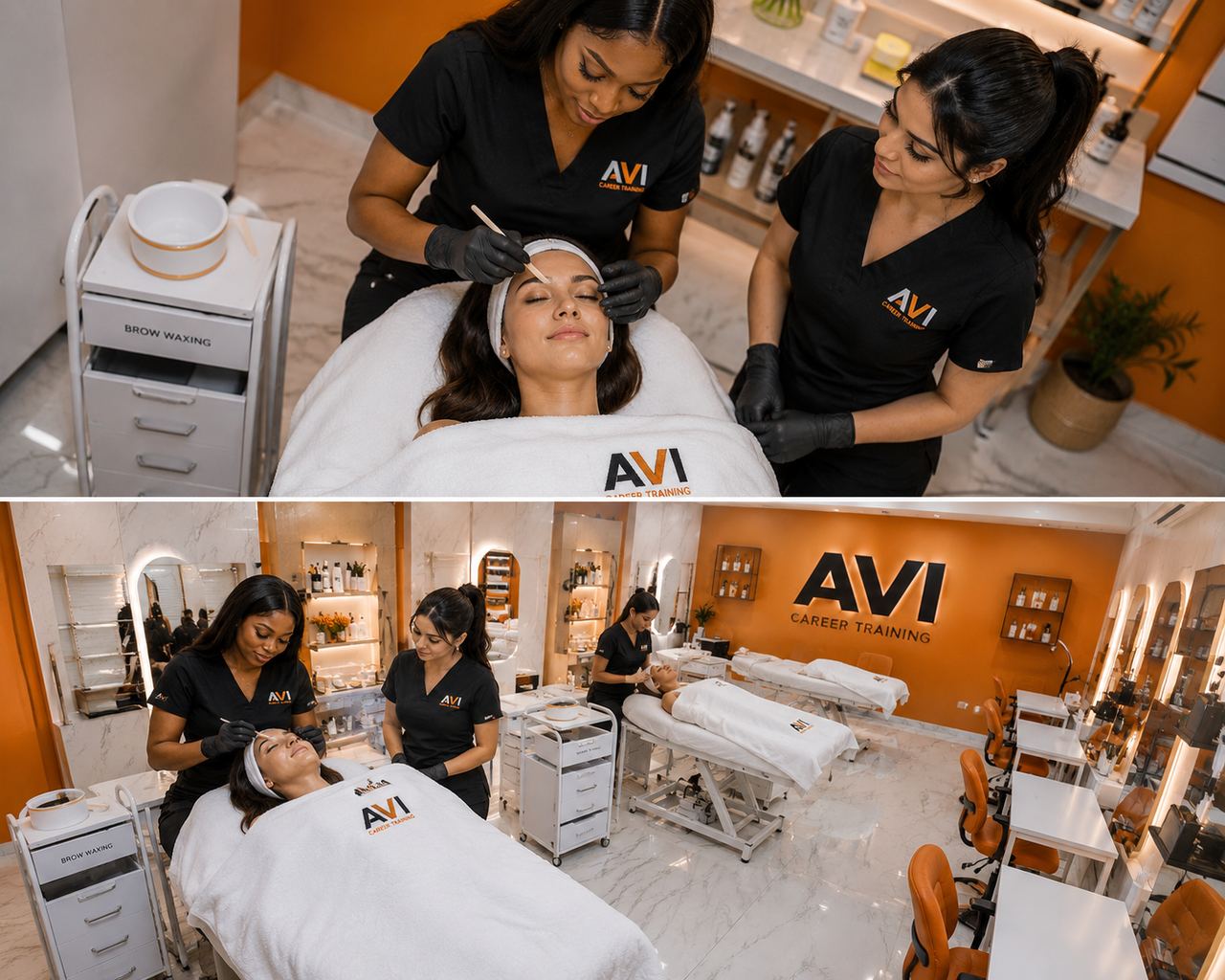
Esthetics vocational training gets you licensed and earning in a fraction of the time — and at a fraction of the cost — of a 4-year college degree. If your goal is a hands-on, client-facing career in skincare, that single fact changes everything about how you should plan your next move.
This article breaks down the real differences between esthetics school and a traditional college degree: what you learn, how long it takes, what it costs, and what you can earn on the other side. If you’re a recent high school graduate weighing your options, or a career-changer who’s done waiting to love what you do, keep reading.
⚡ Key Takeaways
- Virginia requires 600 hours of esthetics training before you can sit for the State Board exam — not four years.
- A 4-year Virginia public university can cost $60,000–$100,000+ before you earn a dollar in your field.
- The average bachelor’s degree graduate carries $30,000+ in student loan debt at graduation.
- The U.S. Bureau of Labor Statistics projects 17% job growth for skincare specialists through 2032 — faster than average.
- AVI Career Training in Vienna, VA is COE-accredited and SCHEV-certified, with federal financial aid available for qualifying programs.
—
What You Actually Learn in Esthetics Vocational Training
Esthetics vocational training is built entirely around the skills you need to work with clients from day one — no detour through electives that have nothing to do with skin.
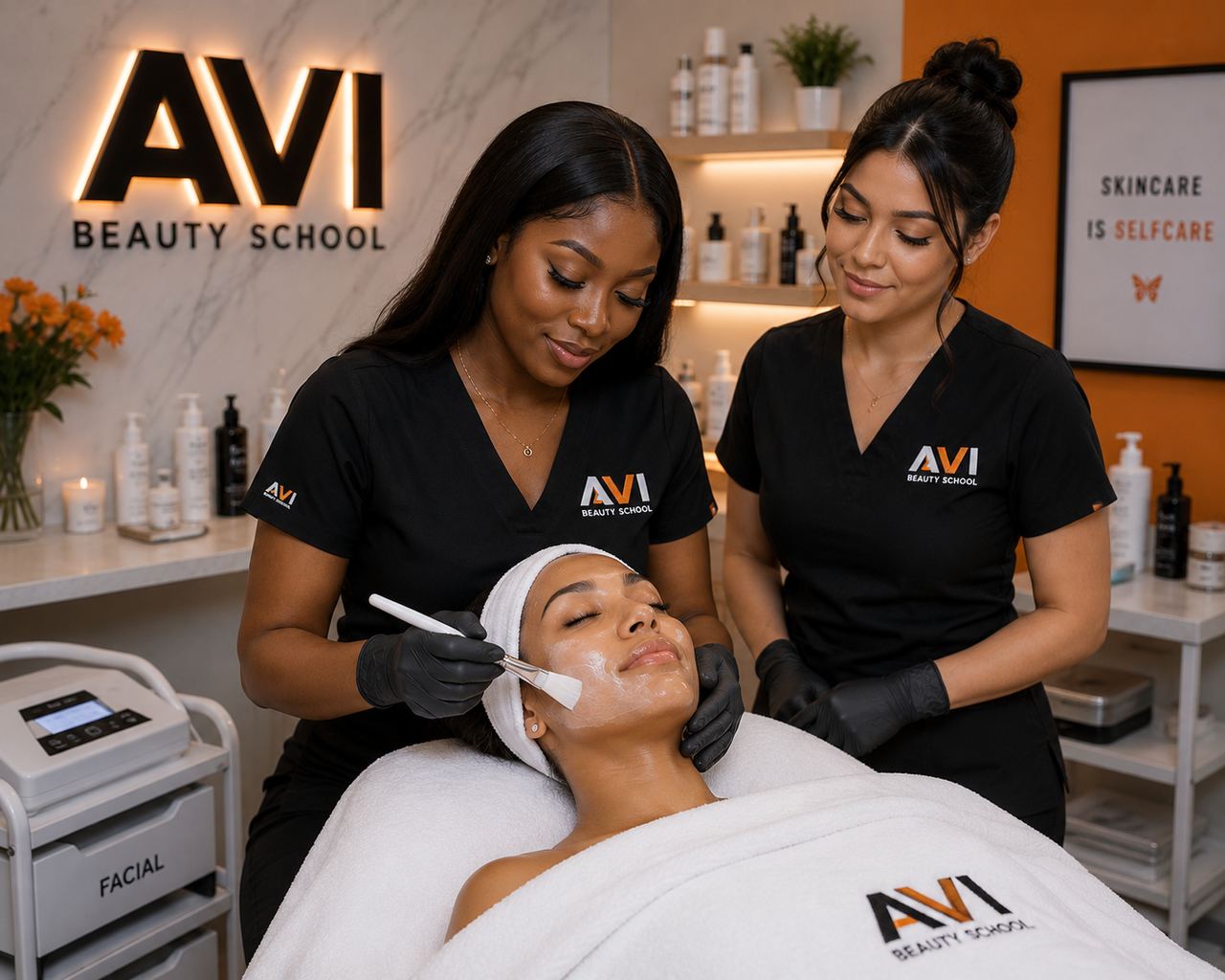
AVI Career Training’s Basic Esthetics program in Vienna, Virginia is a hands-on, skills-first curriculum structured around the competencies required by the Virginia Department of Professional and Occupational Regulation (DPOR). From your first weeks, you’re learning techniques you’ll use every single day as a working esthetician:
- Facial treatments and skin analysis
- Chemical exfoliation and peels
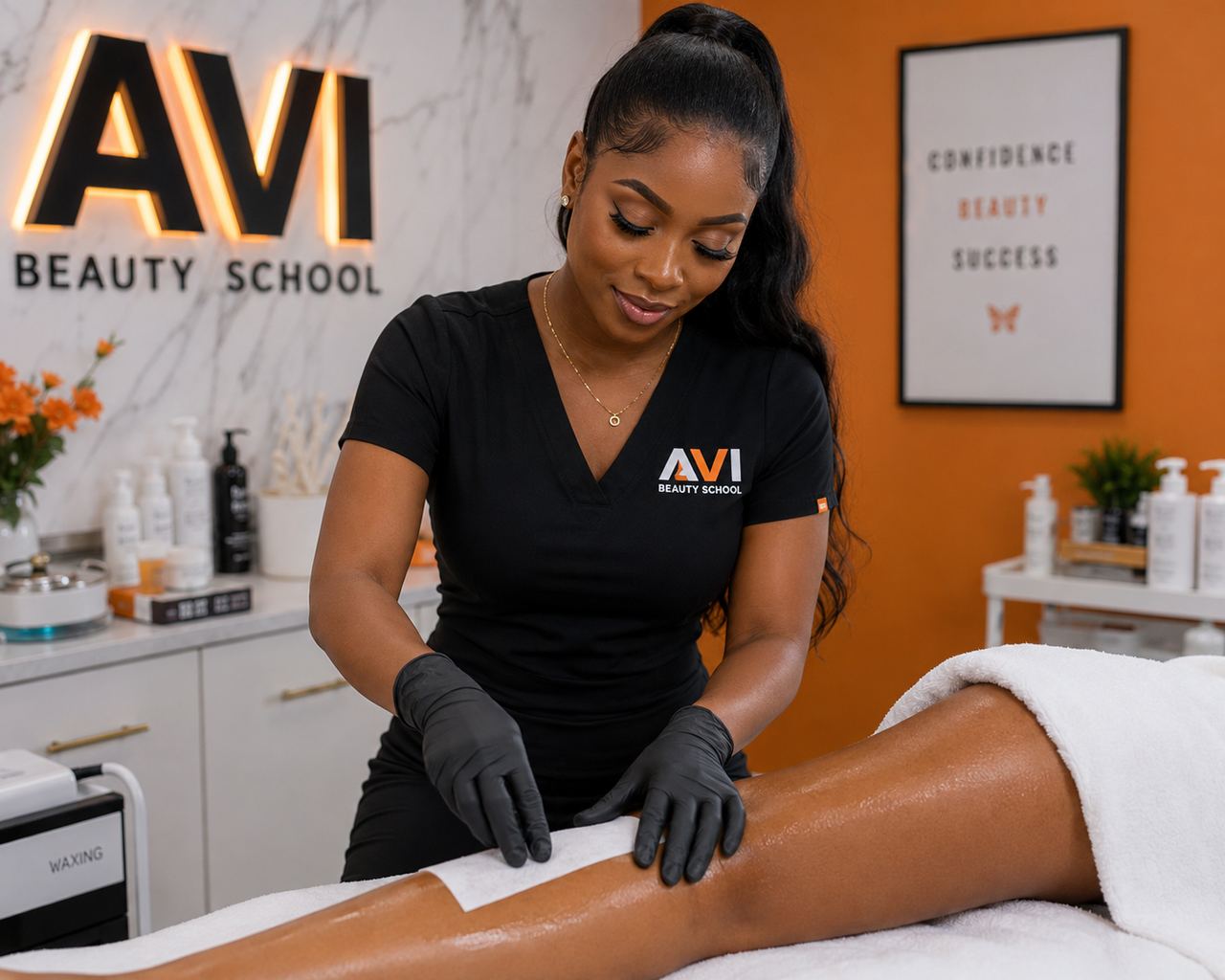
- Waxing and hair removal
- Sanitation, sterilization, and infection control
- Product knowledge and ingredient science
- Client consultation and contraindication screening
Compare that to the first two years of a typical 4-year degree, where a large portion of your time and tuition goes toward general education requirements — English composition, social science electives, math courses — none of which lead to a Virginia esthetics license and none of which teach you how to safely perform a chemical peel on a client with hyperpigmentation.
Vocational Training Is Credential-First by Design
Every hour you spend in an esthetics program at a state-approved school like AVI counts toward the 600-hour threshold Virginia requires for licensure. Nothing is filler. The curriculum is mapped directly to what the Virginia State Board tests — and to what employers hire for.
That design philosophy matters if you’re asking is esthetics school worth it. When the program ends, you don’t walk away with general knowledge. You walk away with a license.
—
Time to Career: 600 Hours vs. Four Years
The most direct answer to “how long does esthetics school take” in Virginia is this: 600 hours of approved training, followed by passing the DPOR written and practical State Board exams.
That’s it. There is no two-year prerequisite. There is no mandatory general education track. A focused student who enrolls in AVI’s Basic Esthetics program can complete the required hours and sit for licensure in significantly less time than a four-year college degree — often before a traditional college freshman has finished their first year.
What Four Years Actually Costs You in Time
A 4-year degree takes, on average, closer to 4.5–5 years for students who change majors, take reduced course loads, or need to repeat coursework. During that entire window, you’re paying tuition. You’re accumulating debt. You’re not licensed. And you’re not building the client relationships, service skills, or professional reputation that estheticians earn through real-world hours behind the treatment table.
Consider this: a student who enrolls in esthetics vocational training in Virginia this fall could be a licensed esthetician and earning income before their former high school classmates who chose a 4-year school have completed their sophomore year.
That is what opportunity cost looks like — made personal.
—
Cost Comparison — Tuition, Debt, and Return on Investment
Esthetics school is dramatically less expensive than a 4-year college degree — and the ROI timeline is much shorter because you start earning sooner.
Here’s what the numbers look like when you put them side by side:
The Real Cost of a 4-Year Virginia College Degree
At a public 4-year university in Virginia, in-state tuition alone averages approximately $14,000–$16,000 per year — before room and board, fees, textbooks, and living expenses. Add those in, and the total four-year cost frequently lands between $60,000 and $100,000 or more.
According to Federal Reserve and U.S. Department of Education data, the average bachelor’s degree graduate leaves school carrying more than $30,000 in student loan debt. Many carry significantly more. That debt follows them into their first job, their first apartment, and their first decade of adult financial life.
What Esthetics Vocational Training Costs
Esthetics programs at accredited vocational schools like AVI Career Training cost a fraction of that — contact AVI’s admissions team directly at (703) 943-9841 or through the enrollment form for current tuition information.
For students enrolling in qualifying programs at AVI, Title IV federal financial aid is available, including Pell Grants and subsidized loans, because AVI is a COE-accredited institution. The GI Bill® is also accepted at AVI, making it a strong option for veterans and military-connected students pursuing a new career in the Northern Virginia area.
> ⚠️ Note: Financial aid availability varies by program and hours. Contact AVI admissions to confirm which specific programs qualify for Title IV federal aid before enrolling.
The ROI Conversation No One Has With You in High School
Return on investment isn’t just about what you spend — it’s about when you start earning. A licensed esthetician in Northern Virginia can begin building income, clientele, and professional equity years before a college graduate finishes paying off their student loans.
That gap compounds. Every year you’re earning, you’re also building skills, reputation, and (if you choose) the foundation for your own suite or business.
—
Earning Potential and Career Paths for Licensed Estheticians
Licensed estheticians can absolutely make a good living — and in the Northern Virginia / DC metro market, wages trend meaningfully higher than national averages.
What the Data Says About Esthetician vs. College Degree Salary
According to the U.S. Bureau of Labor Statistics (BLS), the national median wage for skincare specialists is approximately $39,000–$42,000 per year. That’s the national median — meaning half of all skincare specialists earn more than that figure.
In the Northern Virginia and DC metro area, service-sector wages reflect the region’s higher cost of living and robust demand from a dense, affluent client base. Estheticians in this market — particularly those who specialize, build private clientele, or move into medical or laser settings — frequently exceed those national benchmarks.
And critically: a licensed esthetician earning $42,000 with no student debt is in a materially stronger financial position than a college graduate earning $48,000 while servicing $30,000+ in loans.
Career Paths That Open After Esthetics Licensing
Esthetics vocational training is a launchpad, not a ceiling. Here’s where a Virginia esthetics license can take you:
- Spa Esthetician — luxury day spas, hotel spas, and resort properties throughout the DMV area
- Medical Esthetics — working alongside dermatologists and plastic surgeons, performing advanced skin treatments
- Cosmetic Laser Technician — a growing specialty; AVI also offers a dedicated Cosmetic Laser Technician program for licensed professionals looking to advance
- Independent Suite Owner — rent a private treatment suite and build your own brand and clientele
- Product Education / Brand Representative — drawing on deep product knowledge for skincare brands
- Educator or Instructor — with additional credentials, teach the next generation of estheticians
The skincare industry is projected to grow at 17% through 2032, according to BLS — nearly double the average growth rate across all occupations. That demand is real, and it’s local.
A Career-Change Story: From Retail Manager to Licensed Esthetician
Consider someone like Maya — a retail store manager in her early 30s, burned out on weekend shifts and commission pressure, but genuinely passionate about skincare and helping people feel confident. She’d been putting off a career change because she assumed it meant two more years of general prerequisites before she could even start a beauty program.
She discovered that Virginia’s 600-hour esthetics licensing pathway meant she could enroll directly, train in a focused and structured program, and sit for her State Board exam — all without going back to a four-year school. Within months of completing her program, she was working at a med-spa in the Tysons Corner area, doing the kind of client-facing, results-driven work she’d always wanted. No detour. No six-figure debt.
That path is available right now, right here in Northern Virginia.
—
Who Esthetics Vocational Training Is — and Isn’t — the Right Fit For
Esthetics school is the faster, more affordable, and more directly credentialed path for most people who want to work hands-on in skincare. But it’s worth being honest about when a 4-year degree makes more sense.
When a 4-Year Degree Is the Right Call
If your goals include:
- Becoming a dermatologist or physician — you need a medical degree, not an esthetics license
- Cosmetic chemistry or product formulation — a bachelor’s in chemistry or biochemistry is the appropriate foundation
- Aesthetic medicine (injectables, surgical procedures) — medical or nursing school is the required path
These are legitimate, valuable careers. They require a 4-year degree (and often post-graduate training) because the clinical and scientific depth required demands that structure. Esthetics vocational training is not designed to replace those pathways.
When Esthetics School Is the Right Call
If your goals include:
- Performing professional facials, peels, waxing, and advanced skin treatments on real clients
- Building a loyal client base and growing within a spa, clinic, or independent setting
- Earning a state license and getting to work in the Northern Virginia / DC metro market as quickly as possible
- Changing careers without restarting your life financially
…then esthetics vocational training — specifically the 600-hour pathway to Virginia licensure — is not just a reasonable choice. It is the most direct, most efficient, and most cost-effective route to that career.
A Student Story: High School Graduate, Clear Vision
Daniel graduated high school knowing he wanted to work in skincare — he’d grown up watching his mother struggle to find estheticians trained to work on darker skin tones, and he wanted to be part of changing that. His guidance counselor assumed he’d apply to four-year schools. His parents were on the fence.
Then he found AVI Career Training in Vienna, Virginia. He learned that AVI’s curriculum specifically trains students to work on all skin tones — something generic programs often overlook. He enrolled in the Basic Esthetics program, completed his 600 hours, passed his Virginia State Board exam, and landed a position at a med-spa in the DMV area before any of his friends had finished their freshman year of college. He’s now building the kind of practice he always envisioned — one where every client feels seen.
That’s what inclusive, career-focused esthetics training actually looks like.
—
Frequently Asked Questions
Q: How long does it take to become a licensed esthetician in Virginia?
A: Virginia requires 600 hours of approved esthetics training before a student can sit for the DPOR State Board written and practical exams. The total time from enrollment to licensure depends on your program schedule, but it is significantly shorter than completing a 4-year college degree. AVI Career Training’s Basic Esthetics program in Vienna, VA fulfills this 600-hour requirement.
Q: Is esthetics school cheaper than a 4-year college degree?
A: Yes — substantially. A public 4-year university in Virginia costs approximately $14,000–$16,000 per year in tuition alone, with total four-year costs frequently exceeding $60,000–$100,000+ when room, board, and fees are included. Esthetics vocational programs at schools like AVI Career Training cost a fraction of that. Contact AVI admissions at (703) 943-9841 for current tuition details.
Q: Can estheticians make a good living without a college degree?
A: Yes. The BLS median wage for skincare specialists nationally is approximately $39,000–$42,000 per year, and wages in the Northern Virginia / DC metro area trend higher due to regional demand and cost-of-living premiums. Licensed estheticians who specialize, build private clientele, or move into medical esthetics or laser technology frequently exceed those figures — often without carrying any student loan debt.
Q: What is the difference between esthetics school and cosmetology school?
A: Esthetics school focuses specifically on skincare — facials, chemical peels, waxing, skin analysis, and related treatments. Cosmetology school covers a broader range of services including hair cutting, coloring, and chemical services, in addition to some skin and nail training. Virginia licenses each separately. AVI Career Training in Vienna, VA offers both a Basic Esthetics program and a Cosmetology program for students choosing their path.
Q: How do I become a licensed esthetician in Virginia?
A: To become a licensed esthetician in Virginia, you must: (1) complete 600 hours of training at a SCHEV-approved esthetics school, (2) pass the Virginia DPOR written and practical State Board exams, and (3) submit your license application to the Virginia Department of Professional and Occupational Regulation (DPOR). AVI Career Training in Vienna, Virginia is SCHEV-certified and prepares students for all components of this process.
Q: Is esthetics school worth it for a career changer?
A: For most career changers whose goal is hands-on esthetics work, the answer is yes. The 600-hour Virginia licensing pathway means you can transition into a new, in-demand career without years of prerequisite coursework or six-figure debt. The Northern Virginia and DC metro market offers strong demand for skilled estheticians, and the BLS projects 17% job growth for skincare specialists through 2032. AVI Career Training’s admissions team can walk you through your specific situation — reach out at (703) 943-9841 or apply online.
—

—
Ready to Start? AVI Career Training Is Right Here in Northern Virginia.
If you’ve been comparing esthetics school vs. a 4-year degree and want a clear answer — here it is: if your goal is a licensed, client-facing esthetics career, vocational training gets you there faster, at lower cost, with no wasted hours on coursework that doesn’t apply to your license.
AVI Career Training is a COE-accredited, SCHEV-certified beauty and wellness school located in Vienna, Virginia — minutes from Tysons Corner, serving students