Esthetics School vs. 4-Year Degree: Which Pays Off?
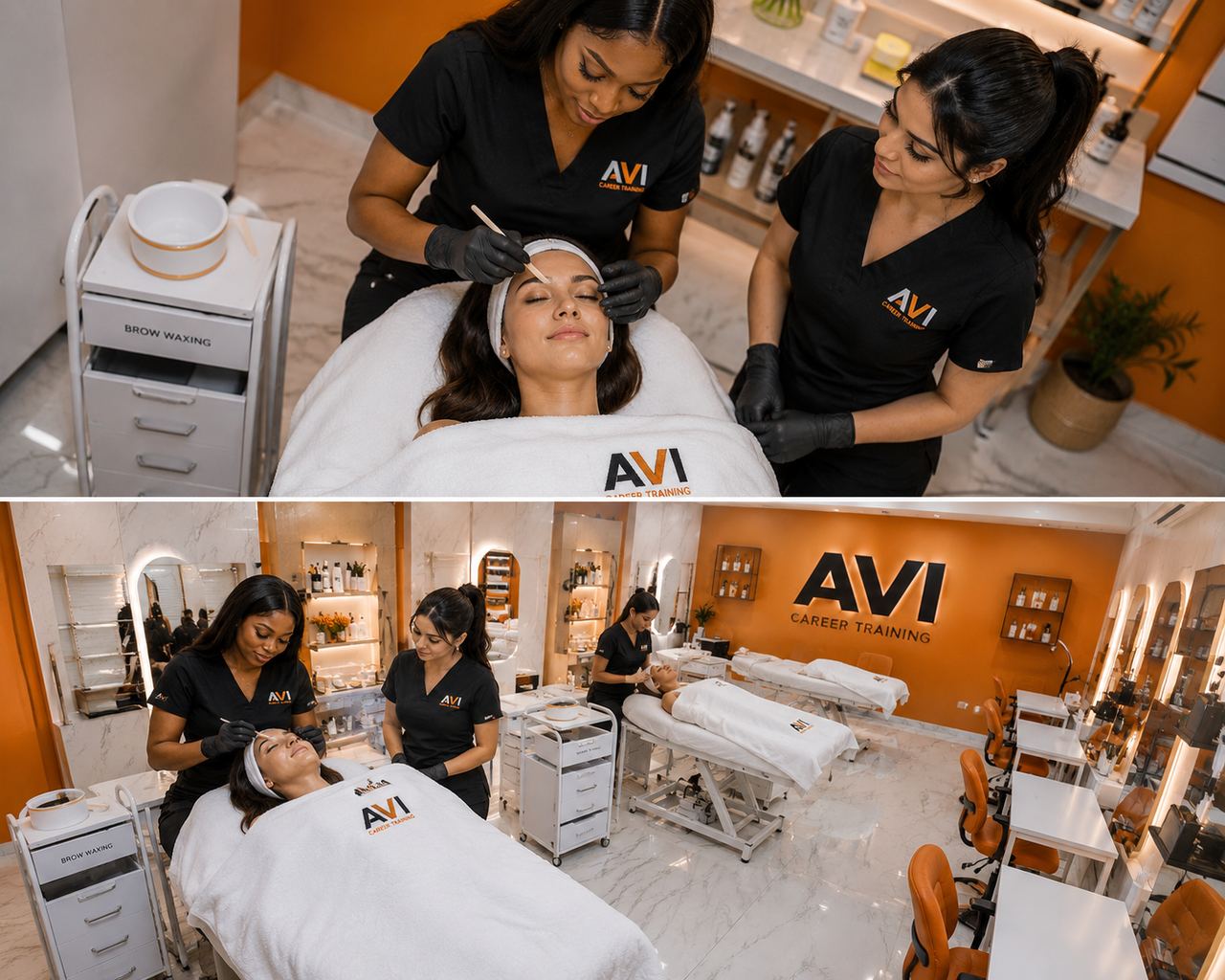
For most people who want to become a licensed esthetician, a 4-year college degree is not required — and choosing one over vocational training will cost you years of time and tens of thousands of dollars more. Virginia law requires completion of an approved esthetics program and passing the Virginia State Board exam, not a university diploma. That means the direct path to a licensed esthetics career runs through a vocational program like the one at AVI Career Training in Vienna, Virginia — not through four years of general education.
That said, both paths serve different people for different reasons. This guide breaks down the real differences so you can make a clear, confident decision about your next step.
—
- Virginia requires 600 hours of approved esthetics training + the State Board exam — not a 4-year degree.
- Vocational esthetics programs take months, not years — students can be licensed and earning in the same calendar year they enroll.
- A 4-year university degree averages $40,000–$100,000+ in tuition alone; vocational training costs a fraction of that.
- AVI Career Training is COE Accredited and SCHEV Certified, making its 600-hour program an approved pathway to the Virginia State Board exam.
- The Bureau of Labor Statistics projects faster-than-average job growth for skincare specialists — the industry is expanding whether you have a degree or not.
—
What Each Path Actually Looks Like
The core difference between these two paths is this: one is designed specifically to train estheticians, and one is not.
Vocational Esthetics Training
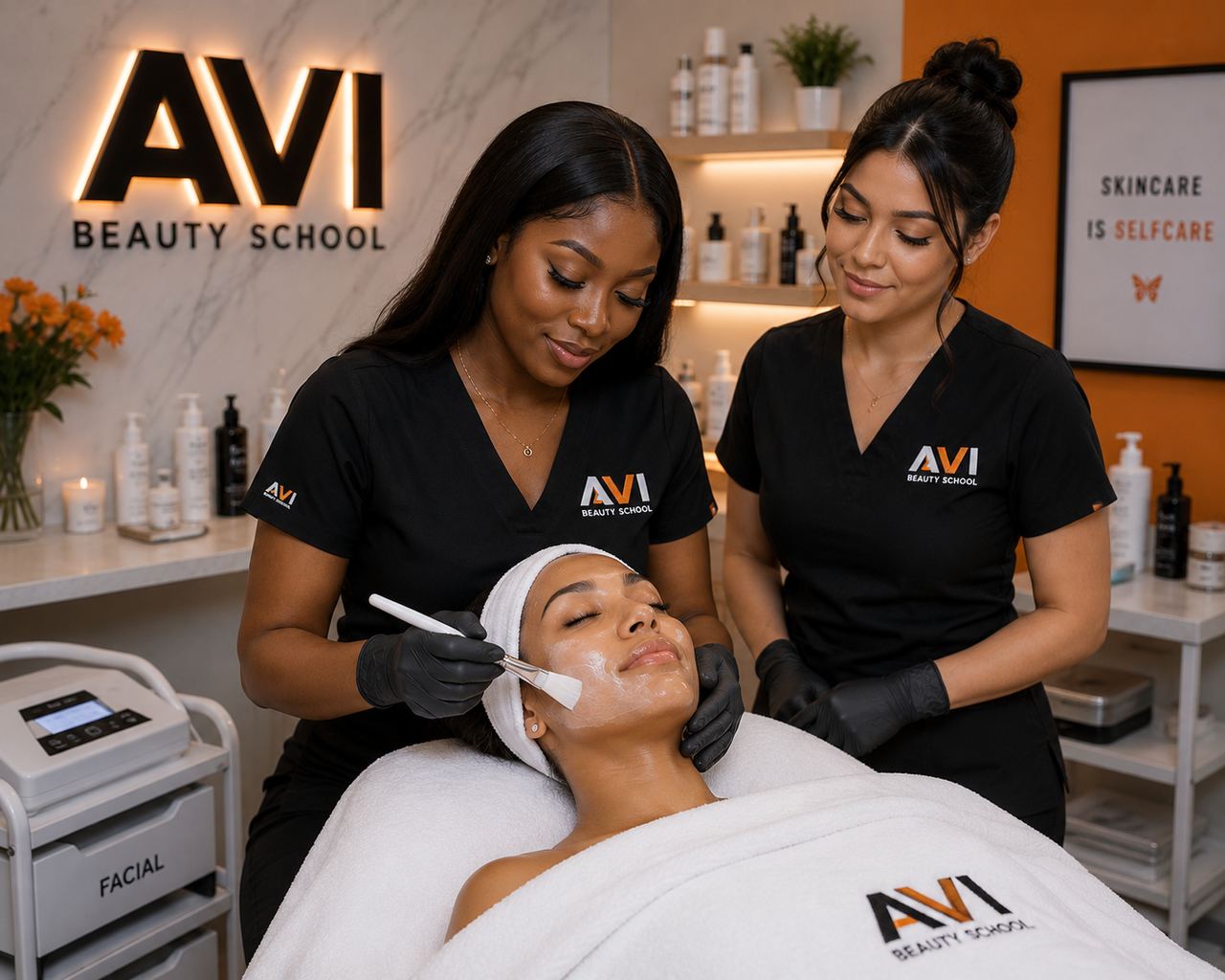
AVI Career Training’s Basic Esthetics program in Vienna, Virginia runs 600 hours — the exact number required by the Virginia Department of Professional and Occupational Regulation (DPOR) to sit for the Virginia State Board exam. You spend those hours learning skin analysis, facial treatments, hair removal, product chemistry, sanitation, and client consultation. Every hour is relevant to your career.
Most students complete the program in a matter of months. That means you could enroll this fall and be a licensed esthetician before the year is out.
A 4-Year University Degree
A bachelor’s degree takes a minimum of four years and requires coursework across subjects that have nothing to do with esthetics — history, math, writing, electives. Some universities offer related degrees in cosmetology management or business, but those programs still don’t satisfy Virginia’s licensing requirement on their own. You’d need additional vocational training on top of the degree to become licensed.
The 4-year path delays your career entry by years. And in esthetics, years of hands-on client experience often matter more than academic credentials.
—
The Real Cost Comparison
The financial gap between these two paths is significant — and most people underestimate how wide it actually is.
What a 4-Year Degree Costs
According to data from the College Board, average annual tuition at a public four-year university runs roughly $10,000–$12,000 for in-state students, and significantly more at private institutions. Over four years, that adds up to $40,000–$100,000+ in tuition alone — before room and board, fees, or textbooks. Many students graduate carrying $30,000 to $50,000 in federal student loan debt.
And that’s the cost for a degree that still doesn’t qualify you to take the Virginia State Board esthetics exam.
What Vocational Esthetics Training Costs
Vocational esthetics programs cost a fraction of university tuition. AVI Career Training encourages prospective students to reach out directly for current program pricing — tuition figures are best discussed one-on-one with admissions so you get accurate, up-to-date numbers.
What’s clear is the broader picture: you spend less money, spend fewer months in school, and start earning your license — and an income — far sooner.
The Time-to-Income Factor
Here’s a comparison that often gets overlooked: opportunity cost. Every year you spend in a 4-year degree program is a year you’re not earning a licensed esthetician’s income. Vocational training students can enter the workforce in the same calendar year they enroll. Over time, that gap in earning — combined with the difference in tuition — is substantial.
Financial Aid at AVI Career Training
AVI accepts federal financial aid and the GI Bill® — making the program accessible to career-changers, working adults, and military veterans across the Northern Virginia and DC metro area. If cost is a barrier, those are real options worth exploring with the AVI admissions team.
—
Virginia Licensing — What the State Actually Requires
Virginia does not require a 4-year degree to become a licensed esthetician — full stop.
The Virginia Department of Professional and Occupational Regulation (DPOR), through the Virginia Board for Barbers and Cosmetology, sets the licensing requirements for estheticians in the state. To become licensed, you must:
1. Complete an approved esthetics training program (minimum 600 hours)
2. Pass the Virginia State Board written and practical exams
That’s it. A bachelor’s degree is not on the list.
AVI Career Training’s Basic Esthetics program meets both criteria. AVI is COE Accredited (by the Council on Occupational Education) and SCHEV Certified (by the State Council of Higher Education for Virginia) — two credentials that confirm the program is approved and that graduates are eligible to sit for the State Board exam.
- Licensing body: Virginia Department of Professional and Occupational Regulation (DPOR) / Virginia Board for Barbers and Cosmetology
- Required training hours: 600 hours at an approved school
- Required exams: Virginia State Board written + practical
- Degree required? No
- AVI’s program status: COE Accredited · SCHEV Certified — approved pathway to licensure
For the most current Virginia licensing requirements, visit the Virginia DPOR website directly.
—
Career Outcomes and Earning Potential
A career in esthetics can be financially strong — and a 4-year degree doesn’t accelerate that outcome.
What the Data Says
The Bureau of Labor Statistics tracks skincare specialists as an occupation and reports median annual wages and employment projections. The BLS currently projects faster-than-average job growth for skincare specialists compared to the overall labor market. For the most current median wage and growth figures, visit BLS.gov — Skincare Specialists.
The DC metro and Northern Virginia market — one of the highest-income regions in the country — also tends to push wages and tips above national averages. The demand for skilled estheticians in Tysons Corner, Arlington, Alexandria, and the broader DMV is real and growing.
Where Estheticians Work
Licensed estheticians work across a wide range of settings:
Each setting carries its own income structure — hourly wages, commission, gratuity, or a combination. Experienced estheticians with strong clientele books can earn well beyond the national median, particularly in high-income markets like Northern Virginia.
The AVI Differentiator: Training for Every Skin Tone
Here’s something most esthetics programs don’t offer — and it directly affects your earning potential in the DC metro market.
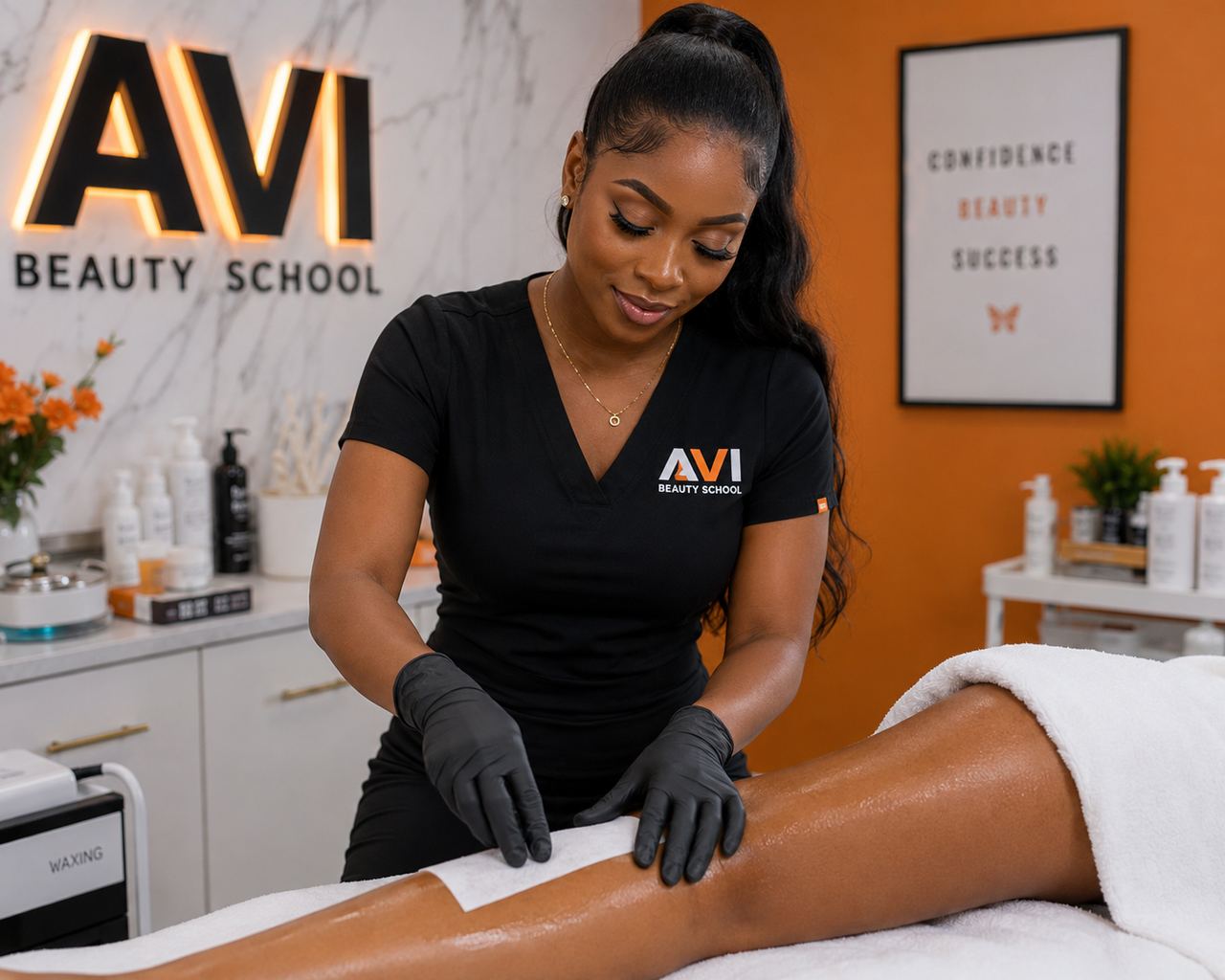
AVI Career Training’s curriculum is built around inclusive esthetics techniques that work on every skin tone. Washington, DC and Northern Virginia are among the most diverse metro areas in the United States. An esthetician trained to confidently serve clients of all backgrounds and skin types has a competitive edge in the local job market that a generic program simply can’t match.
This isn’t just a value statement. It’s a practical career advantage.
—
Mini-Stories: Two Real Decisions, Two Clear Outcomes
The Career Changer: From Office Work to the Treatment Room
Imagine a 34-year-old administrative professional in Fairfax County who has spent a decade in corporate HR and reached a ceiling. She’s passionate about skincare, has been doing her own research for years, and wants a career where she can build real client relationships. She looks at both paths:
Option A: Enroll in a 4-year program at a state university, spend $40,000–$60,000, and graduate at 38 — still needing additional training to get her esthetics license.
Option B: Enroll in AVI Career Training’s Basic Esthetics program, complete 600 hours in months, pass the Virginia State Board exam, and start working at a medical spa in Tysons Corner within the same year she enrolled.
She chooses Option B. Within 18 months of her decision, she has a client book, is earning income she enjoys, and has the freedom to grow toward her own suite someday. The 4-year degree was never the obstacle or the goal. The license was.
The Military Veteran: Using Benefits to Build Something New
Consider a veteran transitioning out of the Army after eight years of service. He’s stationed at Fort Belvoir and settling his family in the Northern Virginia area. He’s always been interested in skincare and wellness — and he wants to use his GI Bill® benefits to build a civilian career without taking on debt.
He discovers that AVI Career Training in Vienna, Virginia accepts the GI Bill® and is COE Accredited — meaning his benefits can apply directly toward his training. He completes the 600-hour program, earns his Virginia esthetics license, and starts working at a high-end spa in the DC metro area. His military discipline translates directly into client trust and professional reliability — qualities that help him build a loyal clientele quickly.
A 4-year degree was never on his radar for this career path. Vocational training was the right fit from day one.
—
Who Vocational Training Is — and Isn’t — the Right Fit For
Vocational esthetics training is the right choice if you:
A 4-year degree may make more sense if you:
If your goal is to be a working, licensed esthetician in Virginia — particularly in the Northern Virginia and DC metro area — vocational training at AVI Career Training is the direct path. The 4-year degree is a detour.
—
Frequently Asked Questions
Q: How long does esthetics school take compared to a 4-year degree?
A: AVI Career Training’s Basic Esthetics program runs 600 hours and takes months to complete — not years. A 4-year university degree takes a minimum of four years. For most esthetics career paths, the vocational program is the faster, more direct route to licensure.
Q: Is vocational training better than a college degree for estheticians?
A: For the purpose of becoming a licensed esthetician in Virginia, yes — vocational training is the direct path. Virginia does not require a 4-year degree for esthetics licensure. It requires 600 hours of approved training and passing the Virginia State Board exam, both of which AVI’s program satisfies.
Q: How much does esthetics school cost vs. a traditional college?
A: A 4-year university degree averages $40,000–$100,000+ in tuition alone. Vocational esthetics programs cost significantly less. Contact AVI Career Training directly at (703) 943-9841 for current tuition figures.
Q: What do you need to become a licensed esthetician in Virginia?
A: You need to complete an approved 600-hour esthetics program and pass the Virginia State Board written and practical exams. Licensing is administered by the Virginia Department of Professional and Occupational Regulation (DPOR) through the Virginia Board for Barbers and Cosmetology.
Q: Can you make a good living as an esthetician without a college degree?
A: Yes. The Bureau of Labor Statistics projects faster-than-average job growth for skincare specialists, and the DC metro market offers strong earning potential through wages, tips, commission, and self-employment. A 4-year degree is not a factor in licensing or client-building success.
Q: Does AVI Career Training accept financial aid or GI Bill®?
A: AVI Career Training accepts federal financial aid and the GI Bill® (including the Post-9/11 GI Bill®). Prospective students should contact admissions to confirm current eligibility and benefit application details.
Q: Is AVI Career Training accredited?
A: Yes. AVI Career Training is COE Accredited (Council on Occupational Education) and SCHEV Certified (State Council of Higher Education for Virginia). These credentials confirm that AVI’s programs are approved pathways to Virginia State Board licensure.
Q: Where is AVI Career Training located?
A: AVI Career Training is located at 1595 Spring Hill Rd #720, Vienna, VA 22182 — convenient to the Tysons Corner area and accessible throughout Northern Virginia and the DC metro region.
—

—
Ready to Take the Direct Path?
If you’ve been weighing your options and you know that becoming a licensed esthetician is the goal — the answer is clear. Virginia requires 600 hours of approved training, not a four-year degree. AVI Career Training’s Basic Esthetics program gives you exactly what you need: hands-on training, inclusive technique instruction for every skin tone, COE accreditation, and a direct path to the Virginia State Board exam.
You could be licensed and working within the same year you start. That’s not a shortcut — that’s the right route.
Have questions before you apply? Call AVI admissions at (703) 943-9841 or reach out online. The team is ready to walk you through the program, tuition, financial aid options, and what your first few months of training will look like.
—
About AVI Career Training
AVI Career Training is a COE-accredited (Council on Occupational Education) and SCHEV-certified (State Council of Higher Education for Virginia) beauty and wellness career school located in Vienna, Virginia. Serving students across Northern Virginia and the greater DC metro area, AVI offers hands-on career training in esthetics, cosmetology, nail technology, massage therapy, cosmetic laser technology, and electrolysis.
AVI’s curriculum is built around inclusive beauty education — training students to work skillfully on every skin tone and serve the full diversity of the DMV’s client population. The school accepts federal financial aid and the GI Bill®, making career training accessible to career-changers, working adults, and military veterans.