AVI Career Training’s esthetics program in Northern Virginia takes students from zero experience to Virginia State Board-ready in as few as four to six months — and for many graduates, the hardest part wasn’t the coursework. It was deciding to start.
If you’ve been circling the idea of becoming a licensed esthetician — researching programs late at night, running the numbers in your head, second-guessing whether this is the right move — this article was written for you. Below, you’ll find an honest look at what the journey actually looks like: the doubts, the training, the turning point, and the career waiting on the other side.
Key Takeaways
- Virginia requires 600 clock hours of esthetics training to sit for the State Board licensing exam
- The Virginia State Board exam includes both a written (theory) and practical component, administered by PSI Exams
- AVI Career Training’s Basic Esthetics program can be completed in approximately 4–6 months full-time
- Licensed estheticians in the Northern Virginia/DC metro area earn approximately $35,000–$55,000+ per year; medical estheticians in NoVA medical spas can reach $50,000–$70,000+ with specialization
- AVI is COE Accredited and SCHEV Certified — flexible payment plans and private financing options are available
She Almost Talked Herself Out of It
Maya had spent eight years working in retail management. She was good at her job. She was also exhausted by it — the overnight shifts, the metrics-driven pressure, the feeling that she was building someone else’s business while her own goals sat untouched.
She had always been drawn to skincare. Not as a hobby, but as something deeper. She’d spent years educating herself on ingredients, helping friends manage hyperpigmentation and acne, and following estheticians on social media who seemed to genuinely love their work. But every time she considered making the switch, a familiar list of objections showed up.
What if I’m too old to start over? She was 34. What if I can’t afford the training? She was a single parent on a tight budget. What if I go through all of this and still can’t find a job?
These doubts aren’t unique to Maya. They’re the same fears that stop thousands of qualified, motivated people from pursuing careers they’d actually thrive in. The fear of starting over. The fear of wasting money. The fear of failing in front of an entirely new audience.
What finally moved Maya forward was a single decision: she would stop researching and start asking real questions. She called AVI Career Training at (703) 943-9841, scheduled a tour of the Vienna, VA campus, and walked in expecting to be talked into something. Instead, she found herself having an honest conversation about program timelines, payment options, and what the first week of training actually looks like.
She enrolled two weeks later. Eighteen months after that first phone call, she was a licensed esthetician working at a medical spa in Tysons Corner.
If you’re in the same place Maya was — curious, cautious, and not quite ready to commit — start your application at AVI Career Training and see what’s actually possible.
What Virginia Actually Requires to Become a Licensed Esthetician
Before you can work as an esthetician in Virginia, you need a license issued by the Virginia Board of Barbering and Cosmetology, which operates under the Virginia Department of Professional and Occupational Regulation (DPOR). Understanding what that license requires takes the mystery out of the path ahead.
The 600-Hour Requirement
Virginia requires 600 clock hours of esthetics training from a state-approved school to be eligible for licensure. These hours must be completed at an institution licensed by the State Council of Higher Education for Virginia (SCHEV) — which AVI Career Training is.
Those 600 hours aren’t filler. They cover a structured curriculum that includes:
- Skin anatomy, physiology, and histology
- Facial treatments and chemical exfoliation
- Hair removal techniques (waxing, threading)
- Makeup application
- Sanitation, disinfection, and Virginia safety standards
- Business and professional ethics
By the time a student completes 600 hours, they’ve moved through foundational theory, practiced techniques in supervised labs, and performed real client services in AVI’s student clinic.
The Virginia State Board Exam
After completing your 600 hours, you’ll apply to take the Virginia State Board exam through PSI Exams. The exam has two parts:
- Written exam (theory): Covers the science and regulatory knowledge taught throughout the program
- Practical exam: A hands-on skills assessment where you demonstrate specific techniques under timed, proctored conditions
Passing both components earns your Virginia esthetics license — the credential that allows you to legally practice and get hired. You can verify current requirements directly with Virginia DPOR.
Why Accreditation Matters
Not all beauty schools are equal in the eyes of the Virginia State Board. Enrolling in a COE-accredited, SCHEV-certified school like AVI Career Training means your training hours will be recognized, your credits are protected, and you’ll have access to flexible payment options and private financing. Those aren’t small details — they’re the foundation of a credential that employers and clients can trust.
What the Training Actually Feels Like
One of the most common surprises students report is how quickly the classroom starts to feel like a professional environment. The early weeks focus on theory — skin biology, ingredient science, sanitation protocols — and some students worry that the science-heavy content will be overwhelming. Most find that it clicks faster than expected, especially once they begin connecting the theory to hands-on practice.
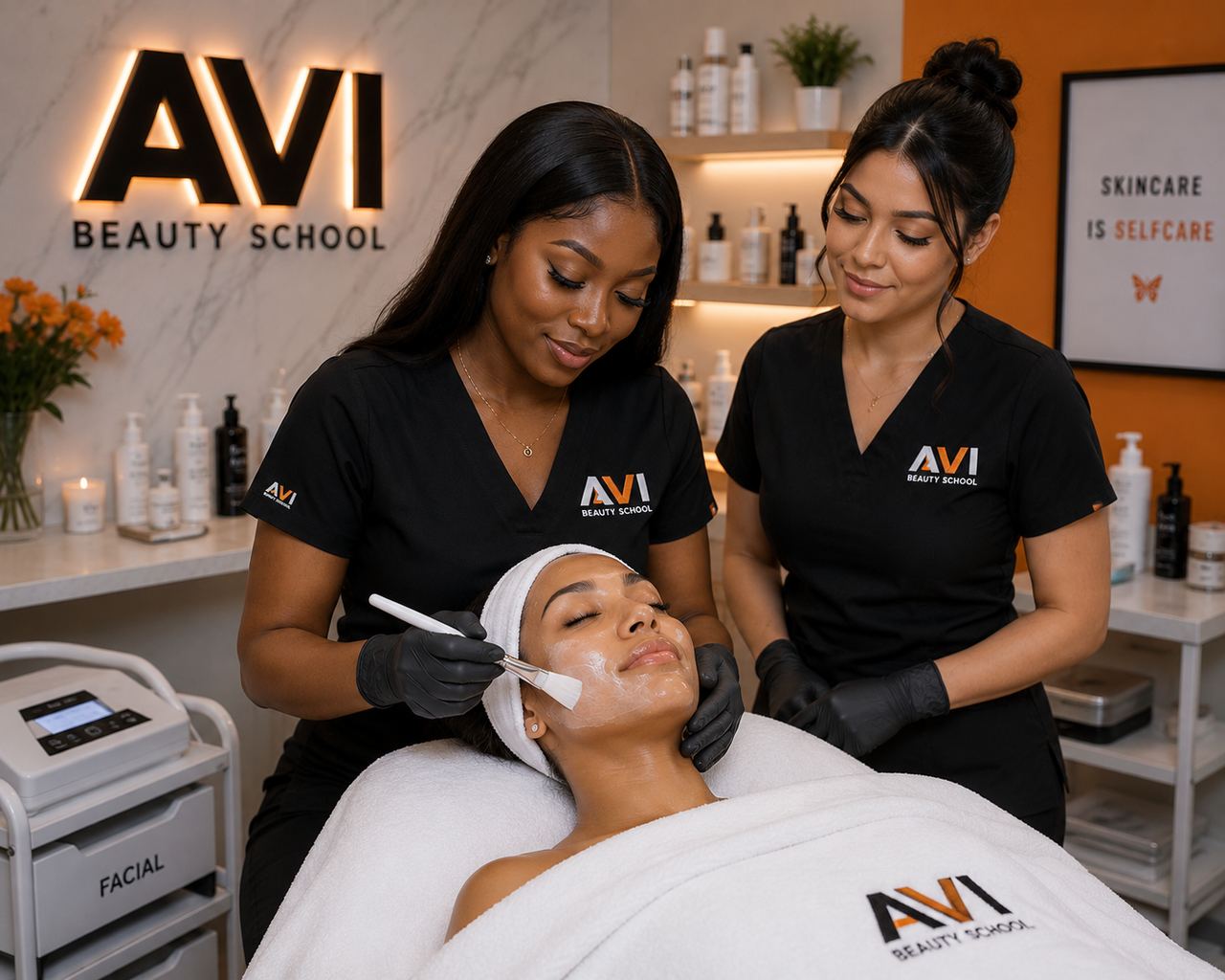
By the midpoint of the program, students are performing facial treatments, practicing hair removal techniques, and refining their client communication skills. The repetition builds confidence in a way that reading alone never could. Students who came in unsure of their technical ability often describe the practical labs as the moment the career started feeling real.
The final stretch of training sharpens both skill and professionalism. Students learn to manage a client experience from consultation to checkout, handle feedback gracefully, and hold themselves to the standards the industry expects. By the time graduation approaches, most students aren’t just ready for the State Board exam — they’re ready to work.
Where a Basic Esthetics License Can Take You
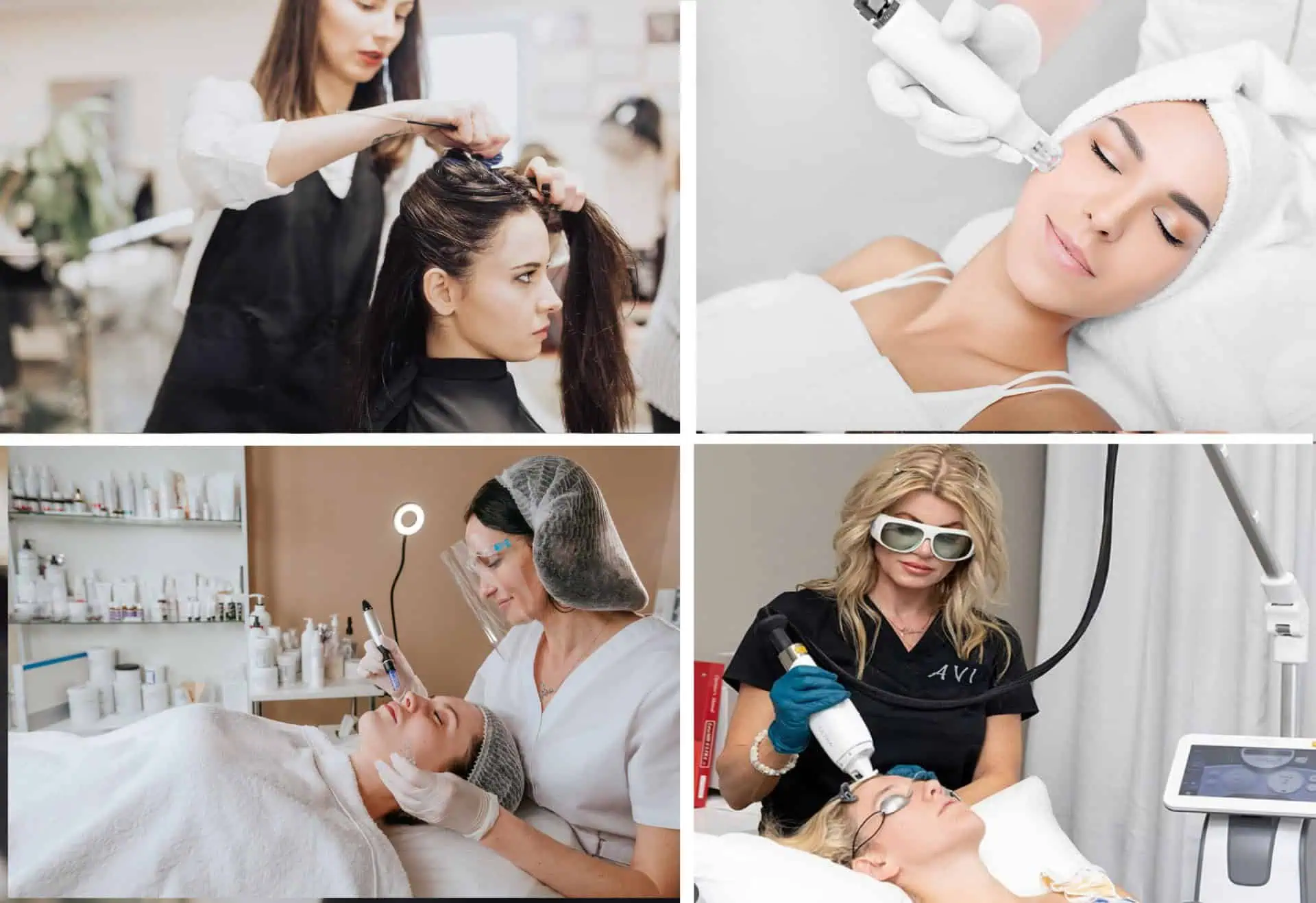
A Virginia esthetics license opens doors across a wide range of settings. Licensed estheticians work in day spas, resort spas, dermatology offices, plastic surgery practices, medical spas, salons, and retail skincare environments. Some build independent clientele and rent booth space. Others move into product education or brand representation.
For those who want to go further, AVI Career Training also offers a Master Esthetics program (600 clock hours) that expands your scope of practice into more advanced treatments. And for students drawn to laser and light-based services, the Advanced Esthetic Laser program (900 clock hours) provides deep preparation for working in medical aesthetic settings — though Virginia does not issue a separate state license for laser services, so practitioners typically work under physician oversight.
The point is that a Basic Esthetics license is not a ceiling. It is a starting point with a great deal of room to grow.
Common Doubts — and Honest Answers
Am I too old to start? AVI students come from every stage of life. Career changers in their 30s, 40s, and beyond bring maturity, work ethic, and client communication skills that younger students are still developing. Age is rarely the obstacle it feels like.
What if I have no background in skincare? The program is designed for students with zero prior experience. You do not need a cosmetology background, a science degree, or any previous beauty training to enroll.
What if I fail the State Board exam? Preparation is built into the program. Students who engage fully with the curriculum — attending consistently, practicing techniques, and reviewing theory — enter the exam with a solid foundation. The written and practical components are challenging, but they are designed to test skills that the training directly covers.
Ready to Stop Researching and Start Training?
The gap between where you are now and where Maya ended up is not as wide as it feels. It starts with a single decision to ask real questions instead of letting doubt make the choice for you.
AVI Career Training’s Basic Esthetics program is 600 clock hours, designed to take you from no experience to Virginia State Board-ready. If you want to go further, Master Esthetics and Advanced Esthetic Laser programs are available to build on that foundation. These are the lengths of AVI’s programs; applicants should confirm current licensure requirements with DPOR.
If you’re ready to take the next step, apply online at AVI Career Training. If you have questions about the program, scheduling, or what to expect on your first day, reach out to the AVI team — they’re there to give you straight answers, not a sales pitch.
Your license is on the other side of a decision you can make today.