Esthetics School in Northern Virginia: Launch Your Skincare Career
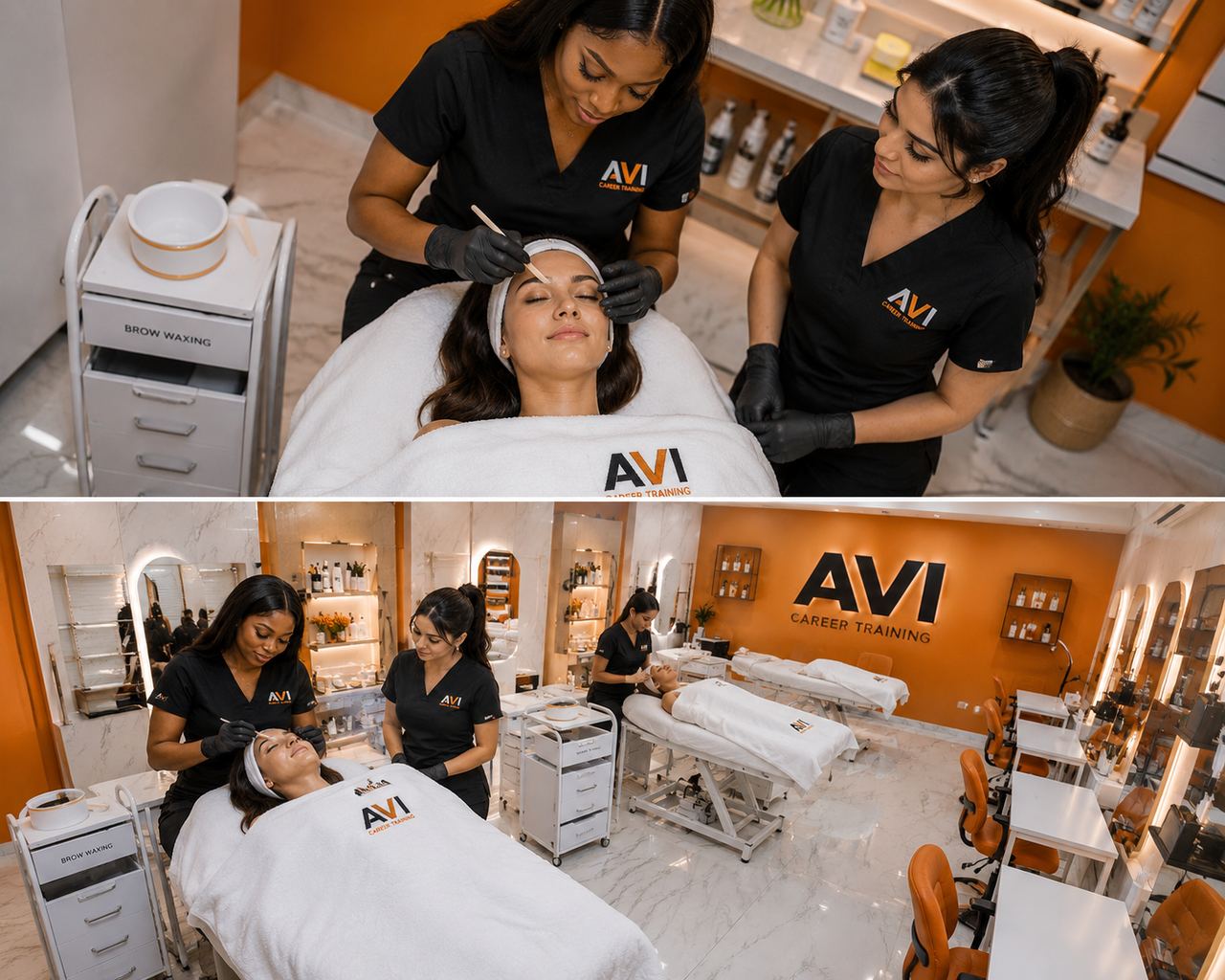
If you’re searching for an esthetics school in Northern Virginia, AVI Career Training in Vienna, VA offers a hands-on, COE-accredited Basic Esthetics program designed to take you from zero experience to Virginia State Board–ready — in months, not years.
The Northern Virginia skincare market is thriving. From Tysons Corner luxury spas to medical aesthetic clinics along the I-495 corridor, demand for skilled, licensed estheticians continues to grow — and wages here consistently exceed national averages. The question isn’t whether there’s opportunity. It’s whether you’re trained and licensed to claim it.
This guide walks you through everything you need to know: what estheticians actually do, Virginia’s exact licensing requirements, what to look for in a local program, and how AVI’s esthetics training prepares you to compete in one of the strongest beauty markets on the East Coast.
Key Takeaways
- Virginia requires 600 clock hours of training from a board-approved school to sit for the esthetician licensing exam
- Full-time students can complete the program in approximately 4–6 months
- The national median wage for skincare specialists is approximately $42,000/year — Northern Virginia rates run higher
- AVI Career Training is COE Accredited and SCHEV Certified, based in Vienna, VA near Tysons Corner
- Federal financial aid is NOT available for AVI’s Basic Esthetics program — see tuition and payment options in the program section below
Apply to AVI’s Esthetics Program →
—
What Does an Esthetician Actually Do?
An esthetician is a licensed skincare professional trained to analyze skin conditions, perform therapeutic treatments, and help clients look and feel their best — without crossing into medical procedures.
That scope is broader than most people expect. Licensed estheticians in Virginia can perform:
What estheticians do not do: diagnose medical conditions, prescribe treatments, or perform invasive procedures. That line separates esthetics from dermatology — but it leaves a wide, lucrative lane for skilled professionals.
Esthetician vs. Cosmetologist: What’s the Difference?
This is one of the most common questions prospective students ask — and it matters for your career path.
A cosmetologist holds a broader license covering hair cutting, coloring, chemical services (perms, relaxers), nail services, and basic skin treatments. In Virginia, cosmetology requires 1,500 clock hours of training.
An esthetician specializes exclusively in skin. The Virginia license requires 600 clock hours — less training time, lower tuition, and a faster path to employment in the specific field you want to work in.
If your passion is skincare, facial treatments, and helping clients with their skin health, the esthetics license is the focused, efficient path. Cosmetology makes sense if you want the full breadth of hair, skin, and nails under one license.
—
Virginia Esthetician License Requirements
To practice as a licensed esthetician in Virginia, you must meet the requirements set by the Virginia Board for Barbers and Cosmetology, which operates under the Virginia Department of Professional and Occupational Regulation (DPOR).
Here’s exactly what’s required:
from a Board-Approved School
Written + Practical
in Virginia
Step 1: Complete 600 Clock Hours
You must complete 600 clock hours of esthetics training at a school approved by the Virginia Board for Barbers and Cosmetology. Self-study or online-only programs do not qualify. Your training must include hands-on, practical instruction.
Step 2: Pass the Two-Part State Board Exam
The Virginia esthetician licensing exam has two components:
Both parts must be passed to receive your license.
Step 3: Renew Every Two Years
Virginia esthetician licenses must be renewed on a two-year cycle. Renewal typically requires a renewal fee and may include continuing education requirements — check the Virginia DPOR website for current renewal specifics.
—
What to Look for in a Northern Virginia Esthetics Program
Not every esthetics program is built the same — and in the DC metro market, where employers are selective and clients are demanding, the school you choose matters.
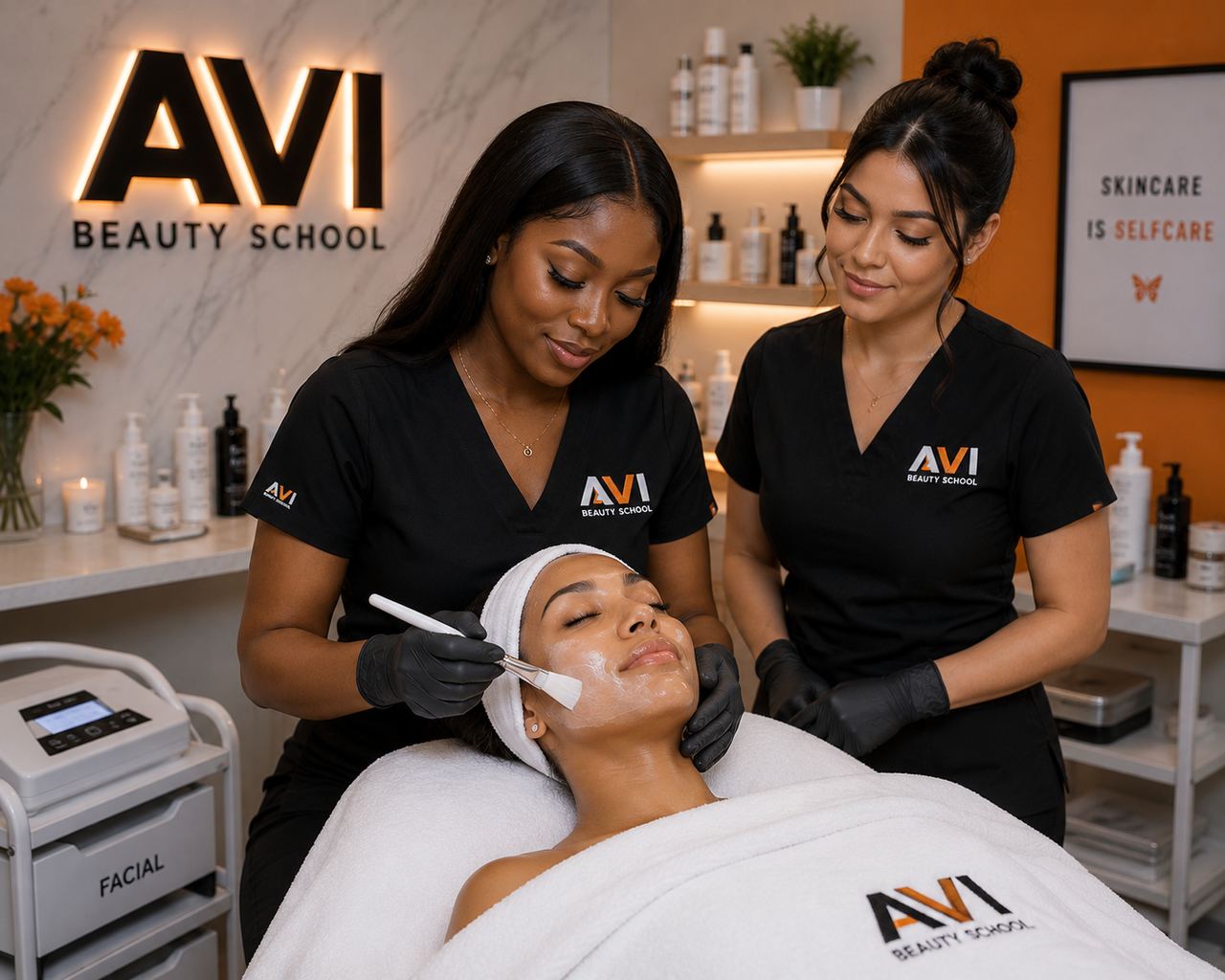
Here are the five criteria that separate a career-launching program from a credential-only experience:
1. Accreditation — COE or ACICS
Accreditation from a recognized body like the Council on Occupational Education (COE) tells you the school has been evaluated against rigorous standards for curriculum quality, instructor credentials, student outcomes, and institutional integrity. COE accreditation isn’t self-reported — it’s independently verified.
When an employer sees a COE-accredited school on your resume, it signals that your training met a recognized national standard. That matters in competitive markets like Northern Virginia.
2. Inclusive Skin-Tone Training
This is a genuine differentiator — and one that’s often overlooked. Many programs default to a narrow curriculum that doesn’t adequately prepare students to work with the full range of skin tones, melanin levels, and skin concerns that clients in diverse, multicultural markets like Northern Virginia actually present.
A quality program explicitly trains you to analyze and treat all skin tones: understanding how hyperpigmentation presents differently on darker skin, how ingredient selection varies by melanin level, and how to customize protocols that genuinely work for every client.
In the DC metro area — one of the most diverse markets in the country — this isn’t a bonus feature. It’s a baseline professional requirement.
3. Real Clinic Hours, Not Just Classroom Time
Theory matters — but esthetics is a hands-on profession. Your program should include substantial clinic hours where you practice on real clients under licensed instructor supervision. The more treatments you perform before graduation, the more confident and employable you’ll be on day one.
4. Licensed, Working-Industry Instructors
Your instructors should be licensed professionals with real-world experience — not just educators who stopped practicing years ago. Current industry knowledge matters because skincare technology, product science, and client expectations evolve quickly.
5. Location and Schedule That Work for Your Life
A school in Vienna, VA — sitting at the edge of Tysons Corner and close to the Fairfax County employment hub — puts you in the center of the Northern Virginia job market from day one. You’ll build relationships with local employers, and your commute to internships, clinics, and post-graduation jobs stays short.
—
Esthetician Career Paths and Earning Potential in the DC Metro Area
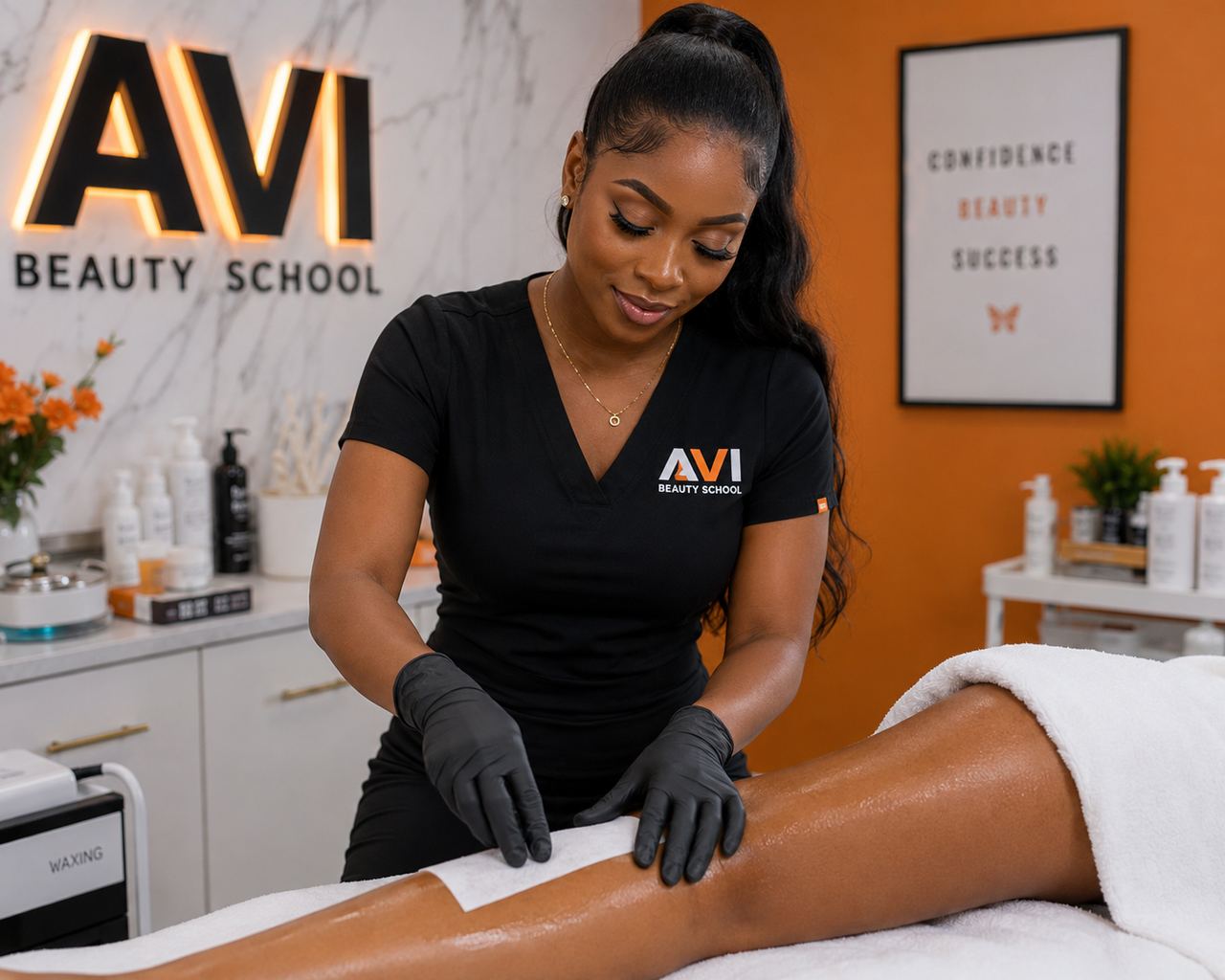
A Virginia esthetician license opens doors to a wide range of work settings — each with different income potential, day-to-day experiences, and growth trajectories.
Where Estheticians Work in Northern Virginia
Day Spas and Luxury Spas: The Tysons Corner and Northern Virginia corridor is home to dozens of high-end day spas serving clients from McLean, Great Falls, Arlington, and across Fairfax County. These positions typically offer a base wage plus commission on services and retail sales.
Medical Spas (Med Spas): This is the fastest-growing segment of the esthetics industry in the DMV area. Medical spas offer treatments like microneedling, chemical peels, and laser-adjacent services — often pairing licensed estheticians with nurse practitioners or physicians. Compensation in medical spa settings tends to run higher than traditional day spas.
Dermatology and Plastic Surgery Clinics: Licensed estheticians working alongside dermatologists or cosmetic surgeons handle pre- and post-procedure skin prep, maintenance facials, and patient education. These roles require strong clinical knowledge and precision — exactly what hands-on training prepares you for.
Hotel and Resort Spas: The Northern Virginia and DC metro area’s hotel corridor — including properties near Dulles and Tysons — employs estheticians for resort-level spa services, often with strong hourly rates and tips.
Self-Employment and Suite Rental: Experienced estheticians in the DC area are increasingly opening private suites — renting booth or suite space to build their own client roster, set their own hours, and keep a larger share of their revenue.
What Estheticians Earn in Northern Virginia
According to the U.S. Bureau of Labor Statistics, the national median annual wage for skincare specialists is approximately $42,000 per year — but that national figure understates earning potential in high-cost, high-demand markets like Northern Virginia.
The DC metro area consistently ranks among the top markets in the country for skincare specialist wages, driven by the concentration of medical spas, high household incomes, and strong client willingness to invest in skincare. Estheticians in established medical spa or luxury spa positions in Northern Virginia frequently earn above the national median, with experienced professionals in specialized roles earning $55,000–$70,000 or more — particularly when commission and tips are factored in.
A Note on Growth
The BLS projects steady demand for skincare specialists nationally through 2032, driven by aging populations, growing consumer interest in preventive skincare, and the continued expansion of the medical aesthetics market. Northern Virginia’s demographics — high income levels, a dense professional-class population, and proximity to DC — position local estheticians especially well.
—
AVI Career Training’s Basic Esthetics Program in Vienna, VA
AVI Career Training’s Basic Esthetics program (NO FINANCIAL AID FOR THIS PROGRAM) is a hands-on, Virginia Board for Barbers and Cosmetology–approved training program based at AVI’s campus at 1595 Spring Hill Rd, Vienna, VA 22182 — just minutes from Tysons Corner.
The program is built around the exact 600 clock hours Virginia requires to sit for the state licensing exam, with a curriculum that goes beyond the minimum to prepare you for real clients in real workplaces.
What’s Covered in the Curriculum
AVI’s Basic Esthetics training covers:
The curriculum is built to serve every client — with specific attention to how treatments are adapted for melanin-rich skin and diverse skin tones. In a market as diverse as Northern Virginia, this isn’t optional. It’s the standard every esthetician should meet.
Inclusive Training as a Professional Advantage
AVI’s instructors are licensed industry professionals who bring current, real-world experience into every class. The school’s commitment to inclusive training — preparing students to work beautifully on every skin tone — reflects both the demographics of the Northern Virginia/DC metro market and AVI’s core educational values.
Meet Simone: Simone had been working in retail for six years before she decided she wanted a career she could build on her own terms. She enrolled in AVI’s Basic Esthetics program (NO FINANCIAL AID FOR THIS PROGRAM) with no prior beauty school experience, drawn by the Vienna campus’s location near Tysons and AVI’s focus on inclusive skin training. Within weeks of graduating and passing her Virginia State Board exam, she landed a position at a medical spa in McLean — where her ability to confidently work with clients across all skin tones immediately set her apart. “Most of the other candidates they interviewed couldn’t speak to melanin-rich skin the way I could,” she said. “That’s what I learned at AVI.”
Program Timeline
Full-time students in AVI’s Basic Esthetics program typically complete the required 600 clock hours in approximately 4–6 months, depending on their schedule. That’s a fast, focused path — in as few as four months, you could be sitting for your Virginia State Board exam and beginning your career.
A Career Change That Happened Fast: Marcus had spent over a decade in hospitality management when the pandemic shifted his perspective on career stability. At 38, he enrolled in AVI’s esthetics training in Vienna, skeptical about whether a career change made sense at his stage of life. He completed the 600 hours while working part-time, passed both parts of the Virginia State Board exam on his first attempt, and transitioned into a position at a hotel spa near Dulles — where his hospitality background gave him an immediate edge with clients. “I wish I’d done it ten years earlier,” he said. “But honestly, the timing was right.”
Tuition and Financial Aid
Important: AVI’s Basic Esthetics program is under 600 hours and does not qualify for federal financial aid (Title IV / FAFSA). Federal student aid, including Pell Grants and federal student loans, is not available for this program.
Payment options for eligible students include:
Contact AVI admissions at (703) 943-9841 or visit avi.edu/apply to get current tuition figures and available payment arrangements. The admissions team will walk you through your options directly.
> Note on GI Bill®: While AVI accepts the GI Bill® for eligible programs, please confirm directly with AVI admissions whether the Basic Esthetics program qualifies for GI Bill® benefits, as eligibility depends on program-specific VA approval.
Accreditation and Credentials
AVI Career Training holds accreditation from the Council on Occupational Education (COE) and is certified by the Virginia State Council of Higher Education for Virginia (SCHEV). The Basic Esthetics program is approved by the Virginia Board for Barbers and Cosmetology, making graduates eligible to sit for the Virginia esthetician licensing exam upon completion.
For a broader look at AVI’s programs and mission, visit avicareertraining.com or learn more about AVI Career Training, including instructor credentials and accreditation details.
—
Frequently Asked Questions
Q: How many hours do you need to become an esthetician in Virginia?
A: Virginia requires 600 clock hours of esthetics training from a school approved by the Virginia Board for Barbers and Cosmetology. You must complete these hours before you can sit for the Virginia esthetician licensing exam.
Q: How long does esthetician school take in Northern Virginia?
A: Full-time students at AVI Career Training in Vienna, VA typically complete the 600-hour program in approximately 4–6 months. Part-time schedules take longer. Contact AVI admissions at (703) 943-9841 to ask about current schedule options.
Q: What can you do with an esthetician license in Virginia?
A: A Virginia esthetician license qualifies you to work in day spas, medical spas, dermatology clinics, hotel spas, and as a self-employed suite renter. Common services include facials, skin analysis, chemical exfoliation, waxing, and lash/brow treatments.
Q: Is esthetician school worth it financially in Northern Virginia?
A: For most students, yes. The DC metro area is one of the strongest skincare markets in the country, with wages that consistently exceed the national median of approximately $42,000/year. The 4–6 month training timeline and focused license make esthetics one of the stronger ROI paths in beauty education.
Q: What’s the difference between a cosmetologist and an esthetician?
A: A cosmetologist holds a broader license covering hair, nails, and basic skin services — requiring 1,000 clock hours in Virginia. An esthetician specializes exclusively in skin and requires 600 clock hours. If skincare is your focus, the esthetics license is the faster, more targeted path.