Esthetics School Near Washington DC: What to Look For
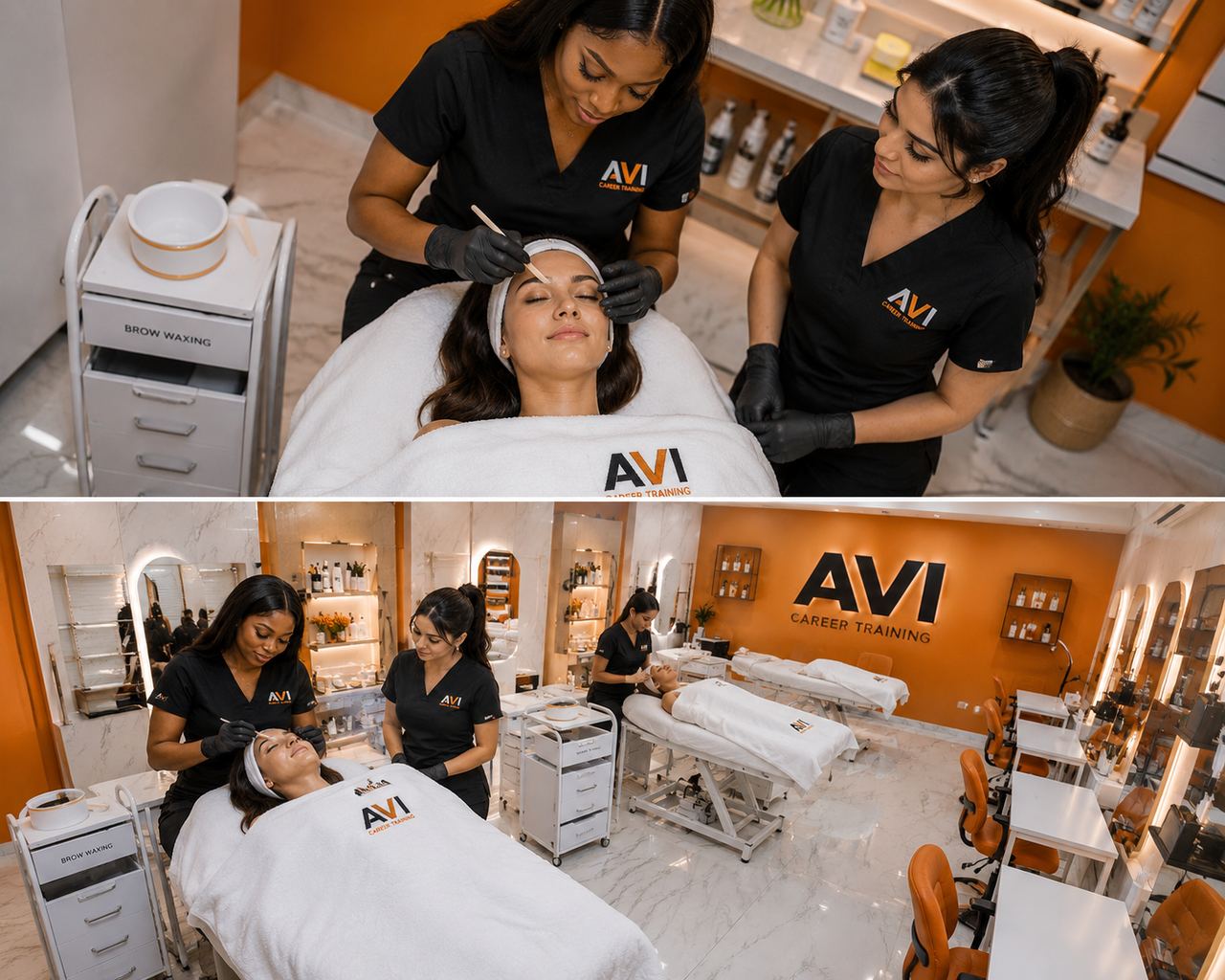
If you’re searching for an esthetics school near Washington DC, AVI Career Training in Vienna, Virginia offers a COE-accredited, 600-hour Basic Esthetics program designed to take you from zero experience to Virginia State Board-ready — right in the heart of the DC metro area.
The DC metro is one of the strongest beauty markets in the country. Spas, medical aesthetics clinics, and luxury salons are everywhere from Arlington to Bethesda to Tysons Corner. But with so many training options out there, knowing what actually separates a strong esthetics program from a forgettable one can save you months of wasted time — and thousands of dollars.
This guide breaks down exactly what to look for, what Virginia requires for licensure, and why your school choice matters far more than most people realize.
- Virginia requires 600 hours of esthetics training to sit for the state board exam
- COE accreditation signals quality, credentialed instructors, and institutional accountability
- AVI Career Training’s Basic Esthetics program is COE-accredited and SCHEV-certified, located in Vienna, VA — minutes from Tysons Corner
- Estheticians in the Washington-Arlington-Alexandria metro area earn roughly $35,000–$60,000+ depending on specialization and setting (verify current figures at BLS.gov before publishing)
- GI Bill® is accepted at AVI — a major benefit for Northern Virginia’s large veteran community
Ready to take the first step? Apply to AVI Career Training today and start your esthetics career in the DC metro area.
—
What Does an Esthetics Program Actually Cover?
A quality esthetics program teaches you the clinical and hands-on skills to analyze, treat, and care for skin professionally — and Virginia’s 600-hour requirement ensures programs go deep enough to prepare you for real work.
Here’s what a comprehensive esthetics curriculum should cover:
- Skin analysis and consultation — identifying skin types, tones, and conditions
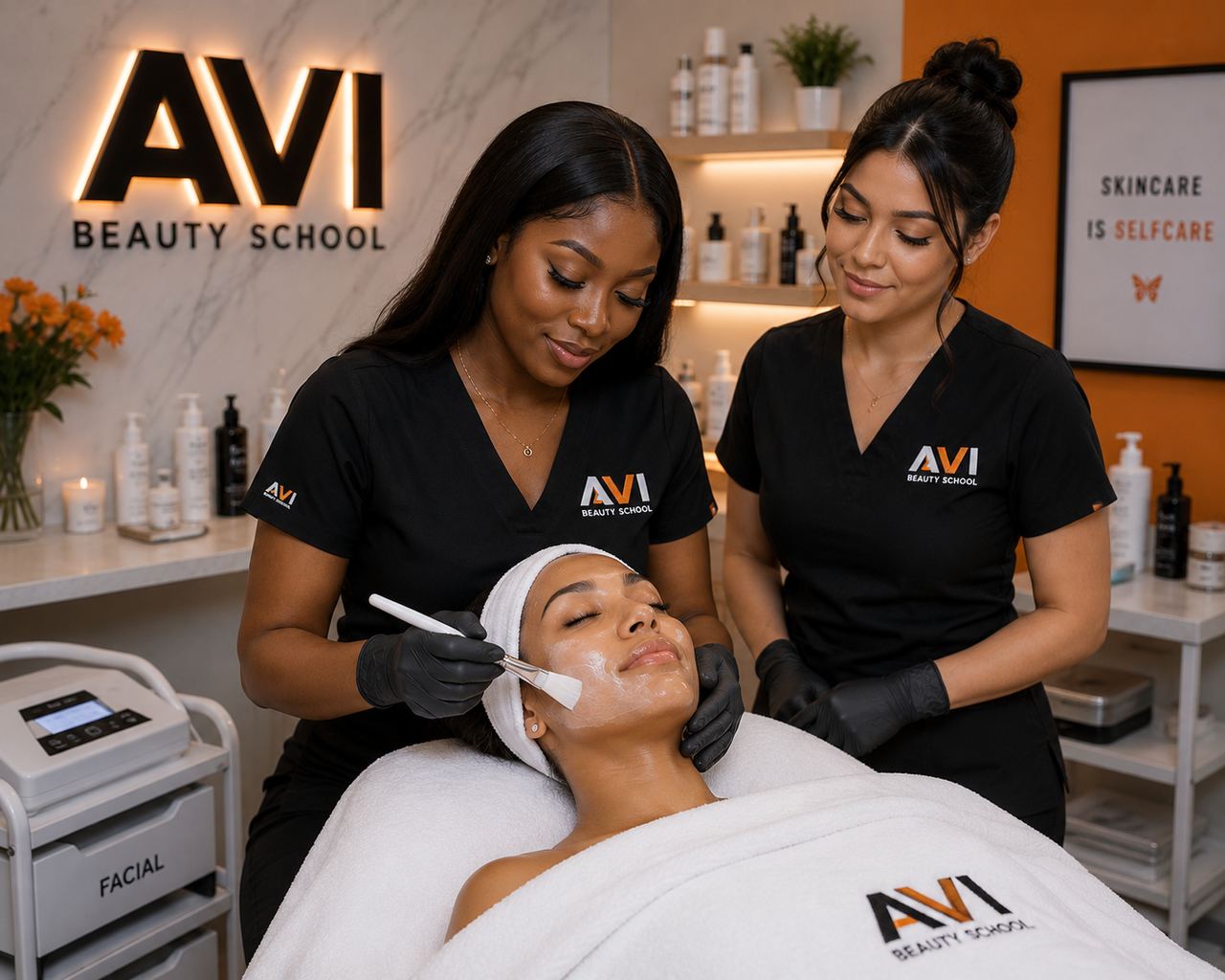
- Facial treatments — cleansing, extraction, massage, and masking techniques
- Chemical exfoliation — understanding acids, peels, and their safe application
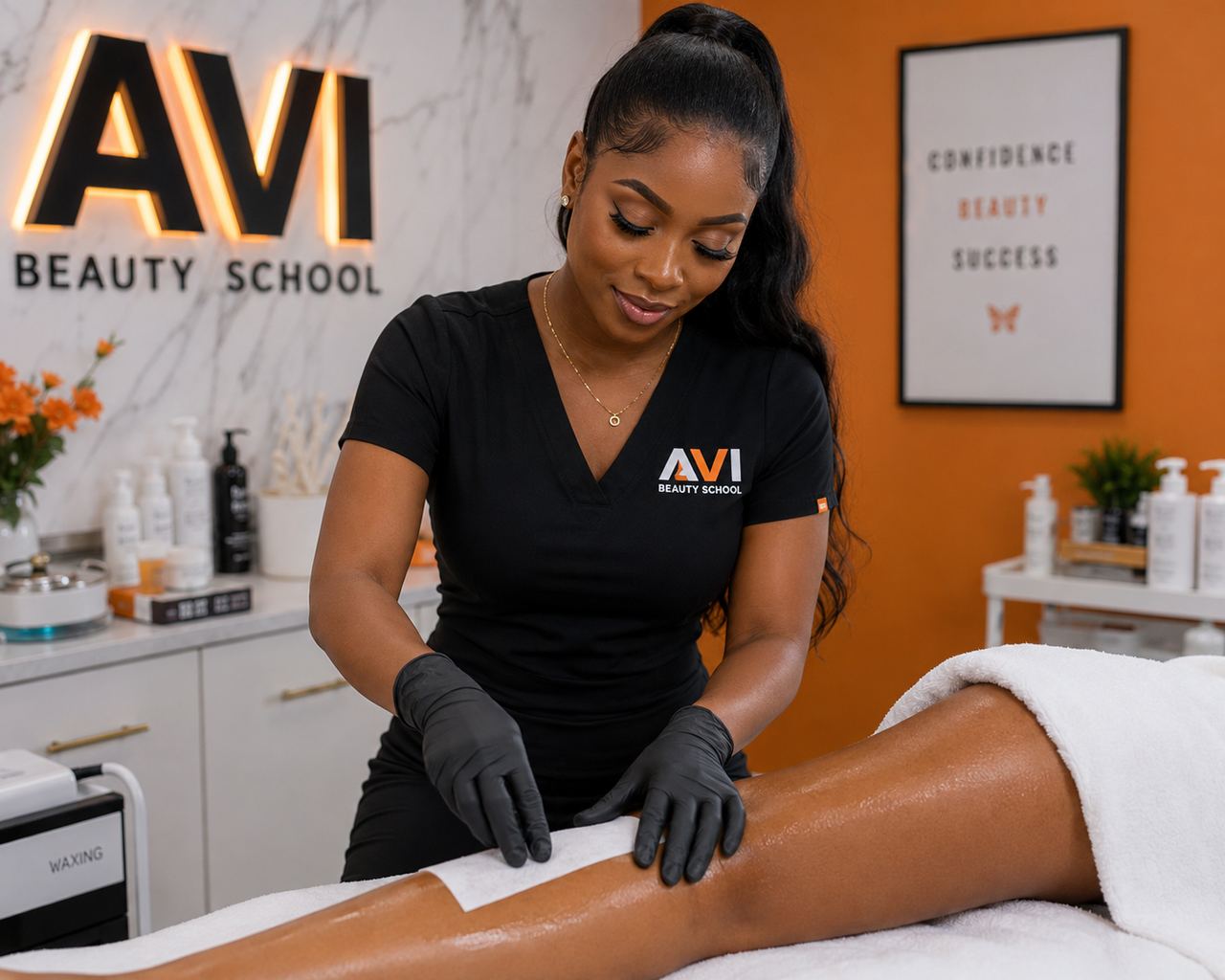
- Waxing — face and body hair removal techniques
- Lash and brow services — tinting, shaping, and application
- Sanitation and infection control — state board-required safety protocols
- Product knowledge — understanding ingredients and their effects on different skin types
That last point matters more than most students expect. Learning to read ingredient labels and match products to diverse skin tones is a practical skill that separates good estheticians from great ones. Not every program emphasizes this equally.
Virginia’s 600-hour requirement also means you’ll spend significant time in a supervised clinical setting — not just a classroom. That hands-on time is what actually builds the muscle memory and client confidence you need on day one of your career.
—
Why Accreditation Matters More Than You Think
Accreditation is the single most important credential a school can hold — and it affects your career in ways that go far beyond a piece of paper on the wall.
What COE Accreditation Actually Means
The Council on Occupational Education (COE) is a nationally recognized accrediting body that evaluates schools on curriculum quality, instructor qualifications, student outcomes, and institutional integrity. COE-accredited schools meet standards that non-accredited programs simply are not required to meet.
For students, COE accreditation means:
- Your training credential carries weight with employers, licensing boards, and future continuing education programs
- GI Bill® benefits can be applied — only accredited institutions are approved for veteran education benefits
- Institutional accountability — accredited schools are reviewed regularly and must meet ongoing standards
COE vs. Non-Accredited: The Real Difference
A non-accredited program may still teach valid techniques. But without accreditation, you can’t access federal Title IV financial aid, you may face questions from employers, and your credential doesn’t carry the same third-party validation. For a career investment of this size, that difference is significant.
> Note on financial aid: AVI Career Training’s Basic Esthetics program (NO FINANCIAL AID FOR THIS PROGRAM) is under 600 hours of total program length and therefore does not qualify for federal Title IV financial aid or FAFSA. See the financial aid section below for available options.
AVI Career Training is both COE-accredited and certified by the State Council of Higher Education for Virginia (SCHEV). That dual credential is a meaningful signal — it means the school has been evaluated and approved at both the national occupational level and the state level in Virginia.
—
5 Things to Look for in an Esthetics School Near DC
Not all esthetics programs are built the same. Here are five criteria to evaluate any school before you commit.
1. Accreditation Status
Start here. Ask specifically whether the school is COE-accredited or state-approved only. Both are legally permitted to train students, but COE accreditation signals a higher level of external accountability and opens more doors post-graduation — including veteran benefits.
2. Inclusive Curriculum (Skin Tone Diversity)
This is a critical differentiator that most prospective students don’t think to ask about. The DC metro area is one of the most diverse markets in the country. If you graduate only knowing how to treat one skin type, you’re walking into your career with a serious blind spot.
Look for programs that explicitly train students to work on all skin tones — including understanding how conditions like hyperpigmentation, sensitivity, and melanin response present differently across different skin types. AVI Career Training builds inclusive technique training into its core curriculum, not as an afterthought.
3. Hands-On Clinical Hours
Classroom instruction is necessary. But the skills that actually get you hired come from supervised hands-on practice on real clients. Ask any school you’re considering how much of their 600-hour program is clinical versus lecture. The more clinical hours, the better prepared you’ll be.
4. State Board Exam Preparation
Virginia’s state board exam has both a written and a practical component administered through the Virginia Department of Professional and Occupational Regulation (DPOR). Your school should be actively preparing you for both. Ask whether state board prep is integrated into the curriculum or offered as a separate, optional session.
5. Financial Transparency and Payment Options
Good schools are upfront about total program cost, what’s included, and how you can pay. If a school is vague about tuition or implies financial aid availability without confirming it, that’s a flag. Ask directly: What is the total cost? What payment plans are available? Does the school accept GI Bill® benefits?
—
What Virginia’s Licensing Requirements Mean for Your School Choice
Virginia’s esthetics licensing requirements are set by the Virginia Department of Professional and Occupational Regulation (DPOR) — the state agency that governs professional licensing across industries, including cosmetology and esthetics.
How Long Does It Take to Become an Esthetician in Virginia?
To sit for the Virginia State Board esthetician exam, you must complete a minimum of 600 hours of approved esthetics training from a state-authorized program. Most students complete a 600-hour program in roughly six to nine months, depending on whether they attend full-time or part-time.
After completing your program hours, you’ll apply to DPOR and sit for:
- A written examination — covering theory, skin science, sanitation, and applicable Virginia law
- A practical examination — demonstrating hands-on technical competency
Passing both components earns you your Virginia esthetician license.
Why This Matters for Choosing a School
Choosing an accredited esthetics program in the DC metro area means you’re training in Virginia under Virginia-approved standards — which is exactly what DPOR requires. You don’t need to travel to Richmond, enroll in an online-only program, or attend a school in Maryland or DC and then navigate reciprocity paperwork.
Staying local also means you can start building your professional network in the exact market where you plan to work. Northern Virginia’s spa and aesthetics market is dense, competitive, and growing — and the relationships you build during training matter.
—
Two Students. Two Starting Points. One Clear Path.
Real careers start from real situations. Here are two examples of the kinds of students who thrive in AVI’s Basic Esthetics program.
Destiny, 24, Arlington, VA had been working retail for two years and kept coming back to her passion for skincare. She’d spent hours on YouTube watching chemical peel tutorials and learning ingredient science on her own. But she knew she needed formal training and a Virginia license to actually work in a clinical spa setting. She enrolled in AVI’s Basic Esthetics program, completed her 600 hours over seven months, passed both components of the Virginia State Board exam on her first attempt, and landed a position at a medical aesthetics clinic in Tysons Corner within six weeks of getting licensed.
Marcus, 38, Fairfax, VA retired from the Army after 16 years and wasn’t interested in sitting behind a desk. He’d always had a knack for detail work and wanted a career where he could use his hands and interact with clients one-on-one. He discovered AVI through a search for GI Bill®-accepted schools in Northern Virginia, confirmed that his Post-9/11 GI Bill® benefits applied to the esthetics program, and enrolled. He completed his training, earned his Virginia license, and now works at a luxury day spa in the Reston Town Center area.
Both paths are real. Both are achievable. The common thread is completing a quality, accredited program that prepares you fully for the state board exam and the job market.
—
AVI Career Training — Esthetics Training in Northern Virginia
AVI Career Training is the DC metro area’s COE-accredited, SCHEV-certified esthetics school — located in Vienna, Virginia, less than three miles from Tysons Corner and easily accessible via I-66 and Route 7. (Verify exact distance with client before publishing.)
The Basic Esthetics Program
AVI’s Basic Esthetics program (NO FINANCIAL AID FOR THIS PROGRAM) is a 600-hour, hands-on program designed to prepare students for the full Virginia State Board esthetician licensing exam. The curriculum covers:
- Skin analysis and facial treatments
- Chemical exfoliation and peeling techniques
- Waxing and hair removal services
- Lash and brow services
- Inclusive skincare techniques for all skin tones
- Sanitation, safety, and Virginia-specific regulatory requirements
- State board written and practical exam preparation
The program is taught by licensed industry professionals — not just instructors with academic backgrounds, but working estheticians who understand what the job actually looks like day-to-day.
What Makes AVI Different
Inclusive training by design. AVI’s curriculum is built around training students to work confidently on every skin tone. In a market as diverse as the DC metro area, this isn’t optional — it’s essential.
Veteran-friendly. AVI accepts GI Bill® benefits, including the Post-9/11 GI Bill®. Northern Virginia has one of the largest veteran populations in the country, and AVI is a school that actively serves that community.
Location that works for real life. Vienna, VA sits at the center of Northern Virginia’s major corridors. Whether you’re coming from Arlington, Fairfax, Falls Church, Reston, or commuting in from DC, AVI is accessible without the drive to Richmond or Fredericksburg.
Tuition and Payment Options
Important note: AVI’s Basic Esthetics program (NO FINANCIAL AID FOR THIS PROGRAM) is under the federal threshold for Title IV financial aid eligibility. This means federal student aid (FAFSA / Pell Grant) is not available for this program.
Available payment options include:
- Payment plans — structured installment arrangements directly through AVI
- Private financing — third-party education financing options (ask AVI admissions for current partners)
- GI Bill® / Veteran benefits — accepted for eligible veterans and service members
- Employer tuition assistance — if you’re currently employed, check with your HR department
Contact AVI admissions at (703) 943-9841 to get a current tuition figure and explore which payment option works for your situation.
Esthetician Earning Potential in the DC Metro Area
Estheticians in the Washington-Arlington-Alexandria metropolitan area earn approximately $35,000–$60,000+ per year, depending on their work setting, specialization, and years of experience. Medical aesthetics, laser, and advanced skin treatment specializations typically sit at the higher end of that range. (Verify current BLS figures for the Washington-Arlington-Alexandria MSA before publishing.)
—
—
Frequently Asked Questions
Q: How long does it take to become an esthetician in Virginia?
A: Virginia requires 600 hours of approved esthetics training before you can sit for the state board exam. Most full-time students complete this in six to nine months. After finishing your program hours, you’ll apply to the Virginia Department of Professional and Occupational Regulation (DPOR) and pass both a written and a practical examination to earn your license.
Q: What should I look for in an esthetics school near me?
A: The five most important factors are: accreditation status (look for COE accreditation), inclusive curriculum that trains you to work on all skin tones, substantial hands-on clinical hours, structured state board exam preparation, and financial transparency about tuition and payment options. Never skip asking about accreditation — it affects your career credentials and benefit eligibility.
Q: How much do estheticians make in the Washington DC area?
A: Estheticians in the Washington-Arlington-Alexandria metro area typically earn between $35,000 and $60,000+ per year. Earnings vary based on work setting (spa, salon, medical clinic), specialization, and experience level. Medical aesthetics and advanced skin treatment roles tend to sit at the higher end of that range. (Verify current BLS figures before publishing.)
Q: What is the difference between a COE-accredited and non-accredited esthetics school?
A: COE-accredited schools are evaluated by the Council on Occupational Education (COE) for curriculum quality, instructor qualifications, and student outcomes. Non-accredited schools may teach valid techniques but lack third-party accountability. Practically speaking, COE accreditation is required for schools to offer GI Bill® benefits and meets higher standards of institutional credibility recognized by employers.
Q: Does AVI Career Training offer financial aid for the Basic Esthetics program?
A: Federal financial aid (Title IV / FAFSA) is not available for AVI’s Basic Esthetics program because the program is under the federal minimum hour threshold for Title IV eligibility. AVI does offer payment plans and accepts GI Bill® benefits for eligible veterans and service members. Private financing options may also be available. Contact AVI admissions at (703) 943-9841 for current tuition details.
Q: Is AVI Career Training’s esthetics program approved by Virginia?
A: Yes. AVI Career Training is certified by the State Council of Higher Education for Virginia (SCHEV) and COE-accredited at the national level. The Basic Esthetics program meets Virginia State Board requirements administered by the Virginia Department of Professional and Occupational Regulation (DPOR).
Q: Where is AVI Career Training located, and how close is it to Washington DC?
A: AVI Career Training is located at 1595 Spring Hill Rd #720, Vienna, VA 22182 — in Northern Virginia’s Tysons Corner area. The campus is accessible via I-66 and Route 7, making it reachable from Washington DC, Arlington, Fairfax, Falls Church, Reston, and surrounding communities without a long commute.
—