
Esthetics School FAQ: Your Top Questions Answered
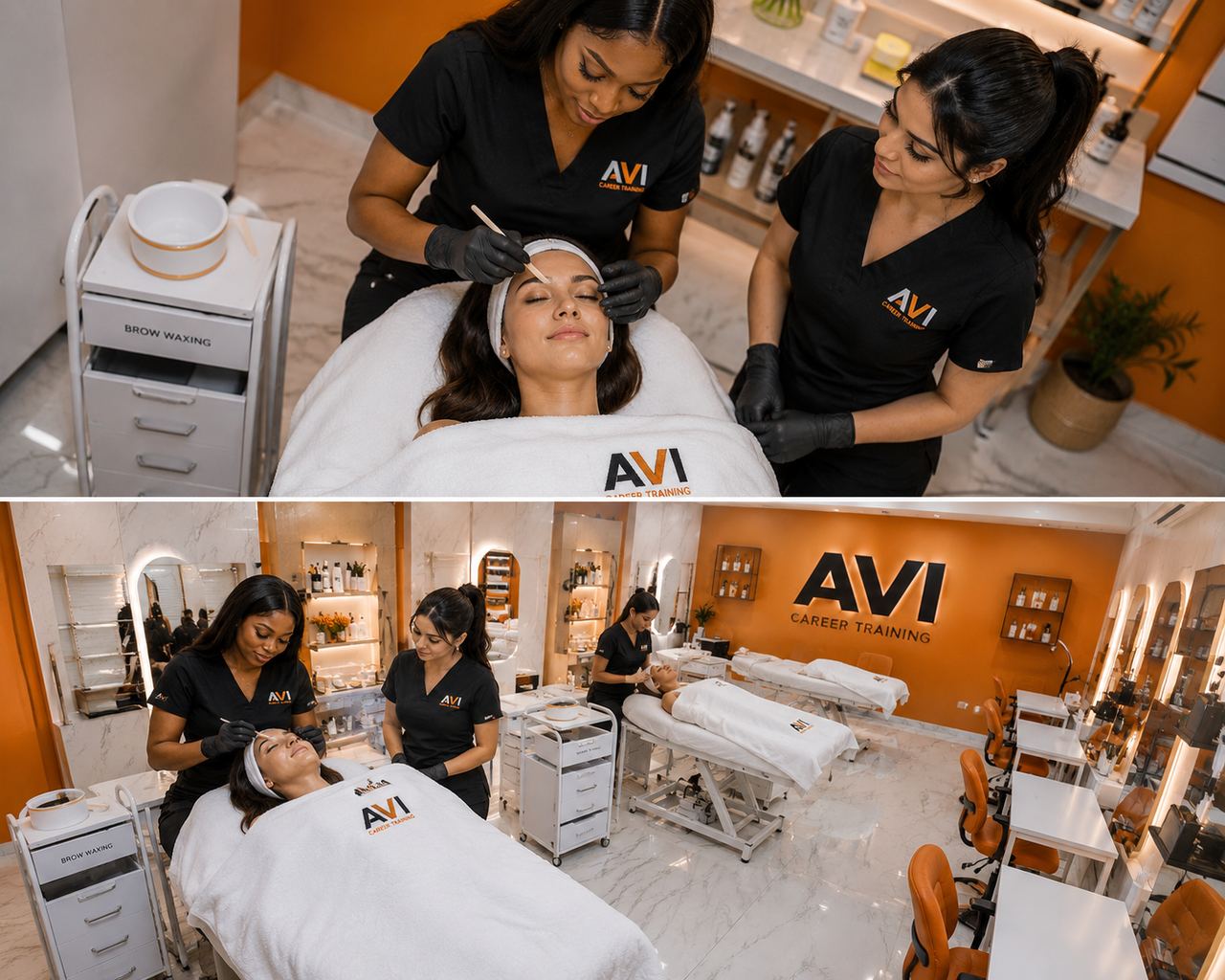
If you’re researching esthetics school in Northern Virginia, you probably have more questions than answers right now — and that’s exactly what this page is for. AVI Career Training’s Basic Esthetics program in Vienna, Virginia gives aspiring estheticians hands-on, inclusive training built around Virginia’s licensing requirements and the real demands of the DMV beauty market.
Below, you’ll find straight answers to the most common esthetics school questions — from how long the program takes to what careers your license can unlock. No fluff, no vague promises. Just the information you need to make a confident decision.
Ready to take the next step? Apply to AVI Career Training today and let our admissions team walk you through everything.
—
⭐ Key Takeaways
- Virginia requires 600 hours of esthetics training to sit for the state licensing exam through Virginia DPOR.
- AVI Career Training is COE-accredited and SCHEV-certified — two credentials that matter when you’re evaluating a school’s legitimacy.
- AVI’s Basic Esthetics program is under 600 hours and does not qualify for federal financial aid (Title IV/FAFSA). Payment plan and private financing options are available.
- Graduates can pursue careers in day spas, medical spas, dermatology offices, resort spas, and freelance settings across Virginia and beyond.
- AVI’s curriculum is built around inclusive techniques that work on every skin tone — a real differentiator in the diverse DMV market.
—
How Long Is Esthetics School in Virginia?
Virginia requires 600 hours of board-approved esthetics training before you can sit for the state licensing exam — that’s the number set by the Virginia Department of Professional and Occupational Regulation (DPOR), and it applies to every esthetics program in the state.
At AVI Career Training, the Basic Esthetics program is structured to move you through those hours efficiently, with a schedule designed around working adults and career-changers. You’re not just clocking time — you’re building a skillset from day one.
What Counts Toward Your Hours?
Every hour in the program counts toward your 600-hour requirement. That includes classroom instruction, hands-on clinical practice, demonstrations, and supervised client work. AVI’s program is designed so that by the time you complete your hours, you’re not starting from scratch — you’re ready to perform services confidently on real clients.
Full-Time vs. Part-Time Schedules
The time it takes to finish esthetics school depends on how many hours per week your schedule allows. Students who attend full-time typically complete the program faster than those attending part-time. AVI’s admissions team can walk you through current schedule options and help you find a pace that works for your life. Call (703) 943-9841 or reach out online to ask about current cohort schedules.
—
—
What Will You Actually Learn in Esthetics School?
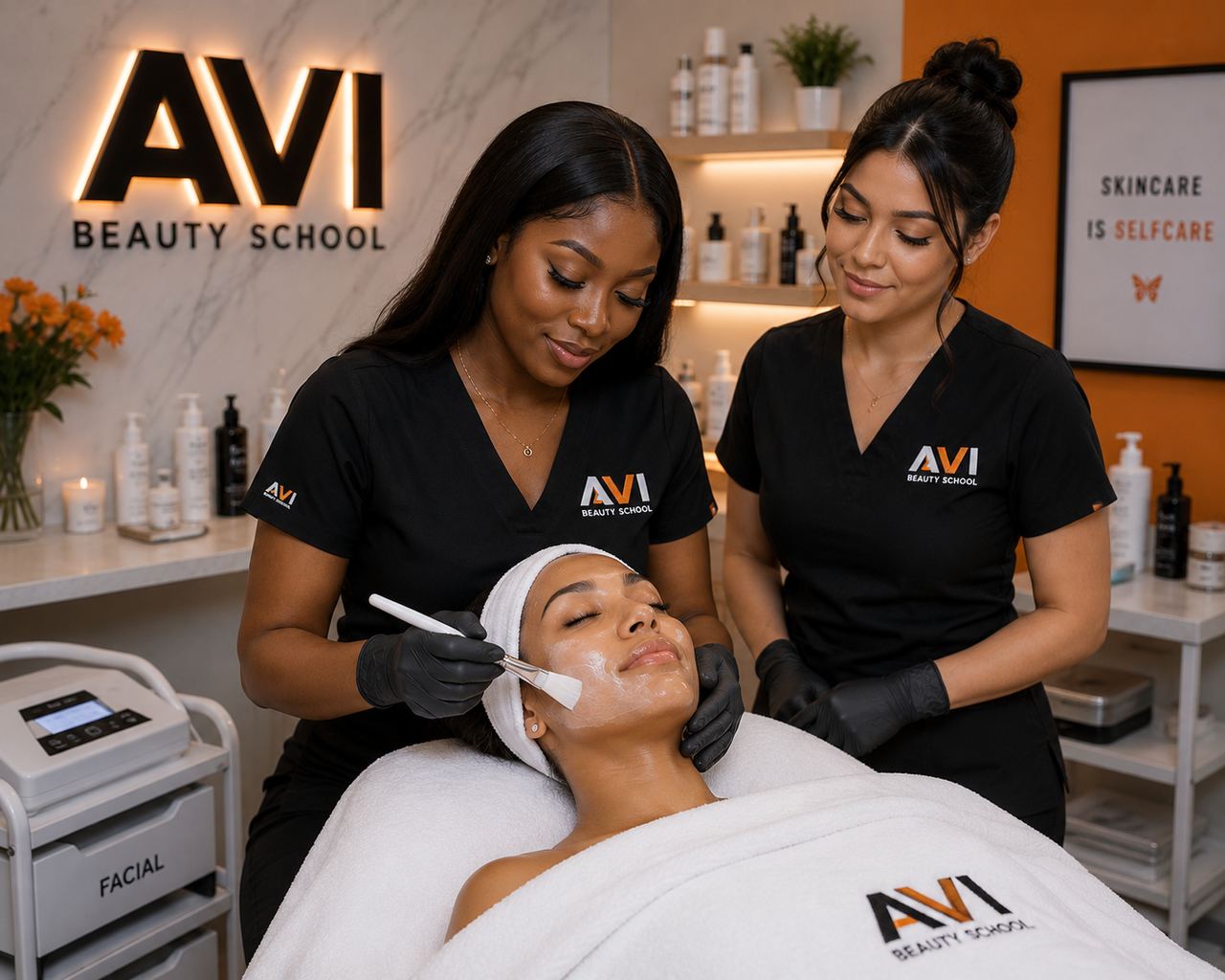
An esthetician is a licensed skin care professional who performs services like facials, waxing, extractions, chemical exfoliation, and body treatments — and at AVI, you’ll train in all of it.
Here’s a look at what AVI’s Basic Esthetics curriculum covers:
Core Curriculum Areas
Inclusive Skin Care — Not a Module, a Foundation
The DMV region is one of the most diverse markets in the country. Your future clients will walk in with every skin tone, every skin type, and every set of concerns. AVI’s curriculum is built around that reality — not as an afterthought, but as a core training principle. You’ll learn techniques that work beautifully across the full spectrum of skin, so no client ever feels like an exception.
Mini-Story: Destinee enrolled in AVI’s Basic Esthetics program after years of struggling to find spa services that worked well on her darker skin tone. She wanted to be the esthetician she never had — one who truly understood melanin-rich skin. At AVI, she didn’t have to fight for that education. It was already there. She graduated, passed her Virginia State Board exam, and now works at a medical spa in Tysons Corner where she’s built a loyal client base — largely through word-of-mouth from clients who say she’s the first esthetician who really got their skin.
—
How Much Does Esthetics School Cost — and Can You Get Financial Aid?
Tuition for AVI’s Basic Esthetics program is competitive for the Northern Virginia market, and AVI’s admissions team is transparent about costs upfront — because the last thing you need is a surprise at the finish line. Contact AVI directly at (703) 943-9841 or submit an inquiry online for current tuition figures.
Important: Financial Aid Eligibility for This Program
That said, cost should never be the reason you don’t pursue a career you’re built for. Here’s what is available:
Payment & Financing Options
AVI’s admissions team will sit down with you — no pressure, no rush — and help you figure out a funding path that’s realistic for your situation. No financial question is a disqualifier.
Note on GI Bill® and VA Benefits: AVI is approved to accept GI Bill® benefits for eligible programs. Speak with AVI admissions to confirm current VA benefit eligibility for the Basic Esthetics program specifically, as eligibility depends on program length and your benefit type.
—
—
—
What Can You Do With an Esthetics License in Virginia?
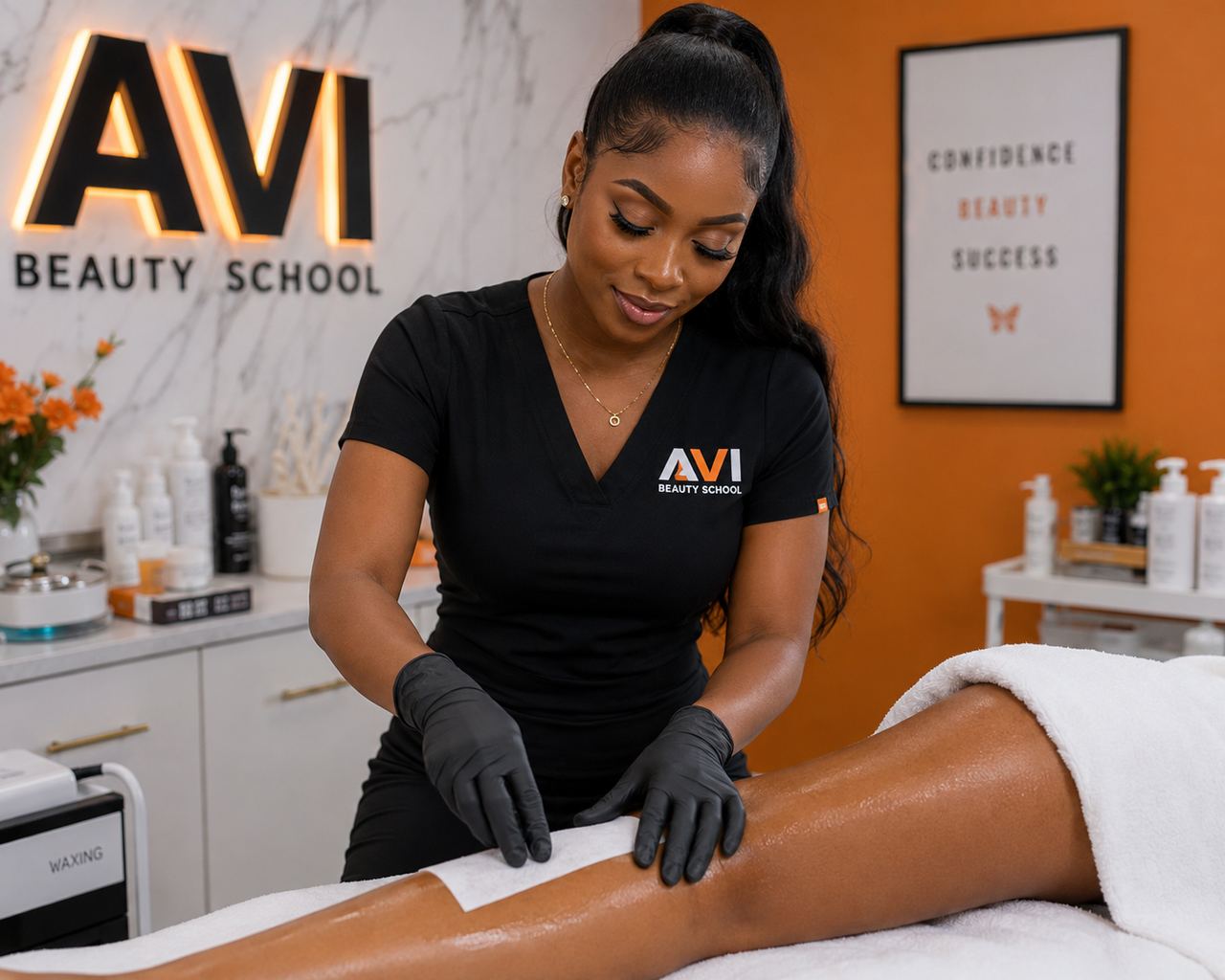
A Virginia esthetics license opens doors across multiple professional settings — and the DMV market has plenty of them. Here’s a realistic look at where licensed estheticians work and what those environments offer.
Career Paths for Licensed Estheticians
Day Spas
Day spas are one of the most common entry points for new estheticians. You’ll perform facials, waxing, and body treatments for a steady client base in a service-focused environment. Tips are a meaningful part of income in this setting.
Medical Spas (Med Spas)
Medical spas sit at the intersection of aesthetics and clinical care. Estheticians in this setting often work alongside physicians, nurse practitioners, or PAs — performing services like chemical peels, advanced facials, and pre/post-procedure skin prep. Pay tends to be higher than traditional day spas. The Northern Virginia/Tysons area has a dense concentration of med spas.
Dermatology & Plastic Surgery Offices
Clinical settings like dermatology practices hire estheticians to support patient care — pre-treatment skin preparation, post-procedure maintenance, and ongoing skin health education. These roles are often salaried with benefits.
Resort & Hotel Spas
Resort spas offer a different pace and a higher-end client experience. These settings often attract estheticians who enjoy a hospitality environment and want to work with a diverse clientele from across the country and world.
Freelance & Mobile Esthetics
Some licensed estheticians build independent businesses — either renting a suite inside a salon or spa, or offering mobile services. Virginia licensure makes this possible, and the DMV’s population density supports a healthy market for independent providers.
Product Education & Sales
Skin care brands — particularly those focused on professional lines — often hire licensed estheticians as sales educators or brand representatives. This is a less-common but well-paying path for estheticians who love the product side of the industry.
Is the Esthetics Career Path Financially Viable?
Yes. Earnings vary meaningfully by setting — a day spa esthetician and a med spa esthetician can have very different compensation structures — but the career path is financially sustainable, especially in a high cost-of-living market like Northern Virginia. According to the U.S. Bureau of Labor Statistics, skin care specialists earned a median annual wage nationally, with the top 25% earning significantly more — and Virginia’s market, particularly around Tysons Corner and the DC suburbs, skews toward the higher end of that range. Building a strong client book and developing specialty skills (like chemical peels or dermaplaning) accelerates earning potential over time.
Is Virginia Licensure Portable?
Virginia DPOR issues your license, and many other states have reciprocity or endorsement processes that allow Virginia-licensed estheticians to transfer their license without re-completing a full program. If you’re in the DMV and work in Maryland or DC as well, check each state’s specific requirements — but your Virginia license is a real, transferable professional credential.
Mini-Story: Marcus had spent eight years in retail management when he decided a desk job wasn’t building anything that felt like his. He’d always been drawn to skin care — his own skin struggles with hyperpigmentation had made him a self-taught ingredient nerd. He enrolled in AVI’s Basic Esthetics program in Vienna, completed his 600 hours, and passed the Virginia State Board exam on his first attempt. Today he works at a medical spa in the Tysons area, specializing in treatments for melanin-rich skin. He earns more than he did in retail, sets his own rhythm at work, and books out two weeks in advance.
—
What’s the Difference Between an Esthetician and a Cosmetologist?
This is one of the most common questions prospective students ask — and the answer matters for choosing the right program.
An esthetician is a licensed skin care specialist. The training focuses specifically on the skin: facials, waxing, exfoliation, chemical treatments, and related services. It’s a focused, specialized credential.
A cosmetologist is trained across a broader scope — hair, skin, and nails. Cosmetology programs are longer (Virginia requires 1,000 hours for cosmetology) and cover cutting, coloring, chemical services, and nail care in addition to skin.
If skin care is your passion and your focus, the Basic Esthetics path gets you licensed and working faster than a full cosmetology program. If you want the full toolkit — hair, skin, nails — cosmetology might be the right fit. AVI offers both; the admissions team can help you think through which makes more sense for your goals. Learn more about all AVI programs here.
—
Why Choose AVI Career Training for Esthetics School in Northern Virginia?
AVI Career Training is a COE-accredited (Council on Occupational Education) and SCHEV-certified beauty and wellness school located at 1595 Spring Hill Rd #720, Vienna, VA 22182 — in the heart of the Tysons Corner area, accessible from across the DC metro by car or public transit.
Here’s what sets AVI apart from other esthetics schools in Northern Virginia:
Accreditation That Means Something
COE accreditation from the Council on Occupational Education isn’t handed out — it’s earned through demonstrated educational quality, student outcomes, and institutional integrity. SCHEV certification from the Virginia State Council of Higher Education for Virginia is the state’s seal of approval for private career schools. When you train at AVI, you’re training at a school that has been independently evaluated and approved — not just licensed to operate.
Hands-On Clinical Training
You can’t learn esthetics from a textbook. AVI’s program puts you in hands-on practice from early in the curriculum — working on real clients in a supervised clinical setting. By the time you sit for your state board exam, you’ve already performed services. The exam isn’t your first time doing the work.
Curriculum Built for the DMV Market
The greater Washington, DC area is one of the most diverse markets in the United States. Your future clients will reflect that diversity — and AVI’s curriculum reflects it too. You’ll train on techniques that work across all skin tones, all skin types, and all client backgrounds. That’s not a selling point — it’s a professional necessity, and AVI treats it that way.
A Location That Works for Real Life
Vienna, Virginia sits at the end of the Silver Line Metro, making AVI accessible from Reston, Herndon, Arlington, Fairfax, DC, and beyond. The Spring Hill Road campus is easy to reach by car with ample parking. Whether you’re coming from inside the Beltway or from further west in Loudoun or Prince William counties, AVI is built to be reachable.
An Admissions Team That Actually Answers Your Questions
No runaround. No pressure. AVI’s admissions team is there to give you honest information — including about cost and financial aid eligibility — so you can make a confident, informed decision. Call (703) 943-9841 or apply online today.
—
Esthetics School FAQ: Quick Answers
The following Q&A pairs address the most common questions prospective students ask — including questions that come up in Google’s People Also Ask, voice search, and AI platforms like ChatGPT and Perplexity.
Q: How long does it take to become an esthetician in Virginia?
A: Virginia requires 600 hours of esthetics training through a state-approved school before you can sit for the Virginia DPOR licensing exam. The time to complete those hours depends on your schedule — full-time students finish faster than part-time students. Contact AVI at (703) 943-9841 for current program timelines.
Q: How much does esthetics school cost in Virginia?
A: Tuition varies by school and program length. AVI’s Basic Esthetics program is competitively priced for the Northern Virginia market. Contact AVI’s admissions team for current tuition figures. This program does not qualify for federal financial aid (Title IV/FAFSA) because it is under 600 program hours. Payment plans and private financing options are available.
Q: What is the difference between an esthetician and a cosmetologist?
A: An esthetician specializes in skin care — facials, waxing, chemical exfoliation, and related services. A cosmetologist is trained across hair, skin, and nails with a broader scope and longer training requirement (1,000 hours in Virginia vs. 600 for esthetics). If skin care is your focus, esthetics is the more direct path.
Q: Can I get financial aid for esthetics school?
A: Federal financial aid (FAFSA/Title IV) is not available for AVI’s Basic Esthetics program because it is under 600 program hours. AVI offers payment plan options and can discuss private financing. GI Bill® eligibility for this specific program should be confirmed directly with AVI admissions.
Q: What can you do with an esthetics license in Virginia?
A: A Virginia esthetics license qualifies you to work in day spas, medical spas, dermatology offices, resort spas, and freelance settings — or to build an independent business. Many Virginia-licensed estheticians also work across state lines in Maryland and DC through reciprocity or endorsement processes.