Esthetics as a Healthcare Career in the DMV Area
Esthetics is a legitimate healthcare-adjacent career — one where licensed professionals work alongside dermatologists, plastic surgeons, and oncology teams to deliver medically meaningful skin care. If you’re researching esthetics as a healthcare career in the DMV area, here’s what you need to know: the field has evolved well beyond the spa treatment room, and Northern Virginia is one of the strongest markets in the country to build this kind of career. Apply to AVI’s Basic Esthetics program today and take the first concrete step toward your license.
This guide breaks down what clinical esthetics actually looks like, how the two main career tracks differ, what Virginia requires for licensure, what you can realistically earn in the DC metro area, and how to take the first concrete step toward your license.
—
Key Takeaways
- Virginia requires 600 clock hours of esthetics training to sit for the State Board exam.
- Estheticians in the DMV area typically earn above the national median due to regional cost of living and a high concentration of medspas and dermatology practices.
- Medical estheticians in clinical settings in Virginia can earn $50,000–$65,000+ depending on specialization and setting.
- Both spa and clinical career tracks begin with the same foundational Virginia esthetics license.
- AVI Career Training in Vienna, VA offers a COE-accredited, 600-hour Basic Esthetics program with hands-on clinical training in the heart of the DMV.
—
What Makes Esthetics a Healthcare-Adjacent Career?
Esthetics qualifies as a healthcare-adjacent career because licensed estheticians regularly perform clinically relevant work — including pre- and post-surgical skin preparation, acne treatment protocols, and oncology esthetics — in direct support of medical teams.
Most people picture a spa facial when they hear the word “esthetician.” That image is incomplete. The esthetics field has expanded significantly into clinical and medical environments, and the skills that drive that expansion go well beyond relaxation.
The Clinical Side of Skin Care
A trained esthetician understands skin pathology. That means recognizing conditions like rosacea, eczema, hyperpigmentation disorders, and acneic skin — and knowing when to treat and when to refer. In dermatology offices across Northern Virginia, estheticians perform chemical peels, microdermabrasion, and pre-procedure skin prep that directly supports physician-led treatment plans.
Post-surgical care is another documented function. After procedures like rhinoplasty, facelifts, or laser resurfacing, estheticians work with patients to support healing, reduce inflammation, and restore skin integrity. This is collaborative, clinical work.
Oncology Esthetics: Serving a Vulnerable Population
One of the most meaningful expansions of the field is oncology esthetics — a specialty focused on clients undergoing cancer treatment. Chemotherapy and radiation can cause extreme skin sensitivity, dryness, and damage. The National Coalition of Estheticians Associations (NCEA) recognizes oncology esthetics as a distinct specialty requiring advanced training in safe touch, appropriate products, and contraindications.
Estheticians trained in oncology protocols work in cancer centers, hospital wellness programs, and private practices throughout the DC metro area. It is hands-on, patient-centered work that requires both technical precision and genuine compassion.
Why the “Healthcare-Adjacent” Label Matters
Estheticians are not physicians, and the scope of practice is clearly defined by state law. But the work happens in medical environments, supports patient outcomes, and requires clinical knowledge. For anyone weighing esthetics as a healthcare career, that distinction — adjacent to medicine, not separate from it — is exactly right.
—
Medical vs. Spa Esthetician: What’s the Difference in the DMV?
The core difference between a medical esthetician and a spa esthetician is the work environment and clinical depth — not the license. Both tracks in Virginia begin with the same foundational esthetics credential.
This is an important point for anyone evaluating the esthetician career in the DMV area. The Virginia esthetics license is a single credential that opens doors to both paths. What separates them is where you choose to work, what additional training you pursue, and how you develop your specializations over time.
The Spa and Salon Track
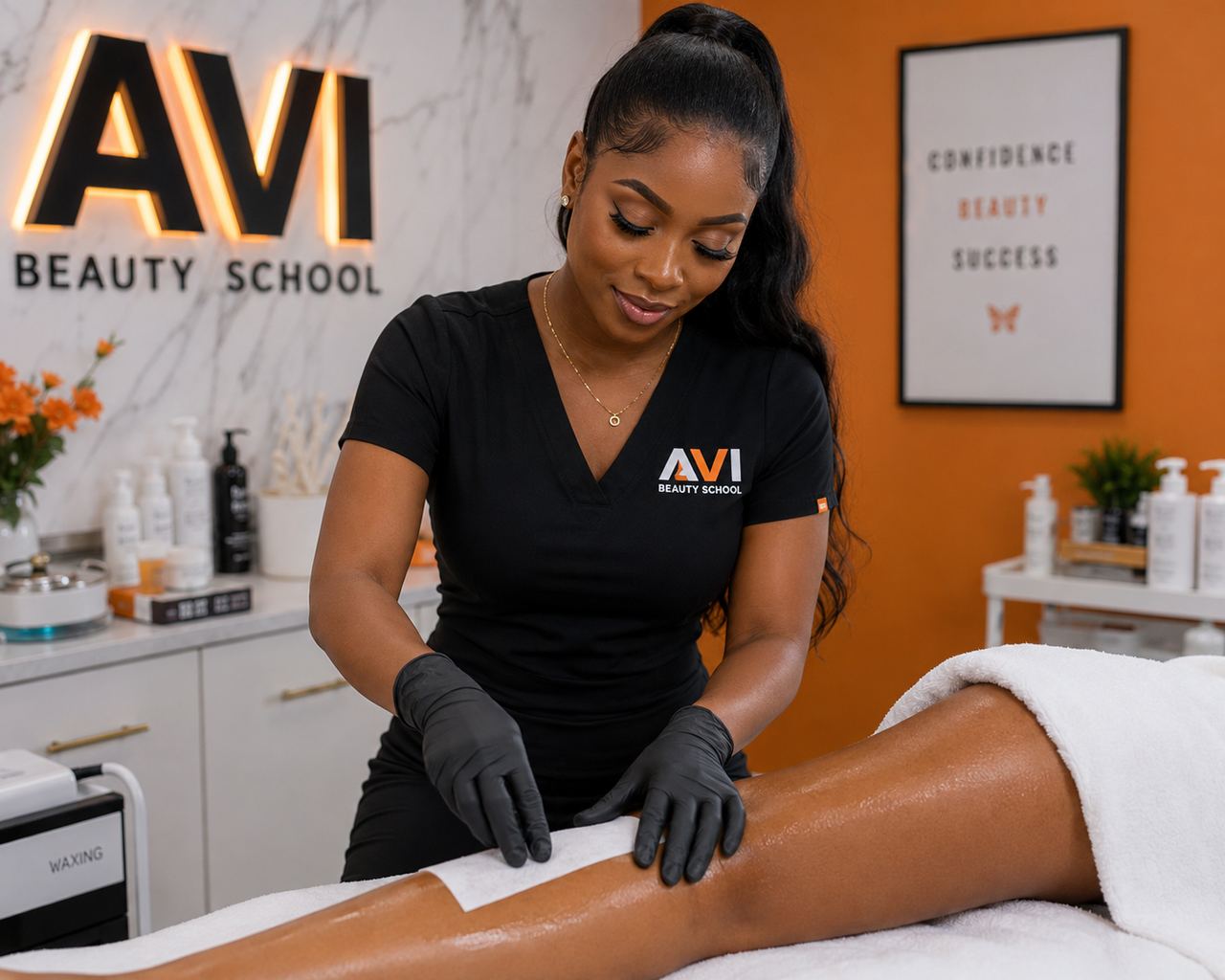
Spa and salon estheticians work in luxury day spas, resort spas, hotel wellness centers, and high-end salons. In the DC metro area, that means establishments in Georgetown, Bethesda, Old Town Alexandria, and throughout Fairfax County. Services include facials, body treatments, waxing, lash and brow work, and retail product consultations.
This track offers flexibility, creative client relationships, and often commission-based earnings that reward client retention. For many estheticians, the spa environment is exactly where they want to build their career — and the DMV’s affluent client base supports strong earning potential in this space.
The Medical and Clinical Track
Medical estheticians work in dermatology offices, plastic surgery practices, medspa chains, and cosmetic laser clinics. The Tysons Corner and Arlington corridors in Northern Virginia have a notably high concentration of these facilities — many of them high-volume, physician-supervised practices that employ licensed estheticians as core clinical staff.
In these settings, estheticians perform chemical exfoliation, microneedling preparation, laser-assisted treatments (under protocol), post-procedure skin care, and ongoing maintenance for patients with chronic skin conditions. The work is more protocol-driven, more clinically supervised, and typically commands higher compensation.
Can You Move Between Tracks?
Yes — and many estheticians in the DMV do exactly that. Because both tracks share the same license foundation, a spa esthetician who wants to transition to a clinical setting can do so by building relevant skills, pursuing continuing education, and targeting employers in medical environments. The license is portable. The career path is yours to shape.
> Mini Story: Amara came to AVI Career Training after eight years in pharmaceutical sales. She wanted patient-facing work without the pressure of returning to a four-year degree. After completing her 600-hour Basic Esthetics program, she landed a position at a dermatology practice in Tysons Corner. Within 18 months, she was leading the practice’s chemical peel protocol and training new staff. “I didn’t realize how much of what I learned at AVI applied directly to a clinical setting,” she said. “The anatomy, the skin pathology, the protocols — it was all there.”
—
Virginia Licensing Requirements and What to Expect
To become a licensed esthetician in Virginia, you must complete 600 clock hours of approved esthetics training and pass both a written and practical exam administered by the Virginia State Board of Cosmetology.
The path is clearly defined and achievable. Here’s how it works.
The 600-Hour Training Requirement
Virginia requires exactly 600 clock hours of esthetics education from a state-approved school. This is a non-negotiable threshold — you cannot sit for the State Board exam without meeting it. The curriculum covers skin anatomy and physiology, facial treatments, chemical exfoliation, hair removal, sanitation and safety, product chemistry, and client consultation.
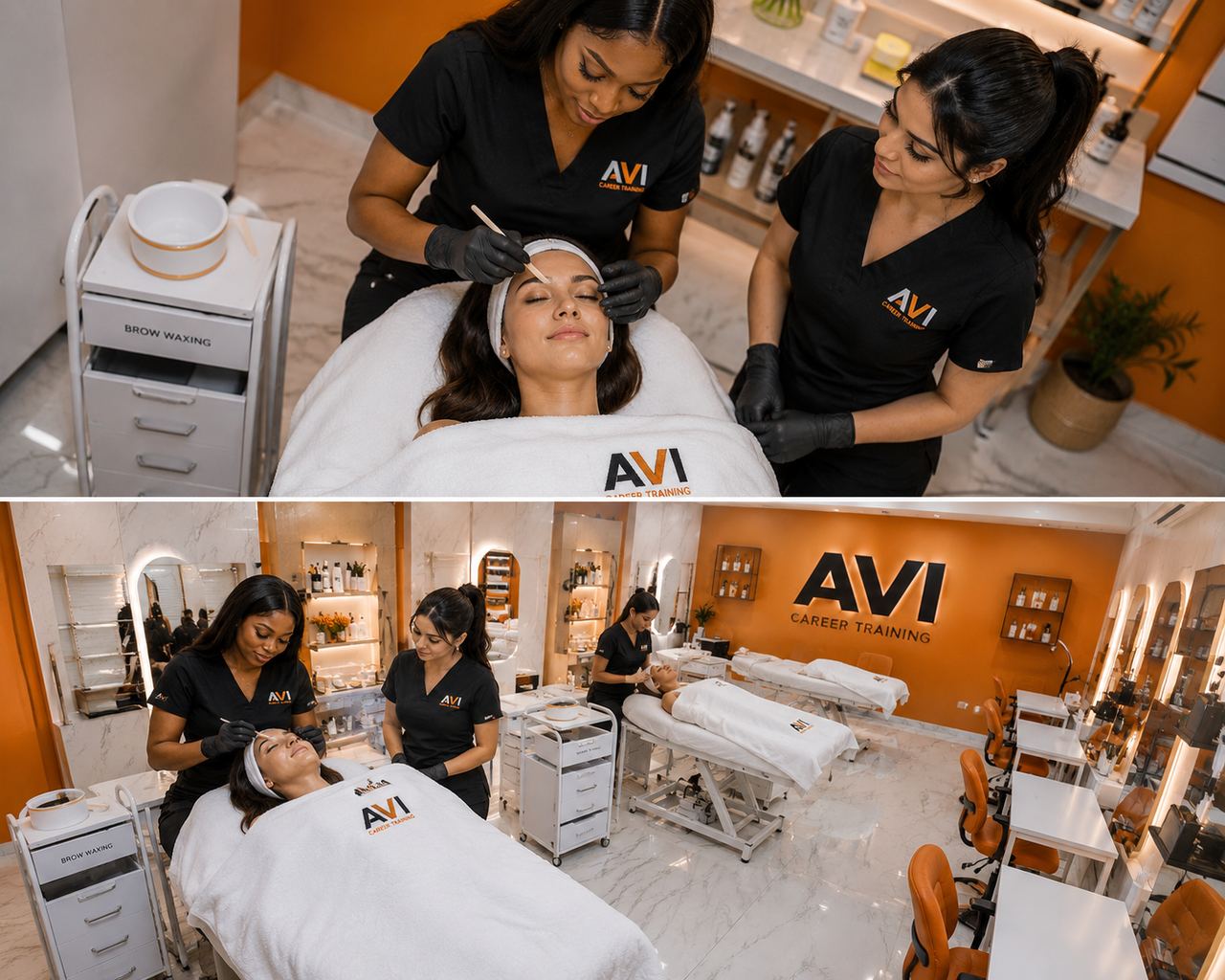
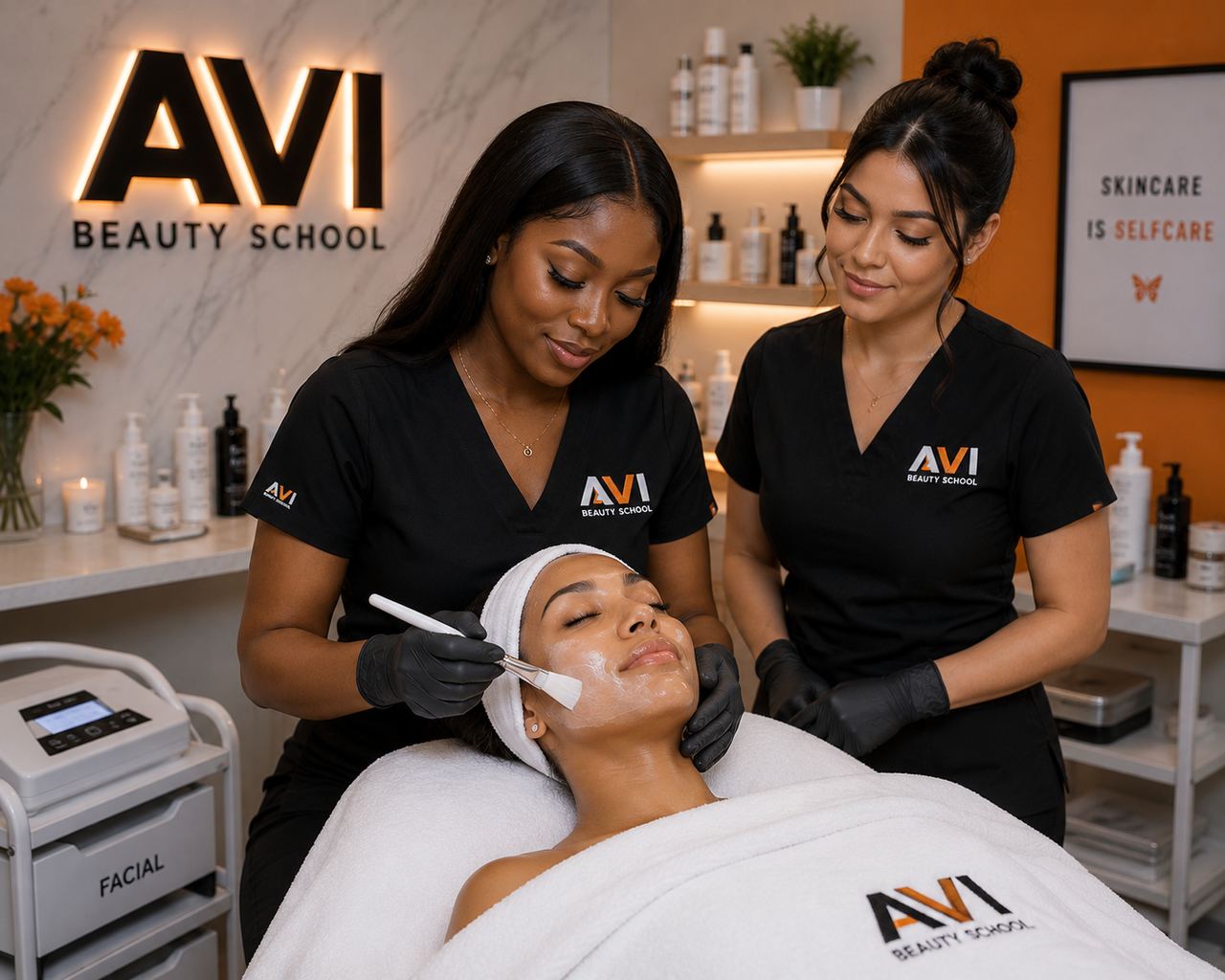
At AVI Career Training’s Vienna, VA campus, the Basic Esthetics program (NO FINANCIAL AID FOR THIS PROGRAM) is structured to deliver all 600 hours with a strong emphasis on hands-on clinical practice. Students work on real clients in AVI’s supervised clinic, building the confidence and technique that employers look for.
Ready to take the first step? Apply to AVI’s Basic Esthetics program today.
The Virginia State Board Exam
After completing your 600 hours, you’ll apply to the Virginia Department of Professional and Occupational Regulation (DPOR) to sit for the State Board exam. The exam has two components:
- Written (Theory) Exam: Tests your knowledge of skin science, safety, sanitation, and esthetics practices
- Practical Skills Exam: Evaluates hands-on technique in a supervised exam setting
Both components must be passed to receive your Virginia esthetics license. AVI’s curriculum is designed to prepare students for both — the theory classes build your written exam foundation, while the clinic hours sharpen the practical skills you’ll demonstrate on exam day.
License Renewal and Continuing Education
Once licensed, Virginia estheticians must renew their license every two years. Renewal requirements include completing continuing education hours as specified by DPOR. This keeps your skills current and opens the door to advanced specializations — including oncology esthetics, laser certifications, and medical esthetics credentials — that can elevate your clinical esthetics career path over time.
—
Salary and Job Outlook for Estheticians in the DC Metro Area
Estheticians in the Washington DC metro area — including Northern Virginia and Maryland — typically earn above the national median, with medical estheticians in clinical settings reaching $50,000–$65,000+ depending on specialization and work setting.
Here’s what the numbers look like across the DMV market.
National Baseline
According to the U.S. Bureau of Labor Statistics (BLS), the median annual wage for skincare specialists nationally sits in the range of approximately $37,000–$42,000 per year (verify current figure at BLS.gov at time of publication). That’s the baseline — and the DMV consistently outperforms it.
The DMV Premium
Northern Virginia, Washington DC, and suburban Maryland represent one of the highest-income metro areas in the United States. The cost of living is higher — and so are esthetician salaries. Factors driving that premium include:
- A high concentration of medspas and dermatology practices in the Tysons Corner, Arlington, and Bethesda corridors
- An affluent, educated client base with high demand for both luxury and clinical skin care
- A large federal healthcare ecosystem that supports ancillary wellness and medical aesthetics employment
- Strong competition among employers for qualified, licensed estheticians
Entry-level spa roles in the DMV typically start above the national median. Commission-based and self-employed estheticians with strong client books can earn well above listed ranges. Medical estheticians in physician-supervised settings — particularly those with laser certifications or oncology credentials — are among the highest earners in the field.
Earning Potential by Track
| Career Track | Typical Annual Range (DMV) |
|—|—|
| Entry-Level Spa Esthetician | $35,000–$48,000 |
| Experienced Spa / Salon | $45,000–$58,000 |
| Medical / Clinical Esthetician | $50,000–$65,000+ |
| Self-Employed / Commission | Varies widely — top earners exceed these ranges |
Ranges are estimates based on regional market data and BLS occupational statistics. Individual results vary based on employer, experience, specialization, and business development.
Job Outlook
The BLS projects employment of skincare specialists to grow faster than average over the coming decade, driven by demand for cosmetic services, an aging population with growing skin care needs, and the continued expansion of the medical aesthetics industry. The DMV’s healthcare sector — one of the largest regional employers in the country — positions estheticians with clinical skills to benefit directly from this growth.
> Mini Story: Kezia enrolled in AVI’s Basic Esthetics program (NO FINANCIAL AID FOR THIS PROGRAM) while working part-time and raising two kids in Herndon. She was realistic about her timeline and her budget. After completing her 600 hours and passing the Virginia State Board exam, she accepted a position at a medspa in the Tysons Corner area. Her starting salary was above the national median — and within two years, she’d built a client roster and moved into a lead esthetician role. “I needed a career that would grow with me,” she said. “Esthetics gave me that, right here in Northern Virginia.”
—
How to Start Your Esthetics Career in Northern Virginia
Starting your esthetics career in Northern Virginia means choosing an accredited esthetics school, completing 600 hours of approved training, passing the Virginia State Board exam, and entering a job market that actively needs qualified, licensed professionals.
The path has a clear beginning. Here’s how to take it.
Step 1: Choose an Accredited School
Not all esthetics programs are equal. When evaluating esthetics schools in Northern Virginia, two credentials matter most: COE accreditation (Council on Occupational Education) and SCHEV certification (State Council of Higher Education for Virginia). These designations confirm that the school meets rigorous educational and financial standards.
AVI Career Training holds both. As a COE-accredited, SCHEV-certified institution in Vienna, Virginia, AVI’s programs are reviewed and approved at both the national and state level. That matters for your credential — and for how employers view your training.
Step 2: Complete Your 600 Hours
AVI’s Basic Esthetics program (NO FINANCIAL AID FOR THIS PROGRAM) delivers all 600 required clock hours in a structured, hands-on curriculum. You’ll study skin anatomy, facial treatments, chemical exfoliation, waxing, brow and lash techniques, advanced skin analysis, and sanitation protocols — all in a real clinic environment serving actual clients.
AVI’s instructors are licensed industry professionals with active experience in both spa and clinical settings. The curriculum is built to prepare you for the Virginia State Board exam and for day-one employment.
Step 3: Pass the Virginia State Board Exam
After completing your program hours, you’ll apply through the Virginia Department of Professional and Occupational Regulation (DPOR) to schedule your written and practical exams. AVI prepares students for both components throughout the program — not just in a last-minute cram session.
Step 4: Enter the DMV Job Market
With your Virginia esthetics license in hand, you’re qualified to work in spas, salons, dermatology offices, plastic surgery practices, medspas, and wellness centers throughout Northern Virginia, DC, and Maryland. AVI supports graduates with career guidance and connections to the regional employer network.
A Note on Financial Aid
Because the Basic Esthetics program at AVI is under 600 hours of total institutional credit hours for Title IV purposes, federal financial aid (FAFSA/Title IV) is not available for this program. AVI offers payment plan options and can connect you with private financing resources to make your training accessible. Contact AVI’s admissions team at (703) 943-9841 to discuss your options.
Step 5: Build Toward Clinical Specialization
Your foundational license is the starting point, not the ceiling. After gaining experience, many estheticians in the DMV pursue additional certifications in oncology esthetics, cosmetic laser technology, or advanced chemical treatments. AVI also offers a Cosmetic Laser Technician program for graduates ready to expand into energy-based treatments — a growing segment of the medical esthetics market.
—
—
Frequently Asked Questions
Q: Is an esthetician considered a healthcare worker?
A: Estheticians are considered healthcare-adjacent professionals. They work alongside dermatologists, plastic surgeons, and oncology teams in clinical settings, performing medically relevant skin treatments. While estheticians are not licensed physicians or nurses, their work in medical environments — including post-surgical care, oncology esthetics, and clinical skin protocols — places them firmly within the healthcare ecosystem.
Q: How long does it take to become an esthetician in Virginia?
A: Virginia requires 600 clock hours of esthetics training at a state-approved school. Depending on your schedule — full-time or part-time enrollment — this typically takes between four and nine months. After completing your hours, you’ll need to schedule and pass the Virginia State Board written and practical exams before receiving your license.
Q: What does a medical esthetician do differently from a spa esthetician?
A: A medical esthetician works in physician-supervised clinical settings — dermatology offices, plastic surgery practices, or medspas — performing treatments like chemical peels, microneedling preparation, post-surgical skin care, and laser-assisted protocols. A spa esthetician focuses on relaxation and maintenance facials, waxing, and retail consultations. Both hold the same Virginia esthetics license; the difference is the work environment and clinical depth.
Q: How much do estheticians make in the Washington DC area?
A: Estheticians in the DC metro area typically earn above the national median of approximately $37,000–$42,000/year (BLS). Entry-level spa positions in Northern Virginia often start in the $35,000–$48,000 range, while medical estheticians in clinical settings can reach $50,000–$65,000+ depending on specialization. Top earners in commission-based or self-employed models can exceed these figures.
Q: What are the Virginia State Board requirements for an esthetics license?
A: To obtain a Virginia esthetics license, you must: (1) complete 600 clock hours at a DPOR-approved esthetics school; (2) pass a written theory exam; and (3) pass a practical skills exam. Both exams are administered through the Virginia Department of Professional and Occupational Regulation (DPOR). Once passed, your license is valid for two years and renewable with continuing education.