
Esthetics Careers in Healthcare: Your DMV Guide
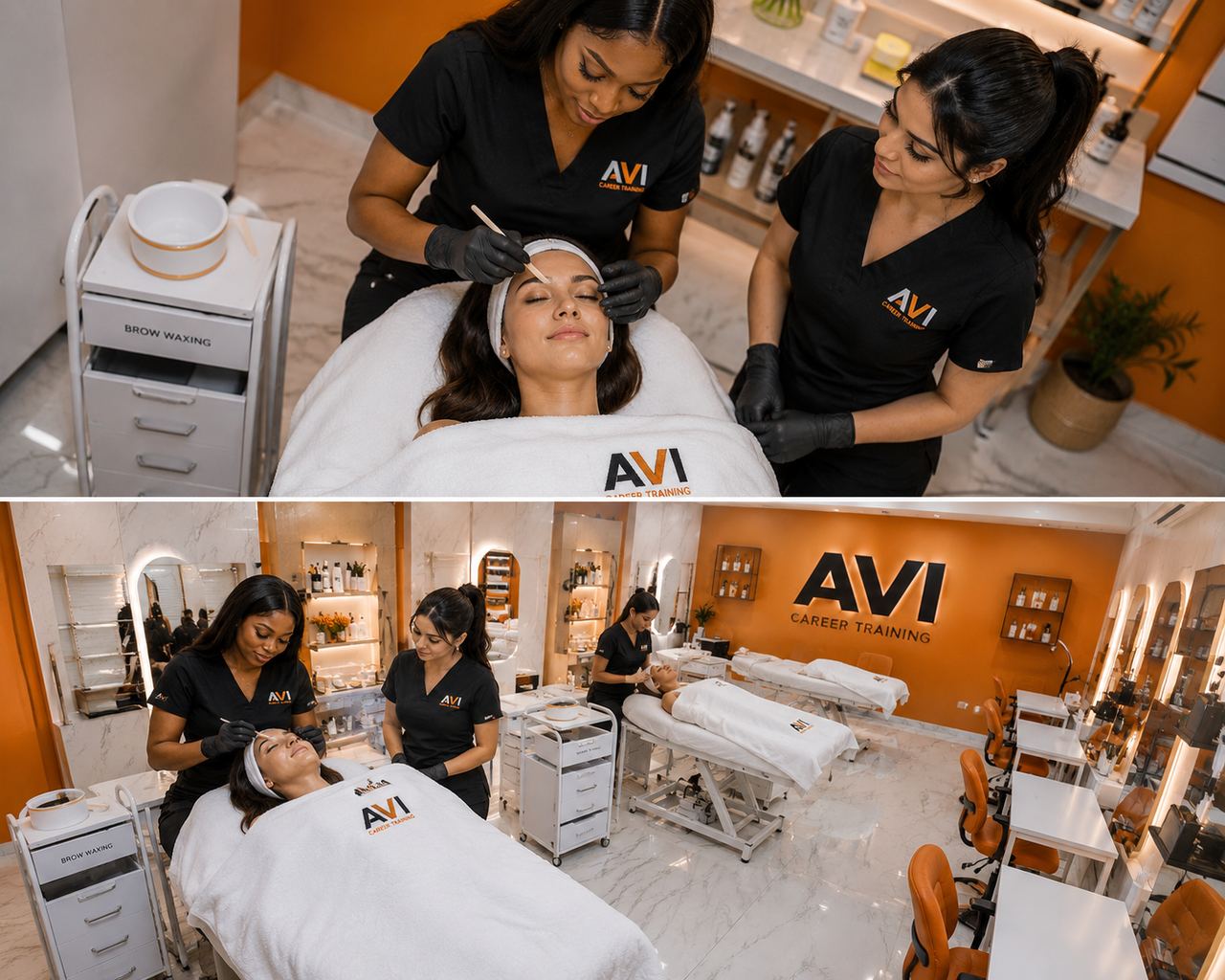
Esthetics is a genuine healthcare-adjacent career — and in the Northern Virginia and DC metro market, it’s one of the fastest-growing paths for people who want meaningful, hands-on work without a four-year degree. Licensed estheticians work alongside dermatologists, plastic surgeons, and oncology teams every day. The line between beauty and healthcare has never been thinner, and in the DMV area, that line represents real earning potential and long-term career stability.
Whether you’re a career-changer evaluating your options or a recent graduate figuring out your next move, this guide walks you through exactly what esthetics as a healthcare career looks like in Northern Virginia — the licensing requirements, the career tracks, the salary ranges, and how to get started at AVI Career Training, Vienna, Virginia’s COE-accredited beauty and wellness school.
Explore AVI’s Esthetics Program →
Key Takeaways
- Virginia requires 600 hours of esthetics training to sit for the State Board exam
- Licensed estheticians in the DMV area earn between $42,000 and $75,000+ annually depending on setting
- Medical estheticians working in dermatology offices or medical spas typically earn 20–35% more than spa-setting peers
- Both the spa track and the clinical/medical track start with the same Virginia esthetics license
- AVI Career Training’s Basic Esthetics program (NO FINANCIAL AID FOR THIS PROGRAM) is accredited by the Council on Occupational Education (COE) and certified by SCHEV
What Does “Healthcare-Adjacent” Mean for Estheticians?
Esthetics as a healthcare career means working in settings where skin health, clinical protocols, and patient outcomes matter — not just relaxation. The word “adjacent” is important here. Estheticians are not licensed medical practitioners. But they routinely work inside medical environments, performing procedures that require clinical precision and directly support physician-led treatment plans.
Think about the range of settings where a licensed esthetician in Northern Virginia might work:
- Day spa or resort spa — the traditional entry point, focused on relaxation and basic skin maintenance
- Medical spa (medspa) — a hybrid environment where estheticians perform chemical peels, microdermabrasion, and pre/post-procedure skin prep under physician supervision
- Dermatology clinic — supporting dermatologists with patient skin analysis, acne treatments, and post-procedure aftercare
- Plastic surgery practice — pre-operative skin prep and post-operative healing support
- Oncology support / oncology esthetics — a growing subspecialty where estheticians provide gentle, medically informed skin care to cancer patients experiencing treatment-related skin changes
In the DMV area specifically, medspas are among the most actively hiring employers of licensed estheticians. Fairfax County, Arlington, Bethesda, and the DC corridor have a high concentration of high-income households willing to invest in clinical skin care. That demand translates directly into job opportunities — and competitive compensation.
Esthetics is legitimately a healthcare career in the context of today’s DMV job market. It requires clinical knowledge, sanitation mastery, and the ability to work professionally alongside licensed medical staff. The training you receive determines which doors open first.
Clinical vs. Spa Esthetics — Two Career Paths, One License
Both career tracks — spa esthetics and clinical/medical esthetics — begin with the exact same Virginia State Board esthetics license. There is no separate “medical esthetician license” in Virginia. What separates the two paths is the depth of your training, the breadth of your clinical knowledge, and the environment where you choose to apply your skills.
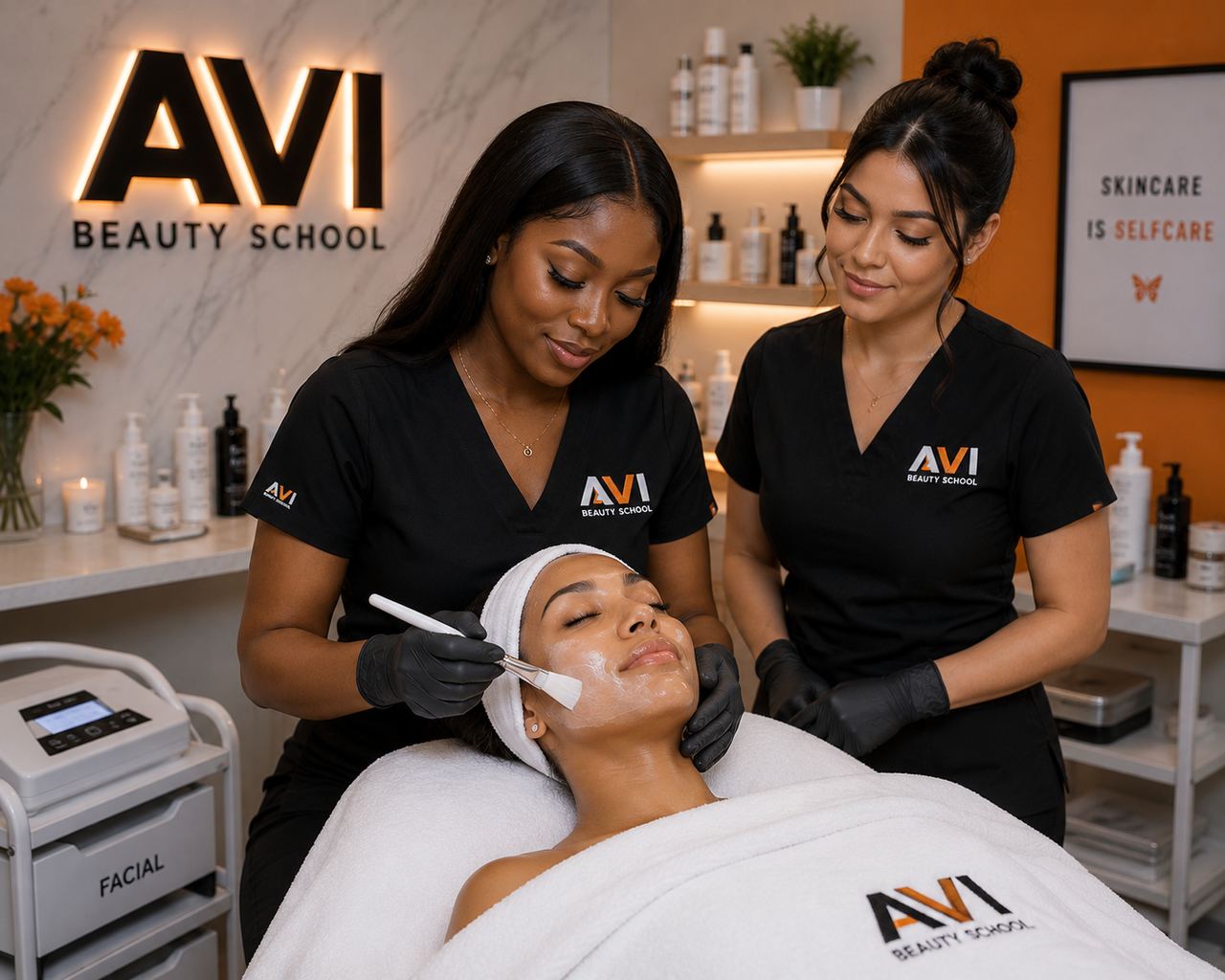
The Spa Esthetician Track
Spa estheticians focus on client wellness, relaxation, and ongoing skin maintenance. Services typically include facials, body treatments, waxing, and basic chemical exfoliation. The work environment is client-centered and relationship-driven. Many estheticians in this track build loyal, long-term clientele and generate strong income through retail commissions and tips on top of their base hourly rate or service commission.
The Medical / Clinical Esthetician Track
Medical estheticians work under the direct or indirect supervision of a licensed physician, nurse practitioner, or physician assistant. They perform more advanced services: chemical peels at higher concentrations, microdermabrasion, dermaplaning, pre- and post-laser skin prep, acne management protocols, and oncology-informed treatments. They read charts, follow clinical intake protocols, and communicate directly with the medical team about contraindications and patient skin health.
This track requires the same base license — but it rewards estheticians who received thorough foundational training. Employers hiring for clinical roles look for candidates whose programs covered infection control, skin pathology, advanced exfoliation chemistry, and professional conduct in medical settings. Cutting corners in your training closes clinical doors before you’ve had a chance to knock on them.
Here’s a real example: Jasmine, a 29-year-old former healthcare administrative assistant from Reston, enrolled in AVI Career Training’s Basic Esthetics program (NO FINANCIAL AID FOR THIS PROGRAM) after spending six years managing patient files at a dermatology practice. She knew the environment. She knew the vocabulary. What she lacked was the license. After completing 600 hours at AVI, passing her Virginia State Board exams, and earning her esthetics license, she walked back into the world of dermatology — this time as the person providing the treatments. Within eight months of licensure, she was working full-time at a medspa in Tysons Corner, earning $58,000 her first full year.
Virginia Licensing Requirements & What 600 Hours Really Covers
Getting your Virginia esthetics license requires completing 600 hours of approved esthetics training at a state-recognized school, then passing both a written (theory) and a practical examination administered through the Virginia Department of Professional and Occupational Regulation (DPOR). Your license is issued by the Virginia Board for Barbers and Cosmetology. Applicants must be at least 17 years of age and hold a high school diploma or equivalent (GED).
Those are the mechanics. But what does 600 hours actually prepare you for?
Core Curriculum Areas in Virginia Esthetics Training
A comprehensive esthetics program doesn’t just teach you how to do a facial. It builds a foundation across multiple clinical and technical competencies:
- Skin anatomy and physiology — understanding the layers of the skin, cell turnover, and how different skin conditions (acne, rosacea, hyperpigmentation, aging) present across diverse skin tones
- Skin analysis — how to assess a client’s skin type and condition accurately before recommending or performing any service
- Chemical exfoliation — the science behind AHAs, BHAs, and enzyme peels; contraindications; depth of action; proper application and neutralization
- Advanced facial techniques — microdermabrasion, dermaplaning, LED therapy, high-frequency treatments
- Waxing and hair removal — full-body and facial waxing with sanitation protocols
- Sanitation and infection control — this is where esthetics training overlaps most directly with healthcare. Proper disinfection, sterilization, and cross-contamination prevention are non-negotiable in any clinical setting
- Cosmetic chemistry and product knowledge — reading ingredient labels, understanding how formulations interact with different skin types
- Business and client consultation skills — how to conduct a professional consultation, document treatment notes, and communicate with clients and colleagues
AVI Career Training’s Basic Esthetics program (NO FINANCIAL AID FOR THIS PROGRAM) in Vienna, Virginia covers all of these areas with a curriculum built around inclusive techniques — meaning you’ll learn to work effectively and confidently on every skin tone. That’s not a tagline. In the DMV area, where your future clientele will reflect one of the most diverse populations in the country, this is a practical career advantage.
Virginia Esthetics Licensing at a Glance
- Training hours required: 600 hours
- Exams: Written (theory) + Practical
- Licensing authority: Virginia Board for Barbers and Cosmetology (DPOR)
- Minimum age: 17 years old
- Education requirement: High school diploma or GED
- AVI’s program accreditation: COE Accredited · SCHEV Certified
Esthetics vs. Cosmetology in Virginia: Esthetics is a specialized license focused entirely on skin care and hair removal. Cosmetology is a broader license that includes hair, skin, and nails — and requires significantly more training hours. If your goal is clinical skin care or a medical esthetician career in the DMV area, the esthetics license is the direct, focused path. It gets you licensed faster and into your chosen specialty sooner.
What Estheticians Earn in the Northern Virginia & DC Metro Market
Estheticians in Northern Virginia earn meaningfully more than the national average — and the clinical/medical track pushes those numbers even higher.
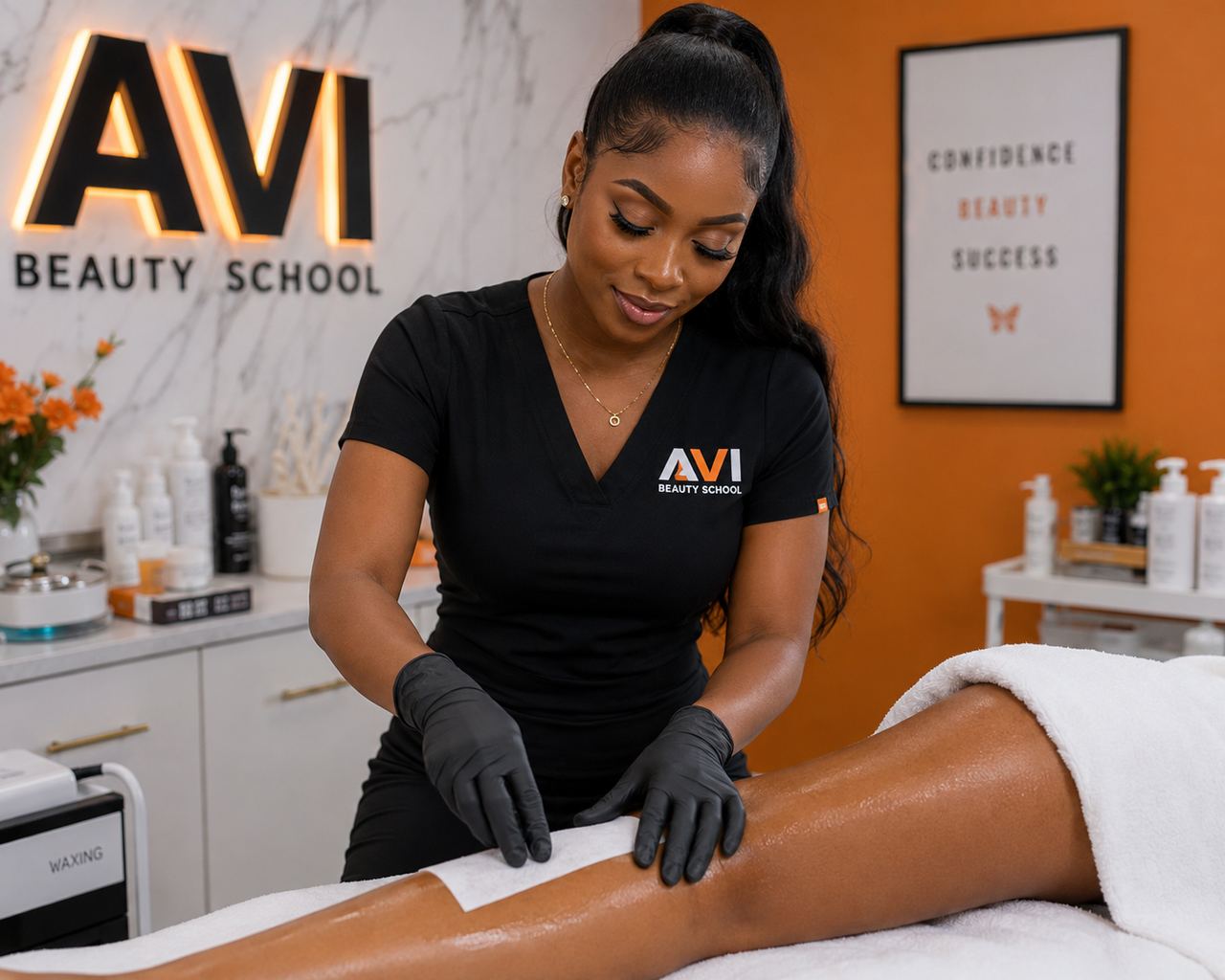
According to the U.S. Bureau of Labor Statistics, the national median annual wage for skincare specialists is approximately $40,000. But national medians obscure the DMV picture entirely. Northern Virginia — particularly Fairfax County, Arlington, McLean, and the Tysons Corner corridor — is one of the highest-income regions in the country. Clients here invest more in professional skin care, and employers pay more to attract qualified estheticians.
Salary Ranges by Setting in the DMV Area
- Day Spa / Resort Spa: $38,000 – $52,000 (base + tips + retail commission)
- Medical Spa (Medspa): $50,000 – $70,000+ (performance-based bonuses common)
- Dermatology or Plastic Surgery Practice: $52,000 – $75,000+ (higher in specialized clinical roles)
- Self-Employed / Suite Rental: Variable — top earners in the DMV regularly clear $80,000–$90,000 with an established clientele
These figures reflect base compensation. In medical and medspa settings, performance bonuses tied to service revenue and retail sales can add $5,000–$15,000 annually. Tips are less common in clinical environments but are standard in traditional spa settings.
A few honest caveats: starting salaries at entry level run closer to the lower end of each range. Building toward $65,000–$75,000 in a clinical role typically takes two to four years of experience and often includes supplemental training in specific modalities (laser, advanced peels, or oncology esthetics). But the trajectory is real — and the Northern Virginia market supports it.
Here’s another example from the field: Marcus, a 34-year-old Army veteran from Woodbridge, used a payment plan to enroll in AVI Career Training’s Basic Esthetics program (NO FINANCIAL AID FOR THIS PROGRAM) after leaving active duty. He was drawn to the medspa industry after his wife, a nurse practitioner, described how hard it was for their practice to find qualified estheticians. After completing his 600 hours and passing his Virginia State Board exams, he joined a medspa in Alexandria. In his second year, with training in advanced chemical peels added through employer-sponsored education, he earned $64,000.
How to Start Your Esthetics Career in Northern Virginia
Starting your esthetics career in the DMV area comes down to three things: choosing the right program, understanding the licensing process, and planning your finances realistically.
Choose an Accredited Program
Accreditation is the first filter. In Virginia, esthetics programs must be SCHEV (State Council of Higher Education for Virginia) approved. COE (Council on Occupational Education) accreditation adds a national quality standard on top of state approval. AVI Career Training holds both — COE Accredited and SCHEV Certified — which means the education you receive at AVI meets rigorous standards reviewed by independent accrediting bodies, not just the school itself.
Why does this matter? Because clinical employers — dermatology offices, plastic surgery practices, and medspas — recognize accreditation as a signal of training quality. Graduates from accredited programs are better prepared, and employers know it.
Understand the Timeline
At AVI Career Training in Vienna, Virginia, the Basic Esthetics program (NO FINANCIAL AID FOR THIS PROGRAM) requires 600 hours of training. Depending on your schedule — full-time vs. part-time enrollment — you can complete the program in as few as a few months. After completing your hours, you’ll schedule your Virginia State Board written and practical exams through DPOR. Most students receive their license within weeks of passing. From first day of class to first paycheck, a realistic timeline is four to six months for full-time students.
Plan Your Finances
Important notice about financial aid: AVI’s Basic Esthetics program does not qualify for federal financial aid (Title IV / FAFSA). Federal Pell Grants and student loans through FAFSA are not available for this program. AVI offers payment plan options and private financing alternatives to help make the program accessible. Contact AVI’s admissions team at (703) 943-9841 or apply online to discuss payment options that fit your situation.
Visit AVI Career Training in Vienna
AVI’s campus is located at 1595 Spring Hill Rd #720, Vienna, VA 22182 — right in the heart of Northern Virginia’s Tysons Corner area. Touring the facility before you enroll is one of the best decisions you can make. You’ll see the training rooms, meet instructors, and get a clear picture of what your daily experience will look like.
Admissions at AVI are straightforward. You don’t need prior beauty experience. You do need to be at least 17, hold a high school diploma or GED, and be ready to commit to your training. The rest is handled with you — not at you.
Frequently Asked Questions
**Q: Is esthetics considered a healthcare career?**
A: Esthetics is widely recognized as a healthcare-adjacent career. Licensed estheticians work in dermatology clinics, plastic surgery practices, medical spas, and oncology support settings alongside licensed physicians and nurses. While estheticians are not licensed medical practitioners, their work directly supports patient skin health outcomes in clinical environments. In the Northern Virginia and DMV area, the medical esthetics sector is one of the fastest-growing employers of licensed skin care professionals.
—
**Q: How long does it take to become a licensed esthetician in Virginia?**
A: Virginia requires 600 hours of approved esthetics training, plus passing both a written and practical exam administered through the Virginia Department of Professional and Occupational Regulation (DPOR). Full-time students at AVI Career Training in Vienna, VA can complete the required hours in a matter of months. Most students are licensed and working within four to six months of starting their program.
—
**Q: What is the difference between a spa esthetician and a medical esthetician?**
A: Both career paths require the same Virginia esthetics license. The difference is the work setting and the services performed. Spa estheticians focus on relaxation, skin maintenance, waxing, and basic chemical exfoliation. Medical estheticians work in clinical settings — medspas, dermatology offices, or plastic surgery practices — performing more advanced protocols under physician supervision and earning higher compensation on average.
—
**Q: How much do estheticians make in the Washington DC area?**
A: Estheticians in the DMV area earn between $38,000 and $75,000+ annually depending on setting and experience. Spa-based estheticians typically earn $38,000–$52,000 including tips and commissions. Medical estheticians and medspa professionals in Northern Virginia commonly earn $50,000–$70,000+, with top performers in clinical and self-employed settings exceeding $80,000. These figures significantly exceed the national median of approximately $40,000.
—
**Q: Can estheticians work in dermatology offices or medical spas in Virginia?**
A: Yes. Licensed estheticians in Virginia can and do work in dermatology offices, medical spas, plastic surgery practices, and other clinical settings. They typically work under physician supervision and perform services that complement medical treatment plans, including pre- and post-procedure skin care, chemical exfoliation, and advanced facial treatments. The quality of your esthetics training determines how quickly you can access these clinical roles.
—
**Q: Does AVI Career Training’s esthetics program qualify for financial aid?**
A: AVI Career Training’s Basic Esthetics program does not qualify for federal financial aid (Title IV / FAFSA) because the program is under 600 hours. Federal Pell Grants and FAFSA-based student loans are not available for this program. AVI offers payment plan options and private financing alternatives. Contact AVI admissions at (703) 943-9841 or [apply online](https://avi.edu/apply/) to discuss options.
—
**Q: Is there a difference between esthetics and cosmetology licensing in Virginia?**
A: Yes. In Virginia, esthetics is a specialized license focused on skin care and hair removal. Cosmetology is a broader license covering hair, skin, and nails, and requires more training hours. If your career goal is clinical skin care or a medical esthetician career in the DMV area, the esthetics license is the faster, more focused path to your specialty.
Ready to Start Your Esthetics Career in Northern Virginia?
AVI Career Training’s Basic Esthetics program in Vienna