
Esthetician Vs Cosmetologist: What Each License Lets You Do
The short answer: an esthetician license lets you focus exclusively on skincare treatments, while a cosmetologist license covers a broader range of services including hair, skin, and nails — and understanding that difference is the key to choosing the right career path for you.
If you’re exploring a future in the beauty industry, you’ve probably wondered whether to pursue esthetics or cosmetology. Both are rewarding, in-demand careers — but they lead to very different day-to-day work, different program lengths, and different professional opportunities. At AVI Career Training in Vienna, VA, we help students make this decision every day, and we want to give you the clearest possible picture before you take your next step.
Key Takeaways at a Glance
- Estheticians specialize in skincare: facials, waxing, chemical peels, and more.
- Cosmetologists are licensed in a wider scope: hair, skin, nails, and chemical services.
- AVI’s Basic Esthetics program is 600 hours; Master Esthetics is 750 hours.
- AVI’s Cosmetology program is 1,000 hours — the most comprehensive beauty training we offer.
- Title IV federal financial aid is available for qualifying programs, including Massage Therapy (625 hours).
- Neither license automatically covers laser or medical aesthetics — those require additional training.
- Virginia state licensing exams are required after completing either program.
- Choosing the right license depends on your passion, career goals, and the services you want to provide daily.
What Does an Esthetician License Allow You to Do?
An esthetician (also spelled “aesthetician”) is a licensed skincare specialist. Once you earn your esthetics license in Virginia, you are authorized to perform a wide range of skin-focused services for clients in a spa, salon, dermatology office, resort, or med-spa setting.
Services Typically Covered Under an Esthetics License
- Facial treatments and customized skin analysis
- Exfoliation techniques, including microdermabrasion and enzyme peels
- Chemical peels (within scope of state law)
- Hair removal: waxing, threading, and sugaring
- Eyebrow and lash tinting and shaping
- Extractions and acne treatments
- Lymphatic drainage and facial massage
- Application of professional skincare products
- Body treatments and wraps
At AVI Career Training, our Basic Esthetics program (600 hours) prepares students for Virginia state licensure and real-world client work. For those who want to go further — including advanced techniques used in medical and clinical settings — our Master Esthetics program (750 hours) builds on that foundation with more in-depth training. If you’re ready to dive in, apply to AVI Career Training today and take the first step toward your esthetics career.
What Does a Cosmetologist License Allow You to Do?
A cosmetology license is one of the most versatile credentials in the beauty industry. Because cosmetologists are trained across multiple disciplines, they have more flexibility in the types of salons and settings where they can work — and more services they can legally offer clients.
Services Typically Covered Under a Cosmetology License
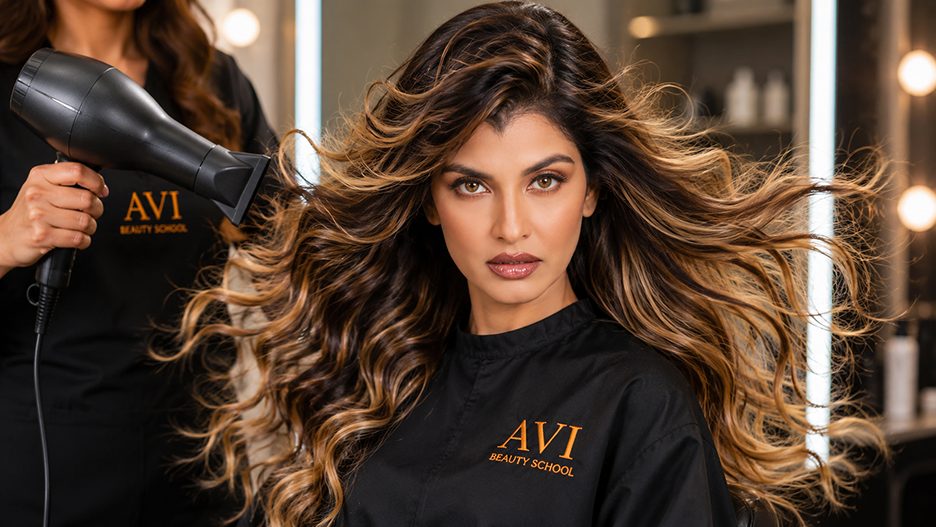
- Cutting, trimming, and styling hair for all hair types
- Chemical services: coloring, highlighting, perming, and relaxing
- Scalp treatments and hair loss consultations
- Blow-drying, flat-ironing, and thermal styling
- Basic skincare and facial services
- Waxing and hair removal
- Basic nail care, including manicures and pedicures
- Makeup application
- Extensions and hair additions
AVI’s Cosmetology program (1,000 hours) is the most comprehensive beauty training we offer. Students graduate ready to sit for Virginia’s state licensing exam and enter the workforce with a wide skill set that opens doors across the full spectrum of the professional salon world.
Esthetician vs. Cosmetologist: Side-by-Side Comparison
Still trying to decide? Here’s a simple way to think about it:
- If you love skin — analyzing it, treating it, transforming it — esthetics is your lane.
- If you love hair and want a broad, versatile license, cosmetology gives you more range.
- If you want both, some graduates complete both programs over time, or choose cosmetology first for its broad foundation.
- If you’re drawn to clinical or medical settings, Master Esthetics or additional specialized training (like our Laser Technician program at 120 hours) may be the right direction.
It’s also worth noting that cosmetology training does include basic skin and nail content — but it doesn’t go as deep into skincare science as a dedicated esthetics program does. If your passion is truly in the skin, you’ll get more specialized, hands-on training by focusing on esthetics directly.
What Neither License Covers (And What to Do About It)
It’s important to be clear: neither a standard esthetics license nor a cosmetology license automatically qualifies you to perform laser treatments, injectable services, or advanced medical aesthetics. These require additional, separate training and — in many states — supervision by a licensed medical professional.
At AVI Career Training, we offer a Laser Technician program (120 hours) that prepares students for work in med-spas and clinical settings. This is typically pursued after earning an esthetics or cosmetology license, not in place of one. We also offer a Medical Assistant program (600 hours) for students interested in a clinical healthcare pathway.
Other Programs Available at AVI Career Training
While esthetics and cosmetology are two of the most popular paths, AVI Career Training offers a full menu of beauty and wellness career programs to match a variety of interests:
- Nail Technology — 150 hours of focused nail art and technique training
- Massage Therapy — 625 hours; Title IV federal financial aid available for qualifying students
- ESL (English as a Second Language) — 1,200 hours to support language and professional growth
Whether you’re a first-time student or a working professional looking to add credentials, AVI’s COE-accredited programs are designed to get you job-ready efficiently and confidently.
How to Choose the Right Path for You
Here are a few practical questions to help you decide between esthetics and cosmetology:
- What excites you most? Imagine yourself at work five years from now — are you doing facials and skincare consultations, or cutting and coloring hair?
- What’s your timeline? Basic Esthetics (600 hours) takes less time than Cosmetology (1,000 hours). If you want to get started sooner, esthetics may fit your schedule better.
- Where do you want to work? Day spas and dermatology offices lean heavily on estheticians. Full-service salons typically hire cosmetologists.
- Are you open to specializing later? Master Esthetics, laser training, and other add-on credentials can grow your career after initial licensure.
Our admissions team at AVI Career Training is happy to talk through your goals and help you find the best fit. Visit us at 112 Lawyers Rd NW Suite 3, Vienna, VA 22180, or call us at (571) 520-4417. You can also start your application online right now — it only takes a few minutes.
Frequently Asked Questions
Can an esthetician do hair in Virginia?
No — an esthetics license in Virginia does not authorize you to cut, color, or chemically treat hair. Those services require a cosmetology license. Estheticians are specifically licensed for skincare, hair removal, and related skin treatments. If you want to offer both hair and skin services, you would need to complete both licensure paths.
Can a cosmetologist perform facials and skincare treatments?
Yes, cosmetology training includes basic skincare and facial services, so licensed cosmetologists can legally perform facials and certain skin treatments. However, the depth of skincare knowledge in a dedicated esthetics program is significantly greater. Many clients seeking advanced skincare — particularly in spa or clinical settings — specifically request licensed estheticians.
How long does it take to become a licensed esthetician at AVI Career Training?
AVI’s Basic Esthetics program is 600 hours, and our Master Esthetics program is 750 hours. Program completion time depends on your schedule — whether you’re attending full-time or part-time. After completing your program, you’ll need to pass Virginia’s state licensing exam before you can practice professionally. Contact AVI at (571) 520-4417 to ask about current scheduling options.
Is financial aid available for esthetics or cosmetology programs at AVI?
AVI Career Training offers Title IV federal financial aid for qualifying programs. We encourage prospective students to contact our admissions team directly to discuss eligibility and available options. We never want tuition to stand in the way of your future — reach out so we can help you explore what’s available.
What’s the difference between Basic Esthetics and Master Esthetics at AVI?
Basic Esthetics (600 hours) provides the foundational training needed to pass Virginia’s state licensing exam and work in spas, salons, and related settings. Master Esthetics (750 hours) builds on that foundation with more advanced techniques and knowledge, making graduates more competitive for clinical, medical-adjacent, and high-end spa environments. If you’re aiming for a med-spa or dermatology office, Master Esthetics can give you a meaningful advantage.
Ready to Start Your Beauty Career?
Whether you’re drawn to the precision of skincare or the creativity of full-service cosmetology, AVI Career Training has a program designed to help you build the skills, credentials, and confidence to succeed. As a COE-accredited school, we’re committed to quality education and real career outcomes for every student who walks through our doors.
Come see us at 112 Lawyers Rd NW Suite 3, Vienna, VA 22180, call us at (571) 520-4417, or apply online today and let’s get your career started.