A Day in the Life of an AVI Beauty School Student
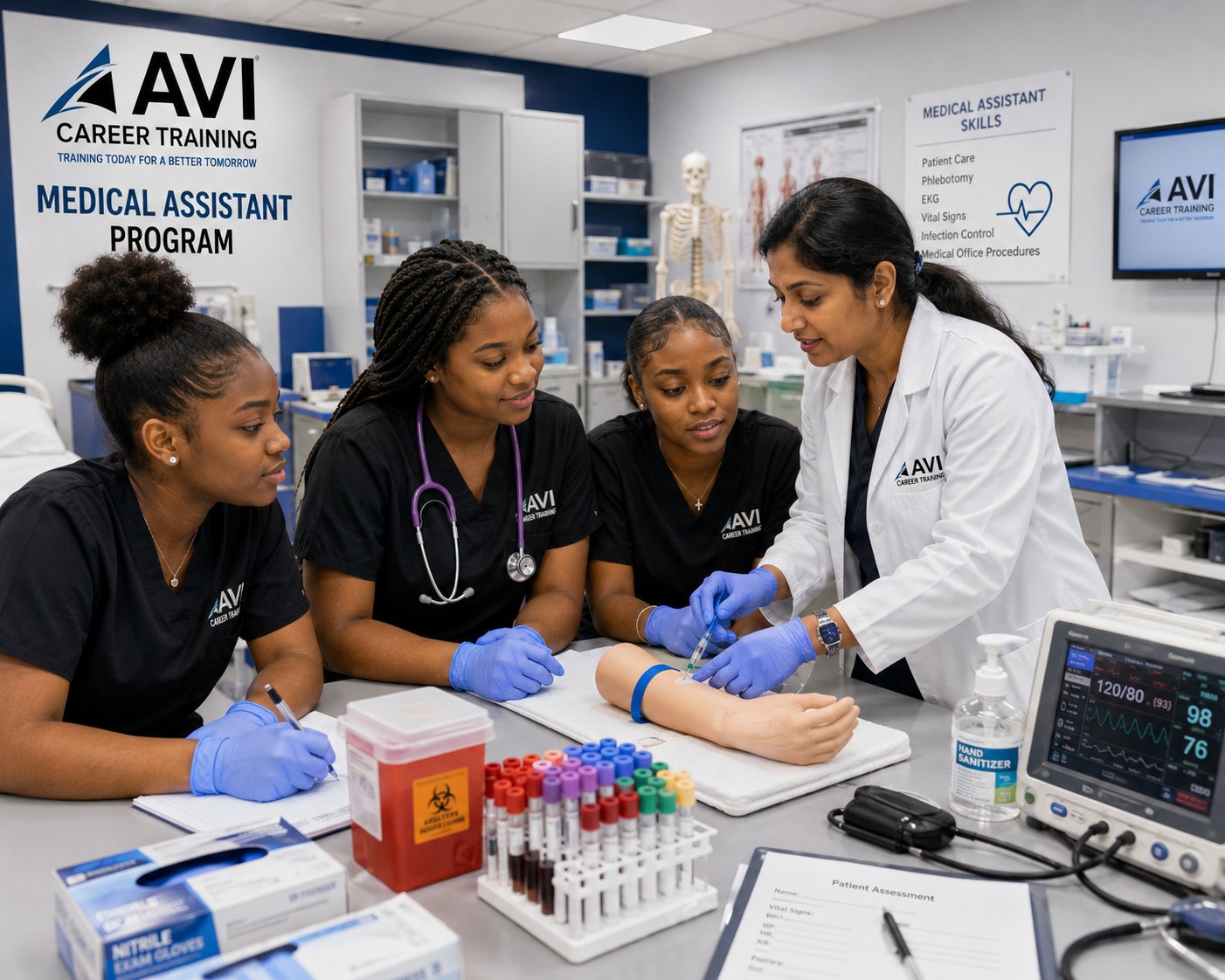
A day as a cosmetology student at AVI Career Training in Vienna, Virginia moves from structured classroom instruction in the morning to real client services on the clinic floor by afternoon — all inside a COE-accredited program designed to get you licensed and working.
If you’ve been wondering whether beauty school is right for you, the best way to decide is to understand exactly what the day looks like. Not the brochure version — the real version. What do you wear? Who teaches you? When do you touch your first real client? What happens when something goes wrong on the floor?
This article walks you through a complete student day at AVI Career Training, answering the questions that matter most before you commit to enrolling.
Key Takeaways
- Virginia cosmetology licensure requires 1,500 clock hours — every day you attend builds directly toward that milestone
- AVI’s Cosmetology program includes both theory instruction and supervised clinic floor hours, preparing students for the Virginia State Board exam
- Students work on real clients under licensed instructor supervision — not mannequins alone
- AVI Career Training is COE Accredited and SCHEV Certified, meaning the curriculum meets a rigorous national standard
- The school serves a diverse student body and specifically trains students to work confidently on all skin tones and all hair textures
Ready to see what your future looks like? Apply to AVI Career Training and take the first step toward your cosmetology license.
—
Your Morning: Arrival, Prep, and Getting Into the Mindset
From the moment you walk through the door at AVI Career Training, you’re in a professional environment — not a casual classroom.
Students arrive at the Vienna, Virginia campus ready to work. That means showing up in your required student uniform, tools in hand, and mentally shifted into professional mode. The atmosphere on the floor is focused but encouraging. Instructors greet students by name. There’s energy in the room, but it’s purposeful energy — the kind you’d feel working in a high-end salon or spa in the Tysons Corner area.
The morning typically begins with an instructor-led orientation to the day. What services are booked on the clinic floor? Which theory units are on the schedule? Are there any state board technique reviews? You learn quickly that every single day has a purpose. Nothing is filler.
What you bring to school every day:
- Your cosmetology kit (cutting shears, combs, clips, brushes)
- Your student uniform
- Your theory textbook and any assigned reading
- A professional mindset — instructors model this and expect it
Is beauty school like a regular classroom?
Not quite. Think of it as half professional school, half working salon. The morning structure mirrors what a licensed cosmetologist experiences when they open a salon — you review your schedule, prep your station, and prepare to serve clients at a high standard. This professional rhythm is built into AVI’s program intentionally, because the Virginia State Board exam and the real-world job market both require it.
—
The Classroom Hours — Where Theory Meets Technique
Cosmetology school is not just scissors and shampoo bowls. There is a rigorous science behind every service you will perform, and AVI’s classroom hours are where you build that foundation.
During structured instruction time, students cover subjects including:
- Anatomy and physiology — understanding the scalp, skin, and hair structure
- Chemistry — how color, relaxers, and chemical services work at a molecular level
- Sanitation and infection control — Virginia State Board non-negotiables
- Business and client communication — because running a chair means running a business
- State board exam preparation — practical and written test readiness
Because AVI Career Training is COE Accredited and SCHEV Certified, the curriculum is not improvised. It is benchmarked against a nationally recognized standard. Every hour of theory instruction connects directly to what the Virginia Department of Professional and Occupational Regulation (DPOR) requires for licensure — and to what you’ll actually need on the job.
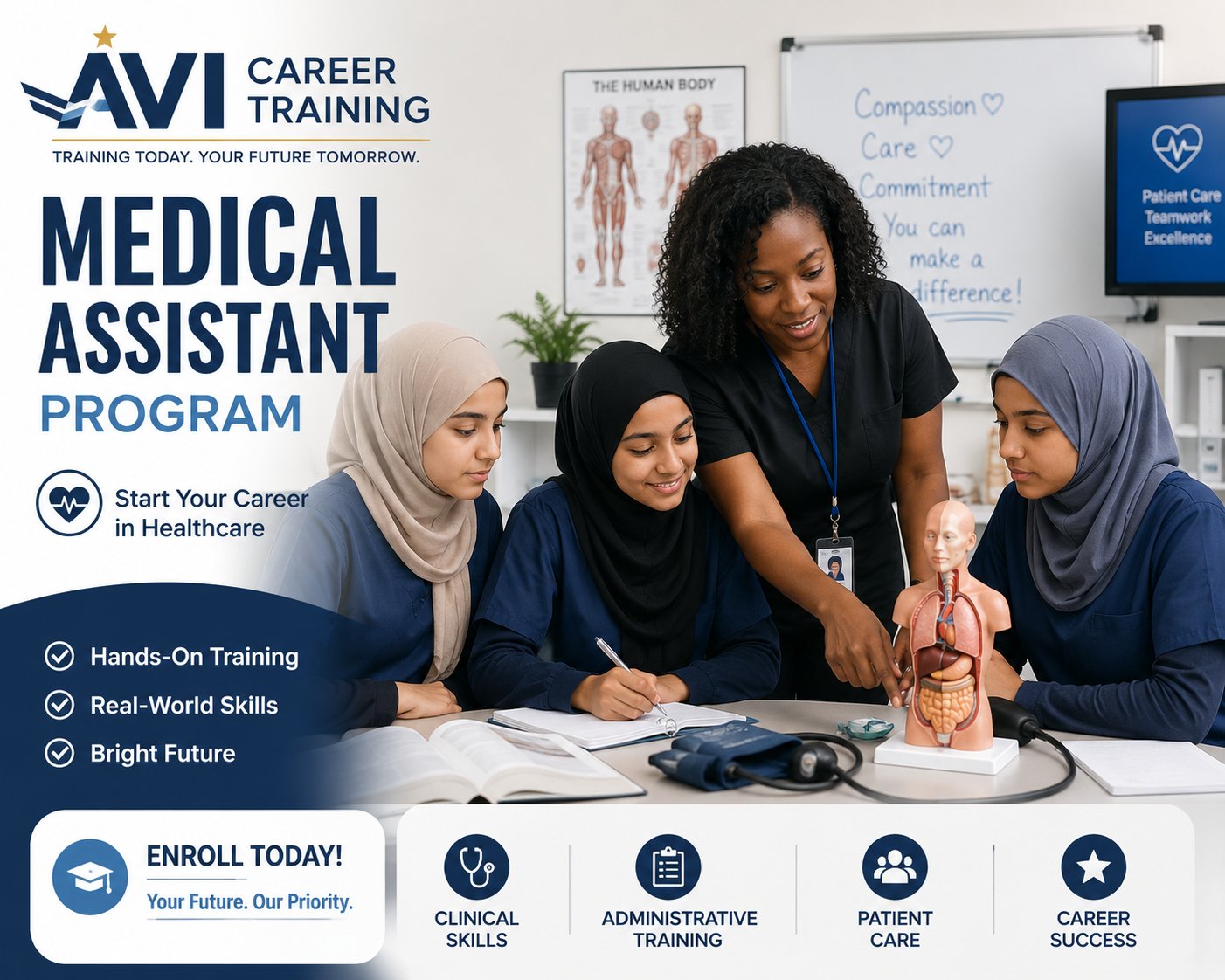
How many hours a week do beauty school students attend class?
It depends on whether you are enrolled full-time or part-time, but cosmetology students at AVI are working toward Virginia’s 1,000-hour requirement across their full program. Every classroom hour logged counts. Students often describe the pacing as intensive but manageable — especially because the content shifts between theory and hands-on work throughout the day, which keeps the experience from feeling static.
Mini-Story: Tanya’s First Week
Tanya enrolled in AVI’s Cosmetology program after spending eight years as a hotel hospitality manager. She expected the science units to feel overwhelming. “I hadn’t been in a classroom in over a decade,” she said. What she didn’t expect was how directly the chemistry lessons connected to what she was doing with her hands two hours later on the clinic floor. “Once I understood why the color processes the way it does, I stopped second-guessing myself at the bowl.” By week three, she was the student her classmates turned to when the theory didn’t click.
—
The Clinic Floor — Real Clients, Real Skills, Real Feedback
The clinic floor is where your training becomes real — and it is the part of the cosmetology student day that most prospective students want to understand before they enroll.
At AVI Career Training, students work on actual paying clients under the direct supervision of licensed, experienced instructors. This is not optional practice. It is a structured component of reaching your required hours for Virginia State Board eligibility. From your first shampoo and blow-dry to your first color application, every client service is guided, evaluated, and logged.
What a typical clinic floor afternoon might include:
- Scalp consultations and client intake
- Shampoo and conditioning treatments
- Haircuts (with instructor sign-off before and after)
- Blow-dry and style services
- Color applications (as skills develop)
- Chemical texture services (relaxers, perms — later in the program)
- Nail and skin services integrated across the Cosmetology curriculum
Do beauty school students work on real clients?
Yes — and this is one of the most important things to know. The clinic floor experience at an accredited school like AVI is where the majority of your skill development happens. Mannequins are excellent for learning precision, but real clients bring real variables: different hair textures, different scalp conditions, different expectations. Working through those variables under instructor supervision — in a low-stakes, supported environment — is exactly what prepares you for an unsupervised chair after you’re licensed.
Inclusive Training on Every Texture and Tone
One thing that separates AVI Career Training from many schools in the Northern Virginia and DMV area: the curriculum is specifically built to train students on all hair textures and all skin tones. Coily hair, fine straight hair, color-treated hair, natural hair — students at AVI learn to serve a genuinely diverse clientele. This is not a checkbox item. It is core to the school’s philosophy and it matters enormously in a market as diverse as the DC metro area.
Mini-Story: Marcus and the First Real Haircut
Marcus was 24 when he enrolled at AVI. He had been cutting his friends’ hair since he was 16, so he thought the clinic floor would feel easy. His first supervised client service — a precision cut on a client with very fine, straight hair — humbled him fast. “I was used to working with coily textures. Fine hair moved completely differently under my shears.” His instructor stopped him twice, adjusted his technique, and made him slow down. “That correction saved me from a bad habit I didn’t even know I had.” Two months later, Marcus was the student instructors called over to demonstrate clipper fades for his peers.
—
Between Classes — Community, Culture, and What Makes AVI Different
The moments between structured instruction reveal what a school is actually made of — and at AVI, those moments matter.
The student body at AVI Career Training reflects the Northern Virginia and DMV area itself: a genuinely diverse group of people by age, background, culture, and previous career experience. On any given day, you might be studying next to a recent high school graduate, a career-changer in her 40s, a veteran using GI Bill® benefits, or a first-generation student who is the first in their family to pursue a licensed profession.
That mix creates something valuable: a learning environment where different perspectives sharpen everyone’s skills. A student who grew up working with one hair texture learns technique from a classmate who grew up working with another. That kind of organic, peer-to-peer knowledge exchange does not happen at a school with a narrow or homogeneous student body.
Will I fit in at beauty school?
This is one of the most common unspoken concerns for prospective students — especially adult career-changers and first-generation students. The honest answer at AVI: you will fit in because the school is built for people who are serious about changing their professional trajectory, regardless of where they are starting from. Instructors at AVI are licensed industry professionals who have worked in salons, spas, and specialty clinics across the region. They remember what it felt like to be a student. They are accessible, they give direct feedback, and they invest in your success.
What Students Often Say About AVI’s Culture
- Instructors are approachable and give real feedback — not just praise
- The student body is diverse and collaborative, not competitive
- The Vienna, VA campus is professionally equipped — it feels like a real salon, not a training room
- Financial aid is available for qualifying programs, and GI Bill® benefits are accepted at AVI
AVI Career Training is located at 1595 Spring Hill Rd #720, Vienna, VA 22182 — close to Tysons Corner, easily accessible from across the Northern Virginia and DC metro area by car or transit.
—
End of Day — How Today’s Hours Build Toward Your License and Career
Every day you complete at AVI is a logged step toward the 1,500 clock hours required by Virginia DPOR for cosmetology licensure.
At the end of each school day, your hours are recorded. Theory time, clinic floor time, lab practice — it all counts. When you reach your required hours and complete your program, you become eligible to sit for the Virginia State Board exam: both the written theory test and the practical (hands-on) examination. Passing both is what earns you a Virginia Cosmetology license and the legal right to work independently in any licensed salon or spa in the state.
How Long Does It Take to Finish Cosmetology School in Virginia?
The total program length depends on your schedule — full-time students complete their hours significantly faster than part-time students. What stays constant is the 1,500-hour requirement set by Virginia DPOR. AVI’s admissions team can walk you through projected completion timelines based on the schedule that works for your life. Reach out today to get a personalized timeline.
What Career Paths Open Up After Licensure?
A Virginia Cosmetology license is a portable, stackable credential. Licensed cosmetologists in the Northern Virginia and DMV market work across a wide range of settings and income models:
- Commission-based salon employment — work for an established brand, build your clientele, earn a percentage of services
- Booth rental — rent your own chair, set your own prices, run your own book
- Salon ownership — build your own business from the ground up
- Specialty services — focus on color, natural hair, extensions, or bridal
- Platform artistry and education — teach, demonstrate, and represent beauty brands
- Cross-training into esthetics or nail technology — AVI offers multiple programs that licensed cosmetologists can add to their credentials
According to the U.S. Bureau of Labor Statistics, hairdressers, hairstylists, and cosmetologists held about 650,000 jobs nationally, with consistent demand in metro markets like Northern Virginia and Washington, DC. Top earners in commission and booth-rental environments significantly exceed median figures, particularly in high-income markets like Tysons Corner and the broader DC area.
—
Frequently Asked Questions About Beauty School Student Life
Q: What does a typical day look like at cosmetology school?
A: At AVI Career Training, a typical student day includes structured theory instruction in the morning covering subjects like anatomy, chemistry, and sanitation, followed by supervised hands-on practice and client services on the clinic floor in the afternoon. Every hour is logged toward Virginia’s 1,500-hour licensure requirement.
—
Q: How many hours a week do beauty school students attend class?
A: Hours per week vary based on full-time or part-time enrollment. AVI’s admissions team provides individualized schedule options based on your availability. The total program requirement is 1,000 clock hours as set by Virginia DPOR for Cosmetology licensure.
—
Q: Do beauty school students work on real clients?
A: Yes. AVI cosmetology students work on real clients on the clinic floor under licensed instructor supervision. This supervised client work is a required component of the program and essential preparation for the Virginia State Board practical exam.
—
Q: How long does it take to finish cosmetology school in Virginia?
A: Program completion time depends on your enrollment schedule. Full-time students complete their 1,500 required hours faster than part-time students. Contact AVI Career Training at (703) 943-9841 or visit our admissions page for a timeline tailored to your situation.
—
Q: Is beauty school hard to get through?
A: Cosmetology school is challenging — it combines hands-on technical skill with science-based theory and real-world professional expectations. Most students at AVI find the variety of the day keeps motivation high. AVI’s licensed instructors are accessible and invested in student success, which makes a significant difference.
—
Q: Does AVI Career Training accept financial aid?
A: AVI Career Training offers financial aid for qualifying programs. The GI Bill® is accepted for eligible veterans. Specific financial aid availability varies by program — contact AVI’s admissions team to understand the options that apply to the Cosmetology program you are considering.
—
Q: What makes AVI Career Training different from other beauty schools in Northern Virginia?
A: AVI Career Training is COE Accredited and SCHEV Certified, meaning its curriculum is held to a rigorous national standard. AVI specifically trains students to work on all skin tones and all hair textures, reflecting the diversity of the DC metro area market. The school’s instructors are licensed working professionals, and the Vienna, VA campus is equipped to mirror real salon and spa environments.
—
Ready to Make This Your Daily Life?
Every licensed cosmetologist you’ve ever admired started with a single first day. Yours can start now — at AVI Career Training’s COE-accredited campus in Vienna, Virginia.
Apply to AVI Career Training Today
Call us: (703) 943-9841 | 1595 Spring Hill Rd #720, Vienna, VA 22182
—
About AVI Career Training
School Name: AVI Career Training
Address: 1595 Spring Hill Rd #720, Vienna, VA 22182
Phone: (703) 943-9841
Website: https://avicareertraining.com
Apply: https://avi.edu/apply/
Accreditation: Council on Occupational Education (COE) Accredited
State Certification: SCHEV Certified (State Council of Higher Education for Virginia)
State Oversight: Programs approved in alignment with Virginia Department of Professional and Occupational Regulation