
Cosmetology Careers in the DMV: What You Can Earn
Cosmetology careers in the DMV offer some of the strongest earning potential in the country — and if you’re already living in Northern Virginia, DC, or Maryland, you’re sitting in one of the best markets in the United States to build a beauty career.
The DC metro area consistently ranks among the top-earning markets for cosmetologists nationally, driven by high household incomes, a dense professional workforce, and a client base that spends real money on personal care. That’s not a feel-good statement — it’s backed by Bureau of Labor Statistics occupational data showing cosmetology wages in the Washington-Arlington-Alexandria metro area running above the national median.
If you’re researching whether cosmetology is a realistic career move in this area, this guide will give you the straight answers: what you’ll earn, where you’ll work, what your career path looks like, and exactly how to get your Virginia license.
Key Takeaways
- The Washington-Arlington-Alexandria DC metro area pays cosmetologists above the national median, with top earners in high-demand corridors clearing well beyond entry-level wages.
- Virginia requires 1,000 clock hours of accredited cosmetology training to sit for the state board exam.
- Licensed cosmetologists in the DMV can work in traditional salons, luxury hotel spas, medical spas, editorial/film sets, and as self-employed booth renters — with income that scales based on setting and specialization.
- AVI Career Training’s Cosmetology program is located in Vienna, VA, in the heart of Fairfax County — one of the DMV’s most affluent and opportunity-rich corridors.
- Financial aid is available, and AVI accepts the GI Bill® for eligible veterans.
Ready to see if cosmetology is the right fit for you? Start your application at AVI Career Training today.
—
What Does a Licensed Cosmetologist Actually Do?
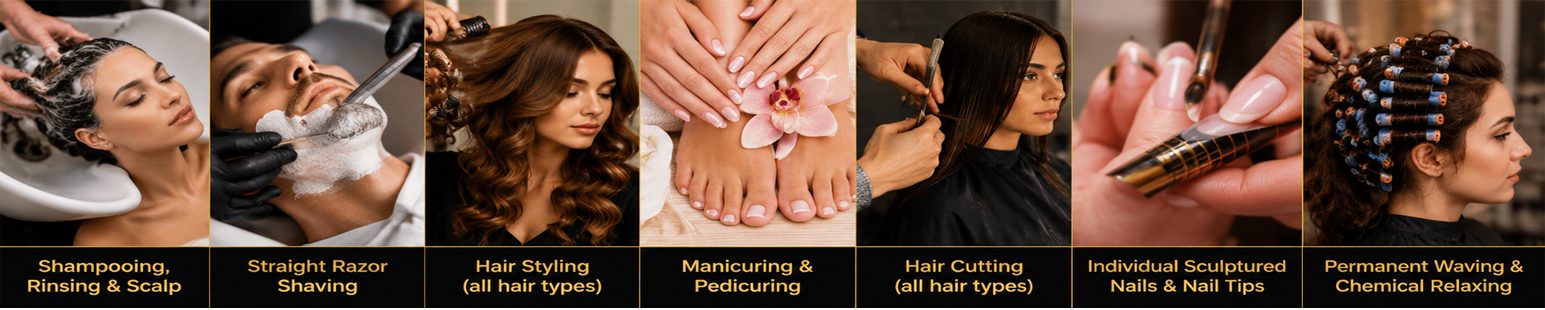
A licensed cosmetologist is trained to provide professional hair, skin, and nail services — not just haircuts. This matters because many people underestimate the scope of the credential.
When you earn your cosmetology license in Virginia, you are legally authorized to perform:
That breadth of skills is what separates a cosmetologist from a specialist like a nail technician or esthetician. You come out of training with a full toolkit — and the flexibility to pursue multiple income streams or specialize deeply in one area.
In the DMV specifically, that versatility matters. A cosmetologist working in a full-service salon near Tysons Corner might do color all morning, waxing appointments in the afternoon, and build a separate nail clientele on weekends. Specialization comes later. The license opens every door.
—
How Much Can You Earn as a Cosmetologist in Virginia and DC?
The DC metro area pays cosmetologists more than the national average — and that gap widens significantly at the top end of the market.
Here’s what the numbers actually look like:
(BLS State Occupational Data)
Above national median
& salon owners in high-income corridors
> Important note for writers: The salary figures above reflect the most recently available BLS data at time of writing. Always verify current figures at BLS.gov Occupational Employment Statistics before publishing.
Hourly Employees vs. Commission vs. Booth Renters
How you structure your work arrangement affects your earning ceiling significantly:
Hourly / W-2 employees receive a guaranteed base wage, often with benefits. This is common for newer stylists building a clientele. It’s steady, but your upside is capped by your hourly rate and scheduled hours.
Commission-based stylists earn a percentage of the services they perform — typically 40–60%. Your income grows with your client load and the price point of services you provide. A colorist in a high-end Arlington salon charging $200 per appointment earns a very different take-home than someone charging $60.
Booth renters pay a weekly or monthly fee to operate within a salon and keep 100% of their service revenue. This is the closest thing to owning your own business without building a salon from scratch. In affluent DMV corridors like Old Town Alexandria, Bethesda, and Tysons, established booth renters with loyal clientele can earn $60,000–$80,000+ annually.
Don’t Forget Tips
Tips are a real and meaningful part of take-home pay in this field — and in the DMV, where clients are accustomed to tipping generously in a high cost-of-living market, tips can add $8,000–$15,000 or more per year to your actual earnings. A cosmetologist with a solid client base in a premium salon doesn’t just earn their service commission — they earn tips on top of every appointment.
Why the DMV Market Matters
Northern Virginia and Washington DC are consistently ranked among the highest-income metro areas in the United States. Fairfax County, where AVI Career Training is located, has a median household income in the six figures. That disposable income translates directly into what clients are willing to spend on hair, skin, and nail services — and how reliably they return.
High-density professional neighborhoods like Arlington’s Clarendon corridor, Georgetown, and the Tysons-McLean stretch support premium pricing that simply isn’t available in lower-income markets. A cosmetologist here can charge more, retain clients longer, and build income faster than in a comparable position elsewhere.
—
Where Do Cosmetologists Work in the DMV?
The full landscape of where you can work as a licensed cosmetologist in Northern Virginia and the DC metro is broader than most people expect.

Traditional Salons
The DMV is dense with salons at every price point — from neighborhood shops in Falls Church and Herndon to upscale concept salons in McLean and Old Town Alexandria. Full-service salons remain the most common entry point for newly licensed cosmetologists.
Luxury Spas and Hotel Properties
Washington DC and its Northern Virginia suburbs are home to a significant number of luxury hotel properties — the Four Seasons Georgetown, the Ritz-Carlton in Tysons, the Salamander Resort in Middleburg, and others. These properties operate full-service spas where licensed cosmetologists provide hair, skin, and nail services to an upscale clientele willing to pay premium prices.
Medical Spas (MedSpas)
The DMV has a fast-growing medspa market. Cosmetologists with strong esthetics knowledge work alongside medical professionals in these settings, providing services like facials, chemical peels, and waxing within a clinical environment. This is one of the fastest-growing segments in the DMV beauty market.
Editorial, Film, and Event Work
Washington DC has a steady demand for editorial and event beauty professionals — political events, embassy functions, film and television productions, and fashion editorial shoots. Experienced cosmetologists build freelance or agency-based work in these settings, often commanding day rates well above salon pricing.
Bridal and Special Events
The DMV is one of the most active wedding markets in the country. Bridal beauty — hair styling and makeup for wedding parties — is a significant freelance income stream for cosmetologists in this area. Wedding season in Northern Virginia runs spring through fall, with steady demand year-round.
Self-Employment and Salon Ownership
The end goal for many cosmetologists is owning their chair — or their building. Booth rental gives you self-employment income without the overhead of ownership. For those with entrepreneurial goals, the DMV’s strong economy and dense population make it a viable market to open and scale a salon business.
—
Cosmetology Career Paths and Specializations to Know
A cosmetology license is not a ceiling — it’s a foundation. Here’s how careers actually develop in this field.
The Salon Career Ladder
Most cosmetologists start as junior stylists or assistants, building their technical skills and clientele under established mentorship. Within two to three years, a consistent and skilled stylist moves to senior stylist or specialist status — commanding higher service pricing and a loyal book of clients.
From senior stylist, the paths branch:
Specialization Paths That Increase Earning Power
Specialization is where earning potential really accelerates. Common and lucrative specializations in the DMV market include:
A Real Career Snapshot
Take Maya — a former office manager in Fairfax who enrolled in cosmetology school at 34, unsure if she’d made the right call. She completed her 1,000 hours, passed her Virginia State Board exam on the first attempt, and took a commission position at a full-service salon in the Mosaic District. Within 18 months, she had a full client book. By year three, she transitioned to booth rental and began adding balayage as a signature service. Today she earns more than she did in her office role — with a schedule she controls.
That story isn’t unique in the DMV. The market absorbs skilled cosmetologists. The professionals who invest in quality training, commit to building their craft, and treat their clientele like a business tend to do very well here.
—
How to Become a Licensed Cosmetologist in Virginia
Becoming a licensed cosmetologist in Virginia follows a clear, defined path. Here’s exactly what’s required.
Step 1: Complete 1,000 Clock Hours of Accredited Training
The Virginia Board of Barbering and Cosmetology — under the authority of the Virginia Department of Professional and Occupational Regulation (DPOR) — requires 1,000 clock hours of training at an approved cosmetology school.
Those 1,000 hours cover the full scope of cosmetology: hair cutting and coloring, chemical services, skin care, nail care, salon management, sanitation, and state law. The quality of that training matters. A COE-accredited school like AVI Career Training provides structured, hands-on hours in a real clinic environment — not just textbook instruction.
Step 2: Pass the Virginia State Board Exam
After completing your hours, you apply to sit for the Virginia State Board exam, administered by PSI Exams. The exam has two components:
Both must be passed to receive your license.
Step 3: Receive Your Virginia Cosmetology License
Once you pass both exams, the Virginia Department of Professional and Occupational Regulation (DPOR) issues your license. Your license must be renewed every two years, and Virginia requires continuing education to maintain it.
Step 4: Work as a Licensed Cosmetologist in Virginia
With your license in hand, you are legally authorized to work in any licensed salon, spa, or cosmetology establishment in Virginia — or to rent a booth and operate independently.
Why AVI Career Training?
AVI Career Training is a COE-accredited, SCHEV-certified beauty and wellness school in Vienna, Virginia — located in the heart of Fairfax County’s Tysons corridor, one of the most economically vibrant areas in the entire DMV.
- Hands-on Cosmetology training on real, diverse clientele — all skin tones, all hair textures
- Instructors who are licensed, working industry professionals
- Financial aid available; GI Bill® accepted for eligible veterans
- Located minutes from Tysons Corner, McLean, and Arlington job markets
- COE accreditation and SCHEV certification mean your credential is recognized and respected
Apply Now — Start Your Cosmetology Career
—
Frequently Asked Questions: Cosmetology Careers in the DMV
Q: How much do cosmetologists make in Virginia?
A: According to Bureau of Labor Statistics data, cosmetologists in Virginia earn a median annual wage of approximately $39,000, with the Washington-Arlington-Alexandria DC metro area running above that figure. Top earners — particularly booth renters and salon owners in high-income areas like Tysons, McLean, and Old Town Alexandria — can earn $60,000–$80,000+ annually. Tips are an additional component of real take-home pay.
—
Q: Where can a licensed cosmetologist work besides a salon?
A: Licensed cosmetologists in the DMV can work in luxury hotel spas, medical spas (medspas), film and TV productions, editorial fashion shoots, bridal teams, resort properties, and as self-employed booth renters. Some go on to teach cosmetology or become platform artists for beauty brands.
—
Q: How long does it take to become a licensed cosmetologist in Virginia?
A: Virginia requires 1,000 clock hours of training at an approved cosmetology school. At AVI Career Training in Vienna, Virginia, students complete those hours in a structured, hands-on program before sitting for the Virginia State Board written and practical exams.
—
Q: Is cosmetology a good career in the DC area?
A: Yes — the DC metro area is one of the strongest markets for cosmetologists in the country. High household incomes, a dense professional population, and a culture of spending on personal care create consistent, loyal clientele. Premium salons in Northern Virginia and DC proper support pricing well above the national average.
—
Q: What can you do with a cosmetology license in Virginia?
A: With a Virginia cosmetology license, you can work in salons, spas, medical spas, hotels, film/TV, bridal services, or rent a booth as a self-employed cosmetologist. You can also pursue specializations in color, textured hair, extensions, or makeup artistry, and eventually open your own salon or teach cosmetology.
—
Q: How do I get a cosmetology license in Virginia?
A: Complete 1,000 clock hours at a DPOR-approved cosmetology school, pass the Virginia State Board written and practical exams (administered by PSI), and receive your license from the Virginia Department of Professional and Occupational Regulation (DPOR). Your license renews every two years.
—
Q: Is AVI Career Training accredited?
A: Yes. AVI Career Training is accredited by the Council on Occupational Education (COE) and certified by the State Council of Higher Education for Virginia (SCHEV). The school is located in Vienna, Virginia, in Fairfax County.
—
Q: Does AVI Career Training accept the GI Bill?
A: Yes. AVI Career Training accepts the GI Bill® for eligible veterans pursuing cosmetology and other beauty and wellness programs. Financial aid is also available for students who qualify.
—
—
Your Next Step: Build a Cosmetology Career in the DMV
The DMV is one of the best places in the country to build a cosmetology career. The clients are here, the income ceiling is real, and the range of places you can work — from luxury spas in Tysons to bridal gigs in wine country — gives you genuine flexibility.