> ⚠️ EDITORIAL TRANSPARENCY NOTICE — IMPORTANT
>
> This article covers CNA training pathways in Northern Virginia as an informational resource. AVI Career Training is a COE-accredited beauty and wellness school offering Cosmetology, Esthetics, Massage Therapy, Nail Technology, Electrolysis, and Cosmetic Laser Technology — not CNA or healthcare aide training. If you arrived here looking for a career in wellness, skincare, or massage, AVI’s programs may be exactly what you need. If you are specifically seeking nurse aide certification, please verify programs directly with Virginia-approved CNA training providers.
>
> AVI Career Training’s programs — including Massage Therapy, which has strong healthcare-adjacent demand — are detailed at avicareertraining.com.
—
Fast-Track Your CNA Career in Northern Virginia
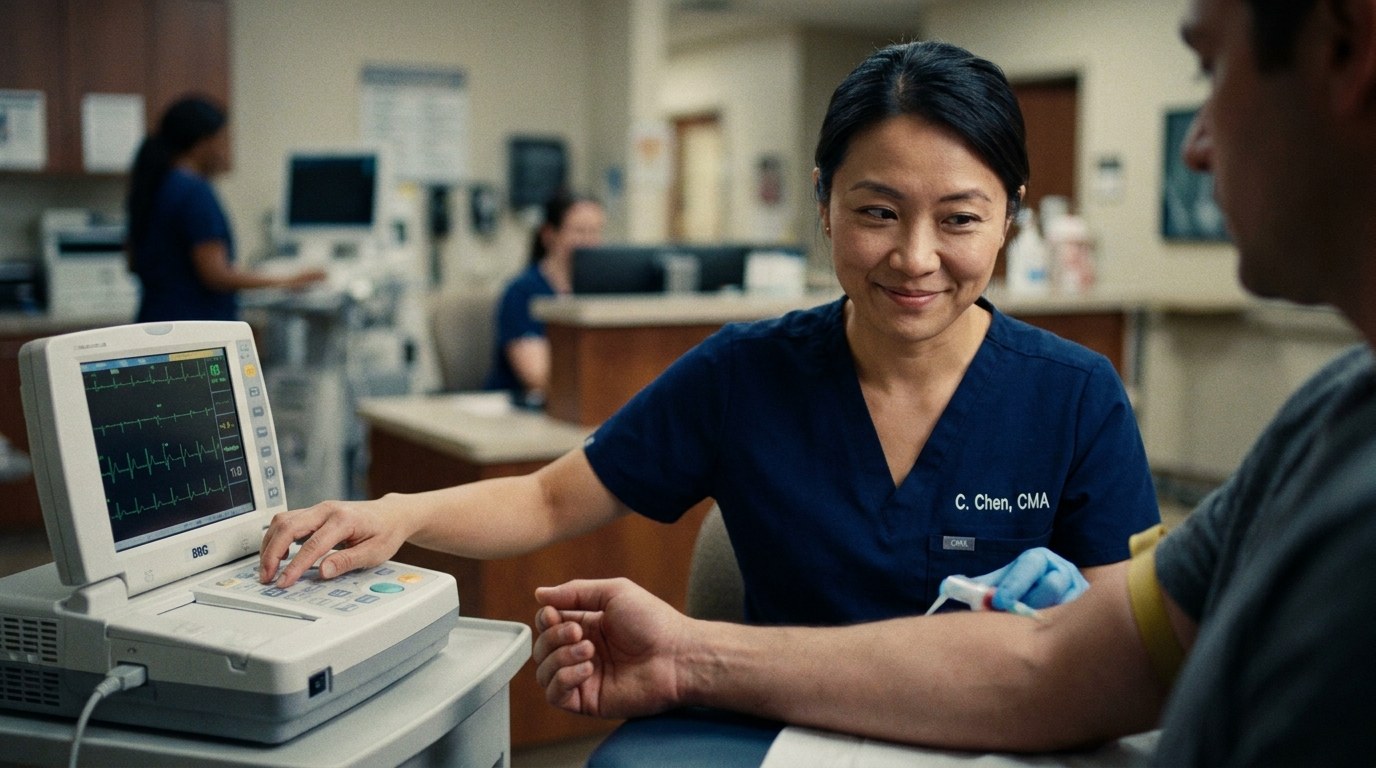
Becoming a Certified Nurse Aide (CNA) in Northern Virginia gives you a direct route to a stable, in-demand healthcare career — most programs take less than six months to complete, and the DC metro job market is consistently strong.
If you’re weighing your options for nurse aide certification virginia, this guide breaks down exactly what you need to know: state requirements, program structure, realistic costs, and what earning potential looks like once you’re credentialed. Whether you’re a career-changer, a recent graduate, or someone reentering the workforce, the path to CNA licensure in Virginia is clear and achievable.
Key Takeaways
—
What Is a Certified Nurse Aide — and Why It’s One of Virginia’s Most In-Demand Credentials
A Certified Nurse Aide is a trained, state-registered healthcare professional who provides direct patient care under the supervision of a licensed nurse. CNAs are the frontline of hands-on patient support in the healthcare system — and in Northern Virginia’s healthcare corridor, they are consistently in short supply.
The CNA role covers a wide range of daily care tasks: bathing, dressing, feeding, and repositioning patients; monitoring and recording vital signs; assisting with mobility and physical therapy exercises; and providing the kind of consistent, attentive care that dramatically affects patient outcomes and quality of life.
Why Northern Virginia Is a Strong Market for CNAs
The Washington-Arlington-Alexandria metropolitan area — which includes Fairfax County, Vienna, Tysons Corner, and the surrounding DMV region — is home to one of the densest concentrations of healthcare facilities on the East Coast. Major health systems, long-term care facilities, veterans’ services organizations, and home health agencies all compete for qualified CNAs.
According to the U.S. Bureau of Labor Statistics (BLS), employment of nursing assistants nationally is projected to grow 4% through 2032 — but in high-density urban markets like Northern Virginia, local demand routinely outpaces those national averages. Facilities in Fairfax County regularly post entry-level CNA openings with competitive wages and benefits.
Who Typically Pursues CNA Training?
The CNA credential attracts a wide range of people. Career-changers who want healthcare work without a multi-year degree commitment. Recent high school graduates exploring healthcare before committing to nursing school. Parents reentering the workforce after caregiving breaks. Military spouses who need a portable credential that transfers across state lines. The program’s short timeline and relatively low cost make it genuinely accessible.
—
Virginia CNA Licensing Requirements — What You Need to Know Before You Enroll
Virginia’s nurse aide certification process is regulated at the state level, and understanding the requirements before you enroll saves you time and prevents surprises.
Virginia mandates a minimum of 120 training hours for nurse aide programs, divided between classroom instruction and supervised clinical practice in an actual healthcare setting. Many programs — including higher-quality options in Northern Virginia — offer 150 hours of training, which provides stronger hands-on preparation and typically produces better competency exam pass rates.
The Two-Part Virginia Nurse Aide Competency Exam
To be placed on the Virginia Nurse Aide Registry, you must pass a two-part exam administered by Pearson VUE on behalf of the Virginia Department of Health:
1. Written (or Oral) Exam: A multiple-choice test covering nursing assistant principles, patient rights, infection control, safety, and basic anatomy and physiology
2. Skills Demonstration Exam: A hands-on performance evaluation where candidates demonstrate five randomly selected clinical skills (e.g., handwashing, vital signs, catheter care, range-of-motion exercises) in front of a trained evaluator
Both sections must be passed within 24 months of completing your training program. If you fail one section, you may retake it independently without repeating the entire exam — but you must pass both within that 24-month window.
Background Check Requirements
All CNA applicants in Virginia must complete a criminal background check as part of the registry application process. Certain convictions — particularly those involving abuse, neglect, or exploitation of a vulnerable adult — may result in denial of registry placement. If you have questions about your background, consult with your training program’s admissions team before enrolling. Many programs can point you toward resources for reviewing your eligibility.
Health Requirements
Most Virginia CNA programs require proof of current vaccinations (including influenza and tuberculosis screening) before the clinical portion of training begins. These requirements reflect the standards of the healthcare facilities where students complete their clinical hours — not the training school’s own policy.
—
How a Fast-Track CNA Program Works — Hours, Schedule, and What to Expect
The structure of a fast-track CNA certification program in Northern Virginia follows a consistent format across reputable providers, though scheduling and delivery formats vary.
A standard 150-hour program divides training into two major components:
Classroom and lab instruction covers foundational nursing assistant knowledge: anatomy basics, medical terminology, infection control procedures, patient rights and legal/ethical responsibilities, basic nutrition, and dementia care fundamentals. Lab time is used to practice clinical skills — taking vital signs, performing transfers, assisting with activities of daily living — in a simulated environment before working with real patients.
Clinical practicum hours take place in an actual licensed healthcare facility (typically a nursing home or long-term care facility) under the direct supervision of a registered nurse instructor. This is where classroom knowledge becomes real-world competency.
Schedule Options: Day, Evening, and Weekend Formats
Most reputable CNA programs in Northern Virginia offer multiple scheduling tracks to accommodate working adults:
If you’re working full-time and asking yourself, “Can I complete CNA training while working?” — the answer is yes, with a part-time or evening track. The clinical hours require some flexibility, as most healthcare facilities run daytime clinical rotations, but many programs work to schedule clinicals on days that accommodate working students.
—
CNA Training Cost in Northern Virginia — What to Budget
CNA training cost northern virginia varies based on program format, provider type, and what’s included in tuition — but here’s a realistic range to work with.
Typical CNA Program Cost Ranges in Northern Virginia
| Program Type | Estimated Cost Range |
|—|—|
| Community college programs | $1,200 – $2,500 |
| Private CNA training schools | $1,500 – $3,500 |
| Hospital-sponsored programs | $0 – $800 (often employer-linked) |
| Competency exam fee (Pearson VUE) | $130 – $160 |
| Registry application fee | ~$50 |
| Uniform, supplies, textbooks | $100 – $300 |
Total realistic budget: Plan for $1,500 – $4,000 all-in for a private or independent CNA program in Northern Virginia, including exam and supply costs. Hospital-system-affiliated programs occasionally offer subsidized or free training in exchange for a post-graduation employment commitment — worth researching if you already know which health system you’d like to work for.
⚠️ Financial Aid Note for Short-Term CNA Programs
Most CNA programs — including 150-hour programs — are under 600 hours in length. Federal financial aid (Title IV / FAFSA) is not available for programs under 600 hours. This means Pell Grants and federal student loans cannot be applied to most CNA training programs.
What you can use instead:
—
CNA Career Outlook and Earning Potential in the DC Metro Area
The career outlook for CNAs in the Washington-Arlington-Alexandria metro area is genuinely strong — and the earning potential, while not the highest in healthcare, is competitive for a credential that takes less than six months to earn.
Entry-Level (0–2 years): $17–$19/hour
Mid-Career (3–7 years): $19–$23/hour
Experienced / Specialty Settings: $23–$27/hour
Typical Annual Range: $35,000 – $52,000+
Source: U.S. Bureau of Labor Statistics Occupational Employment and Wage Statistics, Washington-Arlington-Alexandria MSA
Where CNAs Work in Northern Virginia
Certified Nurse Aides in Fairfax County and the broader Northern Virginia market find employment in a wide range of settings:
Home health CNAs in particular often command premium rates in Northern Virginia, where the cost of living drives higher wages across most healthcare roles.
Using CNA Certification as a Career Ladder
Many CNAs use their certification as the first step toward Licensed Practical Nurse (LPN) or Registered Nurse (RN) licensure. Virginia’s nursing schools frequently give credit or priority admission to applicants with active CNA certification and clinical experience. If your longer-term goal is nursing, the CNA credential is a smart, earning-while-learning bridge.
—
Two Students Who Made It Work — Real Scenarios from the Northern Virginia CNA Path
Scenario 1: The Career-Changer from Herndon
Maria had spent 12 years working in retail management in Fairfax County. At 34, she wanted a career with more meaning and more stability. She’d watched her mother receive in-home care and was moved by the CNAs who treated her with dignity and patience. After researching CNA program vienna va and Fairfax County options, she enrolled in an evening and weekend program — keeping her retail job during the day. In 14 weeks, she completed her 150 hours of training, passed both parts of the Virginia competency exam on her first attempt, and accepted a position at an assisted living facility in Vienna, Virginia — earning $20.50 an hour to start, with full benefits. Her retail income had never included health insurance.
Scenario 2: The Military Spouse in the Tysons Area
James’s wife was stationed at Fort Belvoir, and he’d had to leave a healthcare aide position in another state when they relocated to Northern Virginia. He needed a portable credential he could recertify quickly in Virginia and get back to work. After confirming Virginia’s reciprocity process for out-of-state CNAs (Virginia does allow endorsement if you’re currently listed on another state’s nurse aide registry), James enrolled in a fast-track CNA certification northern virginia day program — completing it in six weeks and sitting for the Virginia competency exam within three weeks of finishing. He was working again within two months of arriving in the DMV.
—
Frequently Asked Questions — CNA Training in Northern Virginia
Q: How long does it take to become a CNA in Virginia?
A: Most CNA programs in Virginia take 8–16 weeks to complete, depending on whether you attend full-time or part-time. Virginia’s minimum requirement is 120 training hours; many programs offer 150 hours. After finishing your program, you’ll schedule the two-part competency exam through Pearson VUE — most candidates complete the exam within 4–6 weeks of program completion.
Q: How much does CNA training cost in Northern Virginia?
A: Expect to budget $1,500–$4,000 for a private CNA training program in Northern Virginia, including the Pearson VUE competency exam fee (~$130–$160), registry application, uniform, and supplies. Community college programs may run slightly lower. Federal financial aid (FAFSA/Pell Grants) is not available for programs under 600 hours — which includes most CNA programs.
Q: What is the Virginia Nurse Aide Competency Exam?
A: It’s a two-part exam required for placement on the Virginia Nurse Aide Registry. Part one is a written (or oral) multiple-choice exam. Part two is a hands-on skills demonstration where you perform five randomly selected clinical skills in front of an evaluator. Both parts must be passed within 24 months of finishing your CNA training program. The exam is administered by Pearson VUE.
Q: Can I complete CNA training while working full time?
A: Yes — many programs in Northern Virginia offer evening and weekend scheduling specifically for working adults. The classroom portions are flexible; clinical hours (which take place in real healthcare facilities) typically run daytime hours, so some schedule flexibility is needed for the practicum component. A part-time program usually takes 12–16 weeks.
Q: What can you do with a CNA certification in the DC metro area?
A: CNAs in Northern Virginia work in skilled nursing facilities, hospitals (including Inova and Virginia Hospital Center), home health agencies, assisted living facilities, veterans’ care settings, and outpatient rehab centers. Entry-level wages range from $17–$19/hour in most Northern Virginia settings, with experienced CNAs earning $23–$27/hour. CNA certification also serves as a recognized first step toward LPN or RN licensure.
Q: Does Virginia accept out-of-state CNA certification?
A: Virginia allows CNAs currently listed on another state’s nurse aide registry to apply for endorsement, which can be faster than completing a full Virginia program. Contact the Virginia Department of Health’s Office of Licensure and Certification for current endorsement requirements and the application process.
Q: What’s the difference between a CNA and a nursing assistant?
A: In Virginia, these terms are used interchangeably. “Certified Nurse Aide” (CNA) and “nursing assistant” refer to the same state-registered credential. Once you pass the Virginia competency exam, you are listed on the Virginia Nurse Aide Registry — that listing is what employers and facilities verify when they hire.
Q: Are background checks required for CNA programs in Northern Virginia?
A: Yes. Virginia requires a criminal background check for all CNA registry applicants. Most training programs also require a background check before clinical placement, since students work in licensed healthcare facilities. Certain convictions — particularly those involving abuse or neglect of vulnerable adults — may affect registry eligibility. Ask your program’s admissions team about your specific situation before enrolling.
—
Considering a Wellness Career Path Instead? AVI Career Training Is Right Here in Vienna, VA
If you’ve been exploring healthcare-adjacent careers and are also open to high-demand wellness and bodywork careers, AVI Career Training in Vienna, Virginia is worth a serious look.
AVI Career Training is a COE-accredited, SCHEV-certified career school located at 1595 Spring Hill Rd #720, Vienna, VA 22182 — minutes from the Tysons Corner area. AVI offers career training programs in:
AVI’s Massage Therapy program in particular attracts students who want a hands-on, people-focused career with healthcare-adjacent demand — similar drivers to what pulls many people toward CNA training. GI Bill® benefits are accepted at AVI, and financial aid is available for qualifying programs.
—