CNA Career Guide: Training & Jobs in the DMV Area
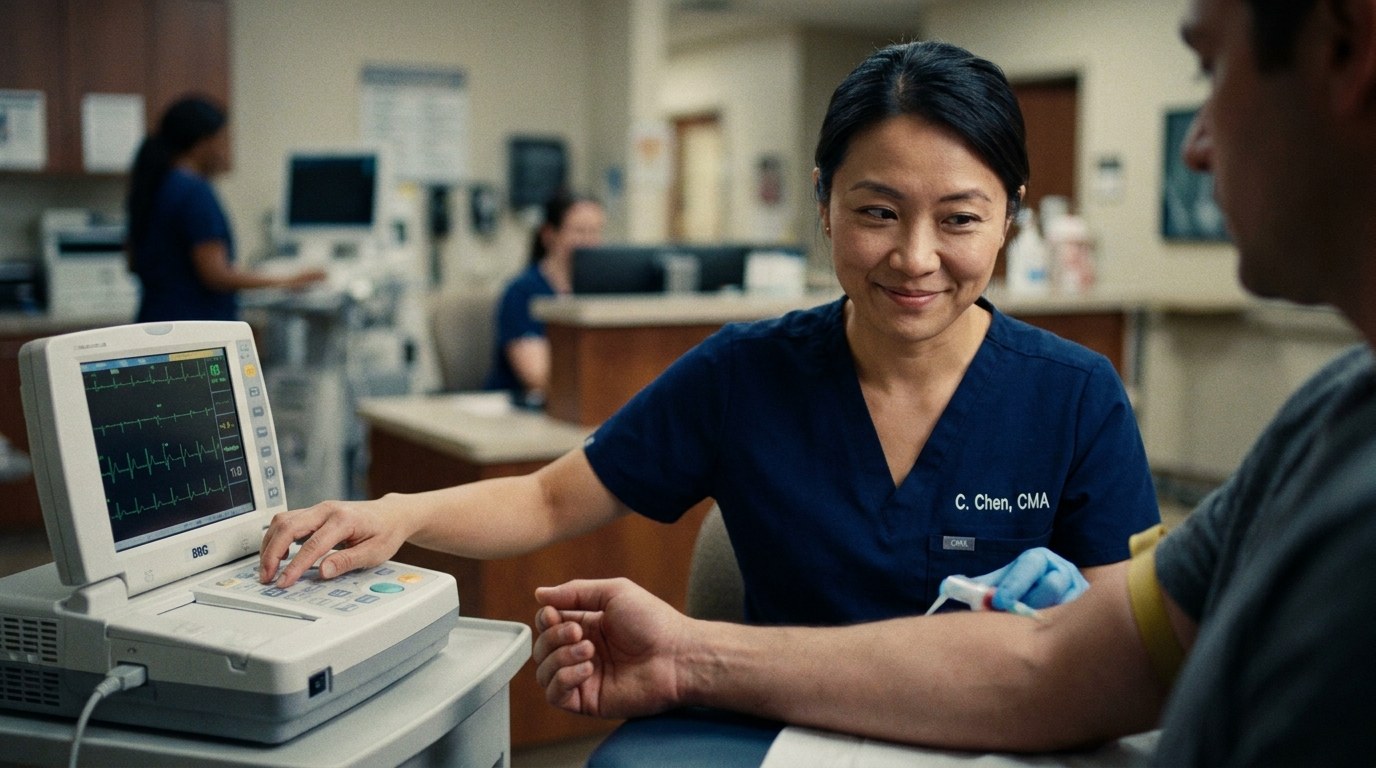
CNA training in the DMV area can be completed in as few as four weeks — and leads directly to one of the most in-demand healthcare roles in Northern Virginia and DC.
If you’ve been researching CNA training in the DMV area, you’re already asking the right questions: How long does it take? What does it pay? What are the licensing requirements in Virginia? And how does this path compare to other hands-on healthcare and wellness careers?
This guide answers all of it — clearly, specifically, and without the runaround.
Apply Now at AVI Career Training →
- Virginia requires a minimum of 150 hours of combined classroom and clinical training for nurse aide certification
- CNAs in Northern Virginia earn approximately $18–$22/hr, with experienced aides at top-tier facilities earning more
- The Virginia Nurse Aide Registry is maintained by the Virginia Department of Health Professions (VDHP); CNAs must renew every two years
- Healthcare support occupations are projected to grow 15%+ through 2032 nationally — and the DC metro ranks among the top 10 U.S. markets for healthcare job density
- CNA is one of several hands-on healthcare and wellness career paths — massage therapy and esthetics offer comparable entry timelines with different work environments and earning trajectories
—
What Is a CNA and What Do They Do?
A Certified Nursing Assistant is a frontline healthcare professional who provides direct, hands-on patient care under the supervision of a licensed nurse.
CNAs are not background workers. They are the people patients interact with most — the ones helping someone get dressed in the morning, monitoring vital signs, assisting with meals, and making sure a recovering patient feels safe and seen. In many care settings, CNAs spend more time with patients than anyone else on the medical team.
Where CNAs Work in the DMV Area
The Northern Virginia and DC metro region offers CNA employment across a wide range of settings:
What CNAs Do Every Day
Daily responsibilities typically include:
The role is physically demanding and emotionally meaningful. CNAs who thrive in this work tend to be people who want to make a tangible difference — not from behind a desk, but with their hands, their presence, and their attention.
—
Virginia CNA Licensing Requirements: What You Need to Know
Virginia’s nurse aide certification process is regulated and clearly defined — and understanding it upfront saves you time, money, and frustration.
Here is the step-by-step licensing roadmap for nurse aide certification in Virginia:
Step 1: Complete an Approved Training Program
Virginia requires candidates to complete a state-approved nurse aide training program before sitting for the competency evaluation. The program must include a minimum of 150 hours of instruction — combining classroom theory and hands-on clinical practice. (More on program formats in the next section.)
Training programs must be approved by the Virginia Department of Education (VDOE) or delivered through a licensed healthcare facility with an approved curriculum.
Step 2: Pass a Criminal Background Check
Virginia law requires a background check before candidates can complete clinical training in a healthcare facility. This is a standard requirement — not a barrier — for anyone working in direct patient care. Certain offenses may affect eligibility, so if you have concerns, contact the VDHP directly before enrolling.
Step 3: Pass the Nurse Aide Competency Evaluation
After training, you must pass a two-part competency evaluation:
Both parts must be passed to earn certification. The evaluation is administered by a VDHP-approved testing vendor.
Step 4: Get Listed on the Virginia Nurse Aide Registry
Once you pass the competency evaluation, your name is added to the Virginia Nurse Aide Registry, maintained by the Virginia Department of Health Professions (VDHP). This registry is what employers verify before hiring.
Certification must be renewed every two years. To renew, you must document that you worked as a nurse aide for pay at least once during the two-year period. If you let your certification lapse, you may need to retrain.
- Minimum training hours: 150 hours (classroom + clinical)
- Regulatory body: Virginia Department of Health Professions (VDHP)
- Training approval: Virginia Department of Education (VDOE)
- Exam format: Written/oral + hands-on skills evaluation
- Registry renewal: Every 2 years with documented work hours
- Background check: Required before clinical placement
For official requirements, verify current regulations directly with the Virginia Department of Health Professions before enrolling in any program.
—
How Long Does CNA Training Take in the DMV Area?
Most CNA programs in the DMV area take between 4 and 12 weeks to complete — depending on program format, schedule intensity, and the school’s curriculum structure.
That timeline is one of the most compelling things about this career path. Compare it to an associate degree (two years), a bachelor’s in nursing (four years), or even a medical assistant diploma (nine to 12 months). The CNA credential is one of the most accessible entry points into healthcare — by design.
Full-Time vs. Part-Time Programs
Full-time programs run five days a week and can be completed in as few as four to six weeks. These are best for students who can commit their schedule and want to enter the workforce quickly.
Part-time programs spread training across evenings or weekends, extending the timeline to eight to 12 weeks. This format works well for students who are currently employed, have family obligations, or are transitioning careers while maintaining income.
Both formats must meet Virginia’s 150-hour minimum, so the content covered is equivalent — only the calendar changes.
The Clinical Component
A meaningful portion of your 150 hours will be completed in an actual healthcare setting — a nursing facility, hospital, or clinic. This is where classroom knowledge becomes real skill. You’ll work with actual patients under supervision, practice the procedures you’ve studied, and build the confidence that makes you employable on day one.
A Real Story: Switching Gears at 34
Consider someone like Marcus — a 34-year-old Fairfax County resident who spent a decade in retail management before deciding he wanted work that felt more meaningful. He researched healthcare careers online, landed on CNA as his entry point, and enrolled in a full-time program near Tysons Corner. Six weeks later, he passed his competency evaluation and was hired by a Northern Virginia assisted living facility within two weeks of getting listed on the registry. He started at $20/hr — more than he’d expected — and within a year was promoted to a lead aide role while exploring LPN bridge programs. His total training investment? Under two months of his time.
The CNA path isn’t slow. For the right person, it’s one of the most direct routes from “thinking about healthcare” to “working in healthcare.”
—
CNA Salary and Job Outlook in Northern Virginia and the DC Metro
CNA salary in Northern Virginia is meaningfully higher than the national average — and the job market here is among the strongest in the country.
What CNAs Earn in the DMV Area
According to U.S. Bureau of Labor Statistics data for the Washington-Arlington-Alexandria, DC-VA-MD-WV Metropolitan Division:
> ⚠️ Salary figures reflect current BLS Occupational Employment and Wage Statistics (OEWS) estimates for the DC-VA-MD metro division. Verify against the most current BLS OEWS report before making financial decisions.
For context, the national median hourly wage for nursing assistants sits closer to $16–$17/hr. Northern Virginia’s wages reflect both the higher cost of living and the intense competition among employers for qualified aides.
Why the DC Metro Market Is Strong for CNAs
Several factors drive exceptional demand in this region:
Can You Work as a CNA While Taking Classes in Virginia?
Virginia does allow students who are enrolled in an approved training program to work in a limited capacity under direct supervision before certification is complete — but the specifics vary by employer and facility type. Some nursing homes hire students as nursing assistants-in-training during their clinical hours. Once you pass your competency evaluation and appear on the Virginia Nurse Aide Registry, you can work independently as a CNA.
If working while training is a priority for you, ask any program you’re considering about their relationships with local employers and what clinical placement looks like.
—
CNA vs. Other Healthcare and Wellness Careers: Choosing Your Path
The CNA credential is a strong choice — but it’s not the only hands-on healthcare or wellness career worth considering. If you’re in research mode, here’s an honest comparison of the most common alternatives.
CNA vs. Medical Assistant
Medical assistants (MAs) work in physician’s offices and outpatient clinics, handling both clinical tasks (taking vitals, drawing blood, preparing exam rooms) and administrative duties (scheduling, billing). Training typically takes nine to 12 months. Pay is similar to CNA wages in many markets, though some specialized MA roles earn more. The work environment is generally less physically demanding than long-term care CNA work.
Choose CNA if: You want the fastest entry into healthcare, prefer working directly with patients in care settings, or plan to use it as a stepping stone to LPN or RN licensure.
Choose Medical Assistant if: You prefer a clinical-plus-administrative role, want to work in a doctor’s office environment, and have nine to 12 months to invest in training.
CNA vs. Phlebotomy Technician
Phlebotomists draw blood from patients for lab testing. Training is short — often four to eight weeks — but the role is narrower in scope. Pay is typically lower than CNA wages in the DMV area, and advancement pathways are more limited unless combined with additional credentials.
CNA vs. Massage Therapy
This comparison comes up more often than you might expect — and for good reason. Both careers involve hands-on work with people, physical presence, and a genuine desire to help others feel better.
Massage Therapy is a licensed profession in Virginia regulated by the Virginia Department of Professional and Occupational Regulation (DPOR). Training programs typically require 500+ hours of instruction. Working as a licensed massage therapist, you can build a private practice, work at a spa or resort, partner with chiropractic or physical therapy clinics, or serve athletes and corporate wellness clients.
Earning potential is comparable — and in private practice or premium spa settings, often exceeds entry-level CNA wages. The work environment is quieter, more controlled, and less physically strenuous in the way institutional care settings can be.
AVI Career Training in Vienna, Virginia offers a Massage Therapy program that prepares students for the Virginia State Board licensing exam with comprehensive hands-on training. If you’re drawn to the therapeutic and wellness side of hands-on work — rather than acute or long-term care — it’s worth comparing both paths seriously.
CNA vs. Esthetics
Estheticians provide professional skincare services — facials, chemical peels, waxing, and more. AVI’s Basic Esthetics program trains students on inclusive techniques that work on all skin tones, preparing graduates for licensure through the Virginia State Board. The esthetics path appeals to people who want a career centered on wellness, beauty, and client relationships — in a spa, salon, or medical setting.
A Real Story: Two Friends, Two Paths
Keila and Destiny were roommates in Reston who both decided they wanted to leave their desk jobs and do something that involved actually helping people. Keila had always been drawn to patient care — she wanted to be in the room when someone needed support. She pursued CNA training, passed her competency evaluation on the first attempt, and landed a position at an Inova-affiliated care facility in Fairfax. Destiny, on the other hand, realized during her research that she was more interested in wellness and skin health — not clinical settings. She enrolled at AVI Career Training in the Tysons Corner area and completed her esthetics training, eventually building a loyal clientele at a medical spa in McLean. Both made the right call — because they took the time to honestly evaluate which environment matched who they are.
| Career | Training Time | DMV Wage Range | Work Setting |
|---|---|---|---|
| CNA | 4–12 weeks | $18–$22/hr | Nursing homes, hospitals, home health |
| Medical Assistant | 9–12 months | $18–$23/hr | Physician offices, outpatient clinics |
| Massage Therapist | 6–12 months | $25–$50+/hr | Spas, clinics, private practice |
| Esthetician | 3–6 months | $18–$35+/hr | Salons, spas, medical aesthetics |
—
Frequently Asked Questions About CNA Training in the DMV
Q: How many hours of training do you need to become a CNA in Virginia?
A: Virginia requires a minimum of 150 hours of combined classroom instruction and clinical training to qualify for the nurse aide competency evaluation. This is set by the Virginia Department of Education (VDOE) and the Virginia Department of Health Professions (VDHP). Always verify current hour requirements directly with VDHP, as regulations can be updated.
Q: How much does a CNA make in Northern Virginia?
A: CNAs in Northern Virginia typically earn between $18 and $22 per hour based on current BLS data for the Washington-Arlington-Alexandria metro division. Experienced aides, those working in specialized facilities, or those employed by major hospital systems may earn above that range. Wages in this market are consistently higher than the national median.
Q: How long does it take to get a CNA certification in the DMV?
A: Most CNA programs in the DMV area take between four and 12 weeks, depending on whether you attend full-time or part-time. After completing training, you must pass the two-part competency evaluation (written and skills) before receiving your certification and being listed on the Virginia Nurse Aide Registry.
Q: What is the difference between a CNA and a medical assistant?
A: CNAs primarily provide direct patient care in nursing homes, hospitals, and home health settings — bathing, feeding, mobility assistance, and vital signs. Medical assistants work in outpatient and physician office settings, performing both clinical tasks (phlebotomy, EKGs) and administrative duties (scheduling, billing). CNA training is significantly shorter; medical assistant programs typically take nine to 12 months.
Q: Can you work as a CNA while taking classes in Virginia?
A: Some employers will hire nursing assistant trainees during their clinical training phase under direct supervision. Full independent employment as a CNA requires passing the competency evaluation and appearing on the Virginia Nurse Aide Registry. If you need income during training, ask programs you’re considering about employer partnerships and paid clinical opportunities.
Q: Is CNA a good career in the Northern Virginia area?
A: Yes — Northern Virginia is one of the strongest CNA job markets in the country. Healthcare support roles are projected to