
How to Choose the Best CNA School Near Tysons, VA
Your practical guide to Virginia’s requirements, program timelines, real costs, and the right questions to ask before you enroll.
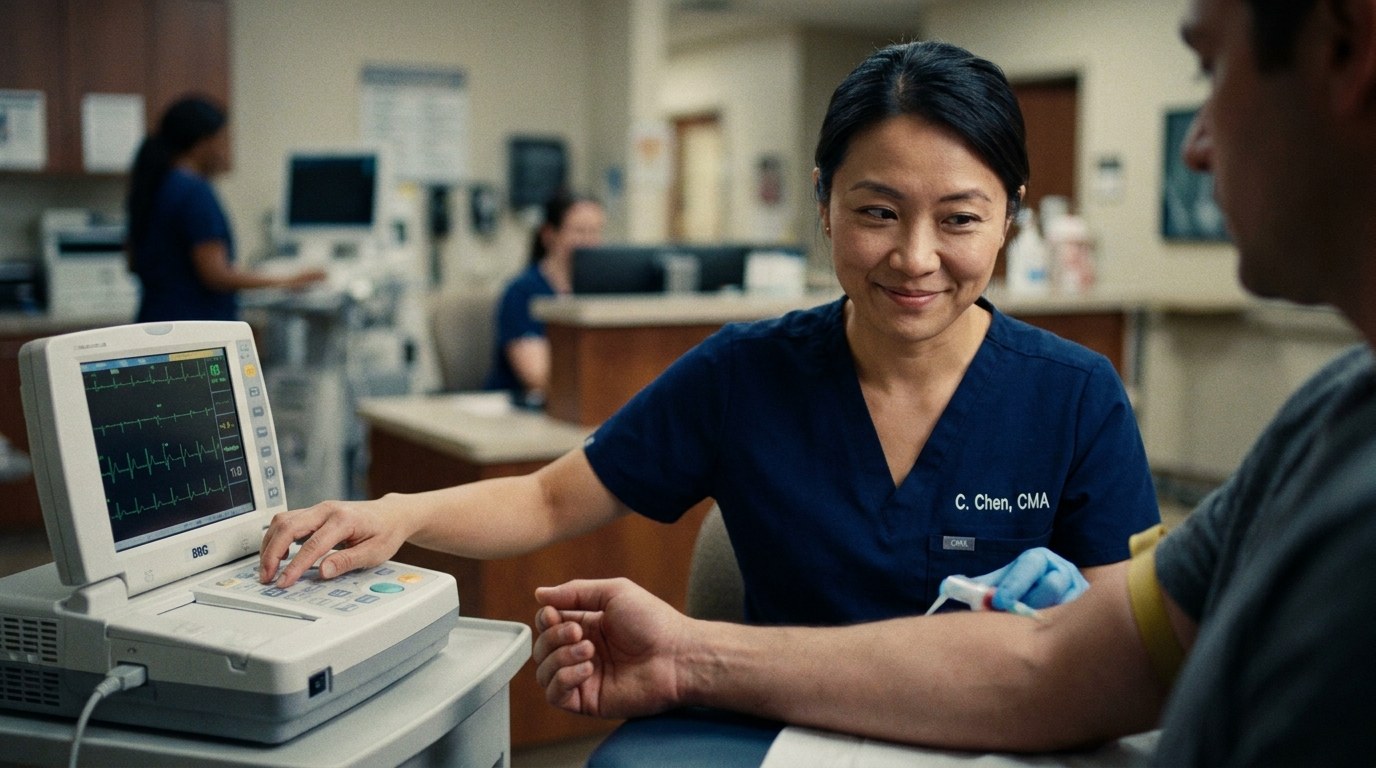
The best CNA school near Tysons, VA meets Virginia Board of Nursing approval standards, offers flexible scheduling, and connects you to real clinical sites in Northern Virginia — all at a cost you can actually manage. If you’re comparing programs in Fairfax County, this guide gives you a clear framework to make a confident decision.
Becoming a Certified Nurse Aide (CNA) is one of the fastest paths into healthcare. Virginia programs typically run four to eight weeks, and once you pass your state competency exam, you can begin working in hospitals, nursing facilities, and home health agencies across the DC metro area almost immediately.
Before you enroll anywhere, it pays to know exactly what Virginia requires, what a quality program looks like, and which questions will separate a strong school from a weak one.
⚡ Key Takeaways
- Virginia requires a minimum of 120 hours of CNA training, including at least 40 clinical hours
- State competency exams are administered by Pearson VUE on behalf of the Virginia Board of Nursing
- Program costs in Northern Virginia typically range from $800 to $3,000 depending on school type
- Median wages for nursing assistants in the Washington-Arlington-Alexandria metro area run approximately $38,000–$42,000 annually
- Some Northern Virginia employers — including Inova Health System — sponsor or reimburse CNA training for incoming hires
—
What Virginia Requires to Become a Certified Nurse Aide
Virginia sets a clear regulatory floor for every CNA program in the state. The Virginia Board of Nursing mandates a minimum of 120 hours of CNA training, with at least 40 of those hours completed in a supervised clinical setting. Any program that falls short of these hours is not approved — and completing it won’t qualify you to sit for the state exam.
After finishing your training, you’ll take the Virginia Nurse Aide Competency Evaluation, which is administered by Pearson VUE. The exam includes both a written (or oral) knowledge test and a hands-on skills demonstration. Pass both components, and you’re placed on the Virginia Nurse Aide Registry — the official state record that employers check before hiring.
Who Oversees CNA Certification in Virginia?
The Virginia Board of Nursing, operating under the Virginia Department of Professional and Occupational Regulation (DPOR), is the governing body for nurse aide certification in the state. Programs must be approved by the Board — and you should verify that approval before enrolling anywhere.
The Virginia Department of Social Services (VDSS) maintains the Nurse Aide Registry itself. Once you pass your exam, your name and credential status are publicly searchable, which is how most employers verify your certification before extending a job offer.
What the 120 Hours Actually Look Like
Most Virginia-approved CNA programs divide their curriculum into two components:
The clinical component is non-negotiable. It’s where the skills you practice in the lab translate into real patient care, and it’s also what the hands-on portion of the Pearson VUE exam directly tests.
—
How to Evaluate CNA Programs Near Tysons and Fairfax County
Not all Virginia-approved CNA programs deliver the same quality of education, clinical access, or career support. Here’s the five-point checklist that will help you sort the strong programs from the ones that just technically meet state minimums.
1. Virginia Board of Nursing Approval
This is the baseline. A CNA program that isn’t approved by the Virginia Board of Nursing cannot legally issue you a completion certificate that qualifies you to sit for the state competency exam. Ask for the program’s official Board of Nursing approval number before you submit any enrollment paperwork — and verify it directly on the Board’s website.
2. Clinical Placement Partnerships
Where your clinical hours happen matters. Programs with established partnerships at well-regarded Northern Virginia facilities — think Inova Fairfax Medical Campus, nursing communities in Vienna or McLean, or home health agencies in Fairfax County — give you two advantages. First, you learn in a professional environment that mirrors where you’ll actually work. Second, clinical sites sometimes hire directly from their student pool, so your practicum becomes a de facto job interview.
Ask the school: “Where specifically do students complete their clinical hours, and how far is the site from Tysons?”
3. Schedule Flexibility
Many people pursuing CNA certification in Northern Virginia are career changers who are currently working or managing family responsibilities. A program that only offers a single 8 a.m. weekday cohort isn’t realistic for everyone. Look for schools that offer evening, weekend, or hybrid scheduling options — or multiple cohort start dates throughout the year.
4. First-Attempt Pass Rate on the State Exam
Schools that genuinely prepare students will share their Pearson VUE first-attempt pass rate without hesitation. The national average for nurse aide competency exams hovers around 70–80%. A strong program should be at or above that benchmark. If a school deflects this question or says the data isn’t tracked, treat it as a red flag.
5. Cost, Payment Options, and Employer Sponsorship Guidance
CNA programs in the Tysons/Fairfax County area typically range from $800 to $3,000. Community college programs often fall at the lower end; private providers may cost more but offer faster start dates and smaller class sizes. Some employers — particularly large health systems in Northern Virginia — will sponsor your training upfront or reimburse tuition if you commit to working with them for a defined period after certification. A good school will help you explore these options before you pay a dollar out of pocket.
—
What to Expect From CNA Training: Timeline, Format, and Costs
CNA training in Virginia moves fast — which is exactly why so many career changers choose it over longer degree programs.
How Long Does CNA Training Take in Virginia?
Most Virginia-approved CNA programs run four to eight weeks when structured as a full-time cohort. Part-time evening or weekend formats may extend the timeline to 10–12 weeks. Either way, from your first day of class to the date you sit for the Pearson VUE exam, you’re typically looking at under three months — and many graduates are employed within 30 days of passing.
What Does CNA Training Cost in Northern Virginia?
Expect to budget in the range of $800 to $3,000 for a complete Virginia-approved CNA program near Tysons or in Fairfax County. That figure typically includes tuition, lab supplies or a scrubs kit, textbook materials, and the cost of the Pearson VUE competency exam. Some programs charge additional fees for criminal background checks and TB testing, which are required at most clinical sites.
A few points that can reduce your out-of-pocket cost:
> Real Talk on Financial Aid: Because most CNA programs are under 600 hours, they typically do not qualify for federal Title IV financial aid (FAFSA/Pell Grants). Always ask a school directly whether federal aid applies to their specific CNA program — and if it doesn’t, ask what payment plan options are available.
A Day in the Life of a CNA Student in Fairfax County
Consider someone like Marcus, a 34-year-old warehouse supervisor in Sterling who had always wanted to transition into patient care. He enrolled in a morning CNA cohort near Tysons that ran Monday through Friday for six weeks. The first four weeks covered skills in the classroom — bed bath procedures, transfers, vital signs, catheter care — followed by two weeks of clinical rotations at a nursing facility in McLean. He passed his Pearson VUE exam on the first attempt, and within three weeks, he was hired as a full-time CNA at an Inova-affiliated rehabilitation center, earning $19.50 an hour with benefits.
Marcus’s path from enrollment to first paycheck: nine weeks.
—
Questions to Ask Before You Enroll in a CNA Program
Choosing a CNA school is a financial and professional decision. Walk into any admissions conversation with these questions — and pay close attention to how clearly (and willingly) the school answers them.
The Eight Questions That Matter Most
1. Is this program approved by the Virginia Board of Nursing?
Ask for the official approval number. Then verify it yourself at the Board’s website. No approval number = no state exam eligibility.
2. What is your first-attempt pass rate on the Pearson VUE competency exam?
A strong program should know this number and share it confidently. A rate below 70% warrants a follow-up question about how they support struggling students.
3. Where will I complete my clinical hours — and how far is the site from here?
You should know the specific facility name and travel distance before you commit. Clinical sites more than 45 minutes away create real logistical problems for working students.
4. How many students are in each cohort?
Smaller classes (12–18 students) generally mean more instructor attention during lab skills practice — which directly affects your exam readiness.
5. Does the program include the Pearson VUE exam fee?
Some schools bundle the exam cost; others don’t. The exam currently costs around $130–$175 in Virginia — worth knowing upfront.
6. What is the start date of the next cohort, and how often do new cohorts begin?
A school that only starts new groups quarterly may mean a wait of weeks or months. If speed matters to you, a school with monthly or rolling start dates is worth paying a premium for.
7. Is federal financial aid (FAFSA/Pell) available for this program?
Most CNA programs are under 600 hours and therefore do NOT qualify for federal Title IV aid. Ask this directly. If a school implies aid is available without confirming the program meets the 600-hour threshold, press them for specifics.
8. Do you offer job placement assistance after graduation?
Job placement support varies widely — from a basic job board to active employer referrals and resume coaching. Understand exactly what you’re getting.
A Second Story: When Asking the Right Questions Changed Everything
Priya was a 28-year-old dental receptionist in Vienna who toured three CNA programs before enrolling. The first program couldn’t tell her their pass rate. The second one’s clinical site was in Manassas — 40 minutes each way from her apartment near Tysons Corner. The third answered every question directly: 84% first-attempt pass rate, clinical rotations at a nursing facility three miles from her home, and a monthly start date so she wouldn’t have to wait six weeks for the next cohort. She enrolled that afternoon. Six weeks later, she passed her state exam and accepted a position at the same facility where she’d done her clinicals.
The difference wasn’t the curriculum. It was the questions she knew to ask.
—
Starting Your Healthcare Career in Northern Virginia
Northern Virginia is one of the strongest job markets in the country for certified nurse aides — and the demand is growing. The DC metro area is home to major healthcare systems including Inova Health System, Virginia Hospital Center, and Kaiser Permanente Mid-Atlantic, all of which continuously hire CNAs across multiple facilities in Fairfax County and beyond.
According to BLS.gov, the median annual wage for nursing assistants in the Washington-Arlington-Alexandria metropolitan area runs approximately $38,000–$42,000 — meaningfully higher than the national median, which reflects Northern Virginia’s higher cost of living and competitive labor market.
The Career Ladder From CNA to RN
One of the most compelling things about starting as a CNA is where it can lead. The credential isn’t a ceiling — it’s a foundation. Here’s how the path typically progresses:
| Credential | Typical Timeline | Average VA Wage |
|—|—|—|
| CNA (Certified Nurse Aide) | 4–8 weeks | $38,000–$42,000 |
| LPN (Licensed Practical Nurse) | 12–18 months | $52,000–$60,000 |
| RN (Registered Nurse) | 2–4 years | $75,000–$95,000+ |
Many Northern Virginia employers actively support this progression — offering tuition assistance for LPN or RN programs to CNAs who demonstrate strong clinical performance. Starting as a CNA also gives you direct patient care experience that makes you a more competitive nursing school applicant.
What About Other Wellness Careers in Northern Virginia?
CNA training is one pathway into a people-centered career — but it’s not the only one. If you’re drawn to hands-on work, client relationships, and the flexibility to set your own schedule, the wellness and beauty industry offers fast-track credentials with strong earning potential in the Northern Virginia market.
AVI Career Training, a Council on Occupational Education (COE)-accredited school in Vienna, Virginia, offers career training in Cosmetology, Esthetics, Massage Therapy, Nail Technology, Cosmetic Laser Technology, and Electrolysis. Programs are designed for working adults, with clinical hands-on training built into every curriculum — and financial aid is available for programs that meet eligibility requirements.
If you’re exploring careers in wellness alongside healthcare, it’s worth knowing what’s available near Tysons. You can learn more about AVI Career Training or schedule a visit to the Vienna, VA campus to see the programs in person.
—
Frequently Asked Questions: CNA School Near Tysons, VA
Q: How long does it take to become a CNA in Virginia?
A: Most Virginia-approved CNA programs run four to eight weeks for full-time students. Part-time or evening formats may extend the timeline to 10–12 weeks. From your first day of class to passing your Pearson VUE exam, most students complete the full process in under three months.
—
Q: What are the Virginia state requirements to become a Certified Nurse Aide?
A: Virginia requires completion of a Board of Nursing-approved training program with a minimum of 120 hours, including at least 40 supervised clinical hours. After training, you must pass the Virginia Nurse Aide Competency Evaluation administered by Pearson VUE, which includes both a written and a hands-on skills component. Upon passing, you’re listed on the Virginia Nurse Aide Registry maintained by VDSS.
—
Q: How much does CNA training cost near Tysons or in Fairfax County?
A: Program costs in Northern Virginia typically range from $800 to $3,000. Community college programs tend to be on the lower end; private providers often charge more but may offer faster start dates and smaller class sizes. Some Northern Virginia employers sponsor or reimburse training for CNA candidates who commit to post-graduation employment.
—
Q: What’s the difference between a CNA certificate and a nursing degree?
A: A CNA certificate is a short-term credential (typically four to eight weeks of training) that qualifies you to provide direct patient care under the supervision of licensed nurses. A nursing degree — either an associate’s (for RN) or bachelor’s degree — takes two to four years and qualifies you for a higher level of clinical responsibility and independent decision-making. Many CNAs use their credential as a stepping stone toward LPN or RN licensure.
—
Q: Can I get financial aid for CNA school in Virginia?
A: Most CNA programs do not qualify for federal Title IV financial aid (FAFSA/Pell Grants) because they are under 600 hours. Some programs may qualify for workforce development grants through local government agencies like the Fairfax County Workforce Development Center. Employer-sponsored training and school payment plans are the most common ways students manage the cost of CNA training in Northern Virginia.
—
Q: Is the Virginia Board of Nursing approval the same as accreditation?
A: Not exactly. Board of Nursing approval means the program meets state regulatory minimums to qualify its graduates for the state competency exam. Institutional accreditation — from bodies like the Council on Occupational Education (COE) — is a broader, voluntary quality standard that evaluates the school’s overall curriculum, faculty, facilities, and outcomes. For a CNA program, Board of Nursing approval is the non-negotiable requirement; accreditation is an additional quality signal.
—
Q: Are there CNA programs that offer evening or weekend classes near Tysons?
A: Yes — some private CNA providers in Northern Virginia offer evening or weekend cohorts to accommodate working adults. When comparing programs near Tysons or in Fairfax County, ask specifically about schedule options and upcoming cohort start dates. Programs with rolling or monthly starts give you more flexibility than those with quarterly enrollment windows.
—
Q: What jobs can I get with a CNA certification in Northern Virginia?
A: Certified Nurse Aides in Northern Virginia work in nursing homes and long-term care facilities, hospitals (including Inova and Virginia Hospital Center campuses), rehabilitation centers, assisted living communities, and home health agencies. The DC metro area’s robust healthcare market means strong ongoing demand, with median wages running approximately $38,000–$42,000 annually according to BLS data.