
CNA Career Guide: Nurse Aide in the DMV Area
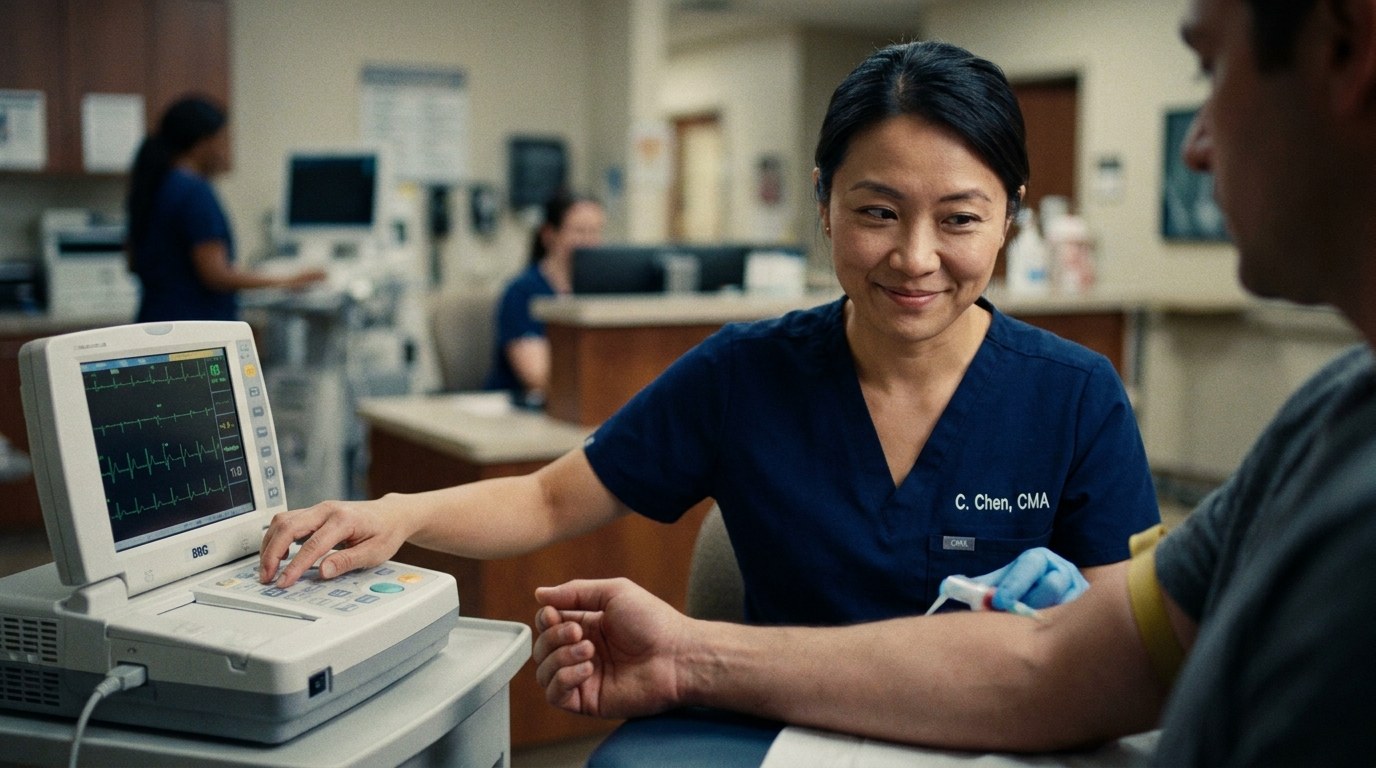
CNA certification in the DMV area opens the door to a stable, in-demand healthcare career — and you can complete the required training in as little as four to six weeks without a college degree. Whether you’re exploring nurse aide training in Northern Virginia for the first time or comparing healthcare career options across the DC/Maryland/Virginia metro, this guide walks you through Virginia’s licensing requirements, real salary data, job outlook, and how CNA stacks up against other short-term career paths in the wellness and healthcare space. If you’re already ready to take the next step toward a wellness or healthcare-adjacent career, apply now at AVI Career Training or call (703) 943-9841 to speak with an admissions advisor.
⚡ Key Takeaways
- Virginia requires a minimum of 75 clock hours of state-approved CNA training, including at least 16 hours of supervised clinical practice.
- CNAs in the Northern Virginia / DC metro typically earn $36,000–$45,000+ annually, above the national median of ~$38,200.
- The BLS projects ~5% growth for nursing assistants nationally through 2032 — driven by an aging U.S. population.
- CNA is one of several short-term healthcare and wellness careers you can launch in the DMV in under six months — without a four-year degree.
- Wellness careers like Massage Therapy and Esthetics offer comparable or higher earning potential with a different work environment and licensing path.
—
What Does a Certified Nurse Aide Actually Do?
A Certified Nurse Aide (CNA) provides hands-on, direct patient care under the supervision of a licensed nurse. This is an entry-level healthcare role — but it’s far from a background position. CNAs are often the professionals patients interact with most during a hospital stay, rehabilitation period, or long-term care placement.
Daily Responsibilities
On a typical shift, a CNA might:
The role is physically demanding and emotionally meaningful. CNAs who thrive in this career tend to be patient, observant, and genuinely motivated by helping others through challenging health situations.
Where CNAs Work
Nurse aides in the DMV area are employed across a wide range of settings:
This variety means CNAs have real flexibility in choosing their work environment — a major advantage for career-changers evaluating work-life balance and schedule options.
Is a CNA Career Right for You?
This path is a strong fit if you want to enter healthcare quickly, prefer hands-on work over desk-based roles, and are comfortable with the physical and emotional demands of patient care. It’s also a popular “bridge” career — many CNAs later advance into LPN or RN programs, using their clinical experience as a foundation.
—
CNA Requirements and Licensing in Virginia
Becoming a CNA in Virginia follows a clear, state-regulated pathway with specific training and testing requirements. Here’s exactly what you need to know.
Step 1 — Complete a State-Approved Training Program
Virginia requires a minimum of 75 clock hours of CNA training from a state-approved program. That 75-hour minimum must include:
Most full programs run four to eight weeks depending on scheduling format (full-time vs. part-time). Some community colleges and vocational training centers in Northern Virginia offer accelerated cohorts that complete training in under a month.
Step 2 — Pass the NNAAP Examination
After completing your training, you must pass the National Nurse Aide Assessment Program (NNAAP) exam, administered through Pearson VUE. The exam has two components:
Both components must be passed to receive certification. Pearson VUE offers testing sites across the Northern Virginia / DC metro area, including locations accessible from Vienna, Tysons Corner, and surrounding communities.
Step 3 — Register on the Virginia Nurse Aide Registry
Once you pass the NNAAP, you are listed on the Virginia Nurse Aide Registry, maintained by the Virginia Department of Health Professions (DHP). Employers are required by law to verify registry status before hiring — so active, in-good-standing status on the registry is non-negotiable for working as a CNA in Virginia.
Important: A background check is required during the credentialing process. Certain criminal convictions may affect your eligibility to appear on the registry. If you have any concerns about your background, consult with the Virginia DHP directly before investing in training.
Maintaining Your Certification
Virginia CNAs must complete 12 hours of continuing education per year and maintain active employment (at least eight hours of paid nursing-related work within each 24-month period) to keep their registry listing active.
📋 Virginia CNA Licensing — At a Glance
- Minimum training: 75 clock hours (including 16+ clinical hours)
- Exam: NNAAP — written + skills components via Pearson VUE
- Registry: Virginia Nurse Aide Registry (maintained by DHP)
- Background check: Required
- CE requirement: 12 hours/year to maintain active status
—
CNA Salary and Job Outlook in the DC/Maryland/Virginia Metro
CNAs in Northern Virginia and the DC metro area earn above the national average — a direct result of the region’s cost of living adjustments and the density of major healthcare employers in the corridor.
What CNAs Earn in the DMV
According to the U.S. Bureau of Labor Statistics (BLS, May 2023):
Home health aides — a closely adjacent role — earn a Virginia median closer to $33,000–$37,000, reflecting the typically part-time or variable-hours nature of that work.
Entry wages for new CNAs in Northern Virginia typically start in the $16–$19/hour range. With one to three years of experience, weekend or overnight shift differentials, and specialty settings (like memory care or surgical recovery), hourly rates can climb to $20–$24+.
Job Outlook: Why Demand Is Rising
The BLS projects approximately 5% growth for nursing assistants nationally through 2032. In Northern Virginia, several local factors amplify that demand:
Career Ladder: What Comes After CNA?
Many CNAs use the role as a stepping stone. Common advancement paths include:
The CNA credential provides clinical hours and employer references that strengthen applications to LPN and RN programs — making it both a job and a career investment.
—
CNA vs. Other Short-Term Healthcare and Wellness Careers
CNA is one of the most recognized short-term healthcare certifications in Virginia — but it isn’t the only fast-track career path worth considering in the DMV. If you’re evaluating your options before committing to a training program, here’s an honest side-by-side look at how CNA compares to adjacent careers in healthcare and wellness.
The Comparison: Four Paths, Under Six Months
| Career | Training Length | Licensing Body | Typical Setting | VA Median Wage |
|---|---|---|---|---|
| CNA | 4–8 weeks | Virginia DHP / NNAAP | Hospitals, nursing homes, home health | $36,000–$42,000 |
| Esthetician | 4–6 months | Virginia DPOR | Spas, salons, medical aesthetics | $38,000–$55,000+ |
| Massage Therapist | 5–6 months | Virginia DPOR | Spas, wellness centers, private practice | $40,000–$60,000+ |
| Cosmetic Laser Technician | Weeks to months | Virginia DPOR | Medical spas, laser clinics | $45,000–$65,000+ |
Wage ranges are estimates based on BLS data and regional employer surveys. Individual earnings depend on employer, setting, experience, and commission structures.
What’s Different — Beyond the Numbers
Work environment: CNAs work in clinical, medical settings. Shifts can involve nights, weekends, and physical labor. Estheticians, massage therapists, and laser technicians typically work in spa, salon, or medical-spa environments — with more control over scheduling and physical working conditions.
Patient vs. client relationships: CNA work involves patients in vulnerable health states. Wellness careers involve clients seeking elective, feel-good services. Both are meaningful — but the emotional tone of the workday is noticeably different.
Licensing body: CNA certification is regulated through the Virginia DHP and the NNAAP examination process. Esthetic, massage, and laser careers are licensed through the Virginia Department of Professional and Occupational Regulation (DPOR), which oversees the Virginia State Board of Cosmetology and the Board of Nursing Home Administrators, among others.
Earning ceiling: Wellness careers — particularly medical esthetics and cosmetic laser technology — carry significant upside through commissions, self-employment, and specialty niches. CNAs earn steady wages with predictable growth tied largely to experience and setting, rather than client volume or individual business development.
A Story Worth Considering
Consider someone like Janelle — a 31-year-old from Reston who spent several years working in retail management and wanted something more meaningful. She initially researched CNA programs in Northern Virginia, drawn by the idea of helping people through healthcare. After attending an open house at AVI Career Training, she realized her interest in skincare and her existing customer service strengths pointed toward medical esthetics rather than clinical care. She enrolled in AVI’s Basic Esthetics program, completed her training in under six months, and landed a position at a medical spa in Tysons Corner — within walking distance of where she’d spent years working retail. The pivot wasn’t about giving up on helping people. It was about finding the environment where she could do it best.
Neither path is better than the other. What matters is which one fits your strengths, schedule, and vision for your daily work life.
—
How to Choose the Right Career Training Path in Northern Virginia
Choosing a short-term career training program in the DMV is a real financial and personal investment. Here’s how to evaluate your options clearly — regardless of which path you’re leaning toward.
1. Check Accreditation First
Accreditation is the single most important quality signal for any training program. It means a third-party organization has verified that the school meets defined standards for curriculum, instruction, and student outcomes.
For wellness and beauty programs, look for Council on Occupational Education (COE) accreditation — the same accreditation held by AVI Career Training in Vienna, Virginia. For CNA programs specifically, look for state approval from the Virginia Department of Health Professions, which maintains a list of approved nurse aide training programs.
Attending an unaccredited program can leave you unable to sit for licensure exams — a costly and avoidable mistake.
2. Understand the Licensing Pathway Before You Enroll
Every career path covered in this guide leads to a Virginia state license or certification — but the pathway differs. Before you commit to a program, confirm:
Legitimate schools publish this information transparently. If a program can’t answer these questions clearly, that’s a red flag.
3. Ask About Financial Aid — and Know the Rules
Federal financial aid (Title IV / FAFSA) is only available for programs that meet minimum hour thresholds — typically 600 clock hours or more. Programs under that threshold, including some short-term CNA courses, are generally not eligible for federal financial aid.
AVI Career Training offers programs that include options supported by federal financial aid — including the GI Bill® for eligible veterans — for qualifying programs that meet the hour requirements. If financial aid access is a priority for you, ask each school directly which programs qualify and which don’t. Never assume.
4. Prioritize Hands-On Training Hours
In both healthcare and wellness careers, the quality of your clinical or practical training hours matters more than the length of your classroom time. Ask any program you’re considering:
At AVI Career Training’s Vienna, Virginia campus, students in programs like Massage Therapy and Esthetics practice on real clients in a supervised student spa environment — building the confidence and skill set that employers in the Northern Virginia market expect from day one.
5. Consider Schedule Fit and Program Length
A six-month program you can actually complete is better than a faster program that conflicts with your existing work or family schedule. Look for programs that offer:
A Second Story
Marcus was 42, a former Army logistics specialist who had settled in Woodbridge after his service. He wanted a new career that didn’t require a four-year degree but offered real earning potential in a growing field. He researched both CNA programs and healthcare-adjacent options and ultimately decided that Massage Therapy at AVI Career Training matched his goals: meaningful work helping people with pain and recovery, a licensing path supported through the Virginia DPOR, and the ability to use his GI Bill® benefits toward tuition. He completed the program, passed his Virginia licensure exam, and opened a mobile massage practice serving veterans and active-duty families in Prince William County within a year of graduating.
His story isn’t about CNA being the wrong choice — it’s about finding the right fit by comparing options carefully before committing.
If you’re exploring healthcare-adjacent and wellness career options in Northern Virginia, AVI Career Training offers COE-accredited programs in Esthetics, Massage Therapy, Cosmetic Laser Technology, and more — with hands-on training at our Vienna, Virginia campus near Tysons Corner. Apply now or call (703) 943-9841 to speak with an admissions advisor.
—
Frequently Asked Questions About CNA and Short-Term Healthcare Careers in the DMV
Q: How long does it take to become a CNA in Virginia?
A: Virginia requires a minimum of 75 clock hours of state-approved CNA training, including at least 16 hours of supervised clinical practice. Most full programs are completed in four to eight weeks. After training, you must pass the NNAAP exam through Pearson VUE before working as a certified nurse aide.
Q: How much do CNAs make in the DMV area?
A: CNAs in Northern Virginia and the DC metro area typically earn between $36,000 and $45,000+ annually, with experienced CNAs in specialty settings or with shift differentials earning toward the higher end of that range. The national median for nursing assistants is approximately $38,200 (BLS, May 2023).
Q: What is the difference between a CNA and a medical assistant?
A: A CNA (Certified Nurse Aide) focuses on direct patient care — bathing, feeding, mobility assistance, and vital sign monitoring — typically in nursing homes, hospitals, or home health settings. A medical assistant handles both clinical tasks (taking vitals, drawing blood) and administrative duties (scheduling, billing) in physician offices and outpatient clinics. The training pathways, certification bodies, and work environments differ significantly.
Q: Can you become a CNA without a college degree?
A: Yes. A high school diploma or GED is typically the only educational prerequisite for CNA training in Virginia. The required 75-hour training program and NNAAP exam are the key steps — no college coursework is required.
Q: What healthcare careers can you start in less than six months in Northern Virginia?
A: Several short-term credentialing paths are available in the DMV in under six months, including CNA (four to eight weeks), phlebotomy technician, medical billing and coding, and healthcare-adjacent wellness careers such as esthetics, massage therapy, and cosmetic laser technology. Each has different licensing requirements, work environments, and earning potential — so comparing them before enrolling is worth the time.
Q: Is CNA certification from Virginia valid in other states?
A: Virginia CNA certification can often be transferred to other states through a registry endorsement process, though requirements vary by state.