Barber School in Northern Virginia: Launch Your Career
AVI Career Training’s Barbering program in Vienna, Virginia gives you the hands-on, state-approved training you need to sit for the Virginia State Board exam, earn your barber license, and build a career in one of the fastest-growing grooming markets in the country.
If you’re searching for a barbering school in Northern Virginia that is COE accredited, taught by licensed professionals, and designed to prepare you for real clients from day one — you’re in the right place.
⚡ Key Takeaways
- Virginia requires 1,500 clock hours of approved barbering training before you can sit for the State Board exam.
- AVI Career Training is COE Accredited and SCHEV Certified, located at 1595 Spring Hill Rd #720, Vienna, VA 22182.
- The U.S. median annual wage for barbers is approximately $36,000–$42,000; the Northern Virginia / DC metro market commands a premium above that figure.
- The U.S. men’s grooming industry is valued at $29+ billion — demand for skilled, licensed barbers is rising.
- AVI’s curriculum covers every hair texture and skin tone, a critical skill set for serving the diverse DMV area clientele.
Ready to take the first step? Apply to AVI Career Training today and find out how quickly you can get started.
—
What Does a Barbering Career Actually Look Like?
A barbering career means you own your schedule, build your clientele, and turn a daily skill into real income. That’s the short answer.
The longer answer is that today’s licensed barber does far more than haircuts. On any given day, you might be doing a precision fade, a straight-razor shave, a beard lineup, a hair color service, or consulting with a client on a style change. You’re part stylist, part small-business operator, and part community anchor — especially in tight-knit neighborhoods like those across Northern Virginia and the broader DMV area.
The Men’s Grooming Market Is Growing
The U.S. men’s grooming industry is currently valued at $29+ billion, driven by a shift in how men think about personal care. Younger clients expect more from their barber visits — they want an experience, not just a haircut. That cultural shift is creating real opportunity for trained, licensed professionals who can deliver.
In the DC metro market specifically, you’re serving a dense, diverse, high-income population that includes professionals, military personnel, government workers, and a strong international community. That mix creates demand for barbers who are technically excellent and culturally fluent — meaning you can work confidently on every hair texture and skin type that walks through the door.
What Working Barbers Actually Do
Day-to-day life as a barber typically involves:
Mini-Story #1: Marcus had worked in retail management for six years in the Tysons Corner area before deciding a desk job wasn’t where he wanted to spend the next three decades. He’d always cut his friends’ hair on weekends. He enrolled in a barbering program, completed his required hours, passed the Virginia State Board exam, and within 18 months of graduating was renting a booth at a shop in Falls Church — building a client list from scratch. Today, his weekend appointment book fills before Wednesday.
—
Virginia Barber License Requirements: What You Need to Know
To become a licensed barber in Virginia, you must complete 1,500 clock hours of training at a state-approved barbering school. That is the requirement set by the Virginia Department of Professional and Occupational Regulation (DPOR) — the state body that issues and governs barber licenses in the Commonwealth.
Here is a clear breakdown of the full licensing path:
in Virginia
to Enroll
(Written + Practical)
Eligibility Requirements
According to DPOR, barbering license applicants in Virginia must:
Your license is issued by DPOR — a state government agency — which means your credential carries real legal authority to practice. This isn’t a private certification; it’s a state-issued license.
For the most current and complete requirements, always verify directly with Virginia DPOR’s official website.
Barber License vs. Cosmetology License in Virginia
This is one of the most common questions prospective students ask. Here is the practical difference:
A Virginia barber license authorizes you to perform barbering services — haircuts, shaves, beard work, and related services — primarily focused on hair above the shoulders and facial hair.
A Virginia cosmetology license covers a broader range of services, including hair, skin, and nail services — but the training path and exam content differ.
A cosmetology license does not automatically authorize you to perform barbering services in Virginia, and vice versa. The two licenses are governed separately under Virginia law. If you want to work in a traditional barber shop environment, a barber license is your direct path.
—
What You’ll Learn in a Barbering Program: Curriculum Breakdown
A quality barbering program teaches you far more than how to run a pair of clippers. You are training to become a licensed professional who can confidently serve every client who sits in your chair — regardless of their hair texture, skin tone, or style goals.
AVI Career Training’s barbering program is built around that principle: inclusive, technically rigorous, and grounded in real-world practice.
Core Technical Skills
Clipper Work and Fade Techniques
Clipper mastery is the foundation of barbering. You’ll learn guard selection, blending, tapering, and the full range of fade styles — skin fade, low fade, mid fade, high fade — that clients across the DMV area request every day.
Straight-Razor Techniques and Shave Services
Straight-razor shaving is a premium skill that commands higher service prices. Your training covers razor safety, lather preparation, shaving angles, and skin aftercare — skills that set professional barbers apart from basic walk-in shops.
Beard Design and Grooming
Beard culture has made beard grooming a core revenue stream for barbers. You’ll learn shaping, edging, trimming techniques, and how to advise clients on beard care between appointments.
Multicultural Hair Textures — A Named AVI Differentiator
Most generic barbering programs default to training on one hair type. AVI’s curriculum specifically addresses all hair textures — straight, wavy, curly, and coily — and trains you to work confidently on every skin tone. In the Northern Virginia and DC metro market, where clients come from dozens of cultural backgrounds, this is not optional. It is essential.
If you can only work on one hair type, you’re limiting half your potential client base before you even open your chair. AVI makes sure that never happens.
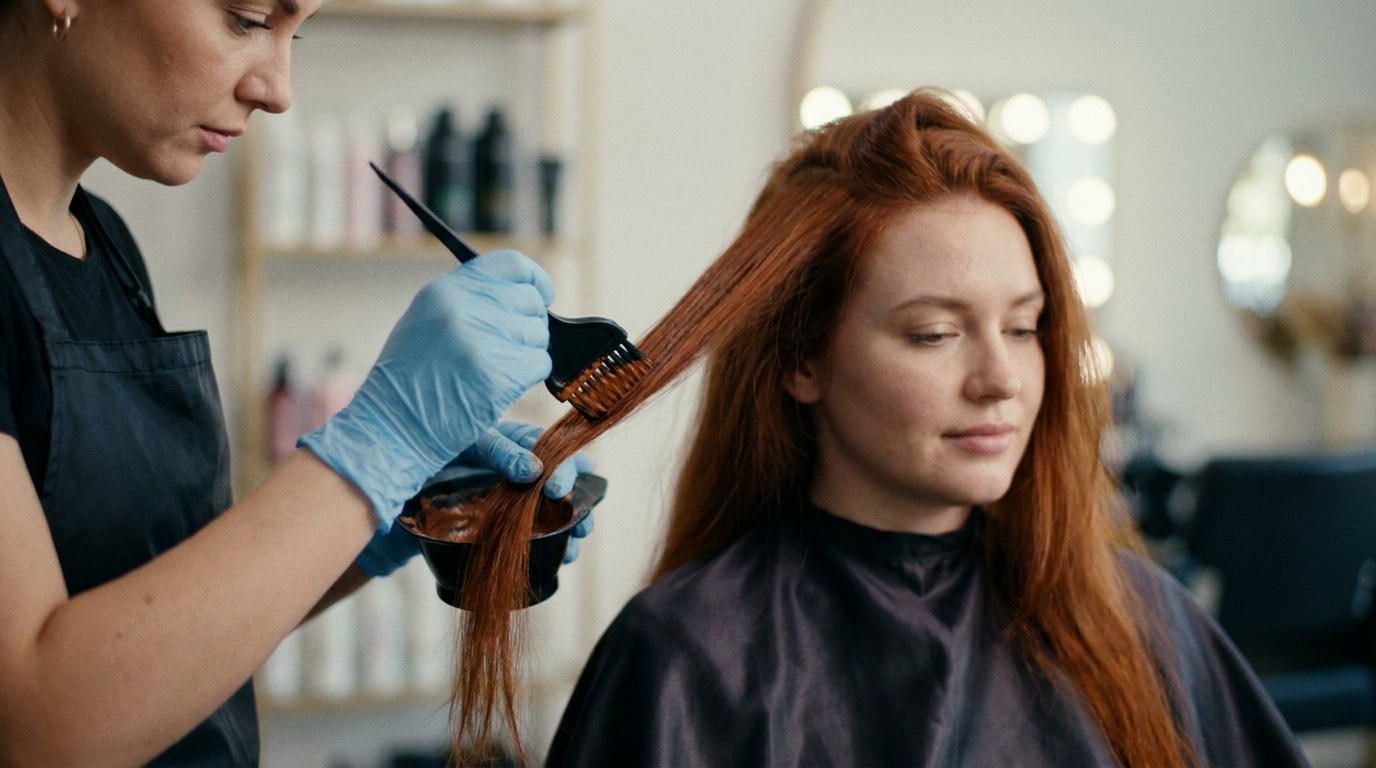
Hair Coloring and Chemical Services
Virginia-licensed barbers can perform hair coloring services, and demand for color services in barbershops is growing. Your training includes color theory, application techniques, and the chemistry behind the products you’ll use.
Scalp and Skin Care Fundamentals
Understanding scalp health — recognizing conditions, advising on treatments, and providing professional scalp services — rounds out your technical toolkit and positions you as a knowledgeable professional, not just a cutter.
Business and Shop Operations
Your training also covers the business side: sanitation standards, state board regulations, client communication, and the basics of managing a chair as a professional — whether you work as an employee or eventually move to booth rental.
Mini-Story #2: Priya had a cosmetology background from another state but wanted to transition specifically into barbering when she relocated to the Northern Virginia area with her family. She chose AVI because the curriculum addressed the full range of hair textures she knew she’d encounter in the diverse Tysons area market. “I needed to know I could handle every person who walked in,” she said. After completing her 1,500 hours and passing her Virginia State Board exams, she joined a multicultural barber shop in Vienna and quickly became the go-to stylist for the shop’s curly and coily hair clients.
—
Barbering Salary and Career Outlook in the DC Metro Area
Barbers in Northern Virginia earn above the national median — and your income trajectory depends heavily on experience, clientele, and your work model.
National Baseline
According to the U.S. Bureau of Labor Statistics (BLS), the median annual wage for barbers in the United States is approximately $36,000–$42,000. That figure reflects the full national range — from rural markets with lower service prices to high-cost urban markets.
The Northern Virginia Premium
The DC metro area — including Northern Virginia markets like Vienna, Tysons Corner, Arlington, Fairfax, and Alexandria — sits significantly above the national median. Here’s why:
Experienced barbers working in high-traffic Northern Virginia or Tysons-area shops can meaningfully exceed median income figures — particularly those operating on a booth rental model, where you keep a larger percentage of your service revenue in exchange for paying a fixed chair fee to the shop.
Employee vs. Booth Rental
Two Ways to Work as a Licensed Barber
Employee model: You receive a regular paycheck, often with benefits, and the shop handles scheduling and marketing. Lower risk, lower ceiling.
Booth rental model: You pay a fixed weekly or monthly fee to rent your chair, keep the rest of your revenue, and operate as your own small business. Higher earning potential with a strong client base, more responsibility upfront.
Most new graduates start as employees to build their books, then transition to booth rental once their clientele is established. AVI’s business training helps you understand both models before you graduate.
—
Why Train at AVI Career Training in Vienna, VA?
Choosing the right barbering school in Northern Virginia is one of the most important decisions you’ll make on this path. Here is what makes AVI Career Training the right choice.
COE Accredited and SCHEV Certified
AVI Career Training holds COE Accreditation through the Council on Occupational Education — one of the most respected accreditation bodies in career and technical education. We are also SCHEV Certified (State Council of Higher Education for Virginia), the state-level certification that confirms AVI meets Virginia’s educational standards.
These credentials matter. They tell you that AVI’s program meets rigorous quality standards and that your training hours will be recognized by the Virginia State Board of Barbering and Cosmetology. You can learn more about AVI’s accreditations and mission here.
Hands-On Training from Licensed Professionals
Your instructors at AVI are licensed industry professionals — people who have worked in the field and understand what Virginia employers and clients actually expect. You are not learning from textbooks alone. You are learning by doing, in a real training environment designed to replicate professional practice.
Inclusive Curriculum — All Hair Textures, All Skin Tones
AVI’s curriculum is explicitly built to train you across every hair texture and skin tone. This is a non-negotiable part of our program, not an add-on. In the diverse DC metro market — one of the most multicultural regions in the country — this makes you a more hireable, more capable, and more confident professional from day one.
Location: Vienna / Tysons Corner Area
AVI’s campus at 1595 Spring Hill Rd #720, Vienna, VA 22182 sits in the heart of Northern Virginia, easily accessible from across the DMV area — including Fairfax, Arlington, McLean, Reston, and the DC suburbs of Maryland. If you’re looking for a barber school in Vienna, VA, you won’t find a better-positioned option.
Financial Aid Information
Please note: AVI’s Barbering program is under 600 hours in certain configurations — please contact AVI directly to confirm current program structure and financial aid eligibility. Federal financial aid (Title IV / FAFSA) is not available for programs under 600 hours. However, AVI does accept the GI Bill® for eligible veterans and servicemembers, which is particularly relevant given Northern Virginia’s large military-connected population. Payment plan and private financing options are also available — speak with AVI admissions for details.
The GI Bill® is especially significant here. Northern Virginia is home to one of the largest concentrations of active-duty military, veterans, and military families in the country. If you or a family member has served, your benefits may cover your barbering training.
—
Frequently Asked Questions: Barbering School in Northern Virginia
Q: How many hours do you need to become a barber in Virginia?
A: Virginia requires 1,500 clock hours of barbering training at a DPOR-approved school. This is the state-mandated minimum before you can sit for the Virginia State Board of Barbering and Cosmetology exams. AVI Career Training’s barbering program is built to meet this 1,500-hour requirement.
Q: How long does barber school take in Virginia?
A: The time it takes to complete 1,500 hours depends on your school’s schedule and how many hours you attend per week. Full-time students typically complete training in approximately 12–15 months, though this varies by program schedule. Contact AVI at (703) 943-9841 for specific scheduling information.
Q: What is the difference between a barber license and a cosmetology license in Virginia?
A: In Virginia, a barber license and a cosmetology license are separate credentials issued by DPOR. A barber license authorizes barbering services — haircuts, shaves, beard work, and related services. A cosmetology license covers a broader range of services including hair, skin, and nails. A cosmetology license does not automatically grant permission to practice barbering, and vice versa.
Q: Can you do barbering with a cosmetology license in Virginia?
A: Not automatically. Virginia law distinguishes between the two licenses. If you want to legally perform barbering services in Virginia, you need a Virginia barber license. Cosmetology license holders who want to add barbering services typically need to pursue barber licensure separately.
Q: How much do barbers make in Virginia?
A: The U.S. median annual wage for barbers is approximately $36,000–$42,000 (BLS). Barbers in the Northern Virginia / DC metro market often earn above the national median due to higher service prices, a dense professional clientele, and strong tipping culture. Experienced barbers on a booth rental model in high-traffic Northern Virginia shops can exceed median figures significantly.
Q: Is barbering a good career in the DC metro area?
A: Yes. The DC metro area is one of the strongest barber markets in the Mid-Atlantic, driven by a large, diverse, and high-income population. The U.S. men’s grooming industry is valued at $29+ billion, and demand for skilled licensed barbers continues to grow — particularly those trained across all hair textures.
Q: Does AVI Career Training accept the GI Bill® for the Barbering program?
A: AVI Career Training accepts the GI Bill® for eligible veterans and servicemembers. Federal financial aid (FAFSA/Title IV) eligibility depends on program hours — contact AVI admissions directly at (703) 943-9841 to confirm current program details and your specific aid eligibility.
Q: Where is AVI Career Training located?
A: AVI Career Training is located at 1595 Spring Hill Rd #720, Vienna, VA 22182 — in the Tysons Corner area of Northern Virginia, easily accessible from Fairfax, Arlington, McLean, Reston, and surrounding communities.
—
Ready to Start Your Barbering Career in Northern Virginia?
AVI Career Training has everything you need: state-approved 1,500-hour training, COE accreditation, licensed professional instructors, and an inclusive curriculum built for the diverse DMV market. Your barber license — and the career it unlocks — starts here.
Apply Now or call (703) 943-9841 to speak with an admissions advisor.
—
About AVI Career Training
AVI Career Training is a COE-accredited, SCHEV-certified beauty and wellness school located in Vienna, Virginia, serving the Northern Virginia and DC metro area. AVI offers hands-on career training in cosmetology, esthetics, massage therapy, nail technology, electrolysis, and cosmetic laser technology — with an inclusive curriculum built to train students to work on every skin tone and hair texture.