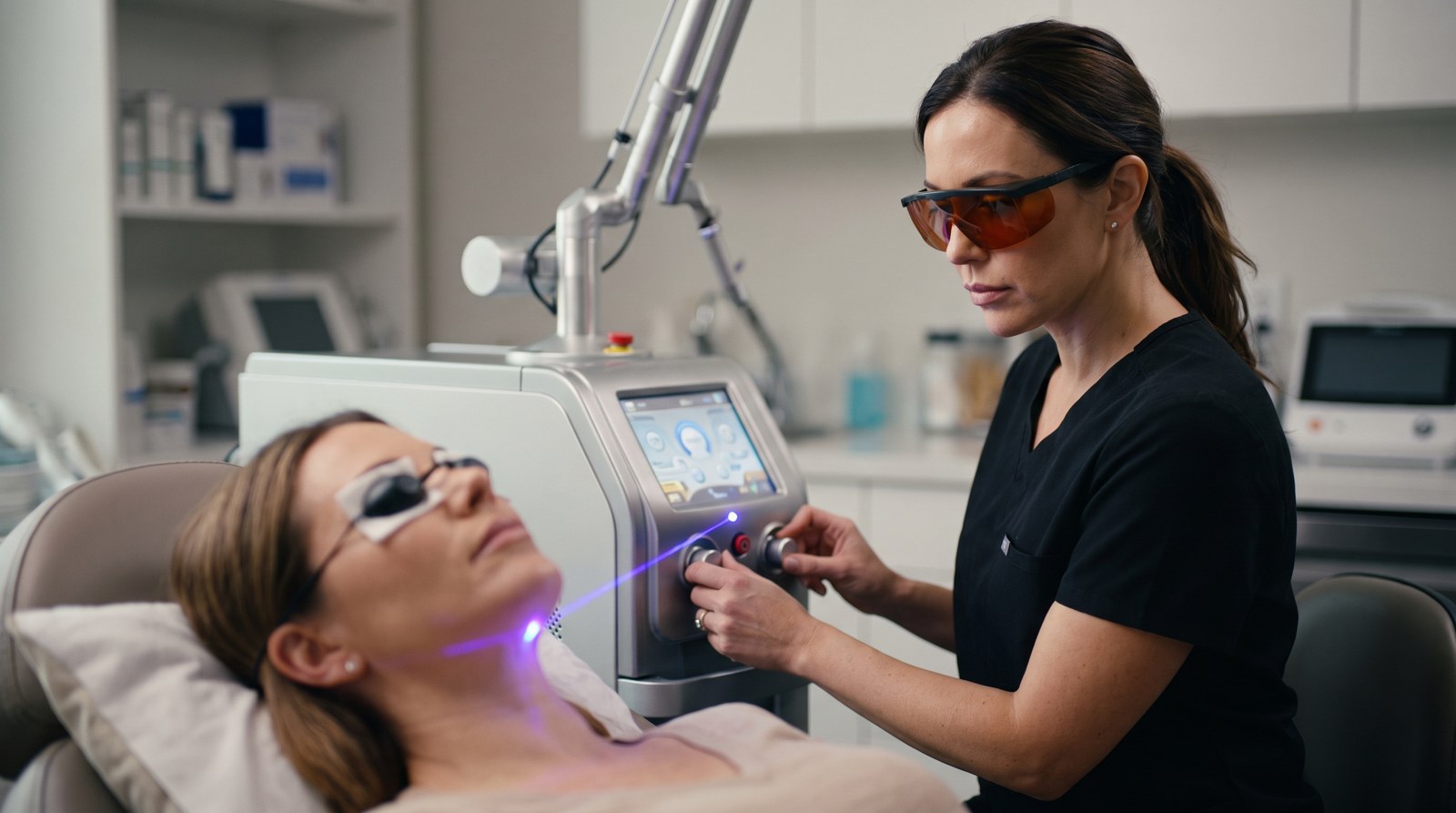
Laser Technician Training in Virginia: Your Career Path
To become a laser technician in Virginia, you need to complete an approved training program, work under licensed medical supervision, and build hands-on skills with the cosmetic laser devices used in medical spas, dermatology clinics, and plastic surgery practices across the state.
It’s a career that’s growing fast — and in the Northern Virginia/DC metro market, it pays which varies by experience and location.
This guide covers everything you need to know: what the job actually looks like, what Virginia requires, what you’ll learn at AVI Career Training, and what your earning potential looks like once you’re working.
Key Takeaways
- Virginia requires laser technicians to operate under licensed medical supervision — an approved training program is essential to meet that standard.
- AVI Career Training’s Cosmetic Laser Technology program in Vienna, VA prepares students for real clinical settings with hands-on equipment training.
- The national median salary for skincare specialists is $42,000–$48,000/year; Northern Virginia/DC metro technicians typically earn 15–25% above that figure.
- BLS projects skincare specialist employment to grow faster than average over the next decade.
- Financial aid is available at AVI — including the GI Bill® for eligible veterans and dependents.
What Does a Laser Technician Actually Do?
Laser technicians perform non-surgical cosmetic treatments using light-based and laser devices. It’s precise, clinical work — and it’s established.
On a typical day, you might perform any of the following services:
- Laser hair removal — using targeted light energy to disrupt follicle growth across the face, legs, underarms, and body
- Skin rejuvenation treatments — addressing fine lines, texture, and overall tone
- Pigmentation treatments — reducing sun spots, hyperpigmentation, and uneven skin tone
- Photofacials (IPL) — using intense pulsed light to improve skin clarity and reduce redness
- Pre- and post-treatment consultations — assessing skin type, reviewing contraindications, and guiding clients through aftercare
This is not a passive role. Laser technicians read skin closely, adjust device settings based on a client’s Fitzpatrick skin type, monitor treatment responses in real time, and document outcomes. The work sits at the intersection of technical skill and client care.
Here’s something most generic guides skip over: Laser technology is not one-size-fits-all. Proper training on diverse skin tones — including deeper Fitzpatrick IV–VI skin types — is both a clinical requirement and a competitive advantage. Laser burns on melanin-rich skin are a documented risk when technicians are undertrained. In the Northern Virginia/DC metro area, where the client population is genuinely diverse, knowing how to work safely and effectively across all skin tones isn’t a bonus — it’s a baseline expectation.
AVI’s Cosmetic Laser Technology program is built around that reality from day one.
Ready to get started? Apply to AVI Career Training today and take the first step toward your laser technician career.
Virginia Licensing Requirements for Laser Technicians
This is where a lot of people searching “how to become a laser technician in Virginia” get confused — because Virginia’s regulatory framework for laser technicians is different from many other states. Here’s what you actually need to know.
Who Regulates Laser Technicians in Virginia?
In Virginia, the use of laser and intense pulsed light (IPL) devices for cosmetic purposes falls under the oversight of the Virginia Department of Professional and Occupational Regulation (DPOR) in coordination with the Virginia Department of Health Professions (DHP). Laser hair removal and IPL treatments are classified as procedures that require licensed medical supervision — meaning a licensed physician, nurse practitioner, or other qualified medical professional must oversee the practice setting where cosmetic laser work is performed.
This is a key distinction: you are not operating independently as a laser technician in Virginia. You’re working within a supervised clinical framework.
Do You Need a License to Do Laser Hair Removal in Virginia?
Virginia does not currently issue a standalone “laser technician license” through DPOR the way some states do for esthetics or cosmetology. However, that does not mean you can walk into a medical spa untrained. Employers — including every reputable medical spa, dermatology office, and plastic surgery practice in Northern Virginia — require verified, documented training before they will allow anyone to operate laser equipment on clients.
Cosmetic laser technician certification from an accredited program is how you demonstrate that qualification. It’s the professional credential the industry recognizes, and in practice, it’s what gets you hired.
Does Virginia Require an Esthetics License First?
Some states require an active esthetics license as a prerequisite for laser technician training or employment. Virginia’s requirements in this area are nuanced and subject to change. You should verify current requirements directly with the Virginia Department of Health Professions before enrolling — and AVI’s admissions team can help you navigate this during your consultation.
Continuing Education
Many employers and professional organizations in the cosmetic laser field expect ongoing education as device technology evolves. Staying current isn’t optional in this industry — it’s how you remain competitive and safe.
What You’ll Learn in AVI’s Cosmetic Laser Technology Program
AVI Career Training’s Cosmetic Laser Technology program in Vienna, VA is designed to produce practice-ready technicians — not just graduates with a certificate.
The curriculum covers the full scope of professional laser and light-based services, with a strong clinical foundation. Here’s what the program prepares you to do:
Laser Physics and Device Technology
You’ll learn how laser and IPL devices actually work — wavelengths, chromophores, pulse duration, and fluence. This isn’t theory for theory’s sake. Understanding the physics behind the device is what allows you to adjust settings safely for different clients, different treatment areas, and different skin types. Technicians who don’t understand the science are guessing. AVI trains you not to guess.
Fitzpatrick Skin Typing — With an Inclusive Framework
The Fitzpatrick scale is the clinical tool used to classify skin types and guide safe laser parameter selection. AVI’s curriculum places explicit emphasis on working effectively across the full range of Fitzpatrick types — including Types IV, V, and VI.
This matters for three reasons:
- Client safety — incorrect settings on deeper skin tones can cause burns, hyperpigmentation, or scarring
- Clinical competence — you will encounter clients of all backgrounds in this market
- Competitive advantage — many programs gloss over Fitzpatrick IV–VI; AVI doesn’t
Safety Protocols and Contraindications
You’ll learn how to conduct proper consultations, identify contraindications (medications, skin conditions, and recent treatments that affect treatment safety), and document client records accurately. You’ll also learn proper eye protection protocols, equipment maintenance, and emergency response procedures.
Hands-On Clinical Hours
This is where the training becomes real. AVI’s program includes supervised hands-on clinical hours working with actual laser equipment. You’ll treat real clients under instructor oversight — building the confidence and muscle memory that employers look for.
Equipment Types Covered
Training includes exposure to multiple device categories — including diode lasers, Nd:YAG, alexandrite, and IPL systems — because the medical spa and clinical environments you’ll enter use a variety of platforms. Versatility makes you a stronger hire.
How Long It Takes — and What It Costs
Program Length
AVI’s Cosmetic Laser Technology program is designed to be completed on a realistic timeline for working adults. Contact AVI Career Training directly to confirm current clock hours and estimated calendar weeks, as program schedules are updated periodically.
What you can expect: this is a focused, skills-intensive program — not a two-year degree. Students who complete the program move into job-ready status significantly faster than they would through a general academic path.
Financial Aid and Tuition
AVI is a COE-accredited institution, which means students may be eligible for federal financial aid — including Pell Grants and other Title IV funding — depending on individual eligibility. The GI Bill® is accepted at AVI, making this program accessible for veterans, active-duty service members, and eligible dependents.
For specific tuition figures and financial aid guidance, speak with AVI’s admissions team. The goal is to help you understand the full picture — what the program costs, what aid you may qualify for, and what your return on investment looks like.
Return on Investment
At the entry-level salary ranges common in Northern Virginia (covered below), many laser technician graduates recover their training investment within the first year of employment. The math works — especially compared to four-year degree programs in adjacent fields.
Career Outlook: What Laser Technicians Earn in Northern Virginia
National Salary Data
According to the U.S. Bureau of Labor Statistics, the national median annual wage for skincare specialists (SOC 39-5094) — the BLS category that most closely tracks this role — is approximately $42,000–$48,000 per year, based on the most recent BLS data release. Top earners in specialized clinical settings exceed that figure significantly.
The BLS also projects employment for skincare specialists to grow faster than the average for all occupations over the next decade — driven by increasing demand for non-surgical cosmetic procedures. You can review current projections at BLS.gov.
The Northern Virginia / DC Metro Premium
Northern Virginia is not an average market. The concentration of high-income households, medical spas, dermatology practices, and plastic surgery clinics in the DC metro corridor creates genuine salary premiums for skilled cosmetic professionals.
Regional labor data consistently shows that skincare and cosmetic laser professionals in the Northern Virginia/DC metro area earn 15–25% above the national median. For a laser technician, that translates to a meaningful difference in take-home pay compared to markets in lower cost-of-living regions.
Where Laser Technicians Work — and How It Affects Pay
Your setting matters. Compensation varies by employer type:
| Setting | Typical Compensation Structure |
|---|---|
| Medical spa | Hourly base + commission on services; often highest total compensation |
| Dermatology clinic | Hourly or salary; strong benefits; clinical advancement potential |
| Plastic surgery practice | Salary-based; premium market; requires demonstrated clinical competence |
| Day spa / wellness center | Hourly; lower ceiling but accessible entry point |
Medical spa positions in Northern Virginia consistently offer the strongest earning potential for laser technicians — particularly as you build a client base and move into senior or lead technician roles.
Career Trajectory
Entry-level laser technicians typically start by performing laser hair removal and basic light-based services under close supervision. Within 12–24 months of consistent employment, many advance to:
- Lead technician — overseeing junior staff and managing treatment protocols
- Treatment coordinator — handling consultations, upselling service packages, and client retention
- Independent practice — some states allow experienced laser professionals to operate under physician-directed protocols in their own medspa setting
The Northern Virginia market supports this kind of progression. The demand is real, the clients are there, and trained technicians who work across all skin types are genuinely difficult to find.
Why AVI Career Training Is the Right Place to Start
Consider Marcus, a 34-year-old Army veteran from Woodbridge who completed a four-year tour and came home looking for a career — not just a job. He’d heard about medical spas and had seen how the industry was growing, but he didn’t know where to start. He found AVI Career Training through a search for laser hair removal training in Northern Virginia, learned that the GI Bill® was accepted, and enrolled in the Cosmetic Laser Technology program. Six months after completing the program, Marcus was working as a laser technician at a medical spa in Fairfax County — earning more in his first year than he expected, and building toward a lead technician role.
Or think about Priya, a licensed esthetician from Reston who loved her work but wanted to move into a clinical setting with higher earning potential. She’d been hesitant because she wasn’t sure if her existing credentials qualified her for laser training, and she was worried about a program that wouldn’t reflect her clients — many of whom had deeper skin tones. She called AVI, spoke with an admissions advisor, confirmed how the programs connected, and enrolled. The Fitzpatrick-inclusive curriculum was exactly what she was looking for. She graduated with the technical depth to treat every client in her chair confidently.
These are the students AVI is built for — career changers, veterans, working estheticians, and anyone ready to move into one of the fastest-growing corners of the beauty and wellness industry.
AVI Career Training is COE-accredited, SCHEV-certified, and located in Vienna, VA — right in the heart of the Northern Virginia market you’ll be working in. Our instructors are licensed industry professionals. Our curriculum reflects the real clinical demands of the medical spa and dermatology settings you’ll enter. And our inclusive training framework ensures you’re prepared to serve every client who walks through the door.
If you’re serious about laser technician training in Virginia, AVI is where that career begins.
Apply to AVI Career Training now — or call us at (703) 943-9841 to speak with an admissions advisor about the Cosmetic Laser Technology program, financial aid options, and your next steps.
Program details, tuition, and scheduling are subject to change. Prospective students are encouraged to verify current Virginia regulatory requirements with the Virginia Department of Health Professions (DHP) and confirm program specifics directly with AVI Career Training admissions.