
Cosmetology School In Fairfax County: What To Expect
If you enroll in cosmetology school in Fairfax County, you can expect a structured, hands-on training program that covers everything from cutting and coloring techniques to salon business skills — and at AVI Career Training in Vienna, VA, that experience is designed to get you licensed and job-ready as efficiently as possible.
Key Takeaways
- AVI Career Training is a COE-accredited cosmetology school serving Fairfax County students at 112 Lawyers Rd NW Suite 3, Vienna, VA 22180.
- Virginia requires 1,000 clock hours to sit for the cosmetology licensure exam — exactly what AVI’s program delivers.
- Training combines theory, live client practice, and professional skills so graduates are prepared on day one of their career.
- Title IV federal financial aid is available for qualifying programs, including Cosmetology and several other offerings.
- AVI also offers related programs in Esthetics, Nail Technology, Massage Therapy, Laser Technology, and more — making it a true one-stop beauty and wellness career school.
- You can reach the admissions team at (571) 520-4417 or apply online anytime.
Why Choose a Cosmetology School in Fairfax County?
Northern Virginia’s beauty industry is thriving. Fairfax County is home to thousands of salons, spas, and wellness studios that are consistently looking for skilled, licensed cosmetologists. Choosing a local school means you can build your professional network right in the community where you plan to work — and AVI Career Training’s Vienna location puts you right in the heart of that opportunity.
Beyond convenience, attending a school like AVI means you’re training at a Council on Occupational Education (COE)-accredited institution. That accreditation matters because it signals that the school meets nationally recognized standards for education quality — and it’s one of the factors that makes the school eligible to offer Title IV federal financial aid to qualifying students.
What the AVI Cosmetology Program Actually Looks Like
Let’s break down what your day-to-day experience at AVI Career Training will actually feel like — because “cosmetology school” means something different to everyone who hasn’t been through it yet.
The Clock Hours Requirement
Virginia’s Board for Barbers and Cosmetology requires 1,000 clock hours of training before you can sit for the state licensure exam. AVI’s Cosmetology program is built around exactly that requirement. Every hour is intentional — split between classroom instruction and practical, hands-on work on real clients in the school’s student salon.
What You’ll Study in the Classroom
The classroom side of cosmetology training covers the science and theory behind every technique you’ll use on the floor. Expect to learn:
- Anatomy and physiology as it relates to hair, skin, and nails
- Chemistry of hair color, perms, relaxers, and other chemical services
- Sanitation, safety, and infection control — essential for any licensed professional
- Virginia state laws and regulations governing cosmetology practice
- Salon business basics, including client communication and professional ethics
This isn’t busywork. Virginia’s state board exam includes a written knowledge test, and a solid foundation in theory is what helps students pass it confidently the first time.
Hands-On Practice: The Student Salon Experience
The practical hours are where cosmetology school really comes alive. Students work in AVI’s student salon providing services to real clients at reduced rates — giving you the repetition and real-world experience that textbooks simply can’t replicate. You’ll practice:
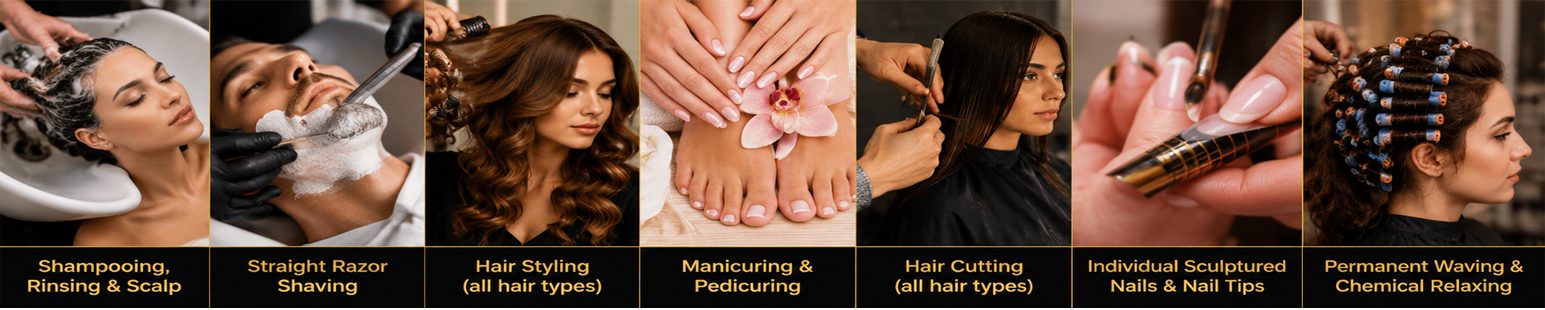
- Haircutting techniques for various textures and lengths
- Hair coloring, highlights, and color correction
- Chemical services including perms and relaxers
- Styling, blowouts, and updos
- Scalp treatments and basic hair care consultations
Instructors are on the floor with you — not just supervising, but actively coaching. At AVI, class sizes are kept manageable so you’re never just a number in the room.
Financial Aid and Tuition Transparency
One of the most common questions prospective students ask is about cost. AVI Career Training never wants money to be the reason someone doesn’t pursue their passion. That’s why the school makes it a priority to help students understand and access every funding option available to them.
For the Cosmetology program — as well as Basic Esthetics (600 hours), Master Esthetics (750 hours), and Massage Therapy (625 hours) — Title IV federal financial aid is available for students who qualify. This includes Pell Grants and federal student loans for eligible applicants.
For specific tuition figures, the best step is to contact AVI’s admissions team directly at (571) 520-4417 or visit the AVI application and inquiry page to get accurate, up-to-date information tailored to your situation. Costs can vary based on program start dates, materials fees, and your individual financial aid eligibility — and AVI’s staff will walk you through it all.
Other Programs at AVI Career Training
Cosmetology is just one of the paths available at AVI. If you’re exploring the beauty and wellness field more broadly — or thinking about a pivot into healthcare — here’s a quick look at what else is offered:
- Basic Esthetics — 600 hours; Title IV eligible
- Master Esthetics — 750 hours; Title IV eligible
- Massage Therapy — 625 hours; Title IV eligible
- Nail Technology — 150 hours
- Laser Technician — 120 hours
- Medical Assistant — 600 hours
- ESL (English as a Second Language) — 1,200 hours
Many students discover that cosmetology is their entry point into a broader passion for wellness — and AVI makes it easy to explore adjacent specializations once you’re in the community.
What Sets AVI Career Training Apart
There are several cosmetology programs in Northern Virginia, so what makes AVI worth a serious look?
COE Accreditation. Not every beauty school in the region holds Council on Occupational Education accreditation. This credential reflects a commitment to educational quality and gives students confidence that their credential will be recognized by employers and state licensing boards.
Supportive, Personalized Instruction. AVI prioritizes a learning environment where instructors know their students by name. If you’re struggling with a technique or nervous about the board exam, you’ll have people in your corner who genuinely want to see you succeed.
Location That Works for Fairfax County Residents. Situated in Vienna at 112 Lawyers Rd NW Suite 3, AVI is easily accessible from across Fairfax County — whether you’re coming from Reston, Falls Church, Herndon, McLean, or anywhere else in the area.
Career-Focused Culture. From day one, the goal is your licensure and employment. AVI isn’t just teaching techniques — it’s preparing professionals.
Ready to take the next step? Apply to AVI Career Training today and start the conversation with the admissions team.
Frequently Asked Questions
How many hours is the cosmetology program at AVI Career Training?
AVI’s Cosmetology program is 1,000 clock hours, which meets Virginia’s state requirement for sitting for the cosmetology licensure exam. Hours are divided between classroom instruction and hands-on practical training in the student salon.
Is financial aid available for cosmetology school at AVI?
Yes. Title IV federal financial aid — including Pell Grants and federal student loans for those who qualify — is available for the Cosmetology program. To find out what you may be eligible for, contact AVI directly at (571) 520-4417 or submit an inquiry through the AVI apply page.
What is the admissions process like at AVI Career Training?
The process is straightforward and student-friendly. You’ll start by reaching out to the admissions team — either by phone at (571) 520-4417 or through the online application. From there, an advisor will walk you through program options, scheduling, financial aid, and next steps. AVI wants to make enrollment as stress-free as possible.
Do I need any prior experience to enroll in the cosmetology program?
No prior cosmetology experience is required. AVI’s program is designed to take you from beginner to licensed professional. What you do need is a genuine interest in the craft and a commitment to showing up and putting in the hours — the school handles the rest.
Is AVI Career Training accredited, and does that matter for getting licensed?
Yes, AVI Career Training holds accreditation from the Council on Occupational Education (COE). Accreditation matters because it confirms the school meets rigorous educational standards, supports your eligibility for certain financial aid programs, and gives future employers confidence in the quality of your training. Virginia’s Board for Barbers and Cosmetology requires training at an approved institution — AVI meets that standard.
Take the First Step Toward Your Cosmetology Career
Cosmetology school in Fairfax County doesn’t have to be a mystery. At AVI Career Training, you’ll find a clear path — 1,000 hours of structured, accredited, hands-on training that leads directly to your Virginia cosmetology license and a career you’re genuinely excited about.
Whether you’re fresh out of high school, changing careers, or finally pursuing something you’ve always been passionate about, AVI’s admissions team is ready to help you figure out if this is the right fit. Give them a call at (571) 520-4417, stop by at 112 Lawyers Rd NW Suite 3, Vienna, VA 22180, or apply online right now to get started.