
CNA Training in Northern Virginia: Start in Under a Year
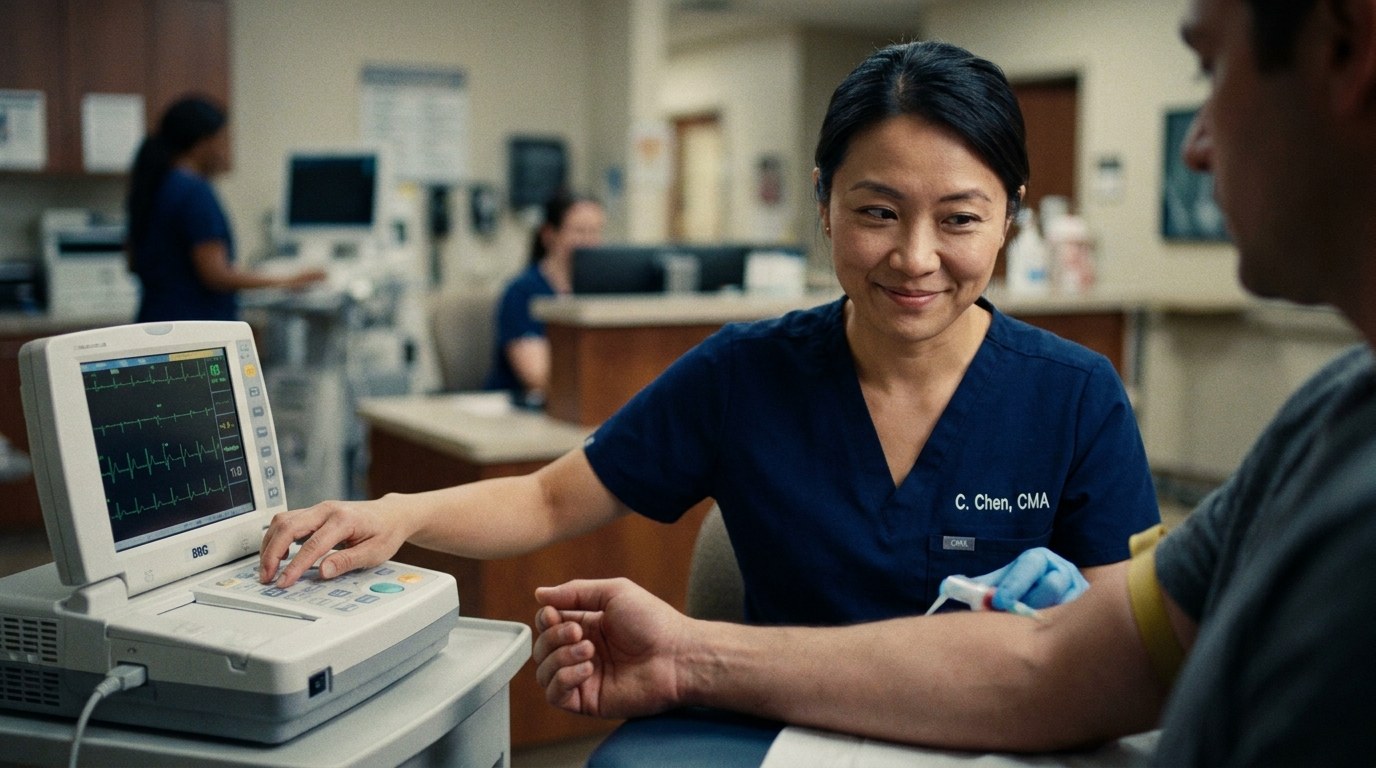
Fast-track CNA training in Northern Virginia takes as few as four to eight weeks full-time — and the entire path from enrollment to registry listing is achievable in under six months. If you are comparing programs on speed, cost, accreditation, and location, this guide answers all four of those questions directly so you can make a confident decision and move forward.
⚡ Key Takeaways
- Virginia requires 150 training hours to qualify for CNA certification — one of the most completable healthcare credentials available.
- Full-time students can finish in 4–8 weeks; part-time students typically complete training in 3–5 months.
- CNAs in the Washington DC metro area earn a median hourly wage above the national average, driven by high demand across Fairfax, Arlington, and surrounding counties.
- Virginia requires passing both a written knowledge exam and a hands-on skills competency test before joining the Virginia Nurse Aide Registry.
- Federal financial aid (FAFSA/Title IV) is NOT available for programs under 600 hours — confirm payment options directly with any program you consider.
> ⚠️ Important Program Scope Note: AVI Career Training is a COE-accredited beauty and wellness school in Vienna, Virginia. AVI’s current program catalog covers Cosmetology, Esthetics, Massage Therapy, Nail Technology, Cosmetic Laser Technology, and Electrolysis. This article is a comprehensive resource for Northern Virginia residents researching CNA training options in the region. If you are interested in a healthcare-adjacent hands-on career that AVI does offer, Massage Therapy at AVI Career Training is worth exploring — it shares many of the same career values: client care, licensed credentials, and real earning potential. If AVI launches a CNA program in the future, this page will be updated accordingly.
Ready to explore hands-on career training in the DMV area? Start your application at AVI Career Training or call (703) 943-9841 to speak with an admissions advisor today.
—
What Virginia Requires to Become a Certified Nurse Aide
Virginia’s requirements for nurse aide certification are clear, finite, and regulated by the Virginia Board of Nursing — and understanding them is the first step toward a realistic plan.
The 150-Hour Training Requirement
To sit for the Virginia CNA certification exam, you must complete a state-approved training program of 150 hours. That number includes both classroom instruction and supervised clinical practice. The Virginia Board of Nursing mandates that clinical hours take place in a real care setting — typically a nursing home, hospital unit, or long-term care facility — where you practice skills directly on patients under licensed supervision.
This 150-hour figure is not a suggestion. It is the minimum required by Virginia law and verified through the Virginia Department of Health Professions (DHP) at dhp.virginia.gov. Any program advertising fewer hours is either misrepresenting its curriculum or operating outside state compliance — a red flag worth taking seriously.
The Certification Exam
After completing your training program, you take a two-part state exam:
- Written knowledge test: A multiple-choice examination covering fundamental nursing assistant competencies, safety protocols, patient rights, and infection control.
- Skills competency evaluation: A hands-on demonstration of clinical skills — such as hand washing, taking vital signs, and assisting with mobility — observed and scored by a state-approved evaluator.
Both components must be passed before you are eligible for the next step.
The Virginia Nurse Aide Registry
Passing the exam earns you a place on the Virginia Nurse Aide Registry, maintained by the Virginia Board of Nursing. Employers — particularly facilities that accept Medicaid or Medicare — are legally required to verify that every nurse aide they hire appears on the registry. A background check is also required before you can begin working in Medicaid- or Medicare-certified facilities.
Registration on the Virginia Nurse Aide Registry is what makes your credential real and employer-recognized across the state. It is not optional, and reputable training programs will walk you through the registration process as part of your completion requirements.
📋 Virginia CNA Certification — At a Glance
- Required training hours: 150 hours (classroom + clinical)
- Exam format: Written knowledge test + hands-on skills competency
- Regulatory body: Virginia Board of Nursing (Virginia DHP)
- Post-exam step: Registration on Virginia Nurse Aide Registry
- Employment requirement: Background check for Medicaid/Medicare-certified facilities
—
Why the “Fast-Track” Path Is Realistic in Virginia
150 hours sounds like a large number until you do the math — and when you do, the fast-track path becomes very concrete and very achievable.
Full-Time vs. Part-Time: What the Timeline Actually Looks Like
A student attending a full-time CNA program typically completes 25–35 hours per week of combined instruction and clinical hours. At that pace, 150 hours translates to roughly 4–8 weeks of actual training time. Add in the time to schedule and sit for your exam, and a full-time student can realistically be on the Virginia Nurse Aide Registry within two to three months of starting.
Part-time students — those balancing a job, childcare, or other responsibilities — typically attend 8–15 hours per week. At that pace, the 150-hour requirement takes 3–5 months to complete. Even in the part-time scenario, the total path from enrollment to registry listing sits comfortably under six months.
Compare that to a 4-year nursing degree, or even a 2-year associate degree for registered nurses. The CNA credential is specifically designed to move people into the healthcare workforce quickly — it is a deliberate entry point, not a shortcut.
The Common Fear: “Healthcare Training Takes Years”
Many career-changers in the Northern Virginia area hesitate because they assume any healthcare credential requires years of prerequisites, waiting lists, and expensive degree programs. That assumption is understandable — and it is wrong for the CNA path.
The 150-hour requirement exists because the role has a defined, trainable scope of practice. CNAs provide direct patient care: assisting with daily living activities, monitoring vital signs, maintaining patient dignity, and communicating patient status to licensed nursing staff. That scope is meaningful, it is in high demand, and it can be taught — and learned — in a matter of weeks.
💡 Real Student Scenario — The Career-Changer: Imagine a 34-year-old retail manager in Fairfax County who has been considering a move into healthcare for two years. She worries that going back to school means giving up her income for a full semester. She enrolls in a part-time CNA program, attends classes on evenings and weekends, and completes her 150 hours in 14 weeks. She passes both parts of her exam on the first attempt and accepts a position at a long-term care facility in Tysons Corner — earning more per hour than her retail job and working a schedule that gives her weekday mornings free. The career change she thought would take years took less than four months.
—
What to Look for in a Northern Virginia CNA Program
Not all CNA programs are built the same. Here is a practical checklist for evaluating any program you are considering — the same criteria that separate programs that set you up for success from ones that leave you underprepared on exam day.
1. State Approval and Accreditation Status
Your program must be approved by the Virginia Board of Nursing. Without state approval, the hours you complete do not qualify you to sit for the certification exam — full stop. Ask any program directly: “Is this program approved by the Virginia Board of Nursing?” If the answer is anything other than a clear yes with verifiable documentation, walk away.
Accreditation from a recognized body — such as the Council on Occupational Education (COE) — adds an additional layer of quality assurance. COE accreditation means an independent review board has evaluated the program’s curriculum, faculty qualifications, facilities, and student outcomes. It is a meaningful signal of program quality, not just a logo on a website.
2. Clinical Hours Compliance
Virginia requires that clinical hours be completed in an approved care setting. Ask the program: Where do students complete their clinical hours? Are those facilities state-approved? A program that is vague on this answer may be cutting corners that matter on exam day.
3. Instructor Credentials
Virginia requires CNA program instructors to hold active RN licensure with relevant clinical experience. Your instructor’s qualifications directly affect your exam preparation. Ask programs about their instructors’ credentials before enrolling.
4. First-Time Pass Rates
State board pass rates are one of the most honest performance metrics a training program can share. A program confident in its outcomes will publish them. One that deflects or cannot answer the question is telling you something important.
5. Financial Transparency — Especially the Financial Aid Question
This is critical: CNA programs under 600 hours do not qualify for federal financial aid (Title IV / FAFSA). Virginia’s 150-hour CNA program falls well below that threshold. Any program implying that FAFSA funds are available for a 150-hour CNA credential is either misinformed or being misleading.
Legitimate programs will clearly explain payment options upfront — including payment plans, private financing, and whether any employer-sponsored tuition assistance programs apply. Ask directly: What are my payment options? Is federal financial aid available? The answer to the second question should always be no for a 150-hour program.
6. Location and Schedule Flexibility
Northern Virginia’s traffic is not a minor inconvenience — it is a real barrier to program completion. A program located near the Vienna Metro station, the Tysons Corner area, or along the Route 7 corridor is meaningfully more accessible than one requiring a 45-minute drive. Schedule flexibility — evening, weekend, or hybrid options — can be the difference between completing your program and dropping out due to life logistics.
💡 Real Student Scenario — The Military Spouse: Consider a 28-year-old military spouse who relocated to the DMV area after her partner’s assignment to Joint Base Myer-Henderson Hall. She wants a portable, in-demand credential she can take to the next duty station. She specifically researches accreditation status, first-time pass rates, and payment plans because she knows federal financial aid is not an option for a short-term program. She chooses a program near Vienna that offers evening scheduling, completes her 150 hours in five months around her family’s schedule, and earns a credential that Virginia, Maryland, and the District reciprocally recognize. When her family relocates again, her registry listing transfers with her.
—
Earning Potential and Career Outlook for CNAs in Northern Virginia
The Northern Virginia healthcare labor market is one of the strongest in the country — and CNAs are among the most consistently in-demand positions within it.
What CNAs Earn in the DC Metro Area
According to the U.S. Bureau of Labor Statistics (BLS), the Washington-Arlington-Alexandria DC Metro area consistently ranks among the highest-paying regions in the country for nursing assistants. The BLS Occupational Outlook Handbook at bls.gov reports a national median annual wage for nursing assistants of approximately $38,200 — with metro DC area wages running meaningfully above that median due to cost-of-living adjustments and competitive healthcare employer demand.
Entry-level CNAs in Fairfax County and Arlington County typically start between $17 and $21 per hour. Experienced CNAs with specialized certifications, overnight differential pay, or positions in acute care settings can earn $22–$28 per hour or more.
Why Northern Virginia’s Healthcare Market Is Especially Strong
The DC metro region is home to a dense network of major hospital systems, long-term care facilities, home health agencies, and specialty care clinics — all of which employ CNAs at scale. Inova Health System (Fairfax, Falls Church, Alexandria), the Veterans Affairs Medical Center in Washington DC, and dozens of skilled nursing facilities throughout Fairfax and Arlington counties create sustained, year-round hiring demand.
Northern Virginia’s aging population demographic — amplified by a large federal employee and military retiree community — means demand for nurse aide services is not cyclical. It is structural. The BLS projects 9% job growth for nursing assistants nationally through 2032, faster than the average for all occupations, with even stronger growth projected in high-density metro markets like the DMV.
The CNA as a Career Ladder — Not a Ceiling
Many CNAs in Northern Virginia use the credential as a deliberate first step in a longer healthcare career. The CNA role provides clinical exposure — real patient care, real documentation, real interdisciplinary teamwork — that makes future nursing school applications more competitive. LPN programs, RN bridge programs, and even allied health degrees commonly give credit for CNA experience.
If your goal is nursing, the fast-track CNA path is not a detour. It is the smartest on-ramp available.
—
Tuition, Costs, and Financial Aid Reality for CNA Programs
Understanding exactly what you will pay — and what financial assistance is actually available — prevents expensive surprises and helps you plan a realistic budget before you enroll.
Typical Program Costs in Northern Virginia
CNA program tuition in the Northern Virginia and DMV area typically ranges from $800 to $2,500 depending on program length, provider type, and what is included in the stated tuition figure. Ask every program you evaluate whether the stated price includes:
- Textbooks and curriculum materials
- Uniform or scrubs (some programs require specific colors)
- Skills lab supply fees
- State exam registration fees (typically $100–$175 in Virginia)
- Background check processing costs
A program advertising a low headline tuition may carry significant add-on fees that close the gap with higher-priced competitors. Get the full cost in writing before you commit.
The Federal Financial Aid Reality — Read This Carefully
⚠️ Federal financial aid (FAFSA / Title IV Pell Grants) is NOT available for CNA programs under 600 hours. Virginia’s 150-hour CNA requirement places every standard CNA program well below the federal eligibility threshold. Any school implying otherwise — through vague language about “financial aid options” that turns out to mean payment plans — is being misleading. Ask directly, in writing: “Is FAFSA or Pell Grant funding available for this specific program?” The honest answer is no.
What Payment Options Do Exist
While federal aid is off the table, several legitimate options can make CNA training affordable:
- Employer tuition assistance: Many Northern Virginia healthcare employers — including Inova, Sentara, and home health agencies — offer tuition reimbursement or upfront tuition assistance for CNA students who commit to a period of employment. Ask potential employers about this before you pay out of pocket.
- Payment plans: Many programs allow students to spread tuition across the length of the program rather than paying upfront.
- Workforce development grants: Virginia’s community workforce development programs occasionally offer funding for short-term healthcare credentials. Contact the Northern Virginia Workforce Development Board for current availability.
- Private financing: Some students use personal loans or credit instruments to cover the relatively modest tuition cost, factoring in the quick return to income once employed.
- Virginia Employment Commission (VEC) funding: Eligible unemployed workers may qualify for workforce training funding through VEC.
—
Frequently Asked Questions About CNA Training in Northern Virginia
Q: How many training hours are required to become a CNA in Virginia?
A: Virginia requires 150 training hours, combining classroom instruction and supervised clinical practice in an approved care setting, as mandated by the Virginia Board of Nursing.
—
Q: How fast can you get your CNA certification in Northern Virginia?
A: Full-time students typically complete the 150-hour training program in 4–8 weeks. Including exam scheduling and registration on the Virginia Nurse Aide Registry, the total path from enrollment to employment is achievable in under three months for full-time students and under six months for part-time students.
—
Q: How long does CNA training take in Virginia if I work full-time?
A: Part-time programs designed for working adults typically schedule 8–15 training hours per week, placing completion at 3–5 months. Evening and weekend scheduling options are available through many Northern Virginia providers.
—
Q: Does Virginia Medicaid accept CNA certifications from accredited schools?
A: Yes — provided the training program is approved by the Virginia Board of Nursing and the candidate has passed both parts of the state certification exam. Medicaid- and Medicare-certified facilities are legally required to verify registry status before hiring any nurse aide.
—
Q: Is financial aid available for CNA training programs in Virginia?
A: Federal financial aid (FAFSA/Pell Grant) is NOT available for CNA programs under 600 hours, which includes all standard 150-hour Virginia CNA programs. Legitimate alternatives include employer tuition assistance programs, payment plans, Virginia workforce development grants, and private financing.
—
Q: What is the difference between a CNA and a medical assistant in Virginia?
A: CNAs work primarily in long-term care, hospitals, and home health settings, focusing on direct patient care activities like hygiene assistance, mobility support, and vital sign monitoring. Medical assistants typically work in physician offices and outpatient clinics, performing both administrative tasks and clinical procedures like phlebot