CNA School in Northern Virginia: Your Questions Answered
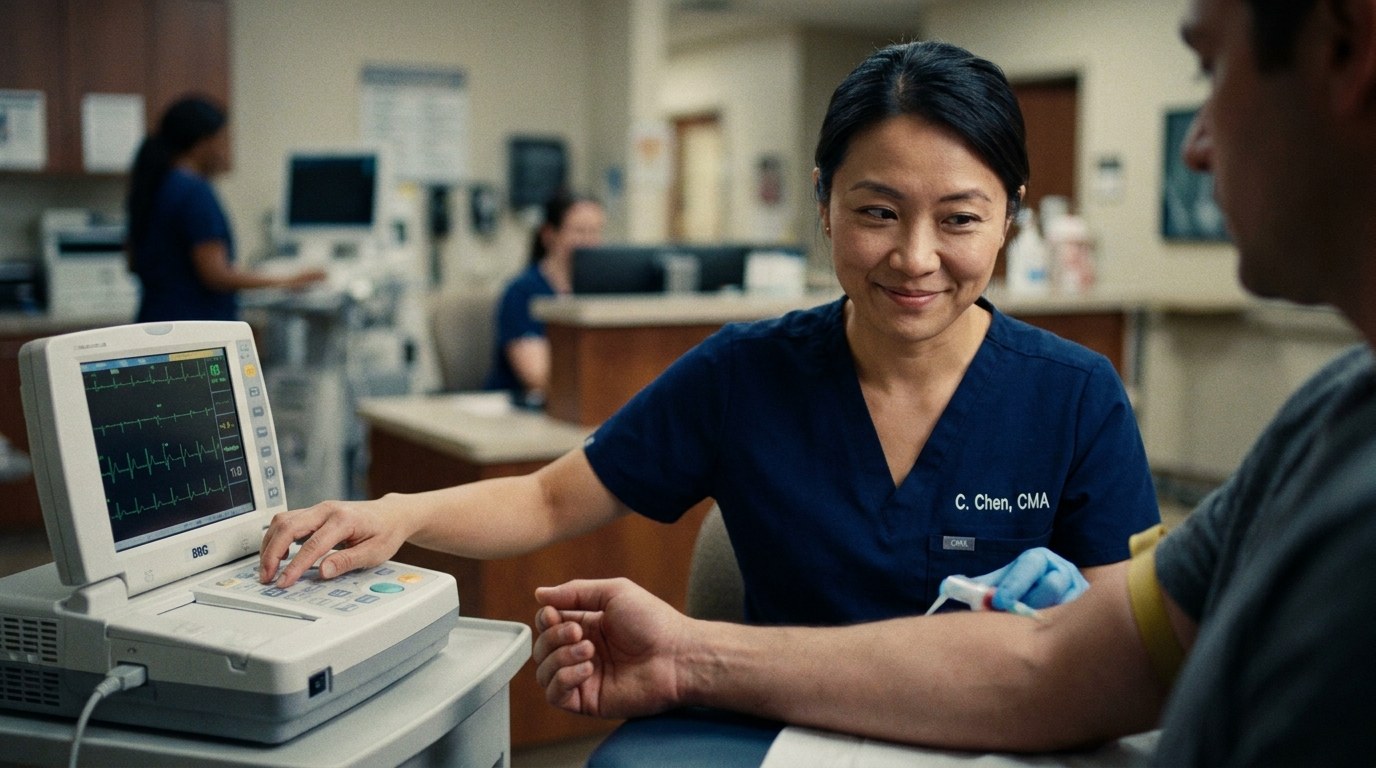
If you’re researching CNA school in Northern Virginia, Virginia requires a minimum of 120 hours of state-approved training, and most programs can be completed in 4 to 12 weeks — making it one of the fastest and most affordable ways to launch a career in healthcare. This guide answers every major question about training hours, state board requirements, salary, and what to look for in a school before you enroll.
Northern Virginia is one of the most active healthcare job markets on the East Coast. Fairfax County alone has dozens of nursing facilities, hospitals, and senior living communities actively hiring Certified Nurse Aides. Whether you’re changing careers, re-entering the workforce, or looking for a role with genuine job security, CNA training is a realistic path you can complete in a matter of months — not years.
This page covers Virginia-specific CNA requirements in plain language so you can make a confident decision about your next step.
—
📋 Key Takeaways
- Virginia requires a minimum of 120 hours of state-approved CNA training before you can sit for the licensing exam
- CNA programs in Virginia typically take 4–12 weeks to complete, depending on schedule format
- CNAs in the Washington–Arlington–Alexandria metro area earn a median wage above the national CNA average — verify current figures at BLS.gov
- You must pass the NNAAP exam (written + skills) and register on the Virginia Nurse Aide Registry to practice legally in Virginia
- AVI Career Training in Vienna, VA offers allied health-adjacent wellness programs for those exploring clinical and hands-on healthcare careers
—
What Is CNA Training and What Will You Learn?
CNA training prepares you to provide direct patient care under the supervision of a licensed nurse — and it’s the fastest credentialed entry point into the healthcare system.
A Certified Nurse Aide (also called a Nursing Assistant or Patient Care Technician in some settings) performs hands-on tasks that keep patients safe, comfortable, and supported day to day. This is not an administrative role. You are on the floor — taking vital signs, assisting with mobility, monitoring patient conditions, and communicating changes to the nursing team.
What You’ll Learn in a Virginia-Approved CNA Program
Core Skills Covered in Training
Virginia-approved CNA programs are structured around both classroom instruction and supervised clinical hours. Topics typically include:
Where CNAs Work
CNAs are employed across a wide range of healthcare settings, including:
In Northern Virginia, the concentration of senior living communities, major hospital systems (Inova Health System, HCA Virginia), and private care agencies creates consistent, year-round demand for trained nurse aides.
—
How Many Hours Is CNA Training in Virginia — and How Long Does It Take?
Virginia requires a minimum of 120 hours of state-approved training before you can apply to sit for the CNA certification exam — but the strongest programs go beyond that minimum.
The 120-hour minimum is set by the Virginia Board of Nursing (VBON). This floor exists to ensure every CNA candidate has covered the essential competencies before entering a clinical environment. However, many programs — including high-quality schools in the Northern Virginia area — offer curricula that exceed this requirement to better prepare graduates for the realities of patient care.
How Training Hours Are Divided
Virginia-approved CNA programs split their hours between two components:
1. Classroom / Theory Hours — Foundational knowledge including anatomy, medical terminology, patient rights, infection control, and nursing assistant responsibilities
2. Clinical Practice Hours — Supervised, hands-on patient care in a real healthcare facility under the direct oversight of a licensed instructor
The clinical component is non-negotiable. You cannot complete a Virginia-approved program without real, supervised patient contact.
What Does This Timeline Look Like for a Working Adult?
Most CNA programs in Virginia run between 4 and 12 weeks, depending on whether classes are offered full-time, part-time, or in an accelerated format. A full-time daytime program can be completed in as few as four weeks. Evening or weekend formats stretch the timeline but allow students to maintain employment during training.
This is one of the most accessible professional certifications available — a meaningful career credential you can earn in under three months.
—
—
Virginia State Board Requirements — Licensing, Exams, and the Nurse Aide Registry
To legally work as a Certified Nurse Aide in Virginia, you must complete an approved training program, pass the NNAAP exam, and be listed on the Virginia Nurse Aide Registry — here is exactly how that process works.
The Virginia Board of Nursing (VBON) oversees CNA certification in the Commonwealth. The path from student to licensed CNA involves four clear steps.
Step 1: Complete a Virginia-Approved Training Program
Your training program must be officially approved by VBON. Enrolling in an unaccredited or unapproved program — even one that covers similar content — will disqualify you from sitting for the state exam. Always verify approval status before you pay tuition.
Step 2: Meet Basic Eligibility Requirements
Virginia’s eligibility requirements for CNA candidates typically include:
Step 3: Pass the NNAAP Exam
The National Nurse Aide Assessment Program (NNAAP) is the standardized exam administered in Virginia for CNA certification. It has two components:
Both portions must be passed to receive certification.
Step 4: Register on the Virginia Nurse Aide Registry
Once you pass the NNAAP, your certification is recorded on the Virginia Nurse Aide Registry — the official state database that employers use to verify your credentials. Your listing must be current and in good standing to work legally as a CNA in Virginia.
For official exam scheduling, eligibility requirements, and registry lookups, visit the Virginia Department of Health Professions — Board of Nursing directly.
—
Real Story: From Uncertain to Employed
Marcus had spent eight years in retail management in Alexandria before his mother’s extended hospital stay showed him how much good patient care matters. He decided he wanted to be on the clinical side — not behind a checkout counter. He enrolled in a Northern Virginia CNA program, completed his 120+ hours of training in six weeks, passed the NNAAP on his first attempt, and accepted a position at a skilled nursing facility in Fairfax within three weeks of certification. The timeline from “I want to do this” to first paycheck was under four months. Marcus later told his program advisor that the clinical hours — actually working with patients before graduation — made all the difference in how prepared he felt on day one.
—
What Does a CNA Earn in Northern Virginia — and Where Can This Career Take You?
CNAs in the Washington–Arlington–Alexandria metropolitan area earn wages that consistently exceed the national CNA median — and that earning potential increases significantly as you build experience and pursue advanced credentials.
According to the U.S. Bureau of Labor Statistics (BLS), nursing assistants in the greater DC metro area earn above the national median for the occupation. The Northern Virginia submarket — driven by high cost of living, healthcare system competition for qualified staff, and a large senior population — further increases compensation compared to national averages. Verify the most current BLS metro-level wage data here.
Why Northern Virginia Pays More
Several factors converge to make the Northern Virginia / DMV area a strong CNA job market:
CNA as a Career Launchpad
CNA certification is often described as the “on-ramp” to a clinical healthcare career — and that description is accurate. Many nurses, physician assistants, and allied health professionals started as CNAs. The credential gives you:
If you’re weighing CNA against other healthcare-adjacent options, the next section covers an important comparison that many career-changers ask about.
—
CNA vs. Medical Assistant [Coming Soon] — What’s the Difference in Virginia?
CNAs and Medical Assistants both support patient care, but they work in different settings, perform different tasks, and follow different certification pathways — understanding the difference helps you choose the right direction.
Certified Nurse Aide (CNA)
Medical Assistant [Coming Soon] (MA)
Neither path is objectively better — the right choice depends on where you want to work, what kind of patient interaction you’re drawn to, and how much time you have for training.
—
Real Story: Discovering the Clinical Side of Wellness
Diana had been a licensed esthetician in the Tysons Corner area for several years when a client — a nurse — started talking about how she wished her spa esthetician understood skin conditions from a clinical lens. That conversation planted a seed. Diana began researching healthcare-adjacent training and eventually enrolled in a medical spa and laser program. She didn’t abandon her esthetics career — she elevated it. Her existing license gave her a foundation, and her new clinical training opened doors to medical aesthetics practices in Northern Virginia that were previously inaccessible. Her story is a reminder that the path from wellness to clinical work doesn’t always require starting over — sometimes it means building on what you already know.
—
Is CNA Training Right for You — and What Should You Look for in a School?
The right CNA program does more than meet Virginia’s minimum requirements — it prepares you to pass the NNAAP on your first attempt and walk into your first job with real clinical confidence.
Here are the criteria that separate a strong program from a bare-minimum one:
1. State Approval
This is non-negotiable. If the program is not VBON-approved, your training hours will not count toward certification eligibility. Verify approval status on the Virginia Department of Health Professions website before you enroll anywhere.
2. Clinical Placement Quality
Where you complete your clinical hours matters. Programs with established relationships with real healthcare facilities — not just simulation labs — give you exposure to actual patient care situations before you graduate. Ask every school you consider: “Where will I complete my clinical hours, and how many clinical hours does your program include?”
3. Instructor Credentials
Virginia requires CNA program instructors to meet specific qualifications — typically a current RN license plus clinical experience. Ask about instructor backgrounds before enrolling.
4. Schedule Flexibility
Most CNA students are adults with existing responsibilities — jobs, children, commutes. Look for programs that offer daytime, evening, or weekend formats and be honest with yourself about which schedule you can realistically maintain.
5. Tuition Transparency and Payment Options
CNA programs are among the most affordable professional training options available — most Virginia programs range from a few hundred to a few thousand dollars in total tuition. Ask upfront what is included (textbooks, exam fees, uniforms) and what payment plan options are available.
6. Pass Rates and Graduate Outcomes
Ask programs directly: “What is your NNAAP first-time pass rate?” Reputable schools track this data and share it willingly. A low pass rate or a school that deflects this question is a red flag.
—
💡 Exploring Wellness and Clinical Healthcare Careers Near Vienna, VA?
AVI Career Training does not currently offer a CNA program — but if you’re drawn to hands-on clinical work, patient-centered care, or the intersection of wellness and healthcare, AVI’s programs in Massage Therapy, Esthetics, Cosmetic Laser Technology, and Electrolysis may be exactly the right fit.
AVI is COE Accredited and SCHEV Certified, with credentialed instructors and hands-on training at our campus in Vienna, Virginia — just minutes from Tysons Corner in the heart of Northern Virginia’s healthcare and wellness corridor.
—
Frequently Asked Questions: CNA School in Northern Virginia
Q: How many hours of training do you need to become a CNA in Virginia?
A: Virginia requires a minimum of 120 hours of state-approved training to become a Certified Nurse Aide. This training must be completed through a program approved by the Virginia Board of Nursing (VBON). Hours are split between classroom instruction and supervised clinical practice. Some programs exceed the 120-hour minimum to better prepare graduates for the NNAAP exam and real-world patient care.
—
Q: How long does it take to get a CNA certification in Virginia?
A: Most students complete their CNA training in 4 to 12 weeks, depending on the program’s schedule format. Full-time daytime programs can be finished in as few as four weeks. Part-time evening or weekend programs typically take 8 to 12 weeks. After completing training, you must schedule and pass the NNAAP exam before receiving your certification.
—
Q: What is the difference between a CNA and a medical assistant [Coming Soon]?
A: CNAs primarily provide direct personal care to patients in nursing homes, hospitals, and assisted living facilities — tasks like bathing, feeding, mobility assistance, and vital signs monitoring. Medical assistants work mainly in outpatient clinics and physician offices, performing a mix of clinical tasks (blood draws, injections) and administrative duties (scheduling, billing). CNA training takes 4–12 weeks; medical assistant [Coming Soon] programs typically take 9–12 months.
—
Q: How much does a CNA make in Northern Virginia?
A: CNAs in the Washington–Arlington–Alexandria metropolitan area earn above the national median wage for nursing assistants. The exact figure changes annually — check the most current data at BLS.gov. Wages in Northern Virginia are elevated compared to many markets due to high cost of living, healthcare system competition for staff, and strong regional demand driven by a large and growing senior population.
—
Q: What are the requirements to apply for CNA school in Virginia?
A: Most Virginia CNA programs require applicants to be at least 16 years old, have a high school diploma or GED (requirements vary by program), pass a criminal background check, and complete a health screening (TB test, physical exam, and certain vaccinations) before clinical placement. Check with the specific school you’re considering, as individual programs may have additional requirements.
—
Q: Does AVI Career Training offer a CNA program?
A: AVI Career Training does not currently offer a CNA program. AVI is a COE-accredited wellness and beauty school in Vienna, Virginia offering hands-on career training in Massage Therapy, Esthetics, Cosmetic Laser Technology, Electrolysis, Cosmetology, and Nail Technology. If you’re exploring healthcare-adjacent or clinical wellness careers, contact AVI’s admissions team to learn which programs align with your goals.
—
Q: Is CNA certification valid across states, or only in Virginia?
A: Virginia CNA certification is issued through the state Nurse Aide Registry. Most states participate in a reciprocity process that allows CNAs certified in one state to transfer their credentials to another without repeating the full exam, provided their registry listing is current and in good standing. Requirements vary by state — contact the nurse aide registry in your destination state directly to confirm their reciprocity process before relocating.