CNA Jobs in the DMV: What You Can Earn and Where to Work
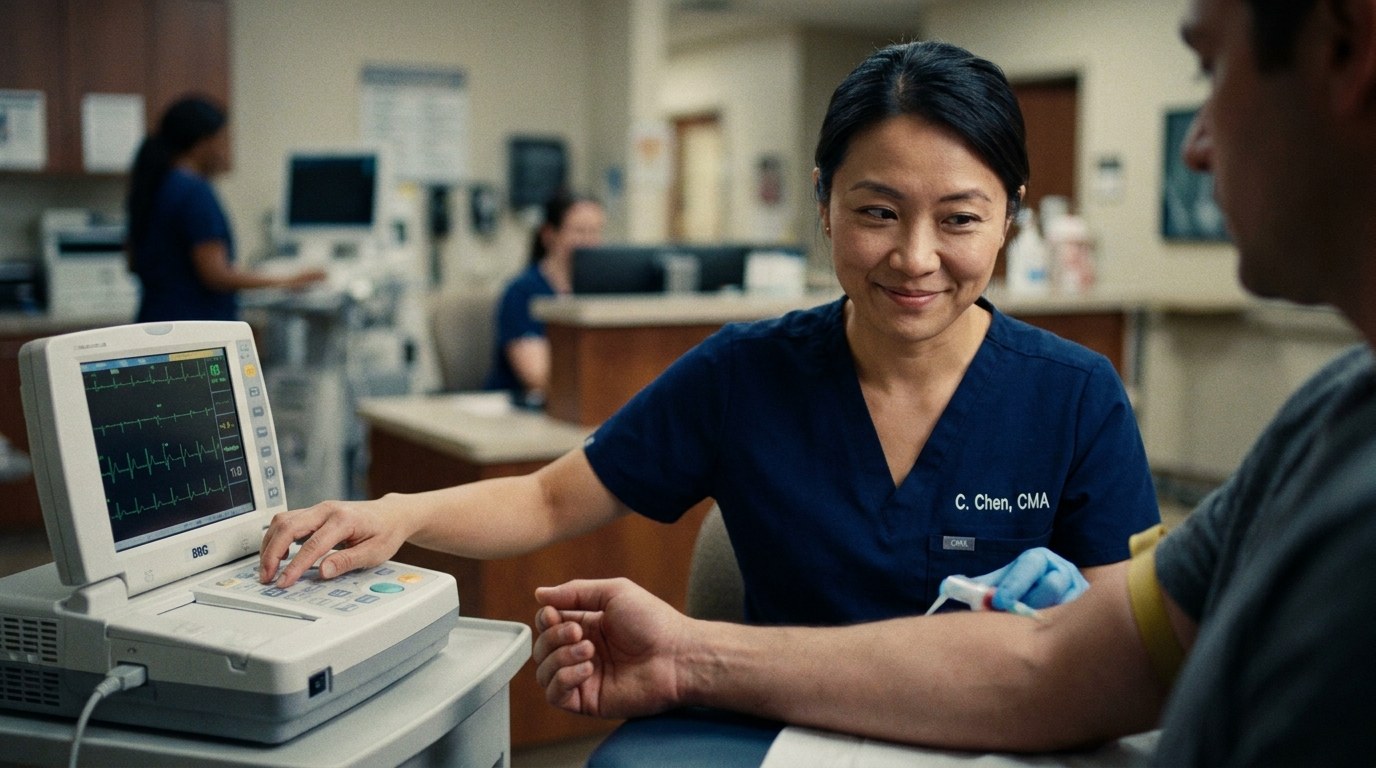
CNA jobs in the DMV area are plentiful — and for career-changers who want meaningful, hands-on work without a four-year degree, becoming a Certified Nurse Aide in Virginia or the broader DC metro is one of the fastest paths to a healthcare paycheck.
This guide breaks down everything you need to know: what CNAs actually do day-to-day, what the pay looks like across Northern Virginia, Maryland, and DC, where nurse aides work beyond nursing homes, and exactly what it takes to get licensed in Virginia. And if you’re still exploring your options, we’ll also introduce a parallel track — hands-on wellness careers like Massage Therapy and Esthetics — that attract many of the same career-changers for similar reasons.
—
- Virginia CNAs earn approximately $35,000–$40,000/year; DC metro CNAs can exceed $48,000/year
- Virginia requires a minimum of 75 training hours plus a skills competency exam and written test to become certified
- CNAs work in hospitals, home health agencies, rehabilitation centers, hospice, and pediatric care — not just nursing homes
- Healthcare support jobs in Northern Virginia are growing; demand for allied health workers in the DMV remains strong
- Career-changers who want hands-on health and wellness work also pursue Massage Therapy and Esthetics — fields with similar people-first appeal and a faster licensing timeline
—
What Does a Certified Nurse Aide Actually Do?
A Certified Nurse Aide provides direct, hands-on care to patients and residents — the kind of daily support that makes an enormous difference in someone’s life but often goes unseen.
On a typical shift, a CNA helps patients with bathing, dressing, grooming, eating, and mobility. They take and record vital signs, reposition patients to prevent bedsores, assist with toileting, and communicate changes in a patient’s condition to the supervising nurse on duty. It is close-contact, physically demanding work — and for the right person, it is deeply rewarding.
Who Thrives in This Role?
If you are patient by nature, physically capable, and genuinely motivated by helping people through difficult moments — the CNA role can feel like a calling. The work attracts people who want to be in the room where care actually happens, not behind a desk or screen.
It’s also worth being honest about the challenges. CNAs are on their feet for most of an eight- to twelve-hour shift. The emotional weight of working with elderly, ill, or end-of-life patients is real. High turnover in the field is partly a product of that physical and emotional load. Going in clear-eyed about both the rewards and the demands will help you make a better decision for your career.
Mini-Story: From Retail to Bedside
Consider someone like Marcus — a 31-year-old retail manager in Fairfax County who spent seven years managing a busy home goods store. He was good at his job, but he’d been quietly burned out for two years. A family member’s hospitalization made him realize he wanted work that felt like it mattered in a more direct way. He researched CNA programs in Northern Virginia, completed his training in about six weeks, passed the Virginia competency exam, and landed a position at a rehab facility in Arlington. The pay cut from his retail salary was real — but so was the sense of purpose he’d been missing.
—
CNA Salaries in Virginia and the Greater DMV Region
CNA earnings in Virginia range from modest to genuinely competitive depending on where you work, what setting you’re in, and how much experience you bring.
Here’s a grounded look at current salary benchmarks, sourced from Bureau of Labor Statistics (BLS) Occupational Employment and Wage Statistics data and Virginia-specific figures:
How Much Do CNAs Make in Virginia? (Factors That Move the Number)
Several variables push CNA pay higher or lower within the state:
For the most current Virginia-specific wage data, the BLS Virginia Occupational Employment Statistics page is the most reliable primary source to verify figures before making career decisions.
—
Where CNAs Work in the DMV — Beyond Nursing Homes
Most people picture nursing homes when they think of CNA jobs — but that picture is incomplete, and it keeps some candidates from exploring a field that actually offers considerable variety.
Here is where nurse aides actually work across the Northern Virginia and DC metro area:
Hospitals
Major health systems in the DMV — including Inova Health System, MedStar, Children’s National, and George Washington University Hospital — employ CNAs and patient care technicians in acute care settings. Hospital CNAs often assist with admissions, post-surgical care, and monitoring on medical-surgical floors. Hospital roles tend to pay above the regional average and offer more structured benefits packages.
Home Health Agencies
Home health is one of the fastest-growing segments for CNA employment in Northern Virginia. In-home care aides provide personal care assistance to older adults and individuals with disabilities who live independently or with family. The flexibility of scheduling appeals to many CNAs, and the one-on-one nature of home care can be deeply meaningful. Northern Virginia’s aging population — particularly in Fairfax and Loudoun counties — is driving consistent demand.
Assisted Living Communities
Northern Virginia has a dense network of assisted living communities — particularly in the Tysons Corner area, McLean, Reston, and Leesburg corridors. These settings offer a less acute environment than hospitals, with more consistent resident relationships and often more predictable scheduling.
Rehabilitation Centers
Short-term rehab facilities care for patients recovering from surgery, stroke, or injury before they return home. CNAs in these settings support physical therapy routines, assist with transfers, and help patients rebuild daily living skills. The pace is more dynamic than long-term care.
Hospice and Palliative Care
Hospice CNAs provide comfort-focused care for patients in the final stages of life — in both facility and home-based settings. This work is emotionally demanding and not the right fit for everyone, but for CNAs who are called to end-of-life care, it is among the most meaningful roles in the field.
Pediatric and School Settings
Some CNAs work in pediatric clinics, children’s hospitals, or as health aides in school districts — a less commonly discussed employment track that attracts people whose passion is working with children rather than elderly adults.
—
Virginia CNA Licensing — Hours, Steps, and Timeline
Getting licensed as a CNA in Virginia is a defined, achievable process — and understanding it helps you plan realistically.
Here are the current requirements set by the Virginia Department of Health Professions / Board of Nursing (verify all details at the time of your application, as requirements are subject to update):
Step 1: Complete an Approved Training Program
Virginia requires a minimum of 75 training hours to sit for the CNA competency exam. This includes both classroom instruction and supervised clinical practice. Many programs exceed this minimum — some run 120 to 150 hours — and longer programs often better prepare candidates for the realities of patient care.
Training programs are offered through community colleges, healthcare employers, and private training providers across the state. Course lengths typically range from four to eight weeks for accelerated formats.
Step 2: Pass the Competency Evaluation
The Virginia nurse aide competency evaluation has two components:
Both components must be passed within a set number of attempts and within a defined window after program completion.
Step 3: Appear on the Virginia Nurse Aide Registry
To legally work as a CNA in Virginia, you must be listed on the Virginia Nurse Aide Registry. Your training program and test results feed into this process. A background check is required for all candidates — felony convictions related to patient care or abuse are disqualifying factors.
How Long Does CNA Training Take in Virginia?
From enrollment to first day of work, most candidates complete the process in six to ten weeks — faster if they choose an accelerated program and test promptly after completing training. This is one of the shorter paths to an entry-level healthcare role available in Virginia.
Mini-Story: A Weekend Program and a New Direction
Priya had been a hotel front desk manager in Tysons Corner for five years. When the pandemic reshuffled her industry, she decided to pivot toward healthcare — specifically, she wanted to work directly with patients. She enrolled in a weekend-format CNA program, completed her 75+ required hours over about six weeks while picking up part-time work, and passed both parts of the Virginia competency exam on her first attempt. Within two months of starting her program, she was working full-time at an assisted living community less than 10 miles from her home. The salary was comparable to what she’d earned in hospitality — and the job felt entirely different in the best way.
—
Exploring Other Hands-On Health and Wellness Careers in Northern Virginia
Not everyone who searches “CNA jobs DMV area” ends up becoming a CNA — and that’s completely fine. The underlying motivation is often the same: you want a career that’s hands-on, people-centered, doesn’t require a four-year degree, and pays you to do something that genuinely helps others feel better.
If that describes you, it’s worth knowing that wellness careers like Massage Therapy and Esthetics attract many of the same career-changers — and offer a distinct set of advantages worth comparing honestly.
What Makes Wellness Careers Worth Considering?
Here’s a straightforward side-by-side picture:
Neither path is better in an absolute sense — they serve different personalities, physical preferences, and career goals. But they belong in the same conversation for career-changers who want to work with people, use their hands, and build a credential without spending four years in a classroom.
AVI Career Training: A COE-Accredited Option in Northern Virginia
AVI Career Training, located in Vienna, Virginia — just minutes from the Tysons Corner area — is a COE-accredited, SCHEV-certified beauty and wellness school that offers Massage Therapy, Esthetics, Cosmetology, Nail Technician, Cosmetic Laser Technician, and Electrolysis programs.
AVI does not offer CNA training. That is important to state plainly.
What AVI does offer is a serious, credentialed path into the wellness side of the hands-on health and wellness spectrum — for people who want to help others feel better, work with their hands, and build a career without a four-year degree. Financial aid is available for qualifying programs, and AVI accepts the GI Bill® for eligible veterans.
If you are researching CNA career opportunities in Northern Virginia and realize the healthcare environment is not the right fit — but the people-centered, hands-on appeal still resonates — AVI is worth a look.
Explore Massage Therapy and Esthetics programs at AVI Career Training in Vienna, VA. Programs are COE-accredited and designed for working adults making a career change.
—
Frequently Asked Questions About CNA Jobs in the DMV
Q: How much do CNAs make in Virginia?
A: Virginia CNAs earn approximately $35,000–$40,000 per year at the median, with Northern Virginia CNAs typically earning above the state average. DC metro CNAs can exceed $42,000–$48,000 annually due to the area’s higher cost-of-living wage structure. Factors like work setting, shift differentials, and experience all affect actual earnings.
Q: Where do nurse aides work besides nursing homes?
A: CNAs work in hospitals, home health agencies, assisted living communities, rehabilitation centers, hospice programs, pediatric clinics, and school health settings. In the DMV area, hospital systems like Inova and MedStar, home health agencies, and the region’s large network of assisted living communities all employ nurse aides.
Q: How long does CNA training take in Virginia?
A: Virginia requires a minimum of 75 training hours to sit for the CNA competency exam. Most programs run four to eight weeks in accelerated formats. From enrollment to first day of work, the typical timeline is six to ten weeks — one of the faster entry points into healthcare employment.
Q: Is being a CNA worth it in the DMV area?
A: For many career-changers, yes — especially those who want meaningful, hands-on work without a four-year degree and are drawn to healthcare environments. The DMV’s large hospital systems, aging population, and home health demand create consistent job availability. The trade-offs are real — physical demands, emotional weight, and moderate pay — but for the right person, the career offers genuine purpose and job stability.
Q: What is the difference between a CNA and a medical assistant?
A: CNAs focus almost exclusively on direct patient care — bathing, feeding, mobility assistance, and vital signs — primarily in nursing homes, hospitals, and home health settings. Medical assistants (MAs) handle a mix of clinical and administrative tasks in outpatient settings like physician offices and clinics — things like taking patient histories, preparing exam rooms, drawing blood, and scheduling. MAs typically require more training hours and their scope of practice varies by state.
Q: Does AVI Career Training offer a CNA program?
A: No. AVI Career Training is a COE-accredited beauty and wellness school in Vienna, Virginia. AVI offers programs in Massage Therapy, Esthetics, Cosmetology, Nail Technology, Cosmetic Laser Technician, and Electrolysis — but does not offer CNA or nurse aide training. Career-changers interested in hands-on wellness careers may find AVI’s programs a relevant alternative to explore.
Q: What are the best allied health careers in the DMV for people without a degree?
A: The DMV has strong demand across several allied health and wellness tracks that don’t require a four-year degree. CNA and patient care technician roles are among the fastest to enter. Medical assisting, phlebotomy, and pharmacy technician roles are other commonly pursued paths. On the wellness side, Massage Therapy and Esthetics licensure programs offer another category of hands-on, people-first careers accessible without a bachelor’s degree.
—
Is a CNA Career the Right Move for You?
CNA jobs in the DMV area offer real opportunity — accessible training, consistent demand, and the chance to do work that matters directly to the people in your care. If you are drawn to healthcare environments, comfortable with the physical demands, and ready for the emotional reality of patient care, the CNA path is worth pursuing with open eyes.
If your research leads you to realize the wellness side of hands-on health careers fits you better — whether that’s working in a spa, a med spa, a wellness studio, or building your own client base — that’s a legitimate parallel path, not a consolation prize.
Both tracks serve career-changers who want to use their hands, work with people, and build something real without spending four years in school.
Whatever direction you choose, do your research, verify current requirements directly with the Virginia Board of Nursing or DPOR, and make a decision based on where your skills and your values actually align.