
Barber School in Northern Virginia: Your Career Guide
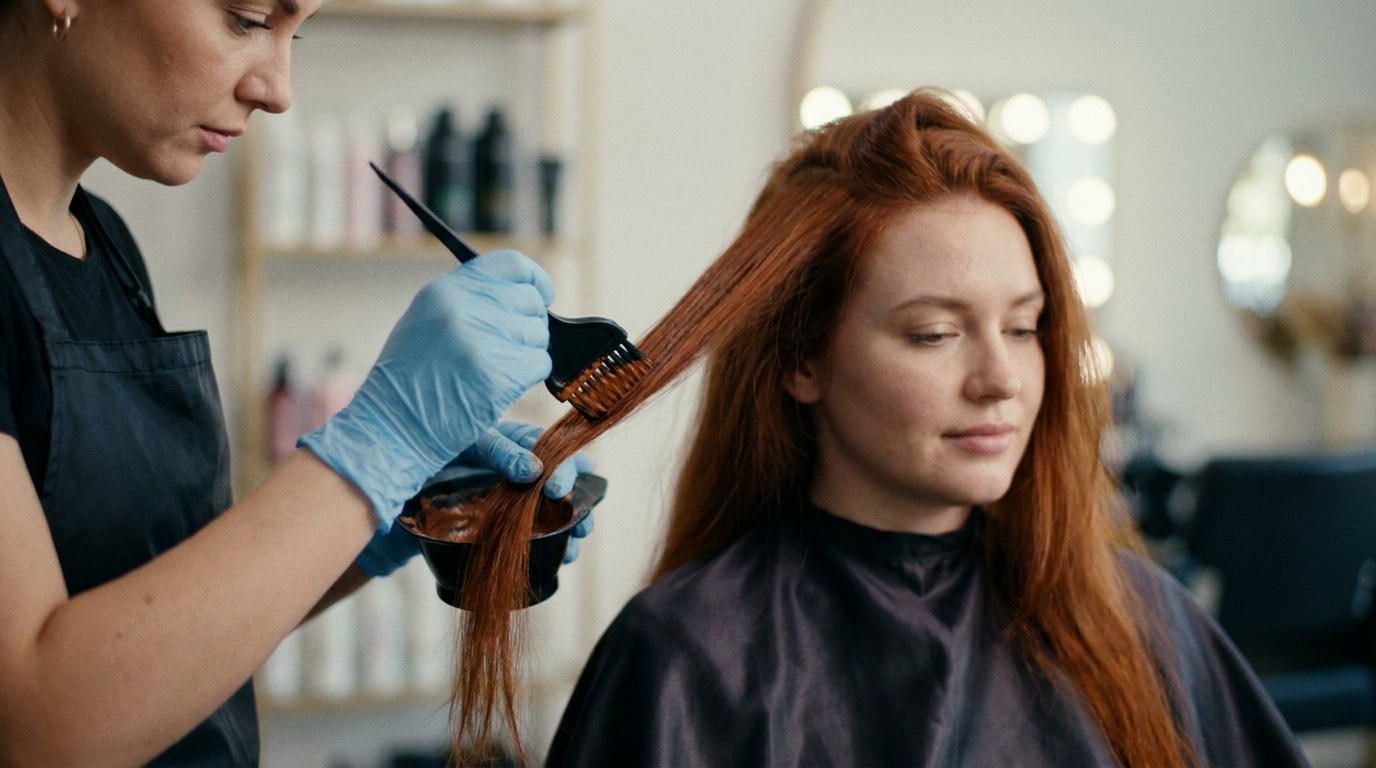
AVI Career Training in Vienna, Virginia offers one of the most accessible routes to a licensed barbering career in the Northern Virginia and DC metro region — a market where demand for skilled barbers is high, clientele is diverse, and top earners regularly exceed national wage benchmarks.
If you’ve been searching for a barber school near you in Northern Virginia, you’re asking the right question at the right time. The DC metro area is one of the strongest markets in the country for barbering professionals, and a structured, accredited program is the clearest path to getting your Virginia barber license and building a career that lasts.
This guide walks you through everything — Virginia’s licensing requirements, what you’ll learn in a 1,500-hour program, what barbers actually earn in this market, and how to choose a school that sets you up to succeed.
???? Key Takeaways
- Virginia requires 1,500 hours of accredited barbering training to sit for the state board exam.
- The Virginia Board of Barbers (under DPOR) requires passing both a written and practical exam for licensure.
- Barbers in Northern Virginia can earn $55,000–$75,000+ with experience, loyal clientele, or a booth rental setup.
- AVI Career Training is COE Accredited and SCHEV Certified, located in Vienna, VA — minutes from Tysons Corner.
- The Barbering program at AVI is under 600 hours of federally qualifying credit — see financial aid details below.
—
What Does a Barber Actually Do? (And Why the Demand Is Real)
Modern barbering is far more than a haircut. Today’s barbers are skilled tradespeople who deliver precision fades, tapers, beard design, straight-razor shaves, scalp treatments, and full style consultations — often building long-term relationships with clients who return every two to four weeks like clockwork.
That loyalty is exactly what makes barbering recession-resilient. People don’t stop getting haircuts when the economy tightens. They may cancel a vacation, but they still show up to the barbershop before a job interview.
The Northern Virginia and DC metro market amplifies this demand significantly. Fairfax County, Arlington, and the surrounding area are home to one of the most diverse, style-conscious, and economically active populations in the United States. Federal employees, military personnel, tech professionals, and entrepreneurs all need skilled barbers — and they’re willing to pay for quality.
The diversity of the region matters in another critical way: clientele here spans every hair texture and background. A barber in Northern Virginia needs to be fluent in cutting 4C coils, managing locs, executing fades on wavy and straight hair, and adapting technique across skin tones. Generic barbering programs that train only on one hair type leave graduates unprepared for this market. The best programs — including AVI Career Training’s Barbering program — train on all textures from day one.
—
Virginia Barber License Requirements: What You Need to Know
To become a licensed barber in Virginia, you must meet specific requirements set by the Virginia Department of Professional and Occupational Regulation (DPOR) — the state agency that oversees barbering, cosmetology, and dozens of other licensed professions.
Here’s what the Virginia barber license pathway looks like:
Step 1 — Complete an Accredited Barbering Program
Virginia requires 1,500 hours of training from an approved barbering school. This is non-negotiable. You cannot sit for the state board exam without completing your hours at a licensed institution.
Step 2 — Pass the State Board Exams
Virginia requires passing both a written and a practical exam to receive your license. The written exam tests your knowledge of theory, sanitation, state law, and safety. The practical exam assesses your hands-on technical skills with real clients.
Step 3 — Apply for Licensure Through DPOR
After passing both exams, you submit your licensure application to Virginia DPOR with the required documentation and fee. Once approved, you’re a licensed Virginia barber.
Barber License vs. Cosmetology License in Virginia
This is one of the most common questions prospective students ask — and it matters for your career planning.
A Virginia Barber License qualifies you to perform barbering services: haircuts, shaves, beard grooming, scalp treatments, and related services typically performed in a barbershop setting. A Virginia Cosmetology License covers hair, skin, and nail services in a broader salon context — but the scope of services, the exam content, and the hour requirements differ between the two.
Can a cosmetologist cut men’s hair in Virginia? Generally, yes — a licensed cosmetologist can provide haircut services. However, straight-razor shaving is a barbering-specific skill, and the technical depth of barber training is specifically designed for the barbershop environment. If your goal is to work in a barbershop, build a fade-and-shave clientele, or eventually own a barbershop, the Barber License is the right path.
⚡ Quick Virginia Licensing Summary
- Required hours: 1,500 hours of accredited training
- Licensing body: Virginia DPOR (Department of Professional and Occupational Regulation)
- Exams required: Written + Practical (both must be passed)
- License type: Virginia Barber License (separate from Cosmetology License)
—
What to Expect in a Barbering Program: Curriculum Breakdown
AVI Career Training’s Barbering program (NO FINANCIAL AID FOR THIS PROGRAM) is built around the full 1,500-hour Virginia requirement — and every hour is designed to produce a graduate who is ready to work on day one.
Here’s what the curriculum covers:
Cutting Techniques Across All Hair Textures
This is where AVI’s approach stands apart. The curriculum is explicitly inclusive — students train on all hair types, including 4C coils, natural and relaxed textures, locs, waves, and straight and fine hair. In a market as diverse as Northern Virginia and the broader DMV, this is not optional training. It’s essential.
A barber who can only cut one hair type is leaving a significant portion of the market — and a significant portion of their income — on the table.
Fading, Tapering, and Precision Cutting
Students master the fade in all its variations — skin fades, low fades, mid fades, high fades — as well as tapering, blending, and razor work. These are the technical skills clients return for, and they take real repetition to build.
Beard Design and Straight-Razor Shaving
Beard grooming is one of the fastest-growing segments of men’s grooming. Students learn beard design, lining, and shaping alongside straight-razor shave technique — a signature barbershop skill that commands premium pricing.
Sanitation, Safety, and State Board Prep
Every licensed barber must demonstrate mastery of sanitation and safety protocols. These aren’t just exam topics — they protect clients and protect your license. AVI integrates sanitation training throughout the program and provides dedicated state board exam preparation before graduation.
Client Consultation and Business Skills
Understanding what a client wants — and communicating clearly when their expectations need adjusting — is a skill that takes practice. Students also learn the business side: booth rental basics, client retention, pricing, and what it means to run an independent career.
—
> Meet Marcus. He came to AVI Career Training after six years in retail management, frustrated that he’d spent his career building someone else’s business. He’d always cut his friends’ hair on weekends — 4C textures, waves, everything — but never thought of it as a career. He enrolled in the Barbering program, completed his 1,500 hours, passed both state boards on his first attempt, and within eight months of graduating had a full book at a Vienna barbershop. Today he’s exploring booth rental options and building toward ownership. His comment at graduation: “I wish I’d done this ten years ago.”
—
Barbering Career Outlook and Earning Potential in Northern Virginia
Barbering pays well — and in Northern Virginia, it pays better than the national average.
According to the U.S. Bureau of Labor Statistics (BLS), the median annual wage for barbers nationally is in the range of $35,000–$40,000 (SOC code 39-5011). But median figures tell only part of the story, especially in high-income metro markets like the DC area.
In Northern Virginia — where Fairfax County consistently ranks among the wealthiest counties in the United States — barbers with strong technical skills and a loyal clientele can earn significantly more. Experienced barbers in this market can earn $55,000–$75,000 or more, depending on their setup, volume, and specialties. These figures are not guaranteed outcomes; they reflect what high-performing barbers with established books report in premium metro markets, based on BLS wage data and industry benchmarks.
Employment vs. Booth Rental: Two Paths to Income
As a new barber, you’ll likely start as an employed stylist at a barbershop — earning a salary or commission while you build your clientele. This provides stability as you grow.
Once you’ve established a loyal book, many barbers transition to booth rental — renting a chair at a barbershop and keeping 100% of what they earn. In the Northern Virginia market, where clients have disposable income and are willing to pay $35–$60+ per cut, a full book on a booth rental basis can generate serious income.
The math looks like this: 20 clients per day × five days per week × $45 average service = over $200,000 in gross annual revenue before expenses. Even at modest productivity levels, the earning ceiling in this market is real.
—
> Meet Destiny. She was a sophomore at a community college who hadn’t declared a major and didn’t feel connected to the traditional four-year path. She’d grown up doing hair for friends and family — natural textures, locs, braided styles — and a friend mentioned AVI. She toured the Vienna campus, enrolled in the Barbering program, and completed her 1,500 hours while working part-time. She passed her Virginia state board exams and landed her first position at a barbershop in the Tysons Corner corridor. Her starting income exceeded what she’d projected for her first year out of a four-year college. Two years in, she’s already eyeing her own suite.
—
How to Choose the Right Barber School Near You — And Why Accreditation Matters
Not all barber schools are equal — and in Virginia, the school you choose directly affects your ability to get licensed, access funding, and launch your career.
Here are the criteria that matter most:
COE Accreditation
AVI Career Training is accredited by the Council on Occupational Education (COE) — a nationally recognized accrediting agency for career and technical education. COE accreditation signals that a school meets rigorous standards for curriculum quality, instructor credentials, student outcomes, and institutional integrity. It’s one of the most meaningful quality markers for a career school.
SCHEV Certification
The State Council of Higher Education for Virginia (SCHEV) certifies postsecondary schools operating in Virginia. AVI is SCHEV Certified — meaning the school meets Virginia’s state-level standards for operation and student protection.
Hands-On Clinic Hours
Theory alone doesn’t build skill. Look for programs that put students on real clients as early as possible, with supervised clinic time that mirrors the actual work environment. AVI’s 1,500-hour program is structured to maximize chair time and real-world repetition.
Instructor Credentials
Your instructors should be licensed professionals with real industry experience — not just educators with a textbook. AVI’s instructors are licensed practitioners who bring current, real-world technique into the classroom.
Inclusive Curriculum
As discussed throughout this guide, the Northern Virginia market demands barbers who can work on all hair textures. Choose a school that explicitly trains on diverse hair types. AVI’s curriculum is built on this foundation.
GI Bill® Acceptance
Northern Virginia has one of the largest active-duty and veteran populations in the country. AVI accepts the GI Bill® — making it one of the few accredited barbering programs in the region accessible to service members and veterans through their earned education benefits.
Tuition and Financial Aid for the Barbering Program
Important note on financial aid: The Barbering program at AVI Career Training (NO FINANCIAL AID FOR THIS PROGRAM) is structured at 1,500 hours of training, but because of the program’s federal credit-hour classification, it does not qualify for federal financial aid (Title IV / FAFSA). Federal student aid is not available for this program.
AVI offers payment plan options and private financing pathways to help students manage tuition. If you’re a veteran, the GI Bill® may cover your program costs — contact AVI admissions at (703) 943-9841 to discuss your specific benefit eligibility.
Location — Vienna, VA (Fairfax County / Tysons Corner Corridor)
AVI Career Training is located at 1595 Spring Hill Rd #720, Vienna, VA 22182 — in the heart of Fairfax County, minutes from Tysons Corner. If you’re searching for a barber school near you in Northern Virginia or a barber cosmetology school in Fairfax VA, AVI’s location puts you in the middle of the market you’ll be serving.
—
Frequently Asked Questions
Q: How many hours do you need to become a barber in Virginia?
A: Virginia requires 1,500 hours of training from an approved barbering school before you can sit for the state board exam. AVI Career Training’s Barbering program is structured around this exact requirement.
—
Q: How long does barber school take in Virginia?
A: At 1,500 hours, the length of your program depends on your schedule. Full-time students typically complete the program faster than part-time students. Ask AVI admissions about current schedule options by calling (703) 943-9841.
—
Q: What is the difference between a barber license and a cosmetology license in Virginia?
A: A Virginia Barber License authorizes you to perform barbering services — haircuts, shaves, beard grooming, and scalp treatments — typically in a barbershop setting. A Virginia Cosmetology License covers a broader range of hair, skin, and nail services in a salon context. Straight-razor shaving is a barbering-specific skill. For those targeting the barbershop career path, the Barber License is the correct credential.
—
Q: Can a cosmetologist cut men’s hair in Virginia?
A: Generally yes — a licensed cosmetologist in Virginia can provide haircut services to any client. However, straight-razor shaving is specific to barbering licensure, and the depth of training in a barbering program is specifically designed for the barbershop environment and clientele.
—
Q: How much do barbers make in Northern Virginia?
A: According to BLS data, the national median for barbers is approximately $35,000–$40,000 annually. In the Northern Virginia and DC metro market, experienced barbers with loyal clientele can earn $55,000–$75,000 or more, depending on their volume, setup (employed vs. booth rental), and specialties. These figures are not guaranteed and reflect market ranges, not individual outcomes.
—
Q: Does AVI Career Training accept the GI Bill® for the Barbering program?
A: Yes — AVI Career Training accepts the GI Bill®, which is particularly relevant given Northern Virginia’s large active-duty and veteran community. Federal financial aid (FAFSA/Title IV) is not available for the Barbering program, but GI Bill® benefits may cover program costs. Contact AVI at (703) 943-9841 to discuss your eligibility.
—
Q: Is AVI Career Training accredited?
A: Yes. AVI Career Training is accredited by the Council on Occupational Education (COE) and certified by the State Council of Higher Education for Virginia (SCHEV). These credentials confirm that AVI meets rigorous standards for curriculum quality, instructor credentials, and student outcomes — and that your hours and credentials will be recognized by Virginia DPOR for licensure.