
AVI Career Training

Massage Therapy School in Northern Virginia

Share:

Massage Therapy School in Northern Virginia

AVI Career Training in Vienna, VA offers one of Northern Virginia’s most accessible paths to a state-recognized massage therapy license — with hands-on clinical training, COE accreditation, and financial aid options that make the career transition real and affordable.

If you’ve been thinking about becoming a licensed massage therapist, you’re looking at a career with genuine earning potential, strong job growth, and the kind of daily work that actually makes a difference in people’s lives. The Northern Virginia and DC metro market is one of the strongest in the country for wellness professionals — and demand keeps climbing.

This guide walks you through exactly what it takes to get licensed in Virginia, what you’ll learn at AVI, how long the process takes, and what you can expect to earn once you’re working. Whether you’re exploring this career for the first time or ready to enroll today, you’ll leave with a clear picture of the path ahead.

Ready to take the first step? Apply to AVI’s Massage Therapy program and get started on your licensing journey.

Key Takeaways

  • Virginia requires a minimum of 500 clock hours of supervised massage therapy education for licensure
  • Graduates must pass the MBLEx (Massage & Bodywork Licensing Examination) before applying to the Virginia Board of Nursing
  • Typical program completion for a 500-hour program: 5–7 months full-time
  • Virginia massage therapists earn a median of approximately $52,000–$58,000 per year; DC metro area wages frequently exceed the national median
  • AVI Career Training is COE Accredited and SCHEV Certified, with financial aid and GI Bill® acceptance available
  • What Does It Take to Become a Licensed Massage Therapist in Virginia?

    Virginia’s licensing requirements are set by the Virginia Board of Nursing, which oversees massage therapy credentialing in the state. Before you can legally practice as a massage therapist in Virginia, you’ll need to meet several specific requirements.

    The Core Requirements

    Age and Education: You must be at least 18 years old and hold a high school diploma or GED. No prior massage or healthcare experience is required — your training program handles the rest.

    Clock Hours: Virginia mandates a minimum of 500 clock hours of supervised massage therapy education from an approved program. These hours cover both theory and hands-on clinical practice. Your school’s accreditation and approval status matter here — not every program qualifies.

    The MBLEx Exam: After completing your program, you must pass the MBLEx (Massage & Bodywork Licensing Examination). This is the nationally standardized exam administered by the Federation of State Massage Therapy Boards (FSMTB) and is accepted by Virginia as the required licensing exam. Most graduates apply to sit for the MBLEx within weeks of finishing their program.

    Virginia BON Application: Once you pass the MBLEx, you submit your license application to the Virginia Board of Nursing along with proof of education, exam scores, and the required application fee. Processing typically takes 4–8 weeks, though timelines can vary.

    License Renewal: Virginia massage therapy licenses must be renewed every 2 years. Renewal requires continuing education hours, keeping you current with evolving techniques and professional standards.

    Why the Path Is Straightforward

    Compared to many healthcare careers, the massage therapy licensing path in Virginia is clear and achievable. You don’t need a 4-year degree. You don’t need to pass a state clinical board separate from the MBLEx. You complete your program, pass one exam, and apply. That’s a timeline measured in months — not years.

    For more information on Virginia’s licensing requirements, visit the Virginia Department of Health Professions (DPOR), which administers the Board of Nursing’s licensing functions.

    What You’ll Learn in AVI’s Massage Therapy Program

    AVI Career Training’s Massage Therapy program is built around one goal: graduating students who are ready to work on day one. That means a curriculum focused on practical technique, anatomical knowledge, and the professional skills clients and employers actually expect.

    Core Techniques and Modalities

    Your training covers the full range of foundational massage techniques, including:

  • Swedish massage — the cornerstone of therapeutic bodywork, focusing on relaxation, circulation, and muscle tension relief
  • Deep tissue massage — targeted work on deeper muscle layers, commonly requested by clients with chronic pain or athletic recovery needs
  • Sports massage — techniques designed for pre- and post-activity care, relevant in Northern Virginia’s active, fitness-oriented market
  • Neuromuscular therapy — addressing trigger points and soft tissue dysfunction
  • Prenatal considerations and seated/chair massage as part of a well-rounded clinical skill set
  • Anatomy, Physiology, and Pathology

    You can’t do effective bodywork without understanding the body. AVI’s program gives you a solid grounding in anatomy and physiology — muscles, skeletal structure, circulatory and lymphatic systems — and pathology so you understand when massage is appropriate and when it isn’t. This knowledge is directly tested on the MBLEx, so classroom theory connects directly to exam success.

    Clinic Practice Hours

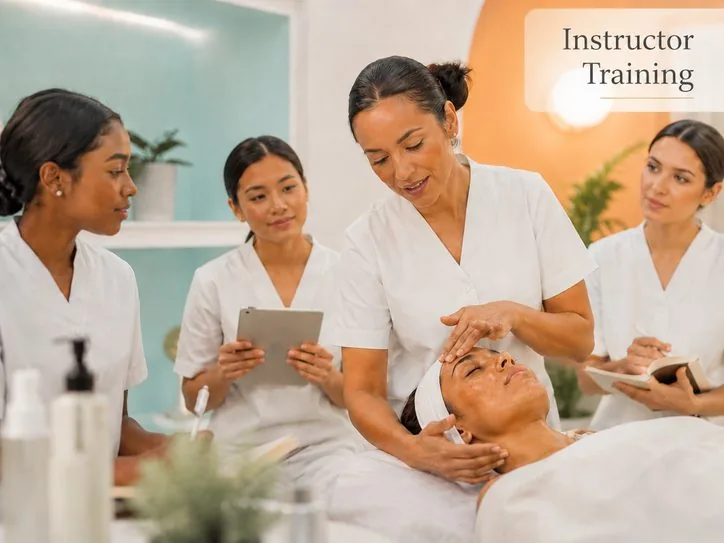
    Hands-on clinic hours are where training becomes competence. You’ll work with real clients under instructor supervision, building the kind of repetition and confidence that textbooks alone can’t deliver. By the time you graduate, working on a client won’t feel like a test — it’ll feel like your job.

    Inclusive Practice

    AVI trains students to work skillfully on every body. That means learning to adapt techniques for clients of different body types, physical conditions, and backgrounds. In a diverse market like Northern Virginia, that kind of inclusive competence isn’t optional — it’s what makes a great therapist.

    How Long Is Massage Therapy School — and When Can You Start Earning?

    One of the most common questions prospective students ask is: how fast can I get from here to a paycheck? It’s a fair question, and the answer is genuinely encouraging.

    Program Length

    Virginia’s 500-hour minimum means you’re looking at a focused, intensive training period — not years of general education. At comparable Northern Virginia programs, full-time students typically complete a 500-hour curriculum in 5–7 months. Contact AVI’s admissions team directly for the current schedule, start dates, and whether part-time options are available at (703) 943-9841.

    From Graduation to Licensed

    After completing your program, the path to licensure moves quickly:

    1. Apply to take the MBLEx through the FSMTB — your school will guide you through this process
    2. Pass the MBLEx — most graduates who prepare consistently pass on their first attempt
    3. Submit your Virginia BON license application — processing takes approximately 4–8 weeks
    4. Receive your license and begin working

    From graduation to licensed and employed, most students are seeing their first professional clients within 2–3 months.

    Marcus’s Story

    Marcus was working in logistics in Fairfax when his company downsized. At 34, he wasn’t interested in another desk job. He’d always been drawn to fitness and wellness — his wife was a physical therapist and he’d watched her career with quiet envy. After two conversations with AVI’s admissions team, he enrolled in the Massage Therapy program. Seven months later, he passed the MBLEx on his first try, got his Virginia license, and landed a position at a sports medicine clinic in Tysons Corner. “I wish I’d done this at 25,” he said. “But I also don’t think I’d have appreciated it the same way.”

    Massage Therapist Salary and Career Outlook in Northern Virginia

    The Northern Virginia and DC metro corridor is one of the best markets in the country to launch a massage therapy career. High household incomes, a large professional workforce, strong demand for wellness services, and proximity to government, military, and healthcare sectors all drive consistent demand for licensed therapists.

    What You Can Expect to Earn

    According to the Bureau of Labor Statistics (BLS), the national median annual wage for massage therapists is approximately $49,860 (2023 data). The top 25% of earners nationally make $62,000 or more per year.

    In Virginia specifically, massage therapists earn a median of approximately $52,000–$58,000 annually — above the national median, reflecting the region’s higher cost of living and market demand. DC metro area therapists frequently earn above Virginia’s statewide median, particularly those working in medical, chiropractic, or high-end spa environments.

    Self-employed therapists with an established private practice in Northern Virginia can earn significantly more — building a client base in a market where people have disposable income and actively prioritize health and wellness.

    Where Northern Virginia Massage Therapists Work

    Your license opens doors across a wide range of settings:

  • Medical and chiropractic clinics — increasingly common as integrative care becomes standard
  • Luxury spas and resort properties — strong demand in the Tysons, McLean, and Reston corridors
  • Sports facilities and athletic training centers — especially relevant in Northern Virginia’s active, fitness-oriented communities
  • Physical therapy offices — collaborative care environments that value licensed massage therapists
  • Corporate wellness programs — a growing segment in Northern Virginia’s large employer base
  • Private practice — the highest earning potential for experienced therapists with a loyal client base
  • A Strong Employment Outlook

    Nationally, employment of massage therapists is projected to grow approximately 18–20% over the next decade according to BLS projections — significantly faster than average for all occupations. Consumer awareness of massage as both wellness and medical care continues to expand, and the Northern Virginia market reflects that trend strongly. (BLS Occupational Outlook for Massage Therapists)

    Is Massage Therapy School Worth It Financially in Virginia?

    This question deserves a direct answer: yes — when you choose an accredited program with legitimate career placement outcomes and transparent tuition, massage therapy training delivers a strong return on investment.

    Breaking Down the Cost

    Massage therapy program tuition in Virginia varies by school. Factors that affect cost include program hours, facilities, and whether the school is accredited and eligible for federal financial aid. Contact AVI’s admissions team for current tuition figures and a breakdown of what’s included.

    What’s important to understand: programs at non-accredited schools may appear cheaper upfront but won’t qualify for federal financial aid — meaning you pay entirely out of pocket. AVI’s COE accreditation means eligible students can access federal financial aid, including Pell Grants, making the total out-of-pocket cost significantly lower.

    Financial Aid at AVI

    AVI Career Training participates in federal financial aid programs for eligible students, and also accepts the GI Bill® — a critical differentiator for Northern Virginia’s large military and veteran community. If you’ve served, your benefits may cover a substantial portion of your training.

    The Return on Investment

    Consider this math: a massage therapy program that takes 5–7 months to complete, financed with available aid, and leading to a career earning $52,000–$58,000 per year in Virginia — that’s a return profile that compares favorably to far longer and more expensive educational paths. And because licensed massage therapists are in demand across multiple industries, you’re not locked into a single employer or narrow market.

    Priya’s Story

    Priya had a biology degree and three years working in medical billing. She liked healthcare but felt disconnected from actual patient care. After researching programs in Northern Virginia, she applied to AVI’s Massage Therapy program, qualified for financial aid, and enrolled within weeks of her initial inquiry. She graduated six months later, passed the MBLEx, and now works three days a week at a chiropractic clinic in Vienna and two days at a spa in Reston. “I’m making more than I did in billing,” she said, “and I actually look forward to work.”

    Why Choose AVI Career Training for Massage Therapy?

    There are several massage therapy programs in Northern Virginia. Here’s what sets AVI Career Training apart.

    COE Accreditation and SCHEV Certification

    AVI is COE Accredited (Council on Occupational Education) and SCHEV Certified (State Council of Higher Education for Virginia). These aren’t just credentials on a wall — they mean AVI meets rigorous standards for educational quality, student outcomes, and institutional integrity. COE accreditation also enables federal financial aid eligibility, which directly benefits you.

    When you’re investing months of your time and real money into training, accreditation matters. It’s the difference between a credential employers respect and one they question.

    Hands-On Clinical Training in Vienna, VA

    AVI’s campus at 1595 Spring Hill Rd #720, Vienna, VA 22182 puts you in the heart of the Northern Virginia market — minutes from Tysons Corner, easily accessible from Fairfax, Arlington, Falls Church, Reston, and the broader DC metro area. You’re not just training in the region — you’re building your professional network here from day one.

    Clinical hours at AVI mean real clients, real technique development, and real instructor feedback. You graduate knowing how to work, not just how to pass a test.

    Financial Aid and GI Bill® Acceptance

    Eligible students can access federal financial aid at AVI, including Pell Grants. AVI also accepts the GI Bill® — making this program one of the few massage therapy options in Northern Virginia that meaningfully serves veterans and active-duty military families. If you’re a veteran evaluating your education benefits, reach out to AVI’s admissions team to discuss your options.

    Inclusive Training for a Diverse Market

    Northern Virginia is one of the most culturally and demographically diverse regions in the country. AVI trains students to work skillfully and confidently with clients of all body types, backgrounds, and needs. That’s not a marketing line — it’s built into the curriculum and reflects a genuine commitment to serving the full community.

    Instructors Who Are Industry Professionals

    AVI’s instructors are licensed working professionals. They bring real-world perspective into the classroom — not just textbook theory, but the kind of practical knowledge that comes from years of actual client work. That context shapes how you learn and how well you perform after graduation.

    People Also Ask

    How Many Hours Do You Need to Become a Massage Therapist in Virginia?

    Virginia requires a minimum of 500 clock hours of supervised massage therapy education from an approved program. This is the state-mandated minimum for MBLEx eligibility and Virginia Board of Nursing licensure.

    How Long Does Massage Therapy School Take in Northern Virginia?

    Full-time students in a 500-hour program typically complete their training in 5–7 months. Part-time options may extend that timeline. Contact AVI at (703) 943-9841 for current start dates and scheduling options.

    What Does the Virginia Massage Therapy Licensing Exam Cover?

    Virginia accepts the MBLEx, which covers anatomy and physiology, kinesiology, pathology, client assessment, ethics, and massage techniques and applications. Your training program prepares you for all tested content areas.

    Is Massage Therapy School Worth It Financially in Virginia?

    Yes — for most students, particularly those attending an accredited school with financial aid access. With median Virginia wages of $52,000–$58,000 and strong employment growth projections, the return on a 5–7 month program is compelling compared to longer, more expensive degree paths.

    Does AVI Career Training Offer Financial Aid for Massage Therapy?

    Yes. AVI is COE Accredited, which means eligible students can access federal financial aid including Pell Grants. AVI also accepts the GI Bill® for qualifying veterans. Contact AVI admissions to discuss your eligibility.

    Start Your Massage Therapy Career in Northern Virginia

    A career as a licensed massage therapist is within reach — and in Northern Virginia, the market for skilled, licensed therapists has never been stronger. AVI Career Training gives you the accredited, hands-on training you need to pass your licensing exam, enter the workforce with confidence, and build a career you’re proud of.

    Five to seven months from now, you could be licensed, employed, and doing work that genuinely helps people. The only step between here and there is starting.

    Apply to AVI’s Massage Therapy program today — or call (703) 943-9841 to speak with an admissions advisor about upcoming start dates, financial aid options, and what to expect.

    Article details:

    Share: