
How to Become a Laser Technician in Virginia
To become a laser technician in Virginia, you need to complete formal cosmetic laser training and work under the supervision of a licensed medical professional — there is no standalone laser technician license issued by the state.
If you’ve been searching for a clear answer about what it actually takes — the licensing rules, the training options, the earning potential — you’re in the right place. This guide covers all of it, specific to Virginia and the Northern Virginia/DC metro market.
Key Takeaways
– Virginia does not issue a standalone laser technician license — you must work under the supervision or delegation of a licensed medical professional
– Cosmetic laser programs typically run 40–100+ hours depending on program depth and modalities covered
– Entry-level laser techs in Northern Virginia earn approximately $40,000–$52,000/year; experienced techs in medical spa settings can reach $55,000–$75,000+
– Laser safety training must address all six Fitzpatrick skin types — this is both a clinical standard and a critical equity issue
– COE-accredited programs like AVI Career Training’s Cosmetic Laser Technology program provide the structured, credentialed training that medical spas and clinics want to see
What Does a Laser Technician Actually Do?
Laser technicians perform non-surgical cosmetic procedures using light-based and energy-based technology. The most common services include laser hair removal, skin rejuvenation, pigmentation treatment, and body contouring. Some settings also offer radiofrequency treatments and intense pulsed light (IPL) therapy.
These are not the same as the facials, waxing, and chemical exfoliants an esthetician typically performs. Cosmetic laser procedures use calibrated energy delivered to the skin, which means the margin for error is narrow. Undertrained technicians can cause burns, hyperpigmentation, or scarring — especially on darker skin tones. That’s why training quality matters so much in this field.
The day-to-day work is genuinely exciting. You’ll consult with clients about their skin concerns, develop customized treatment plans, and operate sophisticated equipment to produce real, visible results. Medical spas, dermatology offices, plastic surgery clinics, and dedicated laser centers are all common employers. Some experienced technicians eventually move into management or medical aesthetics sales roles.
If you’re coming from an esthetics background, you’ll find some familiar territory — skin anatomy, Fitzpatrick skin type assessment, client consultation skills. But laser work adds a layer of technical precision and medical-adjacent responsibility that many estheticians find genuinely engaging.
Virginia Laser Technician Licensing Requirements
Here’s the question most people search first — and the answer surprises a lot of people.
Virginia does not issue a standalone laser technician license.
There is no state board exam to pass, no license number to hang on your wall. Instead, Virginia regulates cosmetic laser procedures under the authority of the Virginia Board of Medicine. Laser treatments are classified as medical procedures, which means they must be performed under the supervision or delegation of a licensed physician, nurse practitioner, or other licensed medical practitioner.
In practical terms, this means you can legally work as a laser technician in Virginia — but you must do so within a framework where a licensed medical professional is overseeing your work and has delegated the procedures appropriately. Most medical spas and laser clinics already operate this way. You’ll find a medical director listed on file, and protocols in place that define which procedures technicians can perform and under what circumstances.
What does this mean for your training path? It means that formal, accredited training from a recognized cosmetic laser program is your primary credential. When a medical spa hires you, they’re not looking for a state license number. They’re looking at your training hours, your program’s accreditation status, your hands-on clinical experience, and whether you can demonstrate competency across multiple devices and skin types.
Cutting corners with a weekend workshop or an online-only course won’t satisfy a serious employer — and it won’t prepare you to work safely. Virginia’s regulatory framework puts the responsibility on the medical director to ensure their staff are properly trained. That means reputable clinics are highly selective about the training backgrounds they’ll accept.
For the most current information on delegation rules and scope of practice, visit the Virginia Department of Health Professions at dhp.virginia.gov directly before making enrollment decisions.
A quick note if you’re a licensed esthetician: Your esthetics license does not authorize you to perform laser procedures in Virginia. These are separate scopes of practice. Completing a cosmetic laser program is the correct pathway regardless of your existing credentials.
What to Look for in a Cosmetic Laser Training Program
Not all laser training programs are built the same. Here’s what to evaluate before you commit.
Accreditation Status
This is non-negotiable. An accredited program signals that an independent body has reviewed the curriculum, faculty credentials, and student outcomes against established standards. For schools in Virginia, look for COE (Council on Occupational Education) accreditation or equivalent. Accreditation also matters for financial aid eligibility — unaccredited programs often cannot participate in federal financial aid programs.
Hands-On Clinical Hours
Reading about laser physics is not the same as operating equipment on real clients. Ask programs directly: How many of your total hours are hands-on? How many live clients will I treat? A program that front-loads theory and minimizes clinical practice is not preparing you for real employment.
Equipment Variety
The medical aesthetics industry uses multiple platforms. A well-rounded program covers at least:
- Nd:YAG lasers — effective across a range of skin tones, including darker complexions
- Diode lasers — widely used for laser hair removal
- IPL (Intense Pulsed Light) — used for pigmentation, vascular, and hair reduction treatments
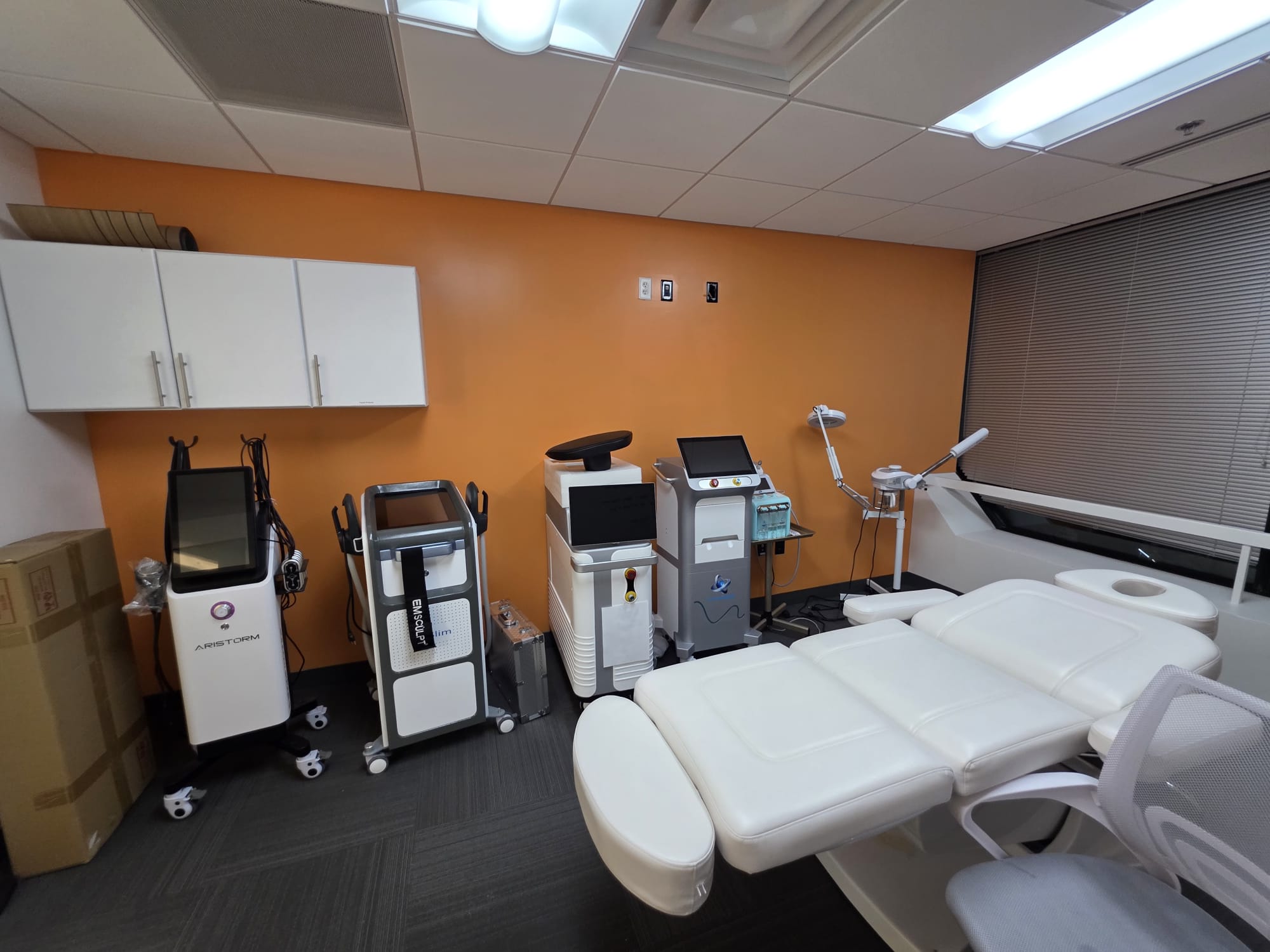
- Radiofrequency devices — increasingly common for skin tightening and body contouring
Training on a single device type limits your employability. The broader your equipment experience, the more valuable you are to a prospective employer.
Fitzpatrick Scale Training Across All Six Types
This one deserves its own callout. The Fitzpatrick Scale classifies skin tones from Type I (very fair) to Type VI (very dark). Laser energy interacts differently with melanin at each level — and historically, many laser training programs have been designed primarily with lighter skin tones in mind.
That’s a real problem, both clinically and professionally. In the Northern Virginia and DC metro market, your clients will represent extraordinary skin tone diversity. A laser technician who isn’t trained to safely and effectively treat Fitzpatrick Types IV, V, and VI is not equipped for this market — and working outside your competency on darker skin tones risks serious injury to clients.
Ask any program directly: Does your curriculum explicitly address all six Fitzpatrick types? How are darker skin tones addressed in your hands-on training?
Instructor Credentials
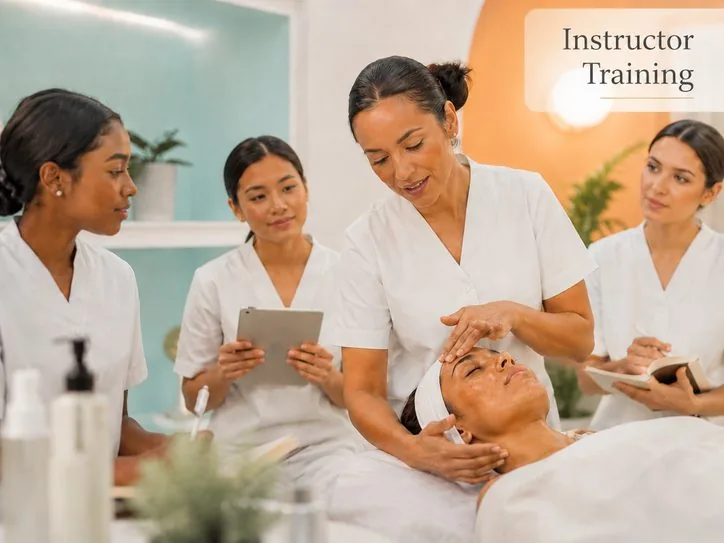
Your instructors should be licensed professionals with real clinical experience — not just classroom educators. Ask about their backgrounds. An instructor who has spent years working in medical spas and laser clinics brings context that textbooks can’t replicate.
Laser Technician Salary & Career Outlook in Virginia
The Northern Virginia and DC metro region is one of the strongest markets in the country for medical aesthetics professionals. High household incomes, a health-conscious professional population, and a dense concentration of medical spas and dermatology practices all drive demand for skilled laser technicians.
Here’s a realistic look at the numbers:
- Entry-level laser technician: approximately $40,000–$52,000 per year
- Experienced laser technician in a medical spa setting: $55,000–$75,000+ per year
- Top earners in high-volume medical spa environments or those who add specialized skills can push beyond these ranges
(Salary data sourced from Indeed and Glassdoor; figures reflect the Northern Virginia/DC metro market and should be verified at time of reading as market conditions shift.)
Medical spa settings typically pay more than general salon environments because the procedures command higher price points and the employer’s liability expectations are higher — which is exactly why they prioritize formally trained, credentialed staff.
The broader industry trajectory is strong. The global medical aesthetics market was valued at over $15 billion in 2023 and is projected to continue growing through 2030, driven by increasing demand for non-surgical cosmetic procedures across all age groups (Grand View Research, 2024). Laser hair removal alone is among the most-requested cosmetic procedures in the United States year over year, according to the American Society for Dermatologic Surgery.
Career growth pathways are real. Many laser technicians move into senior technician roles, take on training or mentorship responsibilities, transition into clinic management, or pivot into medical aesthetics device sales — a field where clinical experience commands a premium.
Mini-Story: A Career Change That Made Sense
Take someone like Priya — a registered esthetician who had been working in a traditional day spa for five years. She was skilled, her clients loved her, but her income had plateaued. She started noticing that the medical spa down the street was fully booked weeks out for laser treatments, and the technicians there were earning significantly more than she was.
What she needed wasn’t a new career — it was a new credential. She enrolled in a cosmetic laser program, completed her hands-on training on a full range of devices and skin types, and within three months of graduating, landed a position at a medical spa in Tysons Corner. Her starting salary was nearly $20,000 more than what she’d been making. The esthetics foundation she’d built made the transition faster — but it was the laser certification that opened the door.
Cosmetic Laser Technology Training at AVI Career Training
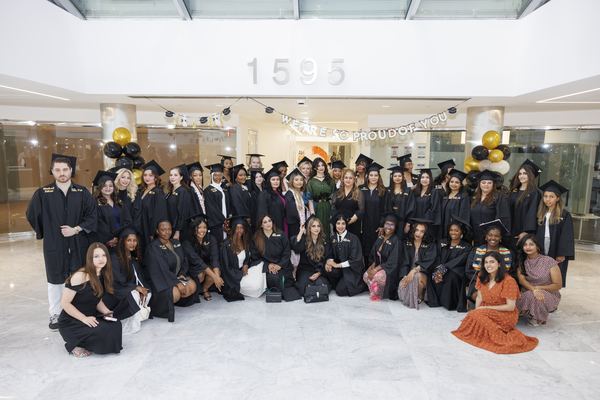
AVI Career Training offers a Cosmetic Laser Technology program at its Vienna, Virginia campus — located at 1595 Spring Hill Rd #720, right in the heart of Northern Virginia’s medical aesthetics corridor.
AVI is COE Accredited and SCHEV Certified, which matters for two reasons: it signals genuine program quality, and it means students may be eligible for federal financial aid, including Pell Grants. AVI also accepts the GI Bill®, making the program accessible for veterans and military-connected students.
What Sets AVI’s Program Apart
Inclusive curriculum across all six Fitzpatrick skin types. This isn’t a footnote in AVI’s curriculum — it’s a core design principle. The DC metro market is one of the most diverse in the country. AVI trains students to work beautifully and safely on every client who walks through the door, regardless of skin tone. That means understanding melanin response, appropriate laser settings for deeper complexions, and the consultation skills to earn client trust across backgrounds.
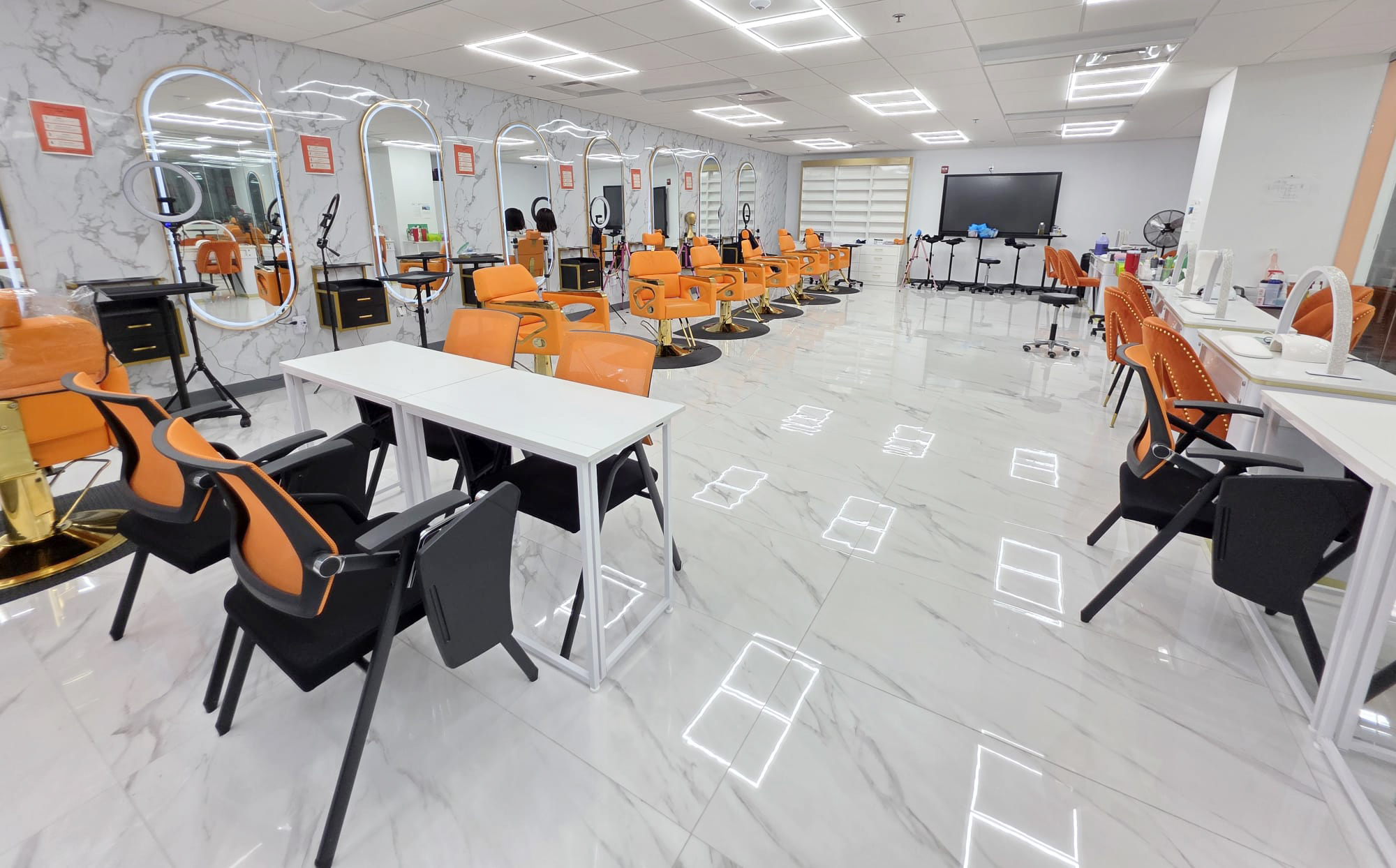
Hands-on training on multiple platforms. AVI’s program covers the modalities you’ll actually encounter in the field, not just the equipment that happened to be available when the curriculum was built.
Instructors with real industry experience. AVI’s faculty are licensed professionals who have worked in the field. They bring clinical context to every session.
Northern Virginia location. You’re training in the same market where you’ll work. Your instructors know the local industry, the employers who hire, and what medical spas in this region expect from their staff.
Mini-Story: Starting From Scratch
Marcus had no beauty industry background at all — he’d spent eight years in retail management and was ready for something completely different. He’d always been drawn to the precision and technology side of aesthetics, and laser work fit that instinct. The concern he kept coming back to: Am I too late to start?
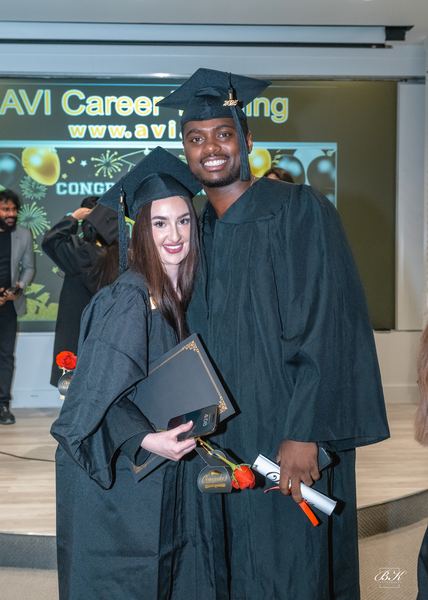
He enrolled in AVI’s Cosmetic Laser Technology program. The structured curriculum, combined with hands-on time on actual equipment, gave him a foundation he could talk about confidently in job interviews. By the time he graduated, he had a clear understanding of Virginia’s supervision framework, practical experience treating clients across a range of skin tones, and a credential from a COE-accredited school that gave employers something concrete to evaluate. He landed his first position at a medical spa in Arlington within six weeks of completing the program.
You don’t need a beauty background to succeed in this field. You need the right training.
Frequently Asked Questions
How Do I Become a Laser Technician in Virginia?
Complete a formal cosmetic laser training program — ideally from an accredited school — and secure a position in a setting where a licensed medical professional oversees laser procedures. Virginia does not issue a standalone laser technician license, so your training credentials and clinical experience are your primary qualifications.
Do You Need a License to Do Laser Hair Removal in Virginia?
Virginia does not have a specific laser technician license. However, laser procedures must be performed under the supervision or delegation of a licensed medical practitioner per the Virginia Board of Medicine. Working without that supervisory relationship — or without adequate training — is both unsafe and potentially unlawful. Always confirm current delegation rules at dhp.virginia.gov.
How Long Does It Take to Become a Certified Laser Technician?
Cosmetic laser programs range from roughly 40 hours for basic single-modality certifications to 100+ hours for comprehensive multi-modality programs covering laser, IPL, and radiofrequency. A more thorough program takes longer but produces better-prepared graduates — and more competitive job applicants. Contact AVI directly to confirm current program clock hours.
How Much Does a Laser Technician Make in Virginia?
In the Northern Virginia and DC metro market, entry-level laser technicians typically earn $40,000–$52,000 per year. Experienced technicians in medical spa settings commonly earn $55,000–$75,000 or more. Compensation reflects the technical skill required, the price point of services, and the liability responsibility that employers carry in this field.
What Is the Difference Between a Laser Technician and an Esthetician?
Estheticians provide skin care services — facials, waxing, chemical exfoliation, and similar treatments — under a state-issued esthetics license. Laser technicians perform energy-based procedures using laser, IPL, and radiofrequency equipment. These are separate scopes of practice. In Virginia, a licensed esthetician cannot legally perform laser procedures without additional laser-specific training and the appropriate medical supervision framework. Many laser technicians do have an esthetics background, but the laser certification is a distinct and separate credential.
Your Next Step
The Northern Virginia market for skilled laser technicians is strong, and it’s growing. The path to getting there is clear: complete a formal, accredited cosmetic laser program, understand Virginia’s supervision framework, and step into a field where your technical skills directly translate to client results and real earning potential.
AVI Career Training’s Cosmetic Laser Technology program is built for exactly this market — inclusive by design, hands-on by structure, and located where you want to work.
Ready to take the first step? Apply to AVI Career Training today or call (703) 943-9841 to speak with an admissions advisor about the Cosmetic Laser Technology program. You can also learn more about AVI Career Training including accreditations, financial aid options, and everything else you need to make a confident decision.
The demand is there. The training is here. Your career in cosmetic laser technology starts with one application.