
Massage Therapy School in Northern Virginia
AVI Career Training in Vienna, VA is one of the only COE-accredited massage therapy schools in Northern Virginia — built to take you from zero experience to a Virginia massage therapy license in approximately 6–9 months.
If you’ve been searching for a massage therapy school near Fairfax, Tysons, or the greater DC metro area, you’re in the right place. This guide covers everything you need to know: what the job actually looks like, what Virginia requires for licensure, what AVI’s program includes, what you can earn in this market, and why students across Northern Virginia choose AVI to make the career change.
Start your application today — or keep reading to see exactly what this path looks like.
Key Takeaways
- Virginia requires 500 clock hours of supervised massage therapy education for state licensure
- Graduates must pass the MBLEx (Massage & Bodywork Licensing Examination) before practicing
- AVI’s Massage Therapy program takes approximately 6–9 months to complete, depending on your schedule
- The national median annual wage for massage therapists is ~$49,860 (BLS); the DC metro area typically indexes above that figure
- AVI is COE Accredited and SCHEV Certified — federal financial aid and the GI Bill® are accepted
What Does a Licensed Massage Therapist Actually Do?
Massage therapy is a licensed healthcare-adjacent profession — not a spa amenity. Licensed massage therapists (LMTs) assess soft tissue conditions, apply targeted manual techniques, and help clients manage pain, recover from injury, reduce stress, and improve overall physical function.
That scope is broader than most people expect. Depending on your setting, you might work with:
- Clinical clients — post-surgical recovery, chronic pain management, or physical therapy support
- Sports and fitness clients — athletes managing injuries, training load, or performance recovery
- Prenatal clients — pregnancy-safe techniques to address discomfort during each trimester
- Spa and wellness clients — relaxation, stress reduction, and routine self-care
In Northern Virginia specifically, the demand is diverse. Med spas in Tysons Corner and Arlington book LMTs alongside esthetics and laser services. Sports facilities near Reston and Alexandria hire therapists for recovery work. Federal agencies and large employers in the DC corridor offer employee wellness programs. And a growing number of LMTs in this market run their own suite-based practices — setting their own hours and client list.
This is a hands-on, relationship-driven career. If you want to build something real — a clientele, a specialty, a business — massage therapy gives you the platform to do it.
Virginia Massage Therapy License Requirements
Virginia massage therapy is regulated by the Virginia Board of Nursing (VBON) under the Department of Health Professions (DHP). Before you can practice legally in the Commonwealth, you must meet all of the following requirements.
How Many Hours Do You Need to Get a Massage Therapy License in Virginia?
Virginia requires a minimum of 500 clock hours of supervised massage therapy education from an approved program. Those hours must cover theory, anatomy and physiology, hands-on technique, and clinical practice — not just spa-style demonstrations.
The MBLEx Exam
After completing your 500-hour program, you must pass the MBLEx — the Massage & Bodywork Licensing Examination — administered by the Federation of State Massage Therapy Boards (FSMTB). The MBLEx is a computer-based, nationally standardized exam. Most AVI graduates are eligible to sit for it immediately upon program completion.
How Long Does It Take to Become a Massage Therapist in Virginia?
From day one of training to license in hand, most students complete the process in approximately 6–12 months total — depending on program schedule format (full-time vs. part-time), MBLEx prep time, and how quickly the state processes your application.
At AVI, the Massage Therapy program runs approximately 6–9 months depending on your enrollment format. That’s a meaningful career change in less than a year.
Additional State Requirements
- Background check — required as part of the Virginia state application
- State application and fee — submitted to the Virginia Department of Health Professions after passing the MBLEx
- License renewal every two years — continuing education requirements apply
For current, authoritative details on Virginia’s licensing requirements, visit the Virginia Department of Health Professions directly.
What to Expect in AVI’s Massage Therapy Program
AVI Career Training’s Massage Therapy program is structured to meet Virginia’s 500-hour requirement and prepare you to pass the MBLEx — while giving you enough practical experience to walk into your first job ready to work.
Here’s what the program covers:
Core Modalities and Techniques
You won’t graduate knowing only one style of massage. AVI’s curriculum introduces you to a range of modalities, including:
- Swedish massage — the foundational technique for relaxation and circulation
- Deep tissue massage — targeting chronic tension and musculoskeletal pain
- Sports massage — pre- and post-event work for athletic clients
- Prenatal massage — pregnancy-safe positioning and technique
- Trigger point therapy — locating and releasing specific points of muscular tension
- Myofascial release and additional clinical techniques
The range matters. Northern Virginia employers — especially med spas, chiropractic offices, and sports facilities — want therapists who can serve multiple client types. Graduates with a diverse skill set are easier to hire and easier to book.
Anatomy, Physiology, and Theory
Hands-on technique alone doesn’t make a great therapist. AVI’s program includes coursework in anatomy, physiology, kinesiology, and pathology — the academic foundation that supports safe, effective practice and prepares you for the science-heavy portions of the MBLEx.
Clinic Hours and Real Client Experience
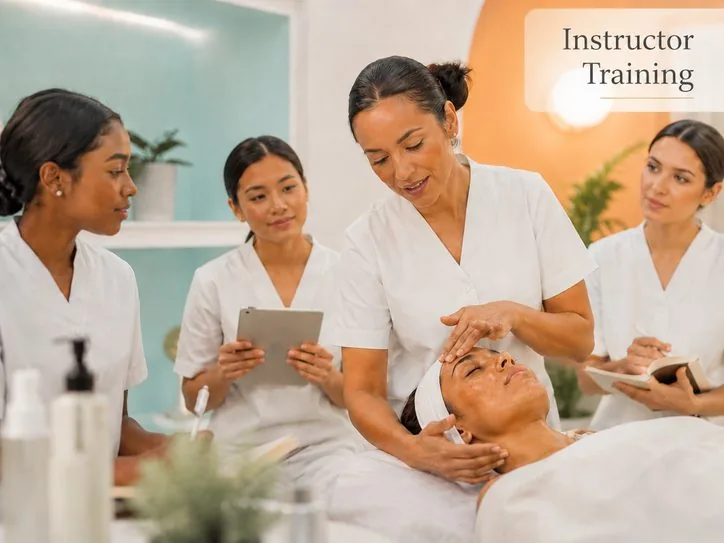
A significant portion of your 500 hours is spent in supervised clinic practice — working on real clients under the guidance of licensed instructor professionals. This isn’t simulated training. You’ll learn to take client intake, identify contraindications, adapt your session, and build the confident, professional presence that clients respond to.
MBLEx Preparation
AVI builds MBLEx preparation into the program. By the time you’re near graduation, you’ll have covered the exam content areas — client assessment, ethics, anatomy, and technique — through both coursework and practice.
One Student’s Story: A Career Change That Actually Worked
Marcus came to AVI in his late 30s after more than a decade in logistics. He wasn’t looking for a hobby — he needed a new career that paid well, didn’t require a four-year degree, and gave him some control over his schedule. He enrolled in AVI’s Massage Therapy program while still working part-time, completed the program in just under nine months, passed the MBLEx on his first attempt, and landed a position at a med spa in Tysons within six weeks of getting his license. Today he sees a full client load and is building toward opening his own suite. His timeline from first inquiry to licensed professional: under a year.
Massage Therapist Salary & Career Outlook in Northern Virginia
How Much Does a Massage Therapist Make in Northern Virginia?
The national median annual wage for massage therapists is approximately $49,860, according to the U.S. Bureau of Labor Statistics (BLS). But that national figure doesn’t fully reflect what’s available in the DC metro market.
The Washington-Arlington-Alexandria metropolitan statistical area (MSA) consistently indexes above the national median for massage therapist wages — driven by higher cost of living, strong employer-sponsored wellness programs, and a concentration of high-volume med spas and sports facilities that can support competitive pay.
Self-employed LMTs who rent suite space or build private practices in this market frequently report income in the $60,000–$80,000+ range — though it’s important to be honest here: that outcome depends on your client volume, specialty, business skills, and how aggressively you build your book. It’s income potential, not a guarantee.
Job Growth Outlook
The BLS projects job growth for massage therapists at roughly 18–20% over the next decade — classified as “much faster than average” compared to most occupations. Demand is being driven by several converging trends:
- Increased integration of massage therapy into medical and clinical settings
- Growing consumer spending on wellness and preventive care
- Expansion of the med spa sector — particularly strong in Northern Virginia
- Employer wellness programs in the large corporate and federal workforce of the DC corridor
For current wage and employment data specific to this metro area, the BLS Occupational Outlook Handbook is the most reliable source.
Where Northern Virginia LMTs Work
The NoVA/DC corridor offers a wider range of employment settings than most markets:
- Med spas in Tysons, Reston, Arlington, and Bethesda
- Chiropractic and physical therapy offices — often seeking LMTs for integrated care models
- Sports and fitness facilities — gyms, athletic training centers, and CrossFit-style studios
- Hotels and resort spas — concentrated along the DC tourism and hospitality corridor
- Federal and corporate wellness programs — unique to this market given the density of government agencies and large employers
- Private practice / suite rental — a growing segment as more LMTs pursue business ownership
One Student’s Story: Starting Strong in a Competitive Market
Priya had worked as a yoga instructor for several years and wanted credentials that would let her offer more to her clients. She enrolled in AVI’s Massage Therapy program in Vienna, completed the program on a schedule that worked around her teaching hours, and targeted the clinical integration track from the start. After passing the MBLEx, she negotiated a part-time position at a sports medicine clinic in Falls Church — working three days a week while maintaining her yoga schedule. Within her first year as a licensed therapist, she had more than doubled her previous annual income.
Why Northern Virginia Students Choose AVI Career Training
There are massage therapy programs in this region. So why do students keep choosing AVI Career Training?
COE Accreditation and SCHEV Certification
AVI is COE Accredited (Council on Occupational Education) and SCHEV Certified (State Council of Higher Education for Virginia). These aren’t marketing badges — they’re institutional credentials that matter when it comes to financial aid eligibility, employer recognition, and the credibility of your diploma.
When you graduate from an accredited school, your credential carries weight.
Financial Aid and the GI Bill®
Federal financial aid is available for eligible students. For Northern Virginia’s large military and veteran community — given proximity to the Pentagon, Fort Belvoir, Quantico, and the National Guard — GI Bill® acceptance is a meaningful differentiator.
If you’ve served, your education benefits can go toward a career that travels with you anywhere you’re stationed or settle.
For students who don’t have military benefits, Pell Grants and other federal aid programs may apply. Reach out to AVI admissions to find out what you qualify for.
Small Classes, Real Instruction
AVI keeps class sizes small — intentionally. Massage therapy is a physical skill. You learn it by doing it, getting corrected, doing it again, and building muscle memory over hundreds of supervised hours. That kind of learning doesn’t happen in a lecture hall with 40 students.
At AVI, your instructors are licensed professionals who know this industry from the inside. They bring clinical experience, honest career perspective, and real investment in your outcome.
An Inclusive Training Environment
AVI’s curriculum is built around the reality that your future clients will come from every background. You’ll train on diverse body types, learn to adapt your approach, and graduate prepared to serve a full range of clients — not just one demographic. In a market as diverse as Northern Virginia, that’s not optional. It’s essential.
Conveniently Located in Vienna, VA
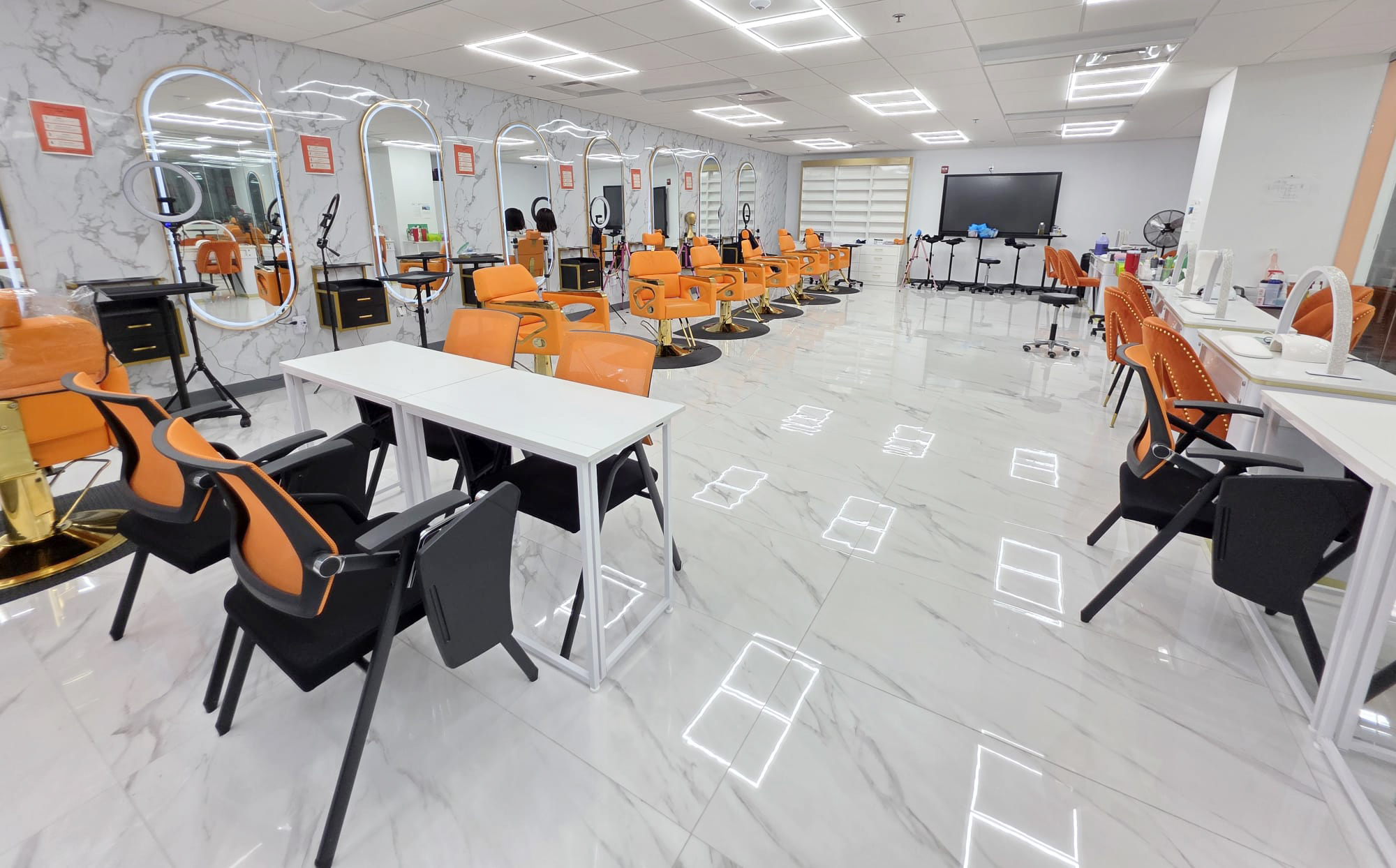
AVI’s campus is located at 1595 Spring Hill Rd #720, Vienna, VA 22182 — accessible from Fairfax, Reston, Herndon, Falls Church, McLean, and the broader DC metro area. If you’ve been searching for a massage therapy school near Fairfax, AVI is close enough to make the commute work.
Is Massage Therapy School Worth It?
For the right person, yes — emphatically. Here’s the honest case:
- The training is shorter and less expensive than most degree programs
- Licensing is state-regulated, which means your credential is recognized and protected
- The career offers scheduling flexibility that most 9-to-5 jobs don’t — especially once you build a private clientele
- The DC metro market is one of the strongest in the country for wellness careers
- Demand is growing much faster than average according to BLS projections
The caveat: massage therapy is physically demanding work. Therapists who stay in the field for decades take care of their bodies — using proper body mechanics, managing session volume, and diversifying their techniques to reduce strain. AVI’s training covers this. But it’s worth knowing going in.
If you’re ready to do hands-on, meaningful work — help people feel better, move better, and recover faster — and you want a career you can build on your own terms, massage therapy is worth every hour of the program.
What’s the Difference Between Massage Therapy School and a Spa Certification Course?
This comes up often, and the answer matters.
A spa certification course — often sold online or through a wellness brand — may teach a specific technique or sequence in a weekend or a few weeks. These are not pathways to licensure. In Virginia, you cannot legally practice massage therapy as a licensed professional based on a spa certification alone.
A licensed massage therapy program — like AVI’s — is a state-approved, 500-hour curriculum that qualifies you to sit for the MBLEx and apply for a Virginia massage therapy license. It’s the difference between a skill and a credential.
If your goal is to build a career — to get hired, get paid, and eventually run your own practice — you need the license. That starts with an approved school.
Ready to Start?
AVI Career Training’s Massage Therapy program in Vienna, VA is accepting applications now. If you’re in Northern Virginia — whether you’re in Fairfax, Herndon, Reston, Falls Church, McLean, or anywhere in between — this is the program built to get you licensed and working in less than a year.
Apply now to start your application, or call us at (703) 943-9841 to talk through the program, your schedule options, and financial aid.
Your next career is closer than you think.