AVI Career Training

Medical Assistant vs. Esthetician: Which Career Fits You?

Share:

Medical Assistant vs. Esthetician: Which Career Fits You?

A medical assistant and an esthetician career each offer fast entry into a stable, people-centered profession — without a four-year degree. The real question is which path fits your personality, goals, and lifestyle. This guide breaks down both careers side by side so you can make a confident, informed decision.


Key Takeaways
– Medical assistant programs take 9–24 months; Virginia’s esthetics license requires 600 clock hours — often completable in 4–6 months full-time
– National median salary for medical assistants: ~$42,000; estheticians: ~$40,000 — with medical estheticians in clinical settings earning $50,000–$70,000+
– Virginia does not require state licensure for medical assistants; estheticians must hold a Virginia Board of Cosmetology license
– Licensed estheticians can work in medical spas, dermatology offices, and plastic surgery clinics — without a medical assistant credential
AVI Career Training in Vienna, VA offers COE-accredited esthetics training with financial aid and GI Bill® benefits available

Apply to AVI Career Training today or call (703) 943-9841 to speak with an admissions advisor.


What Does Each Career Actually Look Like Day-to-Day?

The best career for you isn’t just about salary or speed — it’s about the work itself. Before comparing numbers, picture yourself in the role.

A Day in the Life of a Medical Assistant

Medical assistants work primarily in physician offices, urgent care clinics, and outpatient facilities. Your day typically includes a mix of clinical and administrative tasks:

  • Taking patient vital signs and updating medical records
  • Preparing exam rooms and sterilizing equipment
  • Assisting physicians during examinations
  • Drawing blood, administering injections, and performing basic diagnostic tests
  • Scheduling appointments and processing insurance paperwork

The environment is fast-paced and clinically focused. You’re part of a healthcare team, and your work directly supports patient care. If you thrive under structure, enjoy medical settings, and don’t mind working within strict protocols, this can be deeply rewarding.

A Day in the Life of an Esthetician

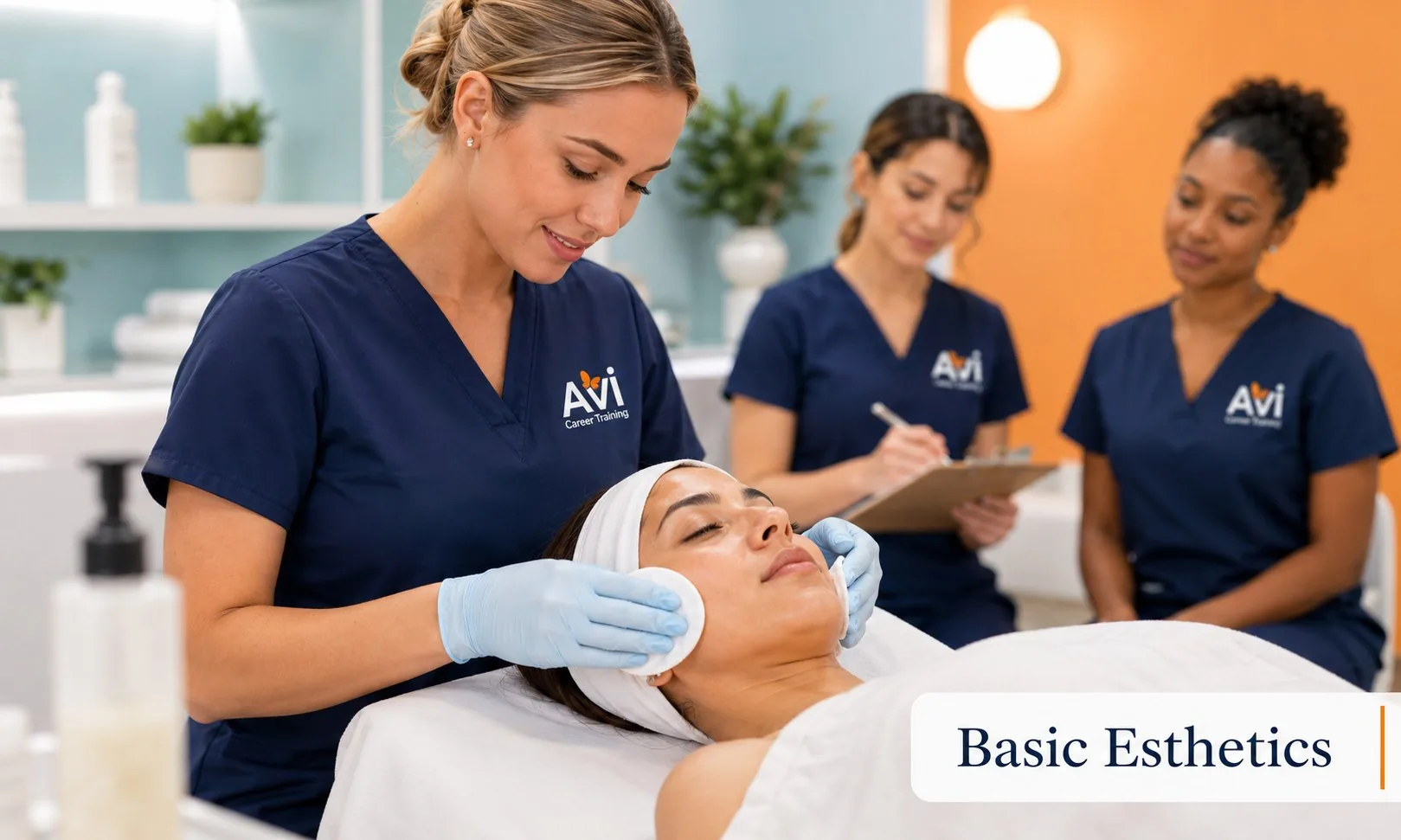
An esthetician’s day looks very different. Whether you’re working in a day spa, a luxury salon, or a medical spa in Northern Virginia, your focus is almost entirely on one-on-one client relationships and skincare results:

  • Performing facials, chemical peels, and exfoliation treatments
  • Consulting with clients on skincare routines and product recommendations
  • Providing waxing, tinting, and hair removal services
  • Performing advanced treatments like microdermabrasion or dermaplaning
  • Building a loyal client base that drives repeat bookings and referrals

The atmosphere is client-centered and creative. You’re building relationships, solving skincare challenges, and often running your own book of business. Many estheticians eventually become self-employed or work as independent contractors — a level of autonomy that medical assistants rarely have.

Bottom line: Both careers serve people, but in fundamentally different environments. Medical assisting is clinical and team-based. Esthetics is relational, creative, and entrepreneurial.


Training Time and Education Requirements Compared

One of the biggest differences between these two paths is how long it takes — and what credentials you’ll hold when you’re done.

Medical Assistant Training

Medical assistant programs are offered at community colleges, vocational schools, and career colleges. Depending on whether you pursue a certificate or an associate degree, you’re looking at:

  • Certificate programs: 9–12 months
  • Associate degree programs: 18–24 months

Here’s something that surprises many people: Virginia does not require medical assistants to hold a state license. Certification is optional but recommended. The two most recognized credentials are the Certified Medical Assistant (CMA) through the American Association of Medical Assistants (AAMA) and the Registered Medical Assistant (RMA) through the American Medical Technologists (AMT). Employers increasingly prefer certified candidates, but it’s not legally required to practice.

Esthetician Training in Virginia

Virginia esthetics training follows a clear, state-mandated pathway:

  • Required clock hours: 600 hours (set by the Virginia Board of Cosmetology)
  • License required: Yes — you must pass a Virginia State Board exam and hold an active license to practice
  • Program length at AVI: Approximately 4–6 months full-time

That means a licensed esthetician can be working in a professional setting — legally and fully credentialed — in roughly the same time it takes to complete the shortest medical assistant certificate program, and often faster.

If you’re also considering cosmetology, Virginia requires 1,500 clock hours, and massage therapy requires 500 hours through the Virginia Board of Nursing.

Side-by-Side Training Comparison

Factor Medical Assistant Esthetician (Virginia)
Training Length 9–24 months ~4–6 months (600 hours)
State License Required No Yes — Virginia Board of Cosmetology
Optional Certification CMA (AAMA), RMA (AMT) Advanced certifications available
Where You Train Community college, vocational school COE-accredited beauty school
Financial Aid Available Often yes Yes — including Pell Grant, GI Bill®

If speed-to-career matters to you, esthetics has a clear advantage. AVI Career Training in Vienna, VA offers a COE-accredited Basic Esthetics program with financial aid options and GI Bill® benefits — making the path even more accessible.


Salary, Job Outlook, and Earning Potential in Northern Virginia

Money matters. Here’s an honest, data-backed look at what both careers pay — nationally and in the Northern Virginia/DC metro area.

Medical Assistant Salaries

According to the U.S. Bureau of Labor Statistics (BLS), the national median annual wage for medical assistants (SOC 31-9092) is approximately $42,000. In the Northern Virginia and Washington, DC metro area, that figure trends higher — often in the $45,000–$52,000 range — due to the region’s higher cost of living and dense healthcare infrastructure.

Job growth for medical assistants is strong. The BLS projects 14% growth over the next decade, faster than the national average for all occupations.

Esthetician Salaries

The national median annual wage for estheticians (SOC 39-5094) is approximately $40,000 — slightly lower than medical assistants on paper. But that number tells only part of the story.

Estheticians have multiple income streams that medical assistants typically don’t:

  • Tips — which can add $5,000–$15,000+ annually in a busy spa
  • Commission on retail product sales
  • Self-employment income — owning your own suite or business
  • Medical spa premiums — estheticians in clinical settings often earn significantly more

In the Northern Virginia and DC metro area, licensed estheticians working in medical spas, dermatology clinics, or plastic surgery offices — often called medical estheticians — can earn $50,000–$70,000 or more depending on specialization and experience.

Salary Comparison at a Glance

Career National Median Northern VA Estimate Upside Potential
Medical Assistant ~$42,000 ~$45,000–$52,000 Limited (hourly/salaried)
Esthetician ~$40,000 ~$43,000–$55,000 High (tips, commission, self-employment)
Medical Esthetician N/A (specialty) $50,000–$70,000+ Very High

The data shows that while the baseline salaries are comparable, estheticians — especially those who specialize in clinical or medical settings — have a steeper upward earnings trajectory.


The Medical Esthetician Path — Where Beauty Meets Healthcare

Here’s where it gets interesting for anyone drawn to both the beauty and healthcare worlds.

A medical esthetician is a licensed esthetician who works in a clinical environment — typically a medical spa (med-spa), dermatology practice, oncology support clinic, or plastic surgery center. The role blends skincare expertise with a clinical sensibility, and it’s one of the fastest-growing niches in the beauty industry.

What Does a Medical Esthetician Do?

Medical estheticians perform advanced, results-driven treatments that go beyond what you’d find in a traditional day spa:

  • Laser hair removal and skin resurfacing (after additional certification)
  • Chemical peels at clinical concentrations
  • Microneedling prep and post-care
  • Pre- and post-surgical skin care for plastic surgery patients
  • Oncology esthetics — specialized care for clients undergoing cancer treatment

The Key Distinction: No Medical Assistant Credential Needed

This surprises a lot of people. To work as a medical esthetician in Virginia, you do not need a medical assistant certification or any clinical healthcare credential. What you need is:

  1. A Virginia Board of Cosmetology esthetician license (600 clock hours)
  2. A clinical employer or med-spa willing to train you on their specific protocols
  3. Optional advanced certifications in laser, chemical peels, or oncology esthetics — achievable within 12–18 months of earning your license

That means a motivated student can go from zero experience to working in a medical spa in Northern Virginia in roughly a year to a year and a half — starting with an esthetics program at an accredited school like AVI Career Training.

Meet Jasmine: From Career Crossroads to Med-Spa Esthetician

Jasmine came to AVI Career Training after spending three years as a dental receptionist. She’d considered a medical assistant program but hesitated at the 12-month timeline and the clinical environment — she wasn’t drawn to procedures like blood draws or IV placement. What she loved was skincare, and she’d been doing research on chemical peels and laser treatments in her spare time.

She enrolled in AVI’s Basic Esthetics program, completed her 600 hours, and passed her Virginia State Board exam. Within six months of graduating, she was hired at a med-spa in Tysons Corner, where she now performs facials, chemical peels, and dermaplaning for a steady book of clients. She’s working toward her laser certification next. Her total time from enrollment to full-time employment: just under 11 months.

Jasmine’s story isn’t unusual. For people who want to work in clinical-adjacent environments without the medical assistant route, esthetics offers a direct, affordable, and surprisingly fast path.


How to Choose the Right Career Path for You

Both careers are valid. Both offer stable employment, meaningful client interaction, and room to grow. But they’re not the same — and the right choice depends on who you are and what you want your work life to look like.

Ask yourself these four questions:

1. Do You Prefer a Clinical Environment or a Creative One?

Medical assistants work in hospitals, clinics, and physician offices. The environment is structured, protocol-driven, and medically focused. If that energizes you, it could be the right fit.

Estheticians work in spas, salons, med-spas, and wellness studios. The environment is relational, often aesthetic, and focused on visible transformation. If you light up thinking about skincare, beauty, and client relationships — esthetics is your lane.

2. Are You Interested in Skincare Science?

If you’re genuinely curious about ingredients, skin biology, chemical exfoliation, and treatment protocols — esthetics gives you a direct outlet for that curiosity. It’s a field where continuing education is built into the culture, and staying current on treatments keeps the work intellectually engaging for years.

3. Do You Want the Option to Be Self-Employed?

Medical assistants almost always work as employees. Estheticians can work in salon suites, launch independent practices, or build a client roster that follows them anywhere. If entrepreneurship is part of your long-term vision, esthetics has a clear structural advantage.

4. How Quickly Do You Need to Start Working?

If you need to be earning income in a licensed role as quickly as possible, Virginia’s 600-hour esthetics requirement — completable in approximately 4–6 months at AVI — gives esthetics a real speed advantage over most medical assistant programs.

A Decision Framework

If You… Consider…
Love clinical environments and healthcare teams Medical Assistant
Are passionate about skincare and client relationships Esthetics
Want to work in medical settings without a clinical degree Medical Esthetics (via esthetics license)
Want to be self-employed or build your own business Esthetics
Need to start earning income within 6 months AVI Esthetics Program
Want maximum flexibility and income upside Esthetics + Advanced Certifications

Meet Marcus: Finding the Right Fit After the Military

Marcus separated from the U.S. Army after eight years and started researching healthcare careers using his GI Bill® benefits. He looked at medical assistant programs, but what kept pulling him back was a different interest — he’d always had a knack for skincare, and several of his fellow soldiers had asked him for product recommendations over the years.

After a phone call with AVI’s admissions team, Marcus learned that his GI Bill® benefits could apply toward AVI’s esthetics program — and that the COE accreditation meant the school met federal standards for quality and accountability. He enrolled, completed his training, and now works at a medical spa in Northern Virginia performing facials and chemical peels. His career made sense on paper and in practice.

If you’re a veteran considering your options, AVI accepts GI Bill® benefits. Reach out at (703) 943-9841 or connect with AVI’s admissions team to learn how your benefits apply.


Your Next Step Starts Here

The medical assistant vs. esthetician decision comes down to this: both careers are accessible, stable, and rewarding. But if you’re drawn to skincare, beauty, client relationships, and the possibility of working in a clinical setting without a clinical degree — esthetics is a powerful, flexible path that’s often faster than people expect.

At AVI Career Training in Vienna, Virginia, the Basic Esthetics program is designed to get you licensed and working in the Northern Virginia and DC metro market. The curriculum covers skincare science, hands-on treatment techniques, Virginia State Board exam preparation, and inclusive practices for every skin tone and skin type. Financial aid is available, and AVI accepts the GI Bill®.

You don’t have to figure this out alone. Talk to someone who knows the path.

Apply to AVI Career Training today or call (703) 943-9841 to speak with an admissions advisor. AVI is located at 1595 Spring Hill Rd #720, Vienna, VA 22182 — and tours are always welcome.


Virginia esthetics licensing information sourced from the Virginia Department of Professional and Occupational Regulation (DPOR). Salary data sourced from the U.S. Bureau of Labor Statistics Occupational Outlook Handbook. Program availability and length subject to change — contact AVI Career Training directly for current enrollment details.

Article details:

Share: