

AVI Career Training

Nail Technician School in Virginia: Get Licensed at AVI

Share:

Nail Technician School in Virginia: Get Licensed at AVI

AVI Career Training in Vienna, Virginia offers one of the fastest paths to a nail technician license in the state — a COE-accredited Nail Technology program you can complete in as few as 8 weeks. If you’re ready to build a real career doing work you love, this is where it starts.

Virginia requires 150 clock hours of training before you can sit for the State Board exam. That’s it. Compare that to the 1,500 hours required for cosmetology licensure, and you begin to see why Nail Technology is one of the most accessible career launches in the beauty industry. You put in focused, hands-on training, pass a two-part exam, and walk out licensed.

At AVI, that training happens in a real salon environment, under the guidance of licensed professionals, with a curriculum built to serve every client — regardless of skin tone, nail health, or background. Apply now to get started, or keep reading to understand exactly what the path looks like.


Key Takeaways

  • 150 clock hours are required to become a licensed nail technician in Virginia — one of the shortest licensing tracks in beauty
  • AVI’s Nail Technology program can be completed in as few as 8 weeks
  • The Virginia State Board exam has two parts: a written theory section and a hands-on practical skills test
  • Nail technicians in Virginia earn a median wage of approximately $32,000–$38,000 annually — with tips and Northern Virginia’s premium market pushing take-home pay significantly higher
  • AVI is COE-accredited and SCHEV-certified, and financial aid (including the GI Bill®) is available

What Does a Nail Technician Actually Do?

Nail technology is a skilled profession that goes well beyond painting nails. A licensed nail technician provides a full range of nail care services — and the scope of what you can do once licensed is broader than most people expect.

Your day-to-day work as a nail tech can include:

  • Manicures and pedicures — shaping, buffing, cuticle care, massage, and polish application
  • Nail enhancements — acrylics, hard gels, soft gels, dip powder, and builder systems
  • Nail art — hand-painted designs, stamping, foils, chrome powders, and custom nail styling
  • Client consultation — assessing nail and skin health, recommending services, and building lasting client relationships
  • Sanitation and infection control — maintaining a clean, safe, and compliant service environment

That last point matters more than people realize. Proper sanitation isn’t just a State Board requirement — it’s the foundation of a trustworthy nail business. Clients return to technicians they trust with their health, not just their nails.

Nail techs work in a wide range of settings: high-end spas, nail salons, beauty schools, resort hotels, cruise ships, and as booth renters running their own books. Many nail technicians in Northern Virginia build thriving self-employed businesses with loyal, high-income clientele.

Who Becomes a Nail Technician?

Career changers, recent graduates, parents re-entering the workforce, entrepreneurs — nail technology attracts people from all backgrounds. What they share is a desire for a career that’s creative, client-focused, and built on a real, portable license.

You don’t need prior beauty experience. You don’t need a college degree. You need 150 hours of accredited training and the commitment to pass your State Board exam.


Virginia Nail Technician License Requirements

Here is exactly what Virginia requires to become a licensed nail technician — no guesswork, no vague summaries.

How Many Hours Do You Need to Become a Nail Technician in Virginia?

Virginia requires 150 clock hours of training at a state-approved school before you can apply for licensure. Those hours must be completed at an accredited institution — which is why choosing the right school matters from day one.

This is regulated by the Virginia Department of Professional and Occupational Regulation (DPOR), the state authority over cosmetology and nail technology licensing.

The Two-Part Virginia State Board Exam

After completing your 150 hours, you’ll sit for a two-part licensing exam:

Part 1 — Theory (Written)
This is a multiple-choice test covering nail anatomy, skin conditions, chemistry of nail products, sanitation protocols, and Virginia State Board rules and regulations. AVI’s curriculum is structured to prepare you for every topic on this exam — not as an afterthought, but as a core part of your training.

Part 2 — Practical (Hands-On Skills)
The practical exam assesses your actual technique. You’ll demonstrate real services — typically including a manicure procedure — with attention to safety, sanitation, and proper execution. Examiners assess your step-by-step process, not just the finished result.

After You Pass

Once you pass both sections, you apply for your Virginia nail technician license through DPOR. You’ll pay a licensing fee and submit your exam scores. After that, you’re licensed — and ready to work anywhere in Virginia.

Licenses must be renewed every two years, which requires completing continuing education hours. Your training at AVI gives you the professional foundation to meet those requirements with confidence.


AVI’s Nail Technology Program: What You’ll Learn

AVI Career Training’s Nail Technology program is built around one goal: getting you licensed, skilled, and ready to work. Everything in the curriculum connects back to that outcome.

Curriculum Overview

Your 150 hours at AVI cover both the technical skills and the professional knowledge you need to pass your State Board exam and serve real clients:

  • Manicures and pedicures — proper technique, nail shaping, cuticle work, callus care, and hand and foot massage
  • Nail enhancements — acrylic application and fills, hard gel and soft gel systems, dip powder, nail forms, and tips
  • Nail art — foundational design techniques, color theory, and trending styles clients actually request
  • Nail anatomy and physiology — understanding the structure of the nail unit, common nail disorders and diseases, and when to refer a client to a physician
  • Sanitation and infection control — disinfection procedures, sterilization standards, and how to maintain a compliant workstation
  • Virginia State Board exam preparation — theory review, practice exams, and mock practical assessments

Inclusive Training: A Real Professional Edge

Most nail programs teach technique in a vacuum. AVI’s program is built around inclusive practice — meaning you’ll be trained to work beautifully and safely on every client who sits across from you.

That includes understanding nail and skin health across all skin tones. For example: recognizing the difference between normal nail pigmentation and a potential warning sign like subungual melanoma — which presents differently on melanin-rich skin — is a clinical skill that protects your clients and sets you apart as a professional.

You’ll also learn how hyperpigmentation around the nail bed, common in darker skin tones, affects service planning and product selection. These aren’t bonus topics. They’re part of what it means to be a genuinely competent nail technician in 2025.

Real-Client Experience

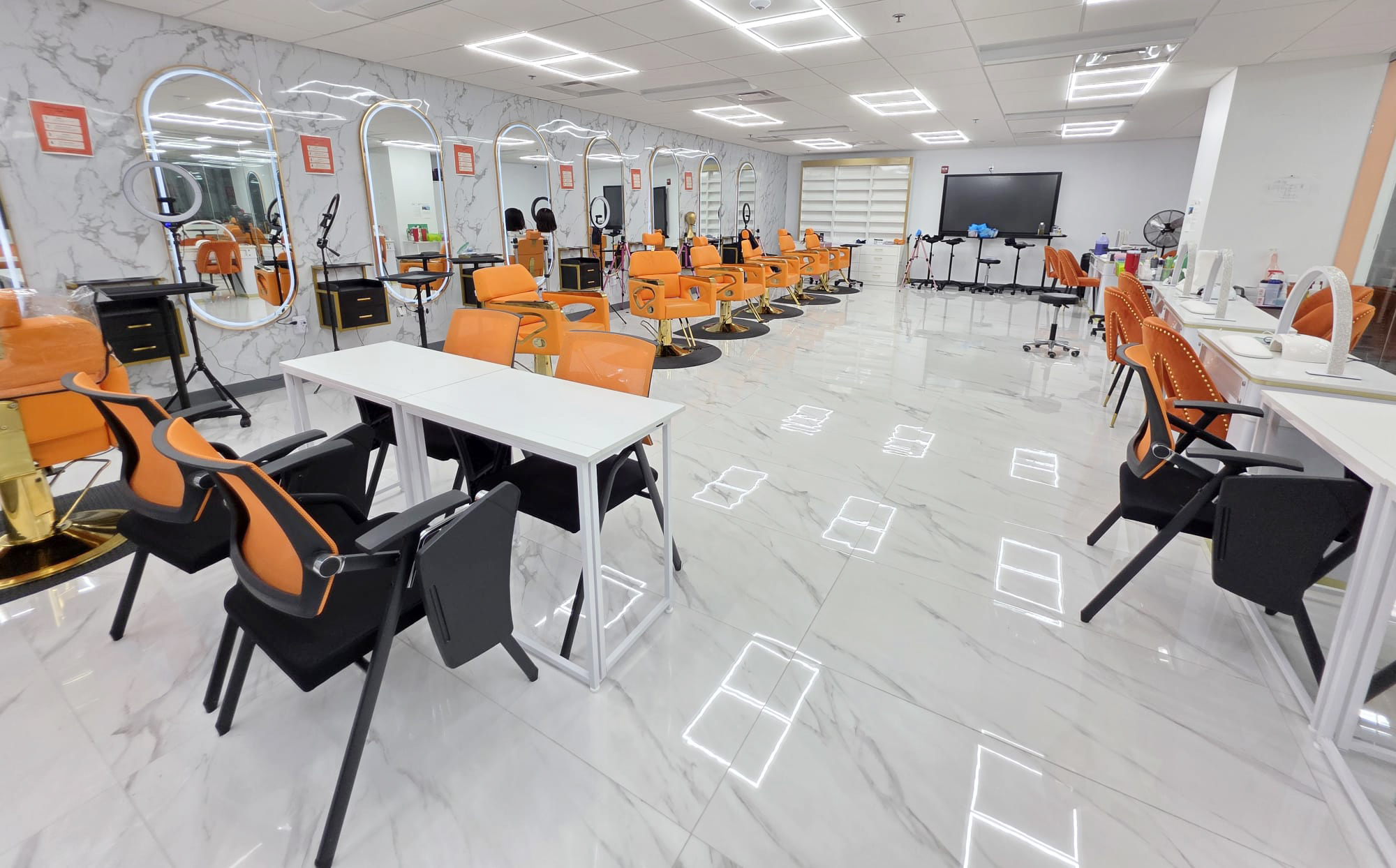
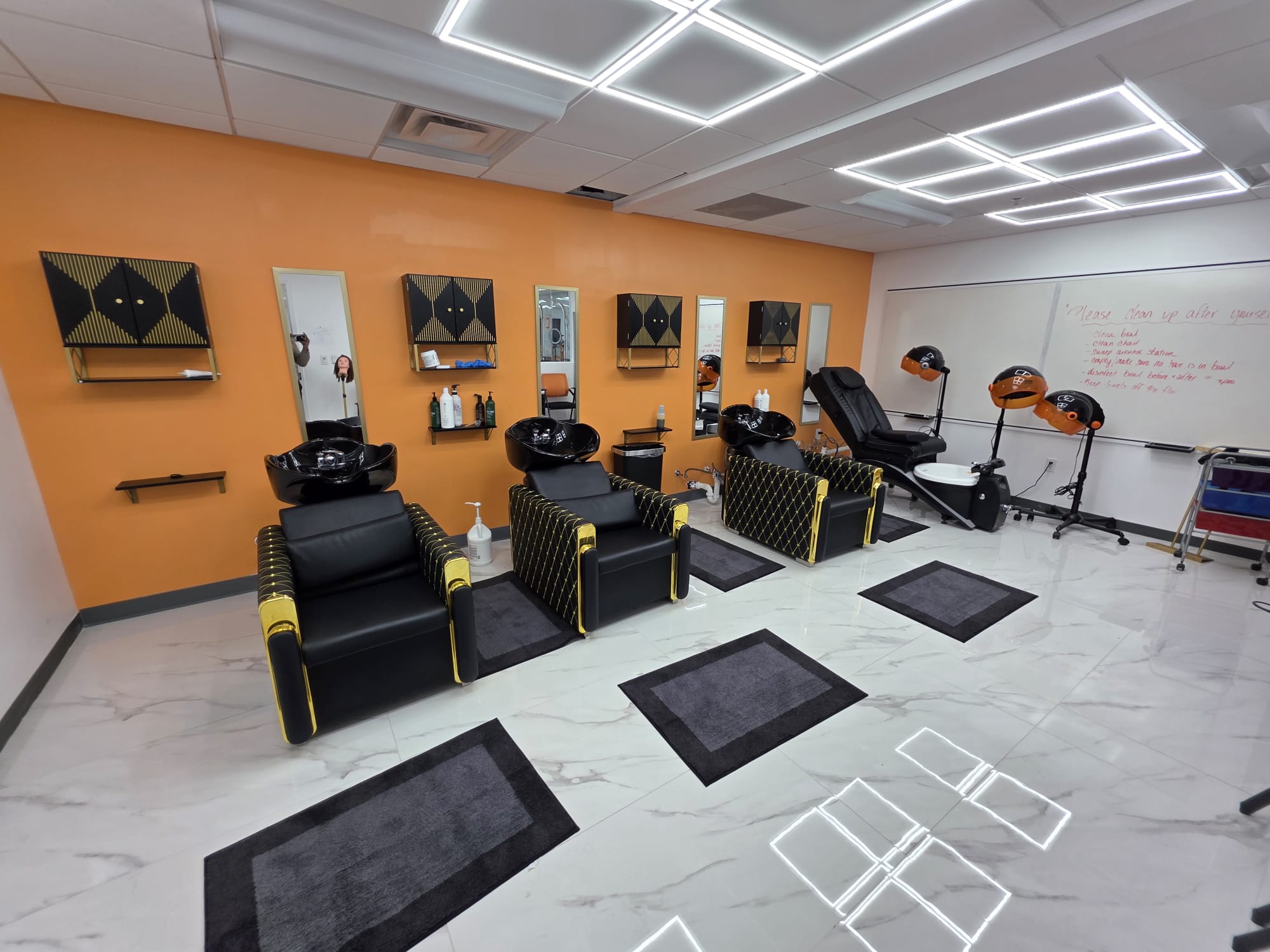
AVI students don’t just practice on mannequin hands. You’ll work with real clients in AVI’s salon environment, building the kind of hands-on confidence that translates directly to your first day on the job. By the time you sit for your practical exam, you’ve already done the work — repeatedly, under professional supervision.

This is what COE accreditation signals to employers, licensing boards, and clients: your training met a nationally recognized standard of quality.


A Student Story: Restarting With Purpose

Monique had spent 12 years in retail management when she decided she needed a career that was hers — something she built, not just clocked into. She’d always loved nail art but assumed becoming a professional was complicated or expensive or time-consuming.

She enrolled in AVI’s Nail Technology program on a Monday. Eight weeks later, she sat for her Virginia State Board exam. Two weeks after that, she was licensed and working at a nail salon in Tysons Corner.

“I didn’t think it would happen this fast,” she said. “I thought I’d be in school for a year. When they told me 150 hours, I almost didn’t believe it.”

Today, Monique works four days a week, manages her own client book, and earns more per hour than she did in retail — with a schedule she controls.


Career Outlook and Earning Potential for Nail Techs in Virginia

Let’s talk about money — honestly and specifically.

What Does a Nail Technician Make in Virginia?

According to Bureau of Labor Statistics data for manicurists and pedicurists, nail technicians in Virginia earn a median annual wage of approximately $32,000–$38,000. That figure represents base reported wages.

Here’s what that number doesn’t capture: tips.

In the nail industry, tips are not occasional — they are standard. A nail technician with a steady clientele in a mid-to-high-end salon can add $10,000–$20,000 or more per year in gratuity on top of base wages. Your real take-home pay as a working nail tech often looks very different from what the BLS median suggests.

The Northern Virginia Advantage

Location matters in this career, and you are training in the right place.

Vienna, Virginia sits inside one of the most affluent, densely populated corridors on the East Coast. The Tysons Corner–McLean–Reston–Falls Church market is home to a clientele with disposable income and high expectations for beauty services. That means:

  • Above-average service prices — clients here pay more for quality nail services than in most of Virginia
  • Higher tip income — a natural result of higher service price points
  • Stronger demand for specialty services — nail art, gel extensions, and premium nail care are the norm, not the exception
  • More high-quality salon environments — meaning better working conditions and earning ceilings

Nail technicians who build their careers in Northern Virginia are not competing in the same market as someone working in rural Virginia. The geography of where you train and where you launch your career genuinely moves the needle on your income.

Where Nail Techs Work

Your license is portable, and your options are wide:

  • Nail salons (independent or franchise)
  • Day spas and resort spas
  • Hotel and resort amenity salons
  • Booth rental / self-employment — run your own schedule and set your own prices
  • Mobile nail services — bring your services to clients directly

Many AVI graduates start as employees while building a clientele, then transition to booth rental or private practice as their reputation grows. The licensing structure in Virginia supports that kind of entrepreneurial path.


Another Student Story: The Career Switcher Who Did the Math

James was an Army veteran who’d been working in logistics since leaving the service. He liked the work, but the desk schedule didn’t fit the life he wanted. When a friend told him AVI accepted the GI Bill®, he looked into it.

He did the math: 150 hours, 8 weeks, licensing exam, and a career that gave him flexibility to manage his schedule around his family. He enrolled, completed the program, and passed his Virginia State Board exam on the first attempt.

James now works at a high-end spa in the DC metro area, and he booth-rents two days a week to build his own clientele on the side. “I didn’t know nail tech was an option for me,” he said. “Now it’s the best career decision I’ve made since separating.”


How to Enroll in AVI’s Nail Tech Program (and Pay for It)

Getting started at AVI is straightforward. Here’s what the process looks like.

Step-by-Step Enrollment

  1. Contact AVI admissions — reach out by phone at (703) 943-9841 or submit your information online
  2. Schedule a tour — visit AVI’s Vienna, VA campus at 1595 Spring Hill Rd #720, Vienna, VA 22182 and see the training environment firsthand
  3. Complete your applicationapply online here
  4. Discuss financial aid — an admissions advisor will walk you through your options
  5. Enroll and start — get your start date and begin your 150 hours

Is Financial Aid Available for Nail Technician School?

Yes. AVI Career Training has financial aid available for students who qualify. Options may include federal financial aid programs for eligible students. AVI also accepts the GI Bill® — making AVI a strong option for veterans and active-duty service members looking to transition into a skilled trade.

Talk to an AVI admissions advisor to find out what you qualify for and what your out-of-pocket costs could realistically look like. Many students are surprised by how affordable the path to licensure can be.

Why Choose AVI Over Other Schools?

There are nail technology programs in Northern Virginia. Here is what sets AVI apart:

  • COE Accreditation and SCHEV Certification — these aren’t just credentials on a wall. They’re what allow AVI to offer federal financial aid and what signal to every employer and licensing board that your training met a nationally recognized standard. Learn more about AVI’s accreditations and mission.
  • Inclusive curriculum — AVI trains you to serve every client, not just the ones that look like a textbook photo. That’s a real-world professional edge.
  • Hands-on, real-client training — you build skills through practice, not just observation
  • Northern Virginia location — Vienna puts you inside the DC metro’s highest-earning beauty market from day one
  • Speed to licensure — 150 hours, 8 weeks, State Board exam, licensed. The path is clear and the timeline is fast.

Frequently Asked Questions

How many hours do you need to become a nail technician in Virginia?
Virginia requires 150 clock hours of training at a state-approved school. AVI’s Nail Technology program meets this requirement and can be completed in as few as 8 weeks.

How long does nail tech school take in Northern Virginia?
At AVI Career Training in Vienna, VA, the Nail Technology program takes as few as 8 weeks to complete. Exact scheduling may vary — contact AVI admissions for current schedule options.

How much does a nail technician make in Virginia?
Nail technicians in Virginia earn a median wage of approximately $32,000–$38,000 annually in reported wages. Tip income — which is standard in the nail industry — can add significantly to that total. Northern Virginia’s premium market means above-average earning potential compared to the state median.

What is on the Virginia State Board nail technician exam?
The Virginia State Board exam has two parts: a written theory exam covering nail anatomy, product chemistry, sanitation, and state regulations, and a practical skills exam where you demonstrate live services and proper technique.

Is financial aid available for nail technician school in Virginia?
Yes. AVI Career Training offers financial aid for eligible students and accepts the GI Bill®. Contact AVI admissions to discuss your specific situation and available options.


Start Your Nail Technology Career at AVI

The path from where you are to a Virginia nail technician license is 150 hours. That’s it. AVI Career Training gives you those hours in a COE-accredited, real-client training environment — inside one of the most lucrative beauty markets on the East Coast.

You can be licensed in as few as 8 weeks. You can use financial aid to get there. And you’ll graduate with the inclusive, professional-grade skills that today’s clients and employers actually expect.

Apply now or call AVI at (703) 943-9841 to speak with an admissions advisor. You can also learn more about AVI Career Training and what makes our programs different.

Your license is closer than you think.

Article details:

Share: