
Barbering School in Northern Virginia: Licensing, Training & Career Guide
AVI Career Training in Vienna, VA offers a state-approved barbering program that prepares you to meet Virginia’s 1,500-hour licensing requirement and build a hands-on career serving one of the most diverse client bases in the country.
If you’re researching barbering schools in Northern Virginia, you’re in the right place. This guide covers everything you need to know — from Virginia State Board requirements and what you’ll learn in training, to realistic salary expectations for barbers working in the DC metro area. By the end, you’ll have a clear picture of the path and how AVI fits into it.
Apply now at AVI Career Training and take the first step toward your barber license.
Key Takeaways
- Virginia requires 1,500 clock hours of barbering training to sit for the state licensing exam
- The Virginia barber exam has two parts: a written theory test and a hands-on practical
- Full-time students can complete training in approximately 12–14 months
- Barbers in the DC metro area frequently earn above the national median, with top earners clearing $60,000–$80,000+
- AVI Career Training is COE-accredited and SCHEV-certified, with federal financial aid and GI Bill® options available
- You do not need a high school diploma or GED to apply for a Virginia barber license
What Does Virginia Require for a Barber License?
Before you pick a school, you need to know what you’re working toward. Virginia’s barber licensing requirements are set by the Virginia Department of Professional and Occupational Regulation (DPOR) through the Virginia Board of Barbers and Cosmetologists.
Here’s what the state currently requires:
Clock Hours: You must complete 1,500 clock hours of barbering training at a state-approved school. These hours cover both theory (the classroom side) and practical skills (the clinic floor).
The Licensing Exam: After completing your hours, you’ll sit for a two-part exam — a written test covering barbering theory, sanitation, and Virginia state law, plus a practical exam where you demonstrate your hands-on skills before an examiner.
Age Requirement: You must be at least 17 years old at the time of your license application.
Education: Virginia does not require a high school diploma or GED to apply for a barber license. This makes the path accessible to more people, regardless of their academic history.
Once you pass both portions of the exam, DPOR issues your Virginia Barber License, and you’re authorized to work professionally in the state.
What Happens After You’re Licensed?
Your license is valid for two years and must be renewed through DPOR. Virginia also requires continuing education hours for renewal. Staying current with trends, techniques, and regulations is part of working as a professional barber long-term.
Barber School vs. Cosmetology School — Which Path Is Right for You?
This is one of the most common questions prospective students ask. The honest answer: it depends on what you want to do every day, and how much flexibility you want in your career.
Scope of Practice
In Virginia, a barber license authorizes you to cut, trim, and shave hair — primarily on the head, face, and neck. This includes fades, tapers, clipper cuts, straight-razor shaves, beard grooming, and scalp treatments.
A cosmetology license covers all of that and more — hair color, chemical services (perms, relaxers), waxing, and nail care. Cosmetology requires 1,500 hours of training in Virginia as well, though the curriculum covers a broader range of services.
The misconception worth addressing: barbering is not just for men’s haircuts. Plenty of barbers build thriving careers working across genders, specializing in textured hair, or focusing on the growing men’s grooming market. The scope of what barbers do has expanded significantly.
Hours & Timeline
Both Virginia barber and cosmetology programs require 1,500 hours, so timeline is similar. The difference is in what those hours cover. Barbering training is heavily focused on clipper work, fading, tapering, and straight-razor technique. Cosmetology training spreads those hours across a wider range of services.
Career Flexibility
A cosmetology license gives you the broadest legal scope of work in Virginia. You can legally do everything a barber can do, plus chemical and color services.
That said, many barbers build specialized, highly profitable careers without needing a cosmetology license. The men’s grooming industry alone has seen consistent growth, and a skilled barber who serves a loyal clientele can earn very well.
If you’re drawn to precision cuts, fades, beard work, and the energy of a barbershop floor — a barber license is a direct path to that career. If you want to do hair color or chemical services regularly, cosmetology may be the better fit.
What You’ll Learn in Barber Training (Curriculum Breakdown)
Understanding what barber school actually teaches helps you walk in on day one knowing what to expect — and helps you see why 1,500 hours is genuinely useful, not just a licensing hurdle.
Core Technical Skills
Clipper Technique: The foundation of barbering. You’ll learn to handle multiple clipper and trimmer types, understand guard sizes, and build precision in your movements. Clean lines and consistent results take practice, and you’ll get plenty of it.
Fades, Tapers & Blends: These are the skills clients request most. You’ll master the full spectrum — skin fades, low fades, mid fades, high fades — and learn to blend seamlessly across different hair textures.
Straight-Razor Shaving: A skill that sets barbers apart. You’ll learn proper technique for close shaves, neck cleanups, and beard shaping with a straight razor, including sanitation protocols that keep clients safe.
Beard Grooming & Shaping: Beard care has become a major part of the modern barber’s service menu. You’ll learn to shape, trim, and advise clients on beard maintenance.
Scalp Care: Understanding scalp health — recognizing common conditions, knowing when to refer a client to a dermatologist, and providing proper scalp treatments — is part of a complete barber education.
Working Across All Hair Textures
This is where AVI’s training stands out. The DC metro area is one of the most diverse regions in the country. Your clients will come in with every hair type — tight coils, loose curls, waves, straight fine hair, and everything in between.
AVI’s curriculum is built to prepare you for all of it. You’ll learn how to work with Type 3 and Type 4 hair patterns, how to approach fades on coarser textures, and how to customize techniques based on what’s actually growing out of your client’s head — not just what looks good in a textbook photo.
Consider Marcus, a career-changer in his early 30s from Fairfax who had been cutting friends’ and family’s hair informally for years. He enrolled at AVI specifically because he wanted formal training that covered textured hair beyond the basics. “I’d been doing fades for a while,” he said, “but I’d never had anyone actually teach me the theory behind why certain techniques work on certain textures.” After completing his 1,500 hours, he passed both parts of the Virginia barber exam and was hired at a shop in Herndon within three weeks of getting his license.
Theory & State Law
Not everything in barber school happens with clippers in your hand. You’ll also cover:
- Anatomy and physiology (hair growth cycles, skin structure)
- Microbiology and infection control
- Virginia barbering laws and professional ethics
- Business basics — useful whether you work for someone else or eventually run your own shop
Career Outlook — What Barbers Earn in the DC Metro Area
One of the first questions prospective students ask is, “Can I actually make a living doing this?” For barbers in the Northern Virginia and DC metro area, the answer is yes — and the earning potential is genuinely strong.
Salary Ranges
According to Bureau of Labor Statistics data, the national median annual wage for barbers sits in the $36,000–$42,000 range. But national medians don’t tell the whole story for Northern Virginia.
The DC metro area has one of the highest costs of living in the country — and clients pay accordingly. Experienced barbers working in Fairfax County, Arlington, Alexandria, and the broader NoVA corridor regularly earn above the national median. Top earners — particularly those on booth rental arrangements or running their own shops — can clear $60,000–$80,000 or more per year.
How Barbers Get Paid
Most new barbers start on commission, earning a percentage of the services they perform. This is a common entry point while you build your clientele.
As you gain experience and a loyal book of clients, many barbers transition to booth rental — you pay a flat weekly or monthly fee to rent your chair, and keep everything you earn. This model rewards barbers who are consistent, skilled, and good at client retention.
Shop ownership is the ceiling. Barbers who build toward owning their own shop take on more business risk but also have the highest earning potential and the most creative control over their environment.
Job Growth
The Bureau of Labor Statistics projects approximately 8–10% growth in barber and personal appearance occupations over the next decade — faster than average for all occupations. The DC metro area’s dense, growing, and diverse population makes demand even stronger locally.
Consider Diane, a Navy veteran living in Falls Church who used her GI Bill® benefits to enroll at AVI after leaving active duty. She wasn’t sure barbering was “serious enough” as a second career — until she sat down and looked at the numbers. Within 18 months of graduating, she was booth-renting at a shop in Vienna and had built a steady client base of over 80 regulars. Her take-home that first full year: just under $55,000. “The GI Bill covered my tuition,” she said. “I had zero debt and a real career.”
How to Start Your Barbering Career at AVI Career Training in Vienna, VA
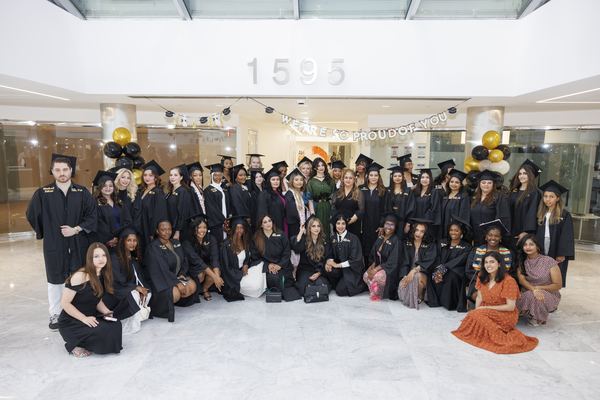
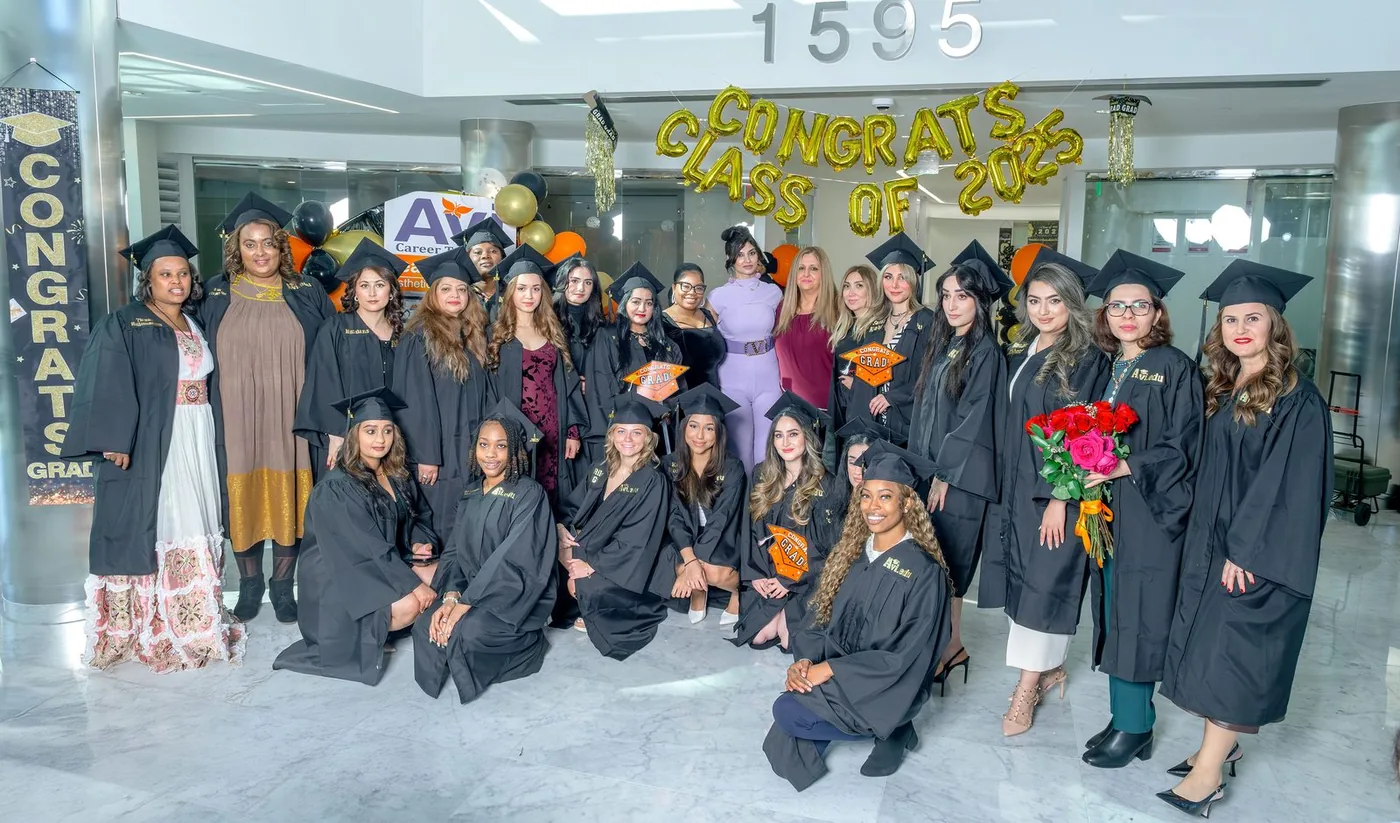
AVI Career Training is located at 1595 Spring Hill Rd #720, Vienna, VA 22182 — in the heart of Northern Virginia, close to Tysons Corner and accessible from Fairfax County, Arlington, Reston, and the surrounding DC metro area.
Here’s what makes AVI the right choice for your barber training.
Accreditation You Can Count On
AVI is COE-accredited (Council on Occupational Education) and SCHEV-certified (State Council of Higher Education for Virginia). These aren’t just logos on a website — they mean AVI meets rigorous standards for educational quality, and that your training will be recognized by the Virginia State Board.
Accreditation also matters for financial aid. Federal student aid (Title IV) is available to eligible students at COE-accredited schools, which can make a real difference in how you pay for your education.
Financial Aid & GI Bill® Benefits
AVI accepts the GI Bill® — a critical benefit for the large military and veteran population in Northern Virginia. If you’ve served and are eligible for education benefits, your barber training may be fully covered.
Federal financial aid options, including Pell Grants, are available for students who qualify. The admissions team at AVI can walk you through what you’re eligible for and how to apply.
Hands-On Training From Day One
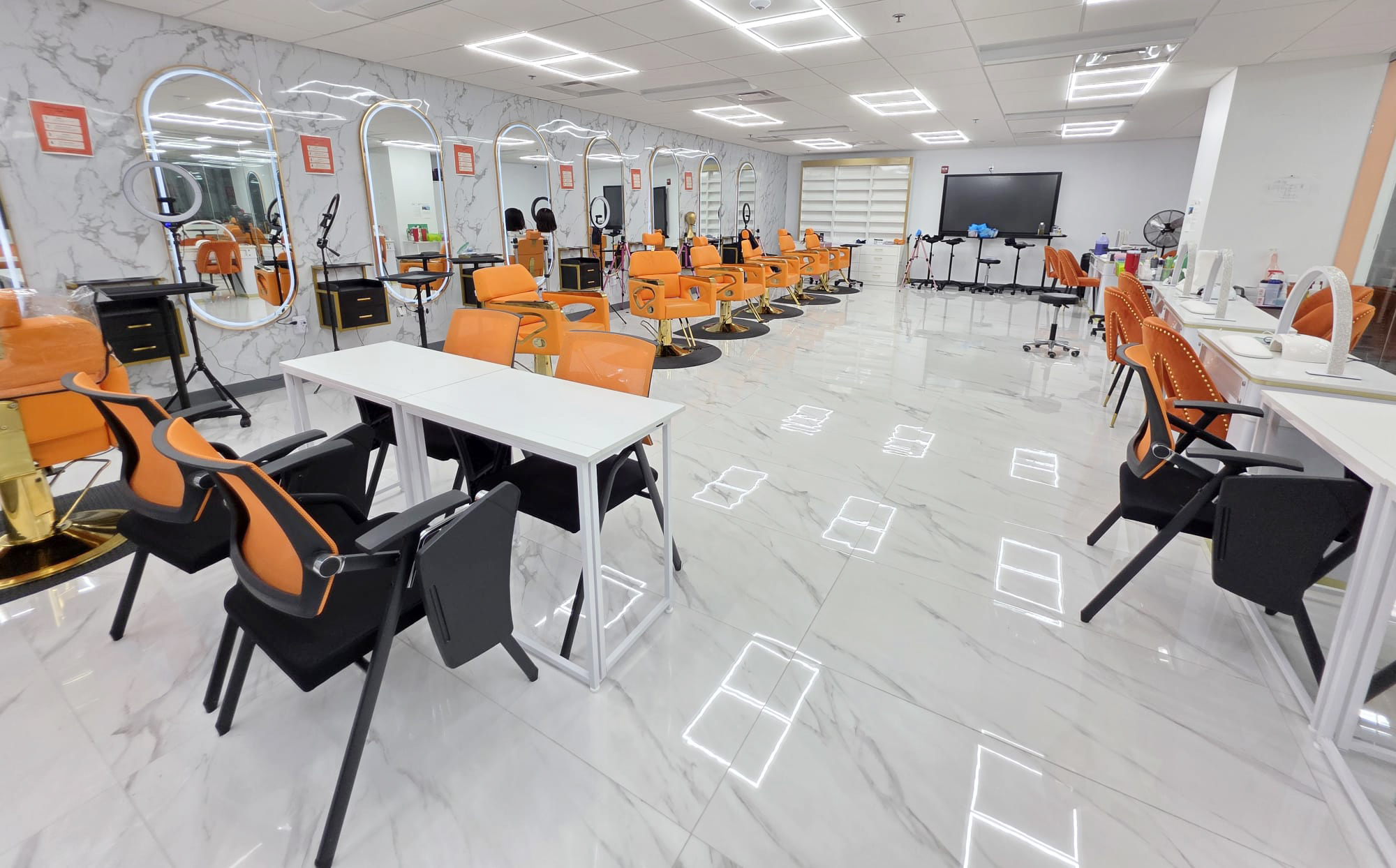
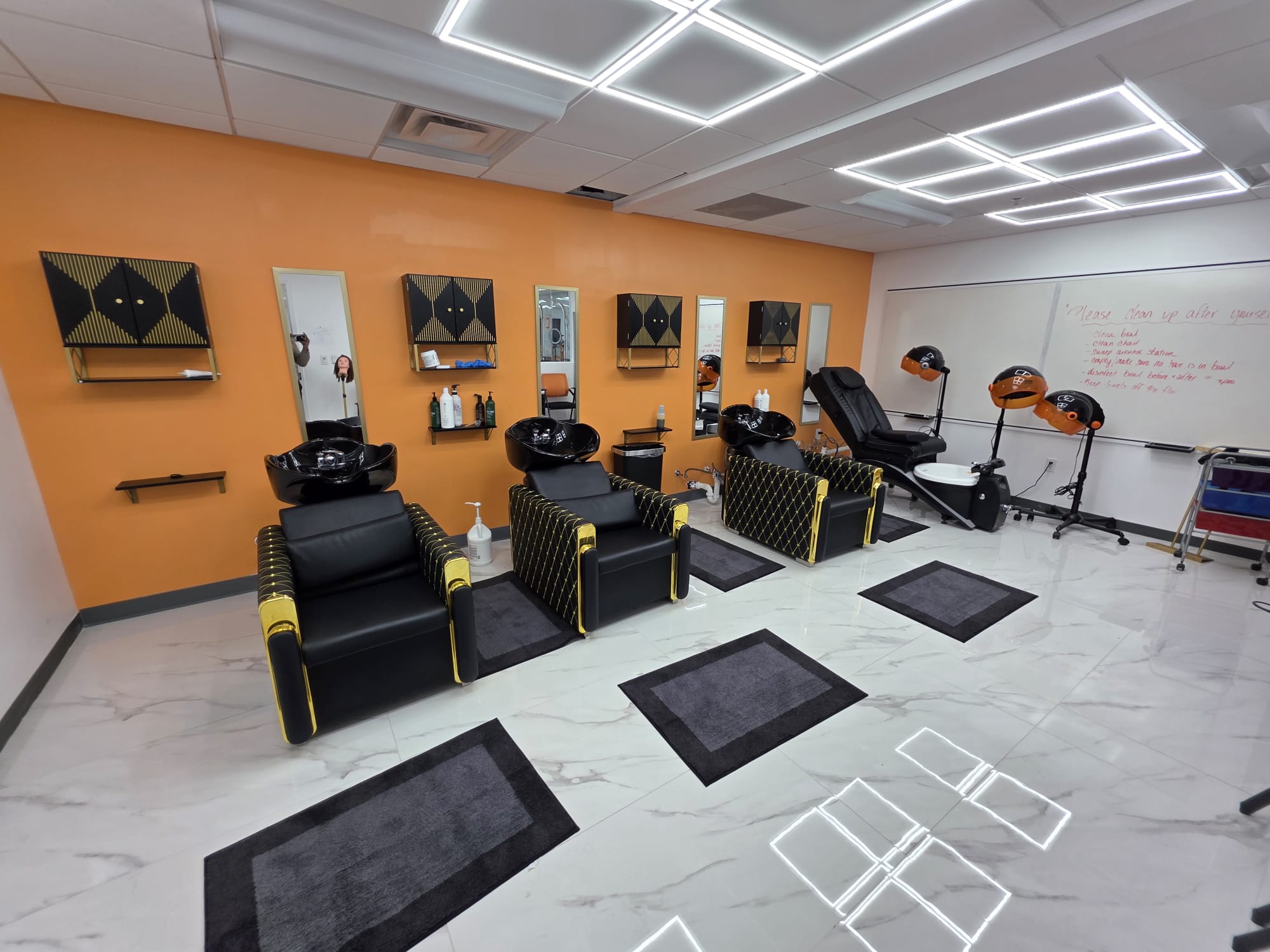
AVI’s program puts you on the clinic floor with real clients early in your training. You’re not just watching demonstrations — you’re building the hands-on reps that make a skilled barber. Instructors are licensed industry professionals, not just academics, and they bring real-world experience into every lesson.
The Northern Virginia Advantage
Training and working in Northern Virginia means you’re entering one of the most active and diverse markets in the country. The clients you’ll serve here represent every background, hair texture, and grooming preference. AVI’s training is built specifically to prepare you for that reality — so you graduate ready to serve anyone who sits down in your chair.
Frequently Asked Questions
How many hours do you need to become a barber in Virginia?
Virginia requires 1,500 clock hours of training at a state-approved barbering school before you can sit for the licensing exam.
How long does barber school take in Virginia?
Full-time students typically complete the 1,500-hour requirement in 12–14 months. Part-time schedules may extend the program to 18–24 months, depending on how many hours per week you attend.
What is the difference between a barber license and a cosmetology license in Virginia?
A barber license authorizes you to cut, trim, and shave hair on the head, face, and neck. A cosmetology license covers those services plus hair color, chemical treatments, waxing, and nail care. Both require 1,500 hours of training in Virginia.
How much do barbers make in Northern Virginia / the DC area?
The national median for barbers is roughly $36,000–$42,000 per year. In the DC metro area, experienced barbers frequently earn above that median, and top earners on booth rental or in shop ownership can clear $60,000–$80,000 or more annually.
Can you do hair color and cuts with a barber license in Virginia?
No. A Virginia barber license does not cover hair color or chemical services. If you want to perform color services, you would need a cosmetology license instead.
Ready to Enroll? Here’s Your Next Step
The path to your Virginia barber license starts with choosing the right school — and AVI Career Training is built for exactly this market. Our program covers the full 1,500 hours required by the Virginia State Board, with hands-on clinic experience, inclusive curriculum, and instructors who’ve worked the same industry you’re entering.
AVI’s Vienna, VA location puts you in one of the most in-demand barber markets in the country. Financial aid is available. GI Bill® benefits are accepted. And the admissions team is ready to answer your questions and help you map out a schedule that works for your life.
Apply now at AVI Career Training — or call us at (703) 943-9841 to speak with an admissions advisor today.
You can also learn more about AVI Career Training and our full range of programs, or visit our campus in Vienna, VA to see the training environment for yourself.
Virginia barbering licensing requirements are governed by the Virginia Board of Barbers and Cosmetologists through DPOR. Salary data sourced from the U.S. Bureau of Labor Statistics. Always verify current requirements directly with DPOR before enrolling.