
AVI Career Training

Esthetics School in Northern Virginia: Start Your Skincare Career

Share:

Esthetics School in Northern Virginia: Start Your Skincare Career

AVI Career Training in Vienna, Virginia is a COE-accredited esthetics school in Northern Virginia where you can complete your 600-hour training, sit for the Virginia State Board exam, and launch a licensed skincare career — all in less than a year.

Whether you’re fresh out of high school, switching careers, or finally pursuing something you’re genuinely passionate about, esthetics training gives you a concrete, in-demand skill set and a clear path to licensure. No four-year degree. No vague outcomes. Just hands-on training, a state-recognized credential, and a career you can build on your terms.

Ready to take the first step? Apply to AVI’s Esthetics Program today and see how quickly your skincare career can begin.


Key Takeaways

  • Virginia requires 600 clock hours of esthetics training to sit for the State Board exam
  • AVI’s program can be completed in less than a year with full-time or flexible scheduling options
  • Skincare specialists nationally earn a median annual wage of approximately $42,000–$47,000, with Northern Virginia’s DC metro market pushing wages higher
  • AVI Career Training is COE-accredited and SCHEV-certified, making students eligible for financial aid and GI Bill® benefits
  • AVI trains students to perform skincare services on all skin tones — a critical and often-overlooked part of a complete esthetics education

What Does an Esthetician Actually Do?

An esthetician is a licensed skincare professional. That’s the short answer. The fuller picture is a career that combines science, artistry, and genuine client service — and it covers far more ground than most people expect.

Day to day, estheticians perform services like:

  • Facials and deep-cleansing treatments
  • Chemical peels and exfoliation therapies
  • Waxing and hair removal services
  • Skin analysis and personalized consultations
  • Lash and brow tinting and shaping
  • Microdermabrasion and advanced skincare equipment treatments

Every client who walks through the door has different skin — different concerns, different tones, different histories. A well-trained esthetician doesn’t apply a one-size-fits-all approach. They assess, adapt, and deliver results that are specific to that person.

That’s why the training matters. Generic esthetics education teaches techniques in theory. A quality esthetics program — one built around inclusive, hands-on practice — prepares you to serve a real, diverse clientele from day one.

Estheticians work in day spas, medical spas, dermatology offices, hotels, resorts, salon suites, and increasingly in clinical or aesthetic medicine settings. Some build their own client base and rent a suite. Others move into product education or sales. The career has real range, and that range starts with a strong foundation.


Virginia Esthetician License Requirements

To legally practice as an esthetician in Virginia, you must meet the requirements set by the Virginia Department of Professional and Occupational Regulation (DPOR).

Here’s exactly what that looks like:

Minimum Eligibility Requirements

Before enrolling in an esthetics program, you need to meet a few baseline qualifications:

  • Be at least 17 years old
  • Hold a high school diploma or GED

That’s it. You don’t need prior beauty experience, a college degree, or any specific background. If you meet those two criteria, you’re eligible to start training.

Required Training Hours

Virginia requires 600 clock hours of approved esthetics training from a state-recognized school. Those hours cover both classroom instruction and hands-on clinical practice — theory and technique, together.

This is a non-negotiable threshold. You cannot sit for the State Board exam until your training hours are fully completed and verified by your school.

The State Board Exam

The Virginia State Board esthetics exam has two components:

  1. Written (Theory) Exam — Covers skin anatomy, physiology, sanitation, safety, and the science behind skincare treatments
  2. Practical Exam — A hands-on skills demonstration where you perform techniques in front of an examiner

Both sections must be passed to receive your license. The exam is administered through the Virginia DPOR, and AVI prepares students specifically for both components throughout the program.

License Renewal

Once licensed, Virginia estheticians must renew their license every two years. Renewal keeps your credentials active and ensures you stay current with professional standards.

How Long Does It Take to Become an Esthetician in Virginia?

With 600 required hours, your timeline depends on your schedule. Full-time students can typically complete their training in a matter of months. Part-time schedules take longer but offer more flexibility for students balancing work or family commitments.

The bottom line: in less than a year, you can complete your training and sit for your Virginia State Board license. For a career that can last decades, that’s a remarkably efficient path.


What You Learn in AVI’s Esthetics Program

AVI Career Training’s esthetics program is built around one core principle: you should graduate ready to work on any client, with any skin type, in any professional setting.

That sounds straightforward. In practice, it’s a meaningful distinction from how many schools approach esthetics training.

Hands-On Technique From Day One

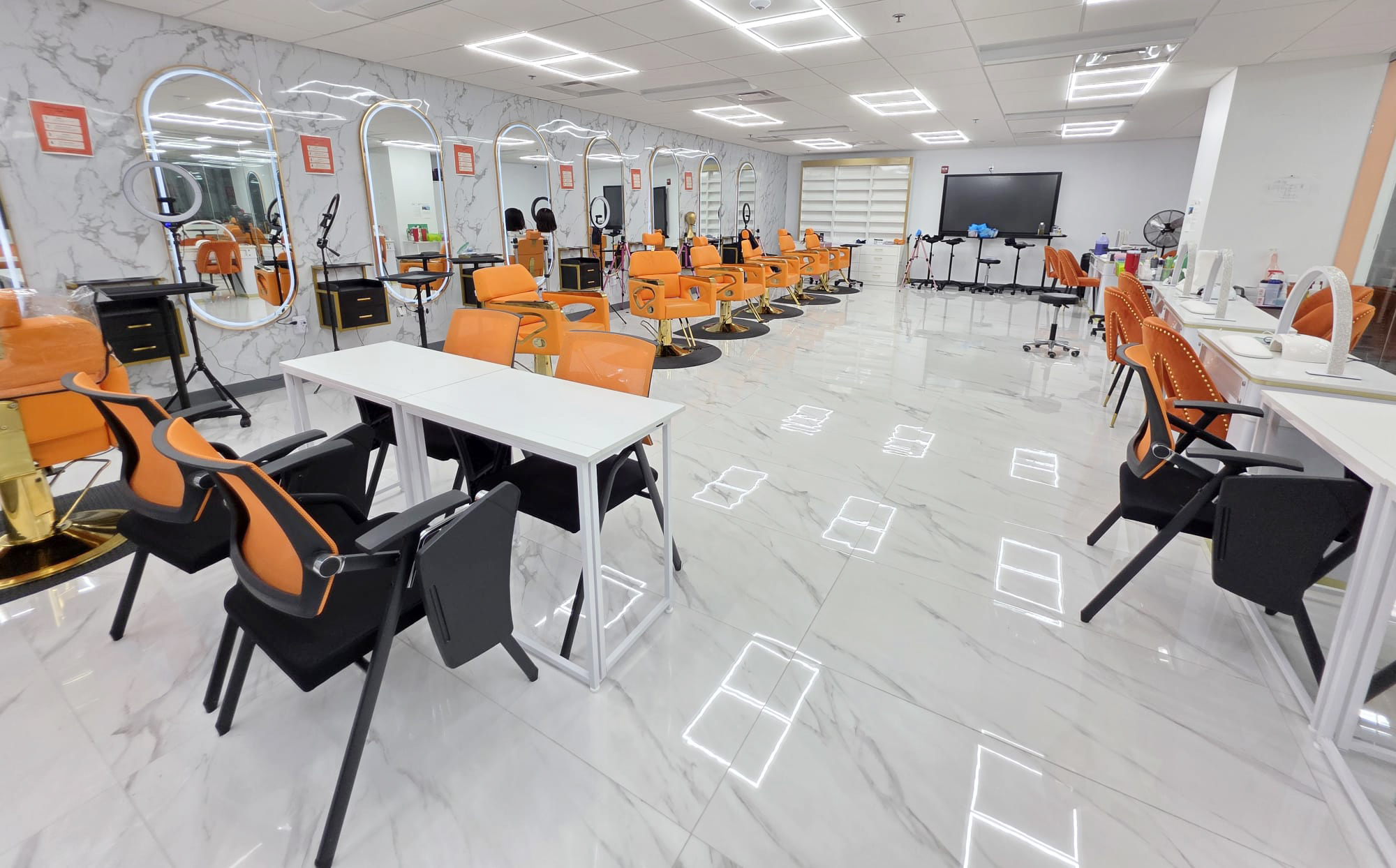
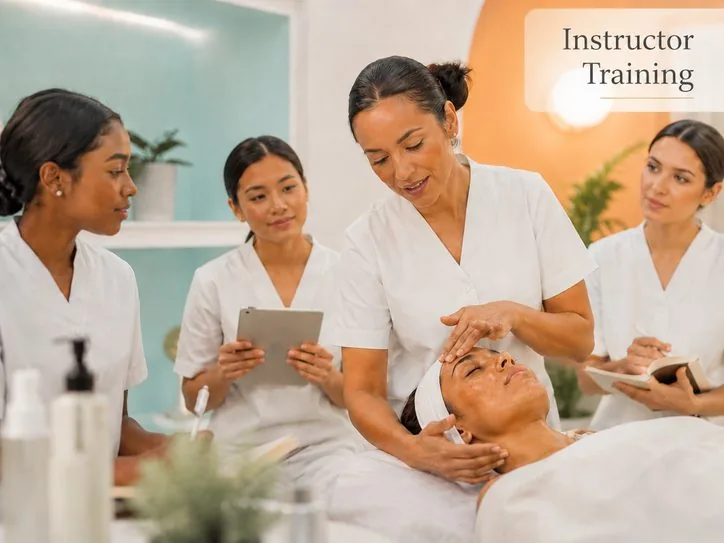
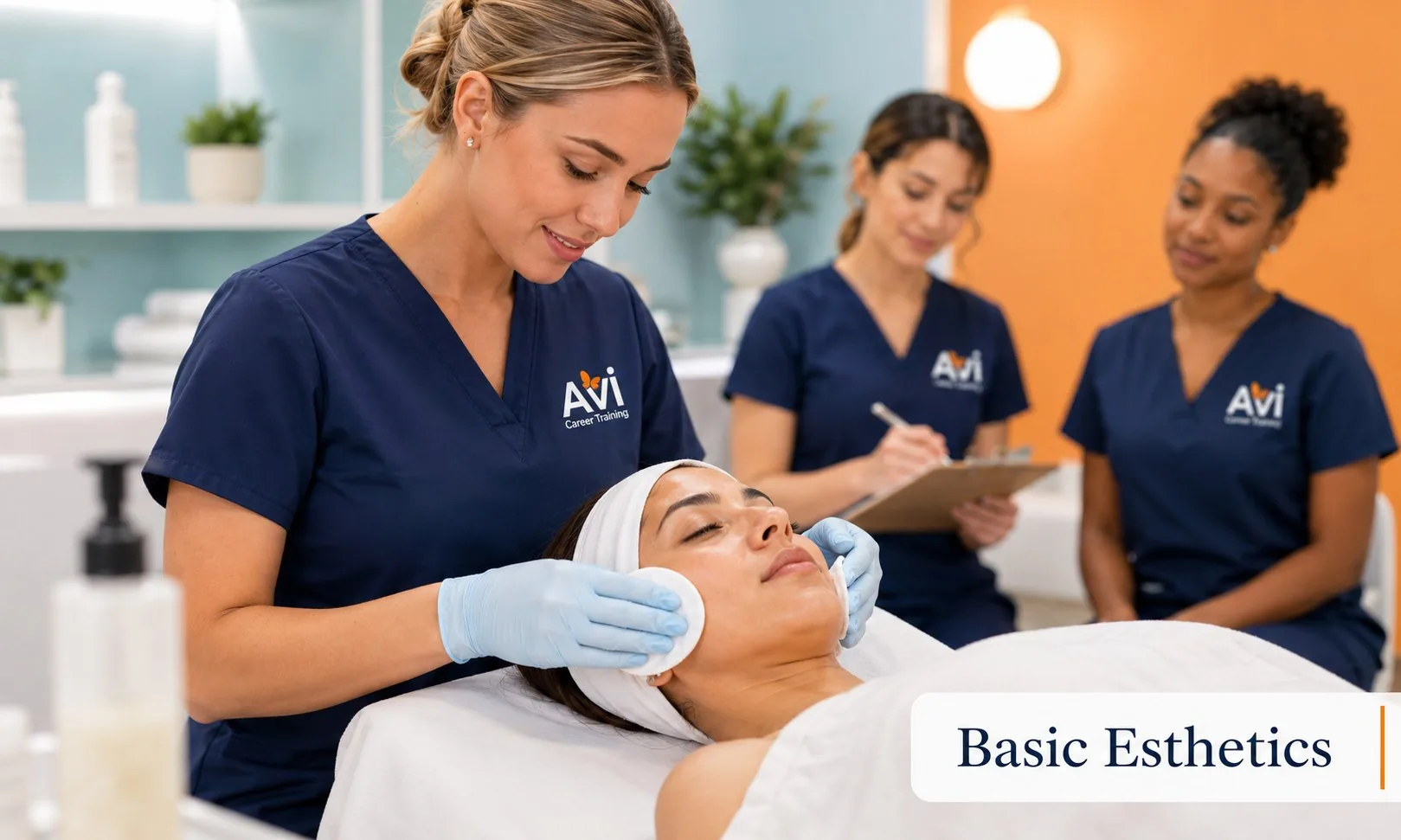
AVI’s program is hands-on by design. You’re not sitting through weeks of lectures before you touch a client. You learn technique through practice — on real people, in a real clinic environment — from early in your training.

That clinic experience matters because it’s where theory becomes skill. Reading about a chemical peel and performing one are two different things. By the time you graduate, performing is second nature.

Inclusive Skincare Across All Skin Tones

This is one of the most important — and most often overlooked — elements of a complete esthetics education.

Historically, beauty school curricula have defaulted to lighter skin tones as the standard. That’s a gap that leaves graduates unprepared for a significant portion of their future clients — and it leaves clients with melanin-rich skin undertreated or underserved.

AVI specifically trains students to work effectively and safely on all skin tones. That means understanding how conditions like hyperpigmentation, post-inflammatory discoloration, and sensitivity present differently across skin types. It means knowing how to adjust treatments, select appropriate products, and deliver real results for every client who books an appointment.

This isn’t just an equity issue — it’s a competitive advantage. Estheticians who can confidently serve a diverse clientele are more versatile, more in-demand, and better positioned in a multicultural market like Northern Virginia.

Core Curriculum Areas

AVI’s esthetics curriculum covers the full scope of what you’ll need as a licensed professional:

  • Skin anatomy and physiology — understanding what’s happening beneath the surface
  • Facial techniques — cleansing, extraction, massage, masking, and hydration protocols
  • Chemical exfoliation — peel application, safety protocols, and contraindications
  • Hair removal — waxing techniques for the face and body
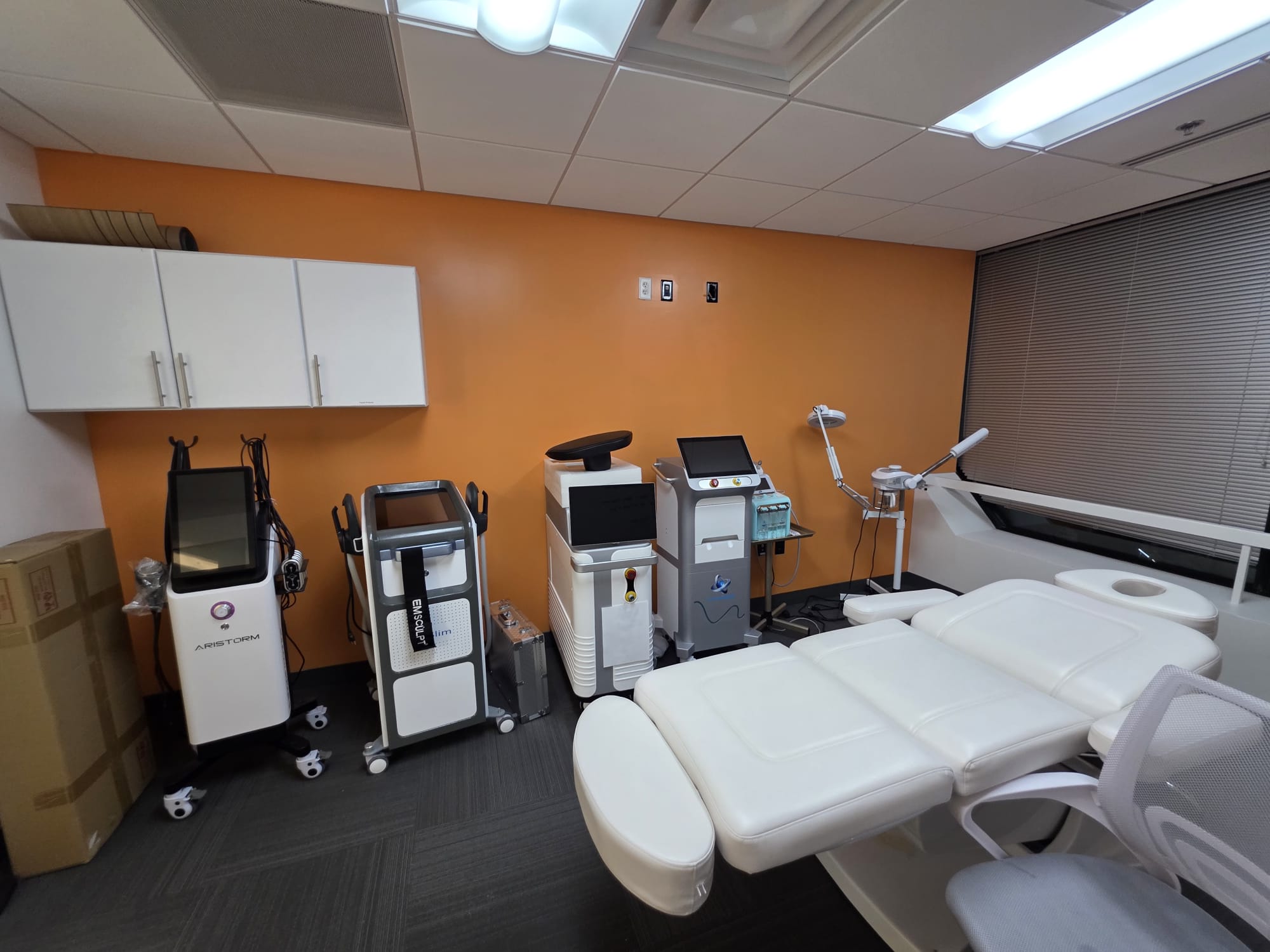
  • Equipment training — hands-on use of professional esthetic devices
  • Sanitation and safety — infection control, OSHA standards, and state board compliance
  • Client consultation skills — intake, skin analysis, treatment planning, and communication

Preparation for the Virginia State Board

Every hour of AVI’s 600-hour program is designed with the State Board exam in mind. Theory courses build your knowledge base for the written exam. Clinic hours and practical workshops build the technique you’ll demonstrate in the practical component.

You don’t leave AVI’s program and then figure out how to prepare for the exam. Exam prep is built into the curriculum throughout.

Explore AVI’s esthetics program and apply today — spots are limited and new cohorts fill quickly.


Esthetician Career Outlook and Earning Potential in Virginia

One of the most common questions prospective students ask is a fair one: Is this worth it?

Here’s an honest answer, grounded in real data.

What Estheticians Earn

According to the U.S. Bureau of Labor Statistics, the national median annual wage for skincare specialists is approximately $42,000–$47,000. That figure represents the midpoint — meaning half of all estheticians earn more than that, and half earn less.

Earnings vary based on several factors:

  • Employment setting (spa, medical practice, resort, self-employed)
  • Experience and specialization (advanced certifications, laser training, medical aesthetics)
  • Geographic market (where you work matters significantly)

That last point is especially relevant for you as someone considering an esthetics program in Northern Virginia.

The Northern Virginia Market Advantage

The DC metro area — which includes Northern Virginia, Washington DC, and suburban Maryland — is one of the highest cost-of-living, highest-income metropolitan areas in the country. That drives demand for premium skincare services and supports above-average wages for skilled estheticians.

Affluent communities in Fairfax County, Loudoun County, and Arlington pay more for high-quality skincare services. Medical spas in the NoVA corridor are among the most active and well-compensated settings in the region. If you want to build a skincare career in a market where demand is strong and clients expect — and pay for — excellence, Northern Virginia is one of the best places to do it.

The BLS projects skincare specialist employment to grow faster than average over the coming decade. That means more positions opening, more competition for skilled graduates, and more opportunity for trained estheticians who hold a strong credential from a recognized school.

Career Paths Worth Knowing

“Spa esthetician” is just one option. Here’s a broader picture of where a Virginia esthetics license can take you:

  • Day Spa Esthetician — Classic setting, strong tips culture, consistent clientele. Great for building foundational experience.
  • Medical Spa / Medspa Esthetician — Higher-end treatments, often supervised by a physician or nurse practitioner. Tends to pay more and attracts clients focused on results.
  • Dermatology Clinic Support — Some licensed estheticians work alongside dermatologists, performing prep services, post-procedure care, and client education.
  • Resort or Hotel Spa — Destination spas and hotel wellness centers offer competitive pay and sometimes include benefits.
  • Freelance / Salon Suite Owner — With a license and a clientele, you can rent your own suite and set your own schedule. Full autonomy, full income potential.
  • Product Education or Sales — Skincare brands actively recruit licensed estheticians to train and educate retail staff and consumers.

A Real Career Story

Consider someone like Maya — a 28-year-old customer service rep in Reston who spent years recommending skincare products to clients but never felt like her work matched her interest. She enrolled in AVI’s esthetics program on a flexible schedule, completed her 600 hours while still working part-time, and passed both components of the Virginia State Board exam within her first year of enrolling.

Six months after licensure, she was working at a medical spa in McLean — serving a diverse clientele, performing chemical peels and advanced facial treatments, and earning more per hour than she had in five years of customer service. She’s now building the clientele and credentials to eventually open her own suite.

Maya’s path isn’t unusual. It’s the kind of outcome that’s available to students who train at a credentialed school, commit to the process, and take the licensing step seriously.


Why Choose AVI Career Training for Esthetics?

There are several esthetics schools in Virginia. Here’s what makes AVI Career Training a different kind of choice.

COE Accreditation and SCHEV Certification

AVI Career Training is accredited by the Council on Occupational Education (COE) and certified by the State Council of Higher Education for Virginia (SCHEV).

These aren’t just logos on a website. They matter for two concrete reasons:

  1. Financial Aid Eligibility — COE accreditation is required for students to access federal financial aid, including Pell Grants. Without it, many students couldn’t afford to enroll.
  2. Employer Credibility — When you apply to work at a medical spa or high-end salon, your school’s accreditation signals that your training met a verified professional standard. It’s a credential that employers recognize.

Financial Aid and GI Bill® Acceptance

AVI offers financial aid to eligible students and accepts the GI Bill® — including the Post-9/11 GI Bill® — for qualified veterans and active-duty service members.

If you’ve ever assumed that esthetics school was financially out of reach, that assumption is worth revisiting. Financial aid can significantly reduce out-of-pocket costs, and AVI’s admissions team can walk you through what you may qualify for.

This matters because beauty and wellness education has historically been seen as something students pay for entirely on their own. AVI’s accreditation changes that.

A Second Student Story

Take Carlos — a 34-year-old Army veteran from Woodbridge who wanted to transition into the wellness industry after his service. He used his Post-9/11 GI Bill® benefits to enroll in AVI’s esthetics program, covered his tuition costs, and graduated with a Virginia State Board license and zero student loan debt.

He now works at a resort spa in the DC area, serves a client base that includes veterans and active-duty personnel, and has started working toward an advanced certification in clinical esthetics. The GI Bill® made the entry point possible. AVI gave him the training to take it further.

Location: Vienna, Virginia

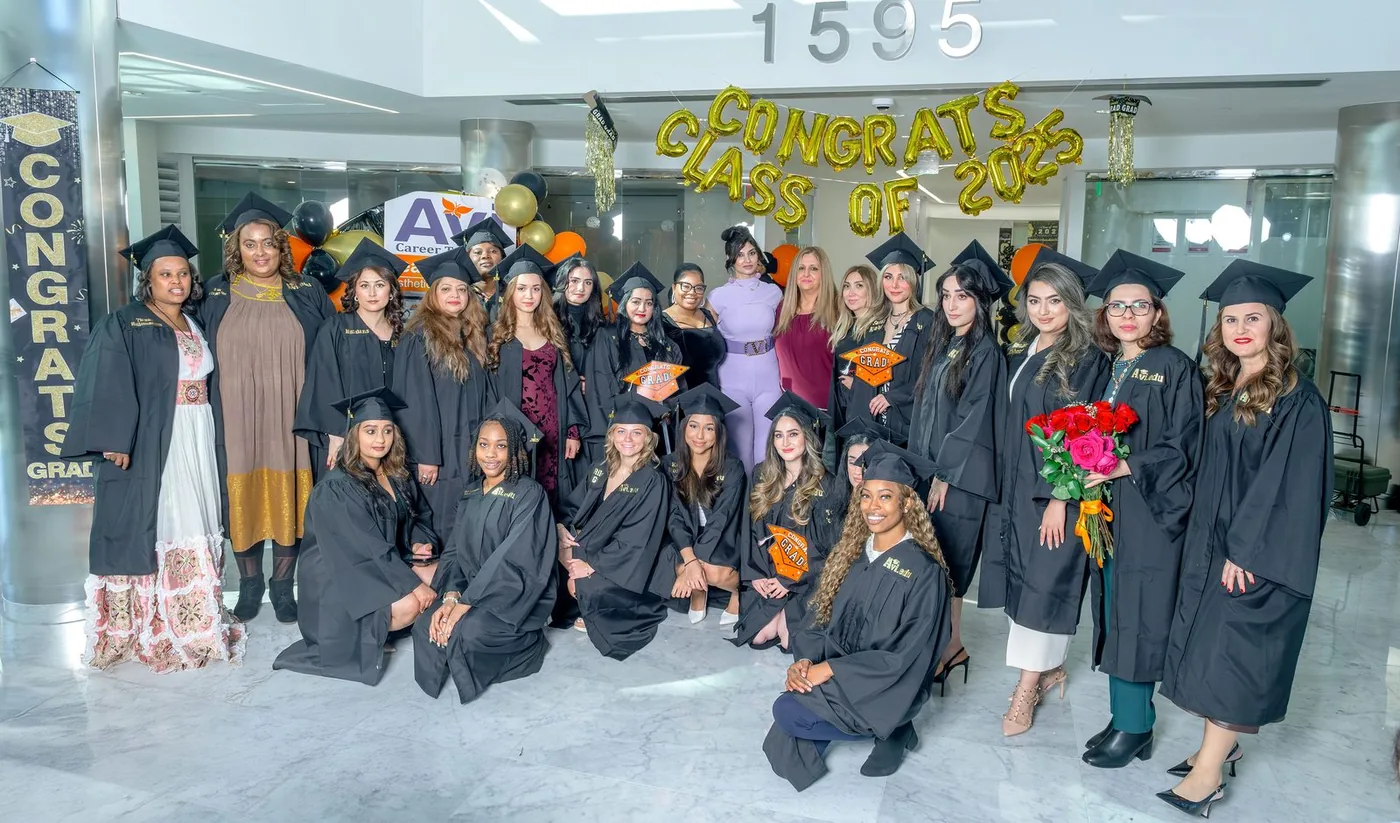
AVI’s campus is located at 1595 Spring Hill Rd #720, Vienna, VA 22182 — a convenient Northern Virginia location accessible from Fairfax, Tysons, McLean, Herndon, Reston, and the broader DC metro area.

You’re training in the same region where you’ll be building your career. That means your clinic experience reflects the actual clientele and market conditions you’ll encounter as a licensed professional.

Inclusive Training as a Core Value

AVI doesn’t treat inclusive skincare as an add-on. It’s built into how every esthetics student is trained.

In a market as diverse as Northern Virginia, that’s not just a nice value to have. It’s a professional skill that sets you apart — and serves your clients the way they deserve to be served.


Is Esthetics School Worth It in Virginia?

Yes — with the right context.

Esthetics school is worth it if you’re genuinely interested in skincare, committed to completing your training, and serious about passing the State Board exam. The 600-hour investment leads to a license that can earn income for the rest of your career.

It’s particularly worth it in Northern Virginia, where the spa and medical aesthetics market is strong, wages are above the national median, and demand for skilled, licensed estheticians continues to grow.

What it requires from you: showing up, putting in the hours, and treating your training like the professional foundation it is. Students who do that graduate prepared, pass their boards, and enter a career that rewards their investment.

The path is clear. The market is strong. The question is whether you’re ready to start.


Take the next step. Apply to AVI Career Training’s Esthetics Program or call us at (703) 943-9841 to speak with an admissions advisor. You can also learn more about AVI Career Training — including our accreditations, programs, and what makes our approach to beauty education different.

Your skincare career starts with 600 hours. AVI is where those hours happen.


Virginia esthetician licensing requirements are governed by the Virginia Department of Professional and Occupational Regulation (DPOR). Salary data sourced from the U.S. Bureau of Labor Statistics Occupational Outlook Handbook. Verify current figures at time of reading.

Article details:

Share: