Beauty School for ESL Students in Northern Virginia
Yes — you can absolutely attend beauty school in Northern Virginia if English is not your first language, and AVI Career Training in Vienna, VA is built exactly for students like you.
Beauty and wellness training is hands-on by nature. You learn by watching, practicing, and doing — not by sitting in a lecture hall and reading dense textbooks. That makes programs like Cosmetology, Nail Technician, Esthetics, and Massage Therapy some of the most accessible career paths available for ESL learners. At AVI Career Training, students from dozens of different backgrounds and language communities have completed their training, passed the Virginia State Board exam, and built real careers in the beauty industry.
If you’ve been wondering whether a language barrier will hold you back, the answer is: it doesn’t have to. This guide walks you through everything — from what makes beauty school work for ESL students, to Virginia licensing requirements, to exactly how AVI supports students from all backgrounds.
Ready to take the first step? Start your application at AVI Career Training today.
Key Takeaways
- Beauty school programs are skill-based and hands-on, making them far more accessible for ESL students than traditional academic programs
- Virginia’s Nail Technician program requires only 150 clock hours — completable in as few as 8 weeks at AVI
- Virginia Cosmetology requires 1,500 clock hours; Esthetics requires 600 hours; Massage Therapy requires 500 hours
- AVI Career Training is COE Accredited and SCHEV Certified — federal financial aid and GI Bill® accepted
- The Virginia State Board exam includes both a written and practical component — confirm current language accommodation options directly with Virginia DPOR before enrolling
Why Hands-On Beauty Training Works for ESL Students
Most academic programs rely heavily on reading, writing, and listening to English lectures for hours at a time. That’s a real challenge if you’re still building your English skills.
Beauty school is different.
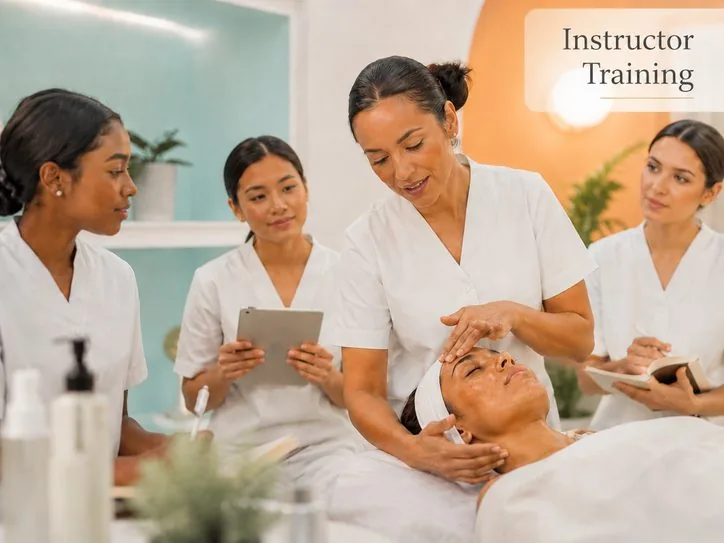
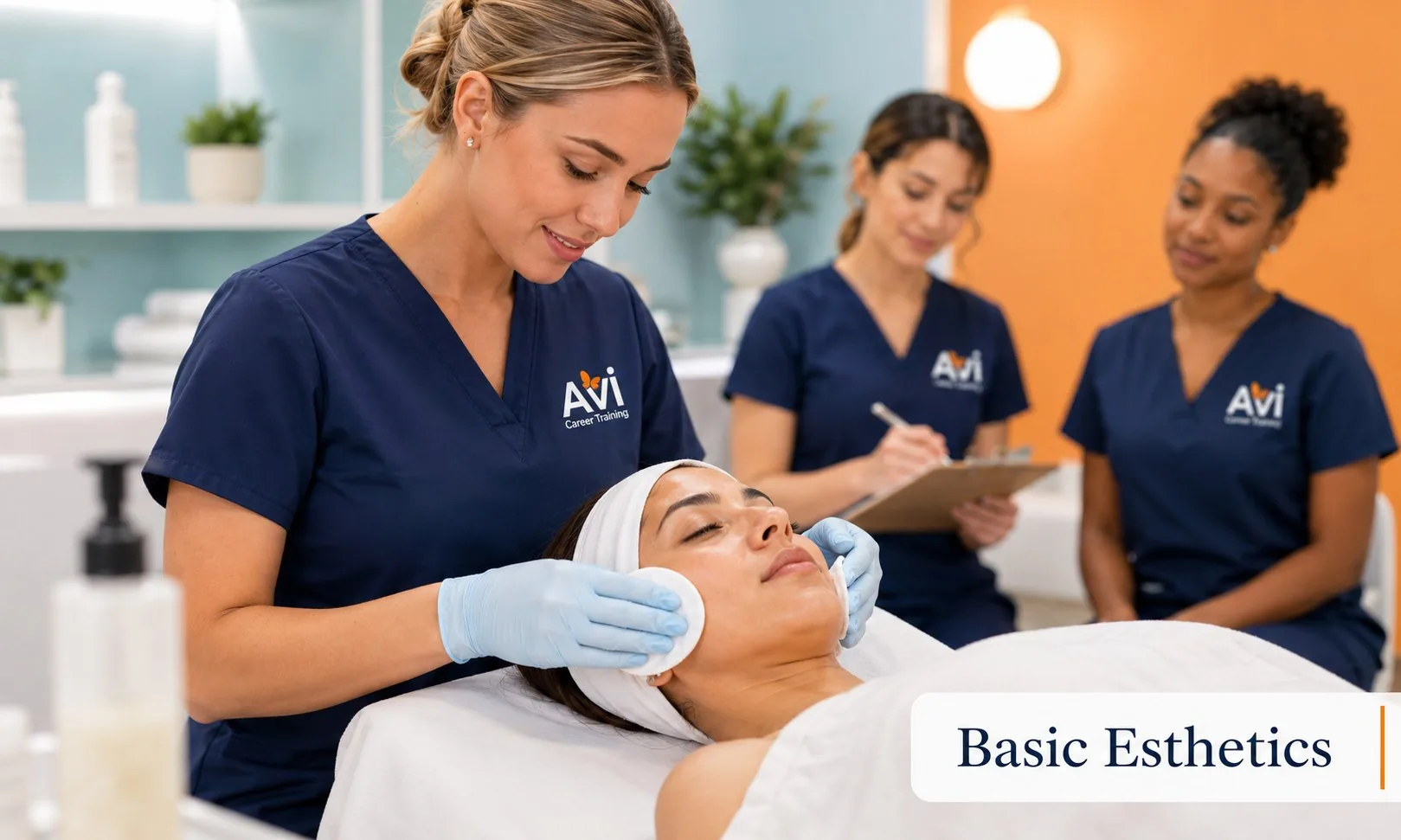
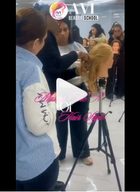
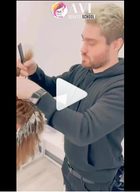
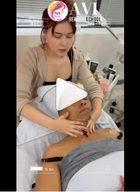
Programs like Cosmetology, Nail Technology, Esthetics, and Massage Therapy are built around physical technique. Your instructor demonstrates a skill. You watch closely. Then you practice it — on mannequins, on fellow students, on real clients in the training salon or spa. The feedback you receive is immediate and visual: your instructor adjusts your hand position, shows you the correct angle, or demonstrates again until you get it right.
This is how skilled professionals are trained around the world, regardless of language.
Yes, there is classroom instruction — safety protocols, skin anatomy, product chemistry, and state law. But a large portion of your day at AVI is spent doing. And doing doesn’t require perfect English.
Consider Yuna, who came to AVI after working as a nail artist in her home country. Her conversational English was limited when she enrolled in the Nail Technician program. But she had strong technical instincts and a genuine passion for her craft. Within her first few weeks, she was already ahead of some native English speakers in her practical assessments — because technique doesn’t translate, it demonstrates. She completed the program in 8 weeks, passed the Virginia State Board exam, and now runs a booth in a Vienna nail salon with a loyal client base she built herself.
Her story isn’t an exception. It’s a pattern.
Northern Virginia is one of the most linguistically diverse regions in the United States. The DC metro area is home to large communities of Spanish, Korean, Vietnamese, Amharic, Arabic, Hindi, and Tagalog speakers, among many others. Beauty schools that serve this community — and train students to serve this community’s clients — thrive. AVI Career Training is one of them.
What to Look for in a Beauty School as an ESL Learner
Not every beauty school is equally supportive of non-native English speakers. Here’s what to evaluate before you enroll.
Demonstration-Based Teaching Methods
Ask the school directly: how are skills taught? If the answer is “mostly hands-on, demonstration-first instruction,” that’s a strong sign the program will work well for you. If the school relies heavily on independent reading or online-only instruction, that may be a harder fit while you’re still building English fluency.
Instructor-to-Student Ratio
Smaller class sizes mean more one-on-one time with your instructor. This is especially important if you need something repeated, shown again, or explained with a demonstration rather than words. AVI’s hands-on training model keeps students and instructors working closely together throughout the program.
A Diverse Student Body
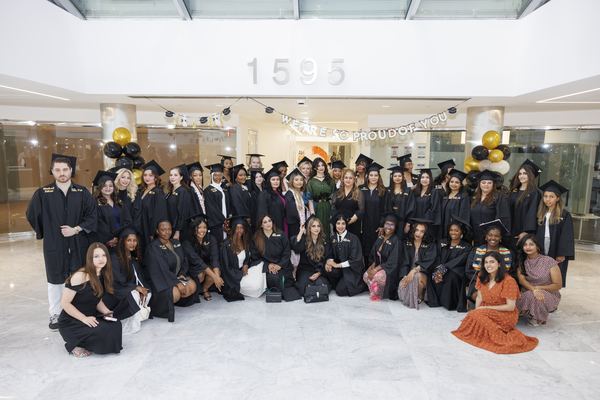
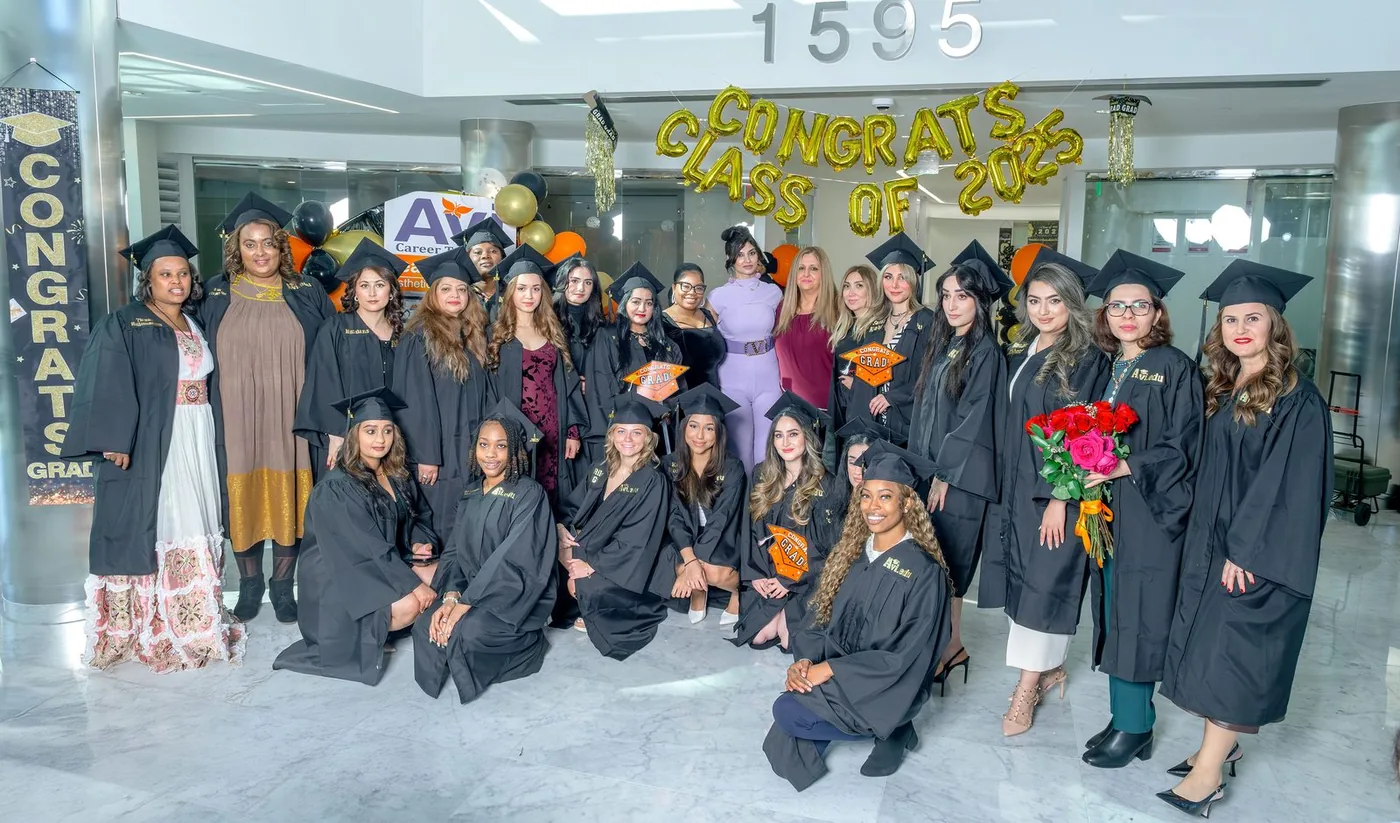
Schools that already enroll students from many different backgrounds tend to be more culturally aware, more patient, and more flexible in how they communicate. When your classmates come from different countries and language backgrounds, the learning environment naturally adapts. AVI’s Vienna, VA campus reflects the diversity of the Northern Virginia community it serves.
Accreditation Status
COE accreditation (from the Council on Occupational Education) is one of the strongest quality signals a vocational school can carry. It means the school has been independently evaluated for educational quality, financial stability, and ethical practices. AVI Career Training is COE Accredited and SCHEV Certified — two credentials that also unlock federal financial aid eligibility for qualifying students.
Financial Aid Availability
Paying for school is a real concern. Look for schools that accept federal financial aid (Pell Grants, etc.) and, if applicable, military education benefits like the GI Bill®. AVI accepts both.
Explore your options and apply to AVI Career Training here.
Virginia Licensing Requirements — What Every ESL Student Needs to Know
To work legally as a beauty professional in Virginia, you must complete a state-approved training program and pass the Virginia State Board exam. Here’s a plain-language breakdown of what each program requires.
Hour Requirements by Program
| Program | Required Clock Hours | Estimated Timeline at AVI |
|---|---|---|
| Cosmetology | 1,500 hours | ~12–14 months |
| Basic Esthetics | 600 hours | ~6 months |
| Nail Technician | 150 hours | As few as 8 weeks |
| Massage Therapy | 500 hours | ~6 months |
These are the minimums set by Virginia’s Department of Professional and Occupational Regulation (DPOR). AVI’s programs are designed to meet these requirements fully, so graduates are eligible to sit for the State Board exam upon completion.
The Virginia State Board Exam
The Virginia State Board exam has two parts:
- Written (theory) exam — Tests your knowledge of safety, sanitation, anatomy, product chemistry, and state law
- Practical exam — Tests your hands-on technical skills on a live model or mannequin
The practical component is almost entirely skill-based. The written component is in English by default.
⚠️ Important: Whether the written exam is currently offered with translated resources or language accommodations is something you should verify directly with Virginia DPOR before enrolling. Policies can change, and you deserve accurate, current information. Contact DPOR at dpor.virginia.gov or call them directly to ask about accommodation options for ESL test-takers.
Many ESL students find that by the time they complete their training hours, their English vocabulary in beauty-specific topics — skin care, nail structure, sanitation standards — has grown substantially. Learning English through your profession is a real benefit of hands-on vocational training.
What Happens After You Pass
Once you pass both portions of the State Board exam, Virginia issues your professional license. That license is what allows you to work — in a salon, a spa, a nail studio, a medical office, or your own booth rental business. It opens the door to employment across the entire DC metro area, one of the most economically active beauty markets in the country.
How AVI Career Training Supports Students from All Backgrounds
AVI Career Training was founded on the belief that beauty education should be genuinely inclusive — not just in who it accepts, but in how it teaches, who it trains students to serve, and what outcomes it delivers.
Here’s what that looks like in practice.
An Inclusive Curriculum Built for the Real World
AVI’s curriculum is explicitly designed to train students to work beautifully on every skin tone and every hair texture. This isn’t a footnote — it’s a core part of the training. In Northern Virginia and the DC metro area, beauty professionals work with clients from every background imaginable. AVI prepares you for that reality from day one.
This inclusive focus also means the school attracts students from all over the world. That diversity makes AVI’s environment naturally welcoming for ESL learners.
Hands-On Learning from Day One
AVI doesn’t hold students in theory classes for weeks before letting them touch a brush or a file. Hands-on practice begins early, and that benefits ESL students enormously. When you’re doing the work, the language barrier shrinks. Muscle memory, visual learning, and instructor demonstration carry you forward.
COE Accreditation and SCHEV Certification
These aren’t just letters on a wall. COE accreditation from the Council on Occupational Education means AVI has met rigorous standards for educational quality and student outcomes. SCHEV certification confirms the school meets Virginia’s own state standards for postsecondary education.
These credentials also make AVI eligible to participate in federal financial aid programs — which means qualifying students can access Pell Grants and other federal funding to help cover tuition costs.
Financial Aid and the GI Bill®
Paying for training shouldn’t be a barrier. AVI accepts:
- Federal financial aid (for students who qualify based on income and enrollment status)
- GI Bill® benefits (for eligible veterans and qualifying dependents)
If you’re not sure what you qualify for, the admissions team at AVI can walk you through your options. There’s no pressure — just real information to help you make a confident decision.
A Real Career on the Other Side
Let’s talk about outcomes for a moment, because that’s what this is really about.
Beauty professionals in Virginia earn competitive incomes, especially as they build clientele and experience:
- Cosmetologists: approximately $33,000–$38,000/year starting; significantly more for experienced stylists and booth renters
- Estheticians: approximately $38,000–$45,000/year median; more in medical esthetics settings
- Nail Technicians: highly variable; booth rental models allow strong earners to exceed median wages significantly
These are real numbers from Bureau of Labor Statistics data. And they reflect base employment — many beauty professionals in Northern Virginia earn considerably more through tips, booth rental income, and self-employment.
Mini-Story: From New Arrival to Licensed Professional
Maria came to Northern Virginia from El Salvador with her family when she was 26. She had experience braiding and styling hair informally — friends and family came to her constantly — but she had no formal credentials and her English was at an early intermediate level.
She enrolled in AVI’s Cosmetology program after visiting the campus and speaking with an admissions representative who took the time to answer every question she had, without rushing her.
The 1,500-hour program took her about 13 months. Were there moments when the written coursework was harder because of language? Yes. Were there study resources and classmates who helped her work through the theory content? Also yes.
When she passed the Virginia State Board exam — both the written and practical portions — she had also gained something she didn’t expect: significantly stronger English in the specific vocabulary of her profession. She could speak confidently to clients about their hair health, their scalp condition, and the products she was recommending.
Today, Maria rents a booth at a salon in Annandale. She has a full client book and a waiting list. Her story isn’t a fairy tale — it’s what happens when someone with skill and determination gets the right credential behind them.
Your Next Step — Starting the Application Process at AVI
If you’ve read this far, you’re serious about your future. That matters.
Here’s exactly what applying to AVI Career Training looks like:
- Fill out the online application form — it’s straightforward, and you can take your time completing it
- Speak with an admissions representative — call (703) 943-9841 to ask questions, discuss program options, and get clear on what financial aid you may qualify for
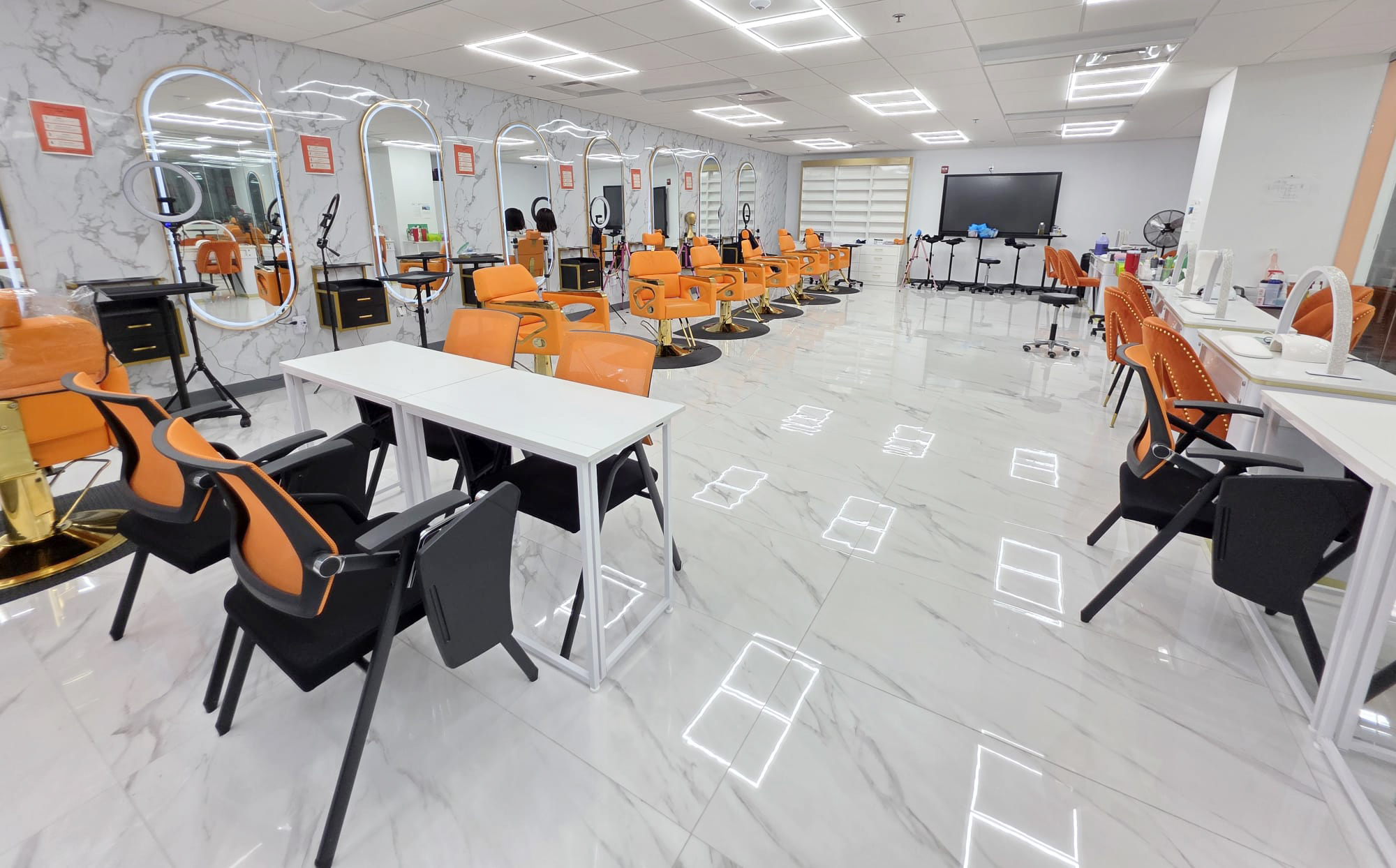
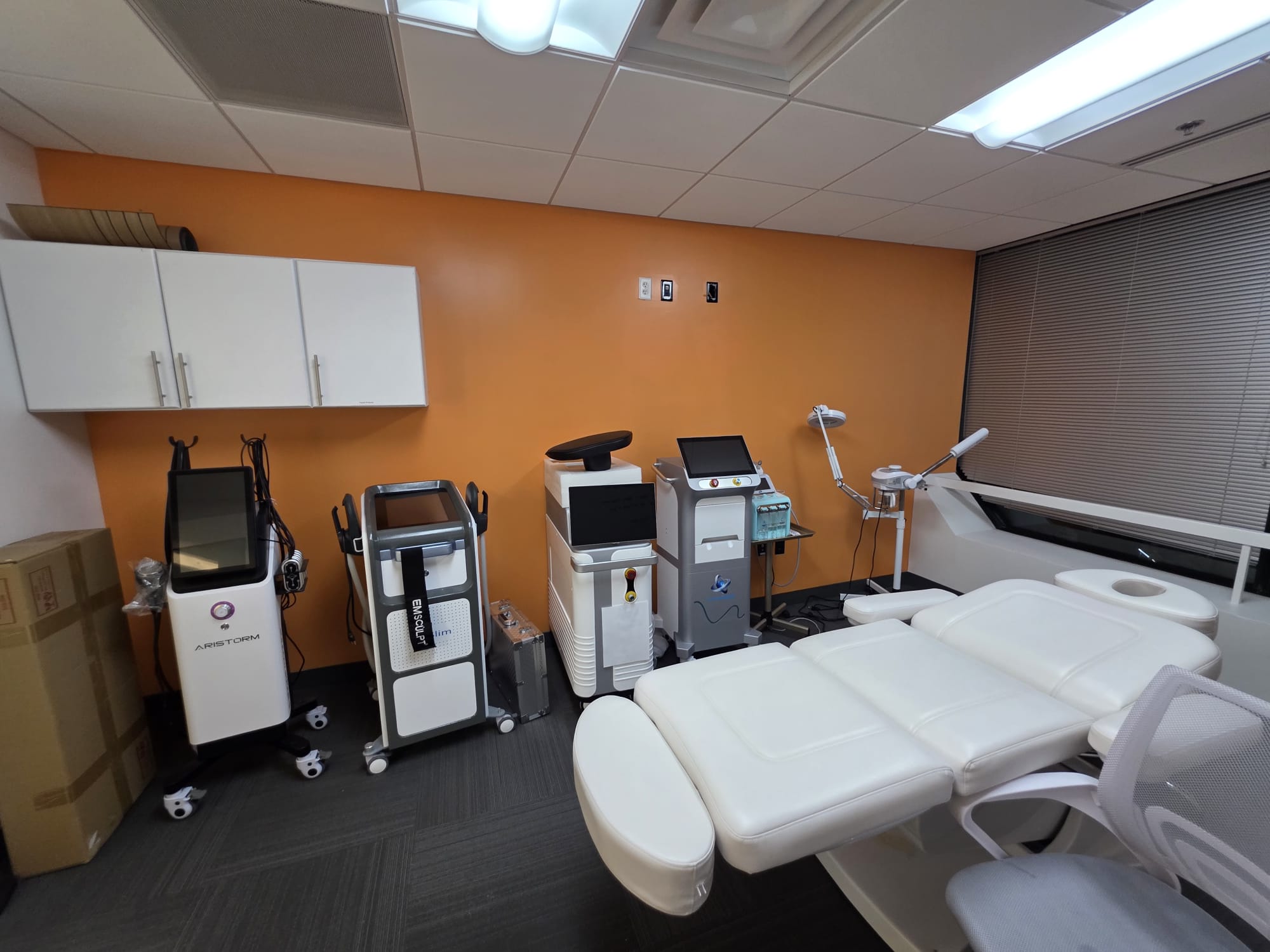
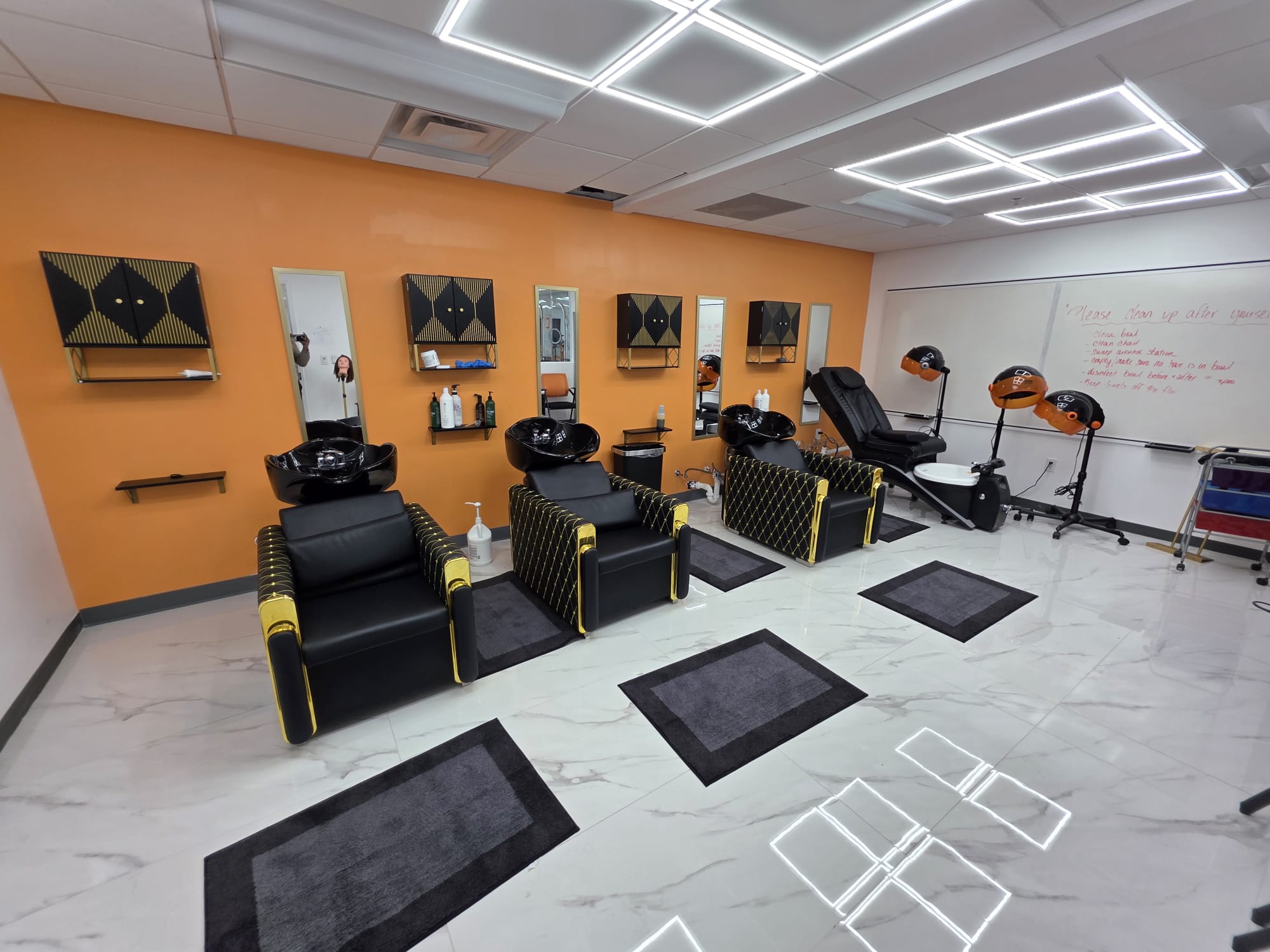
- Tour the campus — AVI’s training facility in Vienna, VA is a real working salon and spa environment; seeing it in person removes a lot of uncertainty
- Choose your program and start date — once accepted, you’ll get a clear plan for your first day and beyond
There is no wrong question to ask during admissions. The team at AVI has worked with students from every background, every language community, and every starting point. Their job is to help you figure out if AVI is the right fit — and if it is, to help you get started with confidence.
You don’t need perfect English to build a career in beauty. You need the right training, the right credential, and the right school behind you.
Apply to AVI Career Training today and take the first step toward your license.
Or call us directly: (703) 943-9841
AVI Career Training | 1595 Spring Hill Rd #720, Vienna, VA 22182
Frequently Asked Questions
Can I go to cosmetology school if English is not my first language?
Yes. Cosmetology and other beauty programs are primarily hands-on and skill-based, which significantly reduces the language barrier compared to traditional academic programs. You’ll still need to study English-language theory for the written portion of the Virginia State Board exam, but many ESL students find their professional English vocabulary grows naturally throughout training.
Does AVI Career Training offer support for ESL students?
AVI Career Training’s hands-on, demonstration-based curriculum is naturally more accessible for ESL learners. The school serves a diverse student body that reflects the multilingual Northern Virginia community. Contact AVI directly at (703) 943-9841 to discuss your specific situation and ask about current support resources.
What beauty school programs work best for non-English speakers?
Nail Technician and Esthetics programs tend to have the shortest training requirements (150 hours and 600 hours, respectively), making them faster paths to licensure. All hands-on beauty programs benefit ESL learners because so much of the instruction is visual and tactile. That said, any Virginia-approved program will require passing a written exam in English unless accommodations apply.
Can I take the Virginia State Board exam in a language other than English?
This is an important question to verify directly with Virginia DPOR before enrolling. Contact the Virginia Department of Professional and Occupational Regulation at dpor.virginia.gov to ask about current language accommodation policies for the written exam.
Is hands-on beauty training easier if I’m still learning English?
In many respects, yes. The practical portion of beauty school — cutting, coloring, applying treatments, performing massages — is learned by demonstration and repetition. Your hands learn the technique regardless of what language the instruction is delivered in. The theory coursework does require English reading comprehension, but students consistently find their professional English improves significantly over the course of their training hours.