
AVI Career Training

Barber School in Northern Virginia: Licensing, Training & Career Guide

Share:

Barber School in Northern Virginia: Licensing, Training & Career Guide

AVI Career Training in Vienna, VA offers one of Northern Virginia’s most accessible paths to a Virginia barber license — with hands-on training designed for the DC metro’s exceptionally diverse clientele. If you’re weighing your options for a barbering school in Northern Virginia, here’s exactly what the path looks like: the hours required by the state, what you’ll learn in the classroom and on the floor, what you can expect to earn, and why the school you choose matters more than most people realize.


Key Takeaways
– Virginia requires 1,500 clock hours of barber training at an approved school to qualify for licensure
– Full-time students typically complete a Virginia barber program in 10–14 months
– The DC metro barber market indexes above the national median annual wage of ~$33,400 (BLS, May 2023)
– BLS projects approximately 8% job growth for barbers, hairstylists, and cosmetologists through 2032 — faster than average
– AVI Career Training accepts financial aid and the GI Bill® — making quality training more accessible


What Does It Take to Become a Licensed Barber in Virginia?

The Virginia Department of Professional and Occupational Regulation (DPOR) sets the requirements for barber licensure in the state. Before you pick a school, you need to understand what the state actually requires — because those requirements define every legitimate program.

Here are the core barber license Virginia requirements:

  • Age: You must be at least 17 years old
  • Education: A high school diploma or GED is required
  • Training hours: You must complete 1,500 clock hours of barber training at a DPOR-approved school — OR complete an approved barbering apprenticeship
  • Examination: You must pass both a written and practical examination administered through PSI Exams on behalf of the Virginia State Board
  • License renewal: Virginia barber licenses are renewed biennially; continuing education requirements apply

The apprenticeship route exists but is far less common. Most students complete their training through an approved school program, which gives you structured curriculum, instructor oversight, and a clear timeline to your exam date.

Want to see what that path looks like at AVI? Apply now and an admissions advisor will walk you through every step.


How Long Does Barber School Take in Virginia?

At 1,500 required hours, the timeline depends almost entirely on how many hours per week you attend. Full-time students — attending roughly 30–35 hours per week — typically complete the program in approximately 10–14 months. Part-time schedules extend that timeline, which can work well for students managing jobs or family responsibilities.

That range is a realistic one, not a best-case scenario. Anyone promising a shorter completion time should be asked exactly how many hours per week that requires.


The Virginia Barber Apprenticeship: What You Should Know

Virginia does allow a barbering apprenticeship path, which requires completing a specified number of hours under a licensed, supervising barber. However, approved apprenticeship positions are harder to find, less structured, and can take longer to complete than a school-based program. For most students in the Northern Virginia area, enrolling in an approved barber school is the faster, more reliable route to the Virginia State Board exam.


What You’ll Learn in a Virginia Barber Program

The 1,500-hour requirement isn’t arbitrary — it reflects the depth of technical skill a competent barber needs before working on paying clients independently. A strong Virginia barber program covers:

Core Technical Skills

  • Clipper and scissor cutting techniques — from fundamental texturing to precision cutting
  • Fades and tapers — the foundation of contemporary barbering; high-demand skills in every market
  • Straight razor shaving — a signature barbering service and a significant revenue driver
  • Beard design and grooming — trimming, shaping, lining, and detailing facial hair
  • Scalp treatments and hair care — recognizing common conditions and providing appropriate care

Sanitation, Safety & State Board Prep

Every Virginia barber program must also cover:

  • Infection control and sanitation — Virginia State Board standards, tool sterilization, and workplace safety
  • Anatomy and physiology — skin, scalp, and hair structure as it relates to barbering services
  • Virginia State Board exam preparation — both the written and practical components

Inclusive Technique Training at AVI

Here’s something most barber school pages won’t say directly: not all programs prepare you equally for the real-world client base you’ll encounter in Northern Virginia.

The DC metro area is one of the most racially and culturally diverse regions in the United States. Your clients will walk in with coily, kinky, wavy, and straight hair textures. They’ll have a wide range of skin tones. A barber who can confidently and skillfully serve every one of those clients builds a loyal clientele faster — and earns more.

AVI’s curriculum is intentionally built around inclusive techniques. You’ll train on the full spectrum of hair textures and skin tones — not as a specialty track, but as the standard. That’s a direct competitive advantage when you’re working in a market as diverse as Northern Virginia.


Barber vs. Cosmetologist: Which License Is Right for You?

This is one of the most common questions prospective students ask — and the answer matters before you invest time and money in any program.

What Each License Permits in Virginia

Barbers are licensed to perform:
– Haircuts, fades, tapers, and styling for all clients
– Straight razor shaving and facial hair services
– Scalp treatments
– Limited chemical services depending on Virginia DPOR scope

Cosmetologists are licensed to perform:
– Haircuts, color, chemical services (perms, relaxers), and styling
– Skincare services (basic)
– Nail services (basic)
– A broader range of chemical and treatment services

The Training Hour Difference

Virginia cosmetology programs require 1,500 clock hours — the same as barbering. However, the curriculum content is different. Cosmetology training leans heavily toward chemical services, color theory, and a broader range of styling techniques. Barbering training focuses on precision cuts, clipper work, fading, and straight razor shaving.

Which Path Fits Your Goals?

If your vision is working in a barbershop environment — performing fades, tapers, beard trims, and hot-towel shaves — a barber license is the right fit. If you want to work in a full-service salon with a focus on color, chemical services, and a broader styling menu, cosmetology may be the better path.

Some students earn both licenses over time. But starting with the one that matches your immediate career goals gets you to work faster.

Not sure which direction is right for you? Reach out to AVI admissions — we’ll help you think it through honestly.


Barbering Career Outlook and Earning Potential in Northern Virginia

Let’s be straightforward about money — because that’s a real consideration, and vague promises don’t help you plan.

National and Regional Salary Data

According to the U.S. Bureau of Labor Statistics (BLS), the national median annual wage for barbers, hairstylists, and cosmetologists was approximately $33,400 as of May 2023. That’s the national median — which includes lower-cost-of-living markets across the country.

The DC metro and Northern Virginia market consistently indexes above that median. Cost of living, consumer spending power, and the density of the region’s population all push wages higher than the national figure. Barbers working in the Tysons corridor, Arlington, Alexandria, and surrounding Northern Virginia communities can realistically earn above that national benchmark — particularly as they build clientele.

BLS projects approximately 8% job growth for this occupational group through 2032, which is faster than the average for all occupations. Steady demand, consistent service needs (hair doesn’t stop growing), and a growing population in the DC metro support that projection locally.

What Actually Drives Earning Potential

Your license gets you in the door. Your income grows based on:

  • Clientele volume and retention — repeat clients are the foundation of barbering income
  • Service menu and pricing — premium fades, straight razor shaves, and beard design command higher prices in NoVA than in many other markets
  • Booth rental vs. employment — many experienced barbers transition to booth rental, where they operate independently and keep a larger share of their revenue
  • Tip income — tips are a genuine and meaningful part of barbering income in high-traffic shops; it’s honest to acknowledge that without overstating it

A Real Path: Meet Marcus

Marcus came to AVI after spending five years in retail management. He wanted a career where his income was tied to his own skills — not a corporate schedule. He completed his barber training, passed the Virginia State Board exam, and took a chair at a shop in Fairfax County. Within 18 months, he had a full book of repeat clients and moved to a booth rental arrangement. His income now exceeds what he made in management — and he controls his own hours.

That’s not a guaranteed outcome. It’s a realistic one for students who put in the work — inside the program and after graduation.


Why Train at AVI Career Training in Vienna, VA?

There are a handful of options for barber school in Vienna, VA and the broader Northern Virginia area. Here’s why AVI stands apart.

COE Accreditation and SCHEV Certification

AVI Career Training is COE accredited and SCHEV certified — two credentials that matter for reasons beyond reputation.

COE (Council on Occupational Education) accreditation means AVI meets rigorous standards for curriculum quality, student outcomes, and institutional integrity. SCHEV (State Council of Higher Education for Virginia) certification confirms AVI is authorized to operate as a postsecondary school in Virginia.

These aren’t just logos on a website. They determine whether your training hours count toward your Virginia State Board application — and whether you can access federal financial aid.

Financial Aid and GI Bill® Acceptance

AVI accepts federal financial aid, including Pell Grants, for students who qualify. AVI also accepts the GI Bill® — making barber training a realistic option for veterans and active-duty service members in the Northern Virginia area, where the military community is significant.

If cost has been the barrier keeping you from starting, talk to AVI admissions about financial aid options before you assume it’s out of reach.

Inclusive Training as a Core Curriculum Value

As noted above, AVI’s approach to inclusive technique isn’t a marketing tagline. The DC metro is one of the most diverse markets in the country. Your success as a barber depends on your ability to serve every client who sits in your chair. AVI’s curriculum builds that competency from day one.

Hands-On Training in a Real Learning Environment

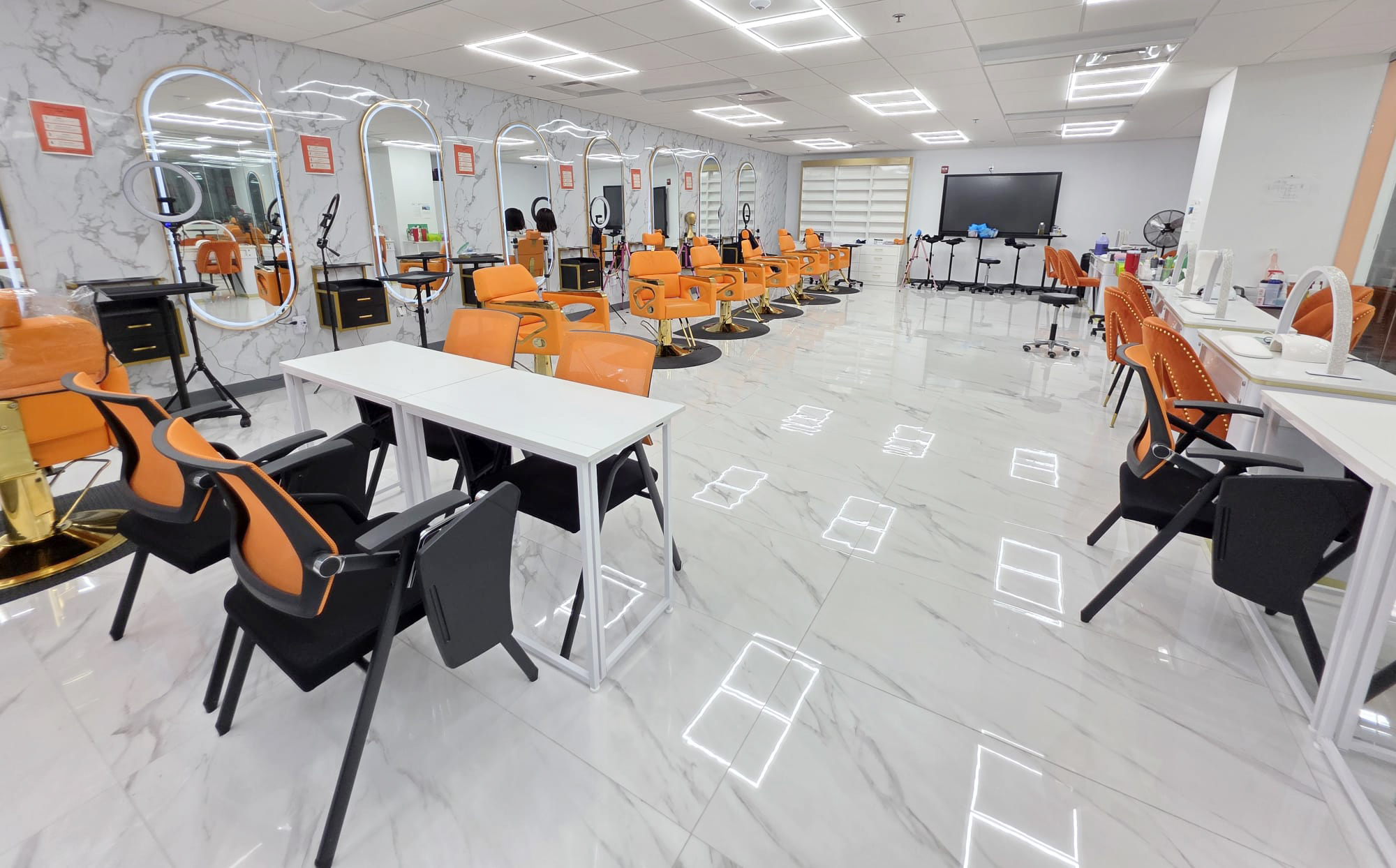
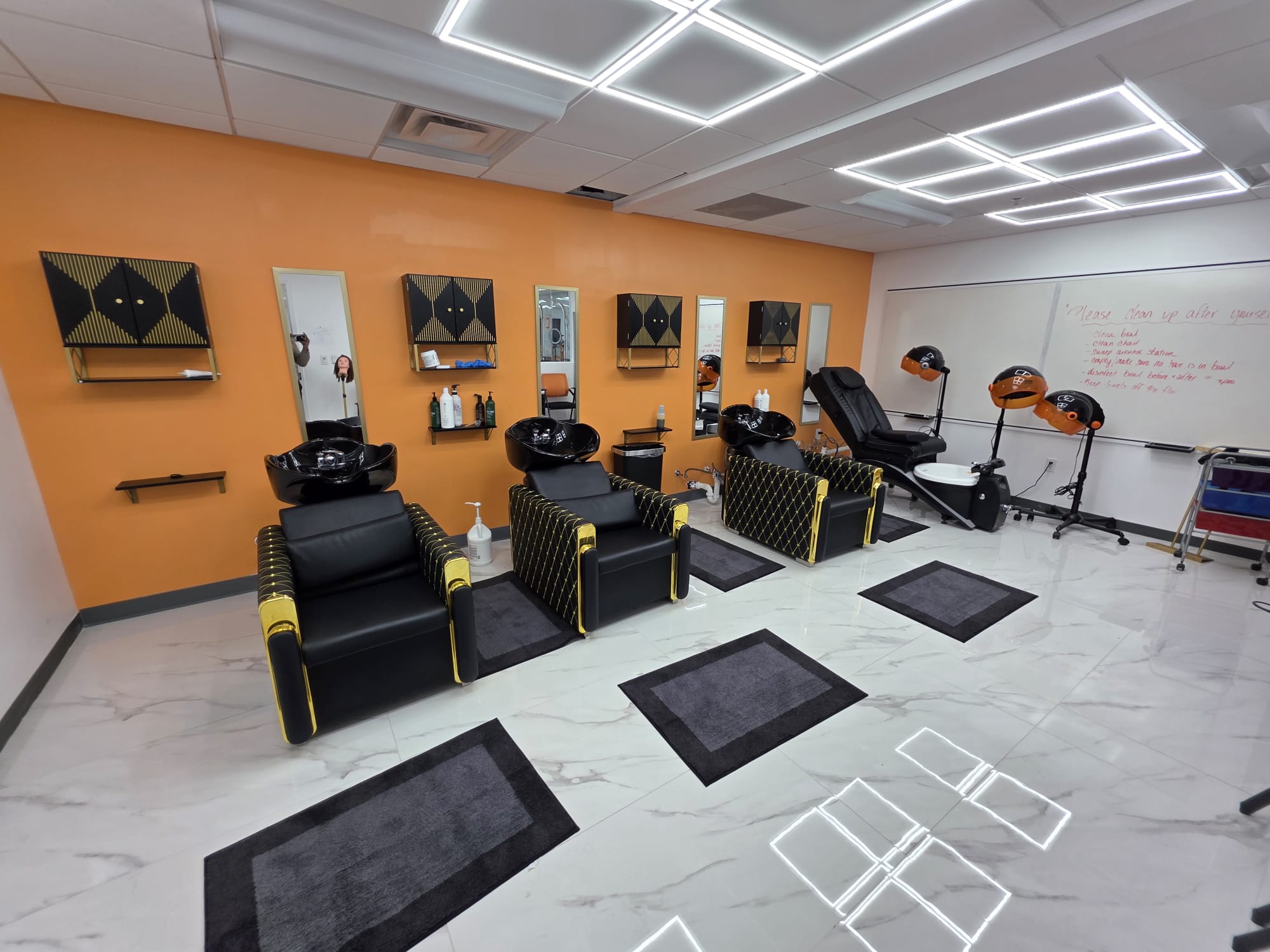
Barbering is a tactile, skill-based profession. Reading about fades and watching videos will only take you so far. AVI’s program puts you behind the chair with real clients in a supervised environment — building the muscle memory, confidence, and technical precision that actually translate to employment.

A Real Path: From Career Change to Licensed Barber

Dani had a background in healthcare and had always cut hair for friends and family on the side. She enrolled in AVI’s barber program while working part-time, taking advantage of a flexible schedule that fit her life. She completed her 1,500 hours, passed her Virginia State Board exam on the first attempt, and accepted a position at a shop near Tysons Corner. She now does exactly what she loved doing for free — and gets paid for it.

Her story isn’t unique at AVI. Career changers, recent high school graduates, and veterans all find their footing here because the program is structured to meet students where they are.


Frequently Asked Questions About Barbering in Virginia

How Many Hours Do You Need to Become a Barber in Virginia?

Virginia requires 1,500 clock hours of training at a DPOR-approved barber school, or completion of an approved apprenticeship. Most students complete their hours through an accredited school program.

How Long Does Barber School Take in Virginia?

Full-time students typically complete 1,500 hours in approximately 10–14 months, depending on their weekly schedule. Part-time options extend that timeline.

What Is the Difference Between a Barber License and a Cosmetology License in Virginia?

Both require 1,500 training hours, but the curriculum content differs significantly. Barber licenses focus on clipper cutting, fading, straight razor shaving, and beard services. Cosmetology licenses cover a broader range of chemical services, color, and styling. See the full comparison in the Barber vs. Cosmetologist section above.

How Much Do Barbers Make in Northern Virginia?

The national median annual wage is approximately $33,400 (BLS, May 2023). Northern Virginia barbers typically earn above that figure given the region’s higher cost of living and consumer spending. Booth renters and barbers with strong clientele can earn meaningfully more — tip income adds to base earnings as well.

Can I Use Financial Aid to Pay for Barber School in Virginia?

Yes — at AVI Career Training, eligible students can use federal financial aid, including Pell Grants. AVI also accepts the GI Bill®. Contact AVI admissions to discuss your specific situation and eligibility.


Ready to Start Your Barbering Career?

The path from where you are today to a licensed barber working in one of the country’s most dynamic markets is concrete and achievable. Virginia requires 1,500 hours of approved training. AVI Career Training in Vienna, VA delivers that training — with COE accreditation, inclusive curriculum, financial aid access, and instructors who are licensed professionals.

The chair is waiting. Apply to AVI Career Training today or call us at (703) 943-9841 to speak with an admissions advisor.


Sources: Virginia DPOR — Barbering Licensing Requirements; U.S. Bureau of Labor Statistics — Barbers, Hairstylists, and Cosmetologists. Verify all regulatory requirements directly with DPOR before enrollment, as requirements may change.

Article details:

Share: