
Financial Aid for Esthetics School in Virginia: Grants, Loans & Scholarships
Yes — you can get financial aid for esthetics school in Virginia, but whether federal aid like the Pell Grant applies to your specific program depends entirely on one critical factor: your school’s accreditation status and your program’s contact-hour requirement.
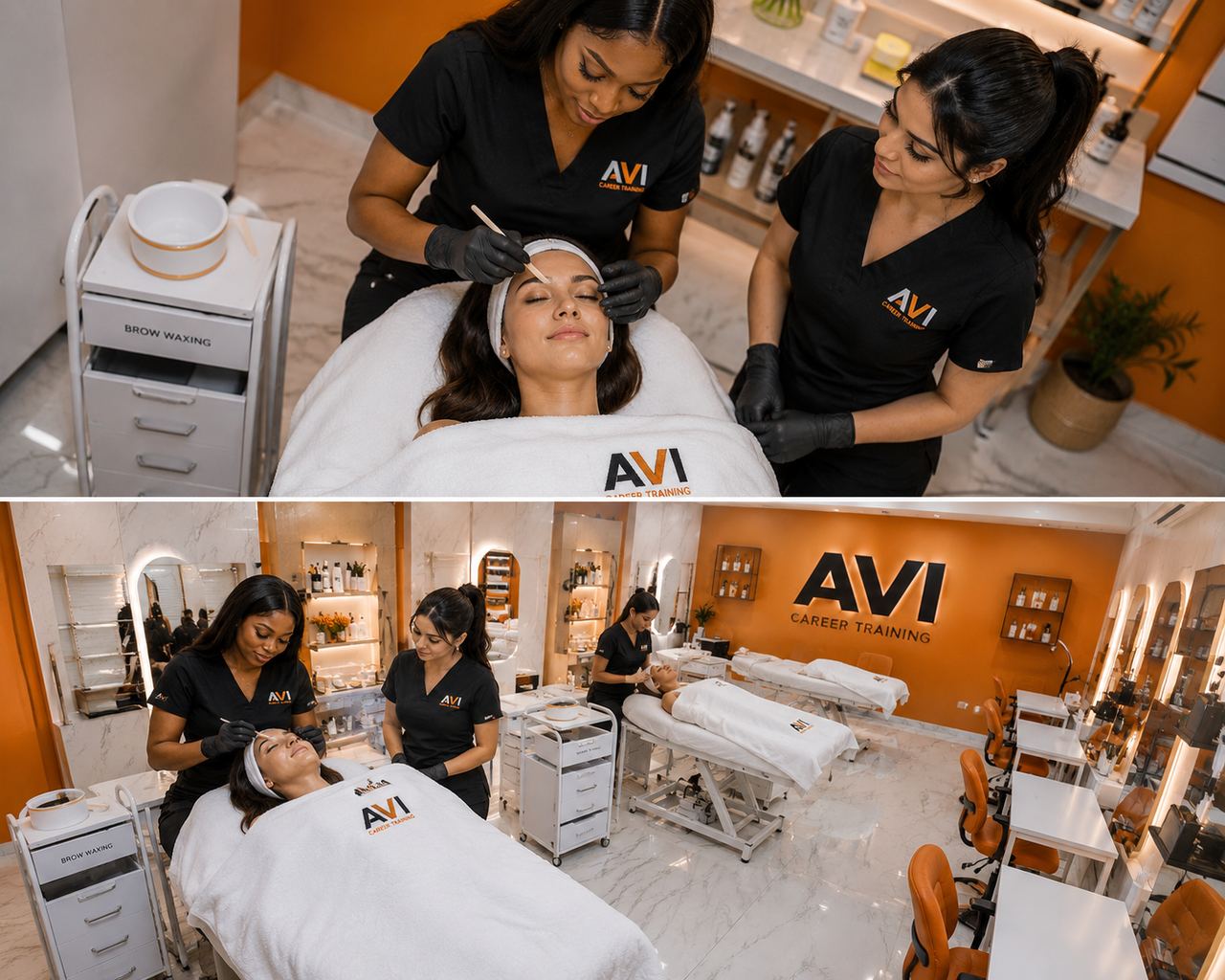
At AVI Career Training, a COE-accredited, SCHEV-certified beauty and wellness school in Vienna, Virginia, financial aid availability varies by program. Understanding exactly which aid types apply to your chosen program — before you enroll — is the single most important step you can take right now.
This guide breaks down every funding option available to esthetics students in Virginia: federal grants, scholarships, state workforce programs, military benefits, and private payment options. By the time you finish reading, you’ll know exactly what’s available, what you qualify for, and how to take your next step.
📋 Key Takeaways
- COE accreditation is the credential that unlocks Title IV federal financial aid — not all beauty schools have it
- The Pell Grant awards up to $7,395 per award year (2024–25) to eligible students at qualifying programs
- AVI Career Training accepts the GI Bill® — a named, confirmed benefit for eligible veterans and service members
- WIOA workforce grants can cover vocational training costs for qualifying Virginians at no repayment required
- Scholarships from the Professional Beauty Association and Cosmetology Advancement Foundation are often left unclaimed — apply early
Apply to AVI Career Training →
—
Can You Get Financial Aid for Esthetics School in Virginia?
The short answer is yes — and the longer answer is that it depends on two things: the school’s accreditation and the hour-length of your specific program.
Here’s what that means in practice. Federal financial aid — including Pell Grants and federal student loans — is only available at schools accredited by a U.S. Department of Education-recognized accreditor. For career and vocational schools, the Council on Occupational Education (COE) is one of the most respected accrediting bodies in the country. COE accreditation is what makes a school eligible for Title IV funding — the federal aid pipeline that includes Pell Grants, Federal Supplemental Educational Opportunity Grants (FSEOG), and subsidized federal loans.
AVI Career Training holds COE accreditation and is also certified by the Virginia State Council of Higher Education for Virginia (SCHEV) — the state-level credential that signals legitimacy to Virginia students and regulators alike. These aren’t just logos on a website; they are the legal and institutional requirements that determine whether your tuition dollars can be offset by federal, state, or military funding.
There is one additional requirement for federal aid eligibility: program length. Under Title IV rules, programs must meet a minimum contact-hour threshold for students to qualify for federal financial aid. At AVI, this is a critical distinction to understand before you choose your program.
⚠️ Important: Know Your Program’s Financial Aid Eligibility
Federal financial aid (Title IV / FAFSA) is only available for programs that meet the required contact-hour minimums. Some AVI programs qualify; others do not. Always confirm financial aid eligibility for your specific program with AVI’s admissions team before enrolling. Call us at (703) 943-9841 or reach out online.
Virginia also has state-level workforce programs that operate independently of federal aid rules — meaning some students who don’t qualify for federal grants may still access state or local workforce funding. We’ll cover those below.
—
Federal Aid Options: Pell Grants, FSEOG, and Federal Student Loans
Federal financial aid is the largest and most accessible source of education funding in the United States — and COE accreditation is the key that unlocks it for students at qualifying programs.
The Pell Grant: Free Money That Doesn’t Need to Be Repaid
The Pell Grant is the federal government’s primary need-based grant for undergraduate students, including those in vocational and career training programs. For the 2024–25 award year, the maximum Pell Grant award is up to $7,395. Unlike loans, grants do not need to be repaid — they are awarded based on financial need, enrollment status, and program eligibility.
To apply for a Pell Grant, you must complete the Free Application for Federal Student Aid (FAFSA). The FAFSA opens on October 1 each year for the following academic year. Filing as early as possible improves your chances of receiving the maximum award, since some aid is distributed on a first-come, first-served basis.
Pell Grant eligibility is determined by your Expected Family Contribution (EFC), cost of attendance at your school, and your enrollment status (full-time vs. part-time). Students from low- to moderate-income households often qualify for significant awards.
Important note: Pell Grant eligibility at AVI Career Training applies only to programs that meet the federal contact-hour minimum. Confirm your specific program’s eligibility directly with AVI’s financial aid team.
FSEOG: Additional Grant Funding for the Highest-Need Students
The Federal Supplemental Educational Opportunity Grant (FSEOG) is a need-based grant layered on top of the Pell Grant for students with exceptional financial need. FSEOG awards range from $100 to $4,000 per year and are distributed directly by participating institutions. Not every student who qualifies for a Pell Grant will receive FSEOG — funds are limited and awarded by the school to the highest-need students first.
Filing your FAFSA early is the single best thing you can do to maximize your chance of FSEOG consideration.
Federal Student Loans: Borrowing with Favorable Terms
For students who need to cover remaining costs after grants and scholarships, federal student loans offer more favorable terms than private loans — including fixed interest rates, income-driven repayment options, and deferment protections. Subsidized loans don’t accrue interest while you’re enrolled; unsubsidized loans do.
Federal loans require FAFSA completion and are only available at schools with Title IV eligibility. Borrow only what you need and understand your repayment timeline before you commit.
—
Scholarships for Esthetics Students — National and Virginia-Specific
Scholarships are one of the most underused funding sources in beauty and wellness education. Students regularly leave thousands of dollars in free money on the table simply because they didn’t apply. Here are the scholarships most relevant to esthetics students in Virginia.
Professional Beauty Association (PBA) Scholarships
The Professional Beauty Association offers need- and merit-based scholarships to students enrolled in cosmetology and esthetics programs at accredited schools. Awards vary by cycle and applicant pool, but PBA scholarships are specifically designed for beauty school students — which means the competition pool is far more targeted than general academic scholarships.
Visit the PBA’s official website to review current scholarship cycles, eligibility requirements, and application deadlines. Awards are typically announced once or twice per year.
Cosmetology Advancement Foundation (CAF)
The Cosmetology Advancement Foundation provides financial assistance to students pursuing beauty industry careers who demonstrate financial need. CAF awards are designed to reduce the financial barrier to completing a professional beauty program — exactly the kind of support that helps students finish strong rather than drop out mid-program due to cost pressure.
Virginia-Specific Scholarship Opportunities
Several Virginia community foundations and workforce organizations offer scholarships for residents pursuing vocational and career training. The Community Foundation for Northern Virginia and similar regional philanthropic organizations periodically offer awards for career-track students in the DMV area. Search your county’s workforce development office and local foundation directories annually — award availability changes each cycle.
Additionally, some salon and spa employers in the Northern Virginia and Tysons Corner area offer tuition assistance or sign-on bonuses that function like post-enrollment scholarships. If you’re already working in or adjacent to the beauty industry, ask your employer before assuming you have to fund training entirely on your own.
Pro tip: Apply to every scholarship you’re eligible for, even smaller awards. A $500 scholarship and a $1,000 scholarship applied together reduce your out-of-pocket cost in a way that adds up fast.
—
Virginia State Aid and Workforce Grants to Know
Virginia offers several state-level programs that can help fund vocational training — some of which operate entirely outside the federal FAFSA system, making them relevant even to students in programs that don’t qualify for Title IV aid.
Virginia Tuition Assistance Grant (VTAG)
The Virginia Tuition Assistance Grant (VTAG) provides funding to Virginia residents attending eligible private colleges and universities in Virginia. VTAG eligibility is primarily designed for degree-seeking students at not-for-profit institutions and typically does not extend to non-degree vocational programs. However, eligibility rules can change — confirm current VTAG eligibility for your specific program with Virginia’s State Council of Higher Education for Virginia (SCHEV) or with AVI’s admissions team.
WIOA Funding: Workforce Innovation and Opportunity Act
WIOA (Workforce Innovation and Opportunity Act) funding is one of the most powerful and underused resources for esthetics students in Virginia — particularly those who are unemployed, underemployed, or transitioning careers.
WIOA funds flow through Virginia’s network of Virginia Employment Commission (VEC) offices and American Job Centers. Qualifying individuals may receive funding that covers vocational training costs directly — with no repayment required. Eligibility is based on employment status, income, and other workforce-readiness factors.
To explore WIOA eligibility, visit your nearest American Job Center in Northern Virginia or contact the VEC directly. The process takes time, so start this conversation early — before you enroll, ideally.
A Real Student Scenario: Career-Changer Uses WIOA to Fund Training
Consider a student like Renata — a 34-year-old single mother in Fairfax County who lost her retail management job during an economic downturn. She had always been passionate about skincare and wanted to become a licensed esthetician, but tuition felt out of reach on unemployment income alone.
Through her local American Job Center, Renata connected with a WIOA case manager who assessed her eligibility. Because she was dislocated from her previous career and met income requirements, WIOA covered a significant portion of her esthetics training costs. She enrolled, completed her program, passed the Virginia State Board exam administered by the Virginia Department of Professional and Occupational Regulation (DPOR), and landed a position at a Tysons Corner spa within six weeks of licensure. Her starting income was approximately $38,000 annually — with room to grow as she built her client base.
Renata’s story isn’t unusual. WIOA exists precisely for career transitions like hers. The key is knowing to ask.
—
Military Benefits and Other Pathways to Fund Your Esthetics Training
If you’re a veteran, active-duty service member, or military spouse, you may have access to education benefits that cover esthetics training costs — and AVI Career Training is positioned specifically to serve you.
GI Bill® at AVI Career Training: A Named, Confirmed Benefit
AVI Career Training accepts the GI Bill® — this is a confirmed, named benefit, not a generic claim. Veterans and eligible service members can apply their Post-9/11 GI Bill® or Montgomery GI Bill® benefits toward qualifying programs at AVI’s Vienna, Virginia campus.
The Post-9/11 GI Bill® (Chapter 33) can cover tuition and fees, a monthly housing allowance, and a books-and-supplies stipend for eligible students. The specific benefit amount depends on your length of service and benefit tier. Contact the U.S. Department of Veterans Affairs (VA) directly to confirm your eligibility and benefit level before enrolling.
For veterans transitioning into civilian careers, esthetics and the broader beauty and wellness industry offer a compelling path: flexible scheduling, entrepreneurial potential, consistent demand, and a skill set that travels with you anywhere in the country. The Northern Virginia and DC metro job market — with its concentration of affluent clientele in areas like Tysons Corner, McLean, and Reston — offers above-average earning potential for licensed estheticians compared to the state average.
MyCAA: Funding for Military Spouses
The MyCAA (My Career Advancement Account) scholarship is a workforce development program from the Department of Defense specifically for eligible military spouses. MyCAA provides up to $4,000 in financial assistance (up to $2,000 per year) for education and training programs that lead to portable careers — and beauty and wellness careers qualify.
Military spouses in Northern Virginia — an area with one of the highest concentrations of military-connected families in the country due to proximity to the Pentagon, Fort Belvoir, and Quantico — are prime candidates for this benefit. If you’re a military spouse researching esthetics school in Virginia, MyCAA should be your first call.
Visit the official MyCAA program website to confirm current eligibility rules and application procedures.
A Real Student Scenario: Veteran Transitions to Esthetics
Marcus served eight years in the U.S. Army and was stationed at Fort Belvoir in Fairfax County before transitioning to civilian life. His wife had always encouraged him to explore skincare — he’d developed a genuine interest in dermal health during his service. Using his Post-9/11 GI Bill® benefits at AVI Career Training in Vienna, Marcus covered his tuition and received a monthly housing allowance that helped cover living expenses during training.
After passing the Virginia State Board exam, Marcus launched a men’s grooming and skincare specialty at a Northern Virginia spa. Within 18 months, he had a loyal client base and was earning well above the state median for estheticians. His GI Bill® benefits didn’t just pay for school — they created the financial stability that let him focus entirely on learning his craft.
Payment Plans and Private Financing Options
For students whose programs don’t qualify for federal financial aid — or who want to supplement other funding sources — AVI Career Training offers flexible payment plan options. These allow you to spread your tuition cost over time without taking on high-interest private debt.
Private financing through third-party lenders is also available as a supplementary option. Compare terms carefully before committing to any private loan, and prioritize grants, scholarships, and workforce funding first.
—
Your Next Steps: How to Start the Financial Aid Process
Getting financial aid for esthetics school in Virginia doesn’t have to be complicated. Here’s exactly what to do, in order:
✅ Your Financial Aid Action Checklist
- Contact AVI admissions — confirm which programs qualify for federal aid and which payment options apply to your program of interest
- Complete the FAFSA at studentaid.gov as early as October 1 — use AVI’s school code to direct your aid award
- Apply for scholarships through the PBA, CAF, and Virginia-based foundations — set calendar reminders for deadlines
- Visit your local American Job Center to assess WIOA eligibility if you’re unemployed or underemployed
- Contact the VA if you’re a veteran or service member to confirm GI Bill® eligibility
- Explore MyCAA if you’re a military spouse
- Ask AVI about payment plan options for any remaining balance
Licensed estheticians in Virginia earn approximately $35,000–$55,000+ annually, depending on specialization, experience, and location. In the Northern Virginia and DC metro area — where clients in Fairfax County, Tysons Corner, McLean, and Bethesda have significant disposable income — earning potential skews toward the higher end of that range. Graduates who build loyal clientele or move into advanced specializations can exceed those figures substantially.
The Virginia State Board exam, administered by DPOR (the Virginia Department of Professional and Occupational Regulation), is the final step between your training and your license. AVI’s curriculum is built to prepare you for that exam — and for the career that follows.
According to the Bureau of Labor Statistics Occupational Outlook Handbook, skincare specialist employment is projected to grow faster than average, driven by consumer demand for skin health services. The Virginia Department of Professional and Occupational Regulation (DPOR) sets and enforces licensing standards for estheticians practicing in the Commonwealth.
Start Your Application at AVI Career Training →
—