Master Esthetics School vs. a 4-Year Degree: Which Pays Off?
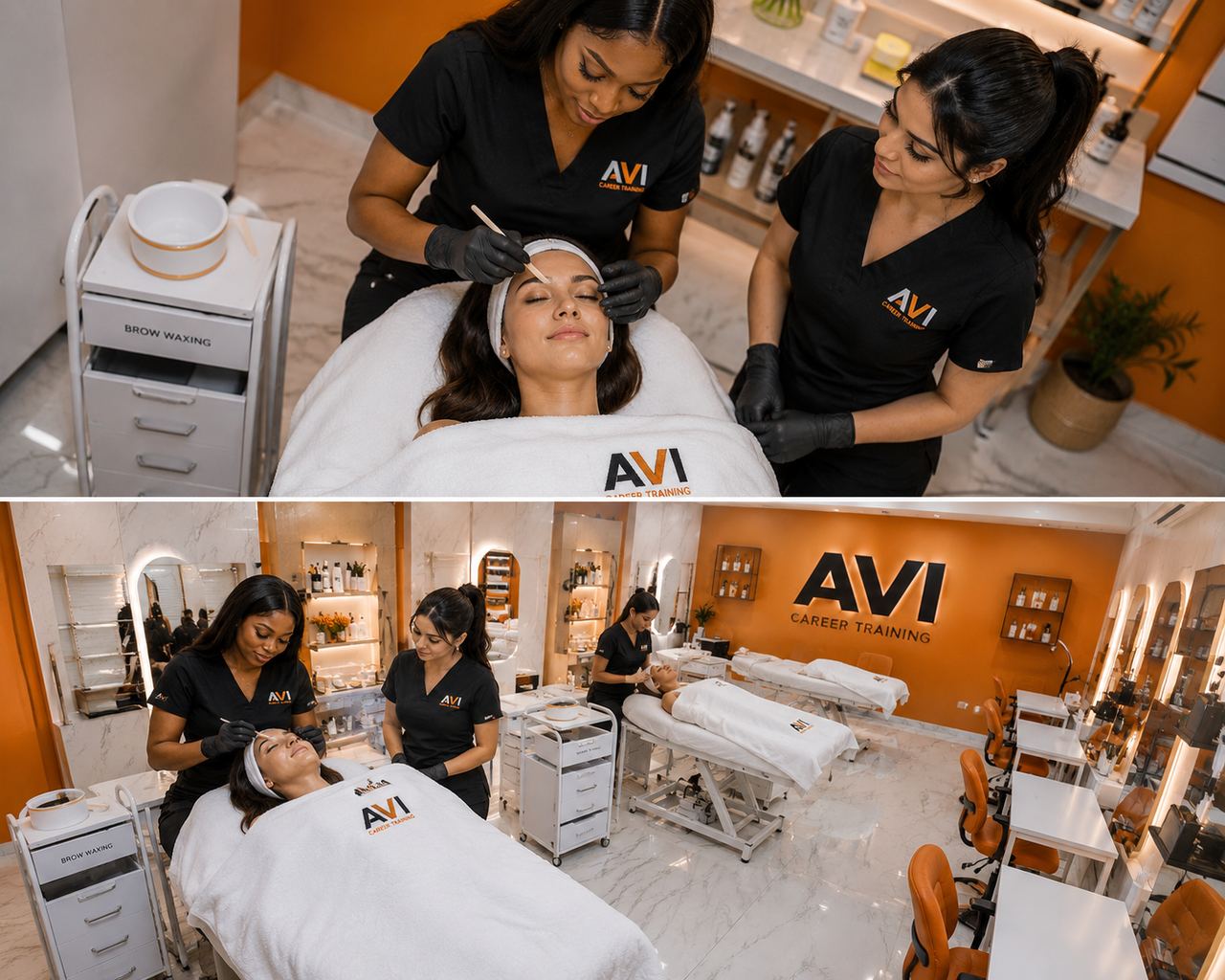
If you want a career in esthetics, a vocational Master Esthetics program gets you licensed and earning in a fraction of the time — and at a fraction of the cost — of a traditional 4-year college degree.
That’s not a sales pitch. That’s how licensing in Virginia actually works. The Virginia Department of Professional and Occupational Regulation (DPOR) doesn’t care whether you have a bachelor’s degree. What unlocks your esthetics career is a Virginia state board license — and that comes from completing an approved training program and passing the board exam, not from four years in a lecture hall.
So the real question isn’t college vs. trade school. It’s: What’s the fastest, most affordable, and most practical path to a licensed, thriving esthetics career in Northern Virginia?
This guide breaks that down — honestly and specifically — for the Northern Virginia and DC metro market.
Key Takeaways
- AVI Career Training’s Master Esthetics program is 600 hours — completable in months, not years
- A 4-year university degree costs $37,000–$104,000+ before accounting for lost income during school
- Virginia requires a state board license to practice esthetics — a diploma is not the credential that matters
- Estheticians in the Northern Virginia / DC metro market earn above national averages due to high-income clientele and dense med-spa demand
- AVI is COE Accredited and SCHEV Certified, and accepts the GI Bill® — note: the Master Esthetics program is under 600 hours and does NOT qualify for federal financial aid (Title IV / FAFSA)
Ready to skip the comparison and just get started? Apply to AVI Career Training today.
—
What Does a Master Esthetics Program Actually Cover?
A Master Esthetics program is a serious, clinical-level credential — not entry-level cosmetology.
What is a Master Esthetics program? AVI Career Training’s Master Esthetics program (NO FINANCIAL AID FOR THIS PROGRAM) in Vienna, Virginia is a 600-hour advanced training curriculum that takes students well beyond basic facials. It covers clinical skincare science, advanced treatment modalities, and the hands-on technical skills that high-end spas, medical aesthetics clinics, and luxury skincare studios actively recruit.
Here’s what that training actually includes:
Advanced Skincare Science
You’ll study skin anatomy, physiology, and the chemistry behind professional-grade treatments. This is the science that separates a licensed master esthetician from someone following a YouTube tutorial.
Clinical Treatment Techniques
Training covers chemical peels, microdermabrasion, microneedling fundamentals, dermaplaning, and advanced extraction protocols. These are the revenue-generating services that clients book at med spas and aesthetic clinics throughout the Tysons Corner and DC metro corridor.
Laser and Light-Based Technology
The Northern Virginia market is saturated with cosmetic laser clinics. Master esthetics training includes foundational knowledge of laser and light-based technologies — giving graduates a competitive edge when applying to high-end med spas in McLean, Arlington, and the broader DMV area.
Inclusive Techniques for All Skin Tones
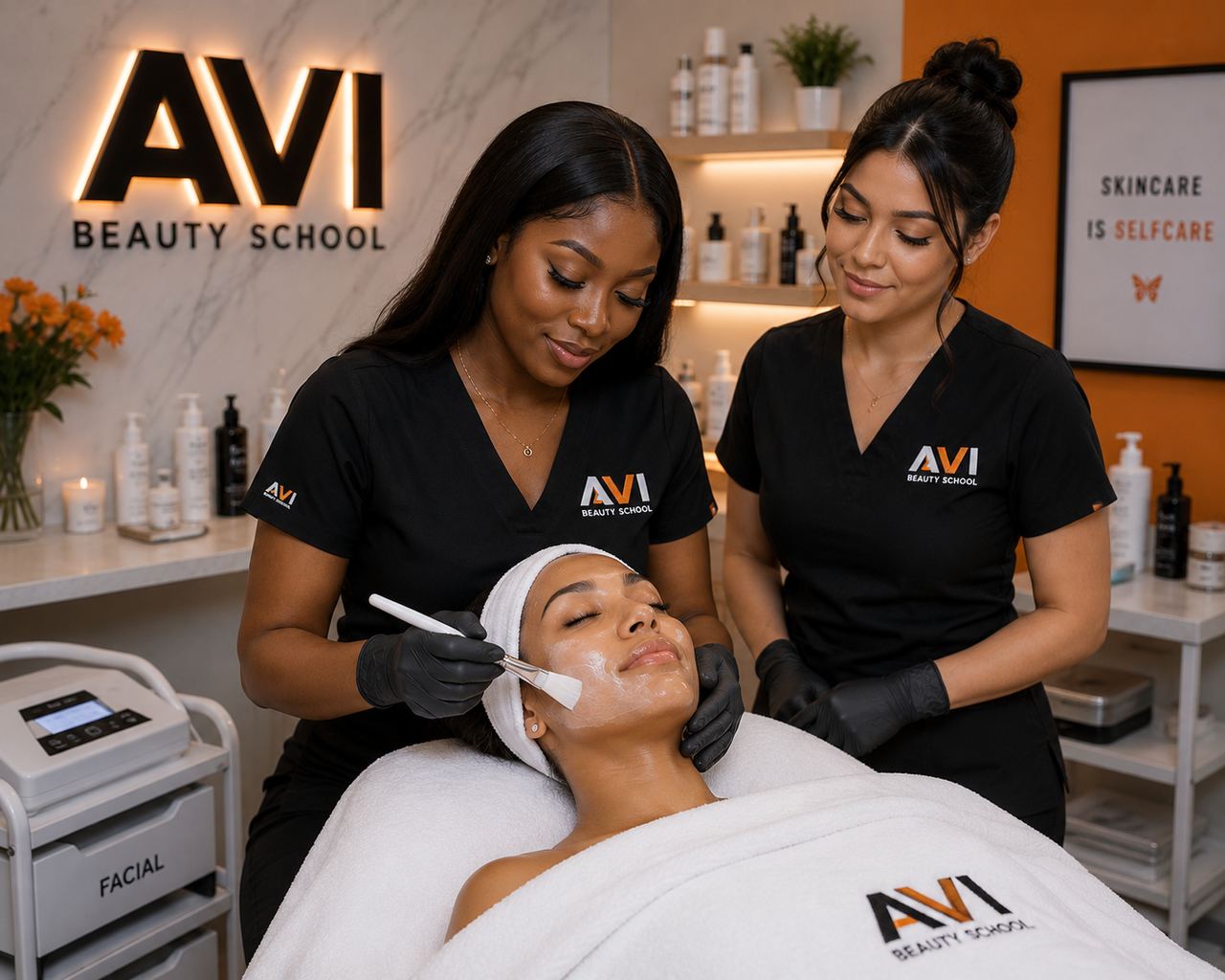
This is a core differentiator at AVI Career Training. The curriculum is built to train students to work beautifully on every skin tone. In the DC metro region — one of the most ethnically and racially diverse markets in the country — estheticians who can confidently serve every client are simply more employable and more bookable. A generic university degree program never teaches this. Most do not even address it.
—
Time to Career: 600 Hours vs. 4 Years
The most direct answer to how long does it take to become a licensed esthetician in Virginia is this: complete your required training hours, pass the Virginia DPOR state board exam, and you’re licensed.
That’s it. No four years. No general education requirements. No $80,000 degree.
Here’s what that timeline difference means in real-world terms:
An AVI Master Esthetics graduate can complete 600 hours of training, sit for the Virginia State Board exam, and begin working as a licensed esthetician — all within the same calendar year they enrolled. Meanwhile, a college freshman is still taking general education requirements in year one.
The opportunity cost is massive. A 4-year degree student spends approximately 48 months in school before ever earning a professional income in their field. An AVI graduate can be building a client base, stacking tips, and earning a professional wage while that college student is still in year two.
A Quick Story: From Career Changer to Licensed in Under a Year
Picture a 32-year-old office manager in Herndon, Virginia — burned out, underpaid, and curious about skincare after years of managing her own hyperpigmentation journey. She didn’t want to spend four years going back to school. She didn’t have the time or the money. She enrolled in AVI’s Master Esthetics program, completed her 600 hours of hands-on training, passed her Virginia State Board exam, and landed a position at a med spa in Tysons Corner — all within ten months of her first day of class. She now earns more per hour than she did managing an office, with a schedule she controls.
That’s not unusual in this field. It’s the path the program is designed to create.
—
The Real Cost Comparison — Tuition, Debt, and ROI
When people ask how much does esthetics school cost compared to college, the gap is bigger than most expect.
What a 4-Year Degree Actually Costs
According to College Board data, the total cost of a 4-year degree ranges from approximately $37,000 at an in-state public university to $104,000+ at a private institution — and that’s tuition and fees alone, before room, board, books, and living expenses. The average student graduates with $29,000–$37,000 in federal student loan debt, which follows them for years or decades after graduation.
And for an esthetics career? That degree doesn’t replace your Virginia state board license. You still need licensure to practice. The degree is, in the most literal sense, optional.
What Vocational Training Costs
AVI Career Training’s vocational programs are priced as career investments, not luxury experiences. Compared to university tuition, the cost difference is significant — and the return timeline is dramatically shorter.
Important note on financial aid: Because the Master Esthetics program at AVI is under 600 hours in total instructional hours, it does not qualify for federal financial aid (Title IV / FAFSA). Students should plan accordingly and explore:
To discuss tuition, payment plans, or financial options specific to your situation, contact AVI admissions directly or call (703) 943-9841.
⚠️ Financial Aid Notice
The Master Esthetics program at AVI Career Training is under 600 hours and does NOT qualify for federal financial aid, Title IV funding, or FAFSA. Federal student aid is not available for this program. Payment plans and private financing options are available — contact admissions at (703) 943-9841 to learn more.
The Hidden Cost of a 4-Year Degree: Lost Income
Here’s what most cost comparisons skip: the income you don’t earn while you’re sitting in class for four years. A vocational graduate who begins working as a licensed esthetician at age 20 has potentially four years of professional income that a college student simply doesn’t have. Over a career, that early start compounds dramatically.
—
Earning Potential and Career Paths After Esthetics School
Can you make good money as a master esthetician? In the Northern Virginia and DC metro market, the answer is yes — and the earning potential is meaningfully higher than national averages.
Esthetician Salary in Northern Virginia
According to the U.S. Bureau of Labor Statistics, skin care specialists nationally earn a median salary in the range of $38,000–$60,000+, with significant variation based on specialty, work setting, experience, and geographic market.
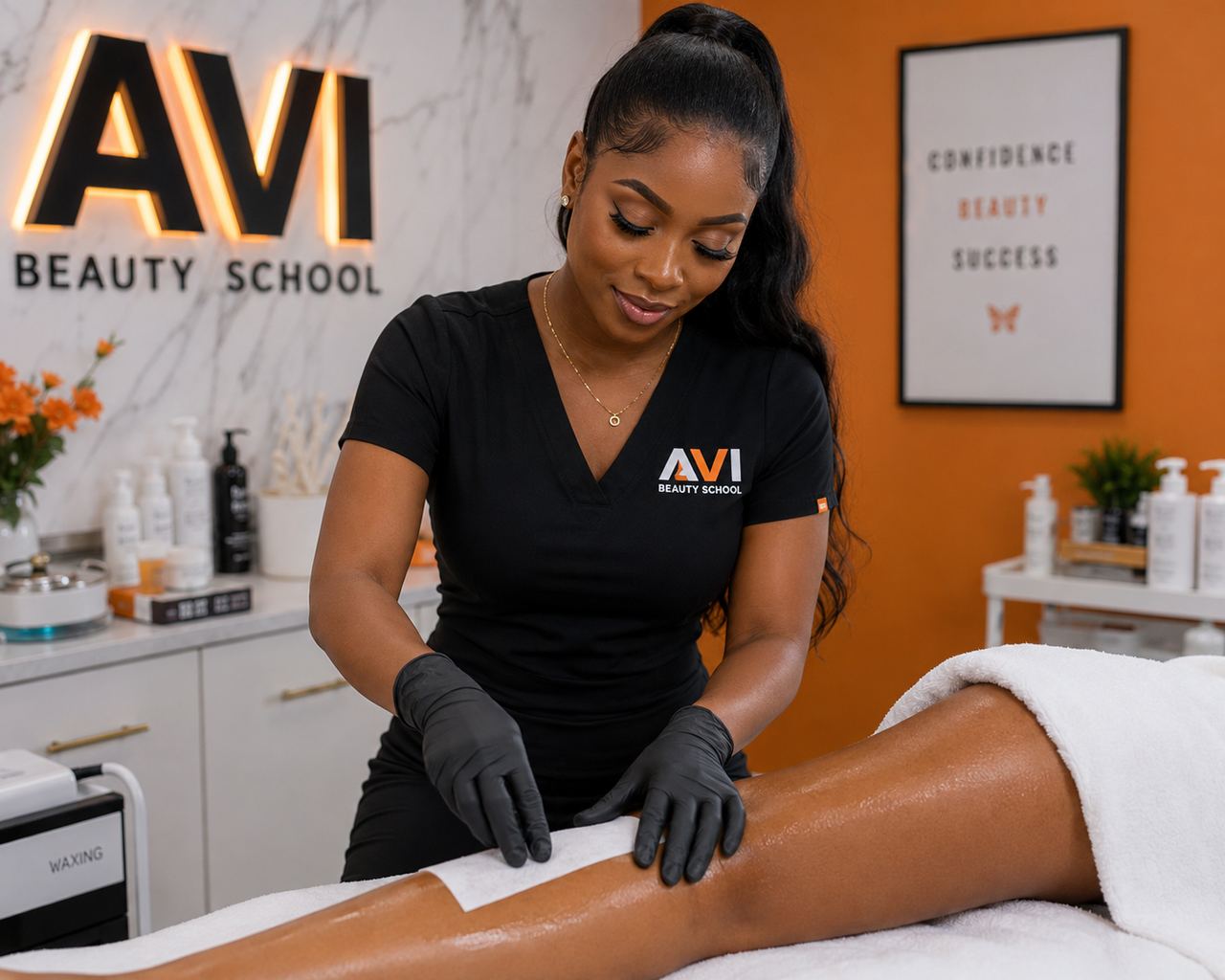
The Northern Virginia and DC metro area consistently commands above-national-average wages for esthetics professionals. The reason is straightforward: this region has one of the highest concentrations of high-income households in the country. Clients in McLean, Vienna, Arlington, and the Tysons Corner corridor expect — and pay for — premium skincare services. Med spas in this corridor regularly charge $150–$400+ per treatment session.
For a skilled, licensed master esthetician with advanced technique training and the ability to serve a diverse clientele, that translates directly to higher hourly rates, stronger tip income, and real commission potential.
Career Settings Available to Licensed Master Estheticians
A Virginia state board license opens multiple career doors:
Another Real Story: The Med Spa Route
A recent AVI graduate from the Vienna campus completed her Master Esthetics training with a focus on advanced chemical peels and laser-adjacent technologies. Within three months of passing her Virginia State Board exam, she had offers from two med spas in the Tysons area. She chose the one that offered commission on retail sales in addition to her hourly rate. In her first full year, her total compensation — base pay plus commission plus tips — exceeded what she had earned in three years at her previous retail management job.
This is the market reality in Northern Virginia. Vocational credentials, in esthetics, are income credentials.
—
Why Accreditation and Licensing Matter More Than a Diploma
Here’s the regulatory truth that reframes this entire comparison: in Virginia, you cannot legally practice esthetics without a state board license — and no college degree substitutes for it.
The credential that matters is issued by the Virginia Department of Professional and Occupational Regulation (DPOR). To earn it, you complete an approved training program, pass the state board exam, and maintain your license through continuing education. A bachelor’s degree in business, communications, or even biology doesn’t satisfy a single one of those requirements.
What COE Accreditation Means for You
AVI Career Training is accredited by the Council on Occupational Education (COE) — the same accrediting body that evaluates occupational and career training programs against rigorous academic and operational standards. COE accreditation signals that AVI’s curriculum, instructors, facilities, and student outcomes meet benchmarks that many traditional institutions don’t even apply to vocational education.
AVI is also SCHEV Certified — approved by the State Council of Higher Education for Virginia. These aren’t marketing badges. They’re third-party validations that the training you receive at AVI is legitimate, regulated, and career-grade.
Why This Neutralizes the “Prestige” Argument
The argument for a 4-year degree often rests on perceived prestige — the name on a diploma, the brand recognition of a university. In most traditional career fields, that prestige has real value. In esthetics, it doesn’t. An employer hiring for a med spa position in Tysons Corner isn’t scanning resumes for university names. They’re asking: Are you licensed? What can you do? Can you serve our clientele?
A COE-accredited, 600-hour Master Esthetics program answers all three questions. A 4-year degree answers none of them.
For more on AVI’s credentials, instructors, and mission, visit the AVI Career Training about page.
—
Frequently Asked Questions
Q: How long does it take to become a licensed esthetician in Virginia?
A: Virginia requires completion of an approved esthetics training program and passing the Virginia DPOR state board exam. AVI Career Training’s Master Esthetics program is 600 hours — students can complete training and sit for the board exam within months of enrolling.
Q: Is a 4-year degree worth it for a beauty career?
A: For an esthetics career in Virginia, a 4-year degree is not required and does not replace the Virginia state board license that all practicing estheticians must hold. A vocational Master Esthetics program provides the licensure-qualifying training, hands-on clinical skills, and career credentials that actually open doors in this field.
Q: How much does esthetics school cost compared to college?
A: A 4-year college degree costs $37,000–$104,000+ in tuition alone, with average student loan debt of $29,000–$37,000 at graduation. Vocational esthetics programs are a fraction of that cost, with a much faster path to income. The AVI Master Esthetics program does not qualify for federal financial aid (Title IV / FAFSA) because it is under 600 hours; payment plans and private financing options are available.
Q: Can you make good money as a master esthetician?
A: Yes — especially in the Northern Virginia and DC metro market. Skin care specialists in this region earn above national averages, with total compensation (base pay, tips, commission) ranging from $38,000 into the $60,000+ range depending on setting, specialization, and clientele. Med spa and clinical esthetics roles at the higher end of the market often exceed national median figures significantly.
Q: What is the difference between esthetics and master esthetics?
A: Basic Esthetics covers foundational skincare services — facials, basic extractions, waxing, and standard skin analysis. Master Esthetics builds on that foundation with advanced clinical techniques including chemical peels, microdermabrasion, dermaplaning, microneedling fundamentals, and laser and light-based technology knowledge. Master Esthetics training qualifies graduates for higher-level licensure and access to clinical and med spa career settings.
Q: Does AVI Career Training accept the GI Bill® for the Master Esthetics program?
A: AVI Career Training accepts the GI Bill® for eligible veterans and military-connected students. Prospective students should contact AVI admissions directly to confirm GI Bill® eligibility for the specific Master Esthetics program, as program-level eligibility can vary. Contact AVI at (703) 943-9841 or visit the apply page for details.
Q: Is AVI Career Training accredited?
A: Yes. AVI Career Training is accredited by the Council on Occupational Education (COE) and certified by the State Council of Higher Education for Virginia (SCHEV). These credentials confirm that AVI’s programs meet rigorous professional and academic standards for vocational career training.
—

—
Make the Decision That Matches Your Goals
The comparison between esthetics school and a 4-year degree isn’t really a close call — not when you run the actual numbers on time, cost, debt, and career outcomes for this specific field in this specific market.
A 4-year degree costs more, takes longer, and doesn’t get you licensed. A COE-accredited Master Esthetics program at AVI Career Training in Vienna, Virginia gets you trained, licensed, and earning — in months, not years, and without six-figure student debt.
If you’re in Northern Virginia, the DC metro area, or anywhere in the DMV and you’re serious about building an esthetics career, the clearest next step is a conversation with AVI admissions.
Questions? Call (703) 943-9841 or contact AVI admissions online.