Cosmetology School vs. a 4-Year Degree: Which Pays Off Faster?
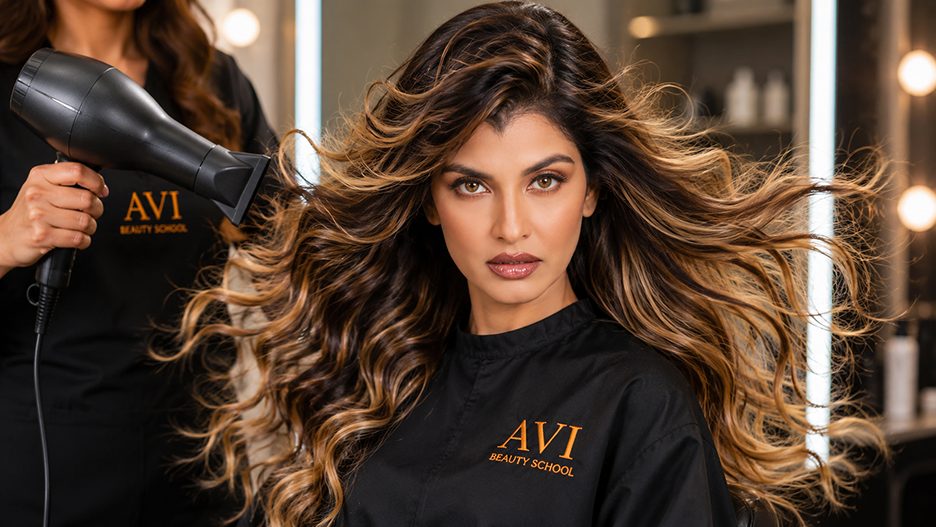
Cosmetology vocational training gets you licensed, earning, and building a career in under two years — often at a fraction of the cost of a traditional four-year university degree. For many people weighing their next step, that comparison alone changes everything.
But cost and speed aren’t the only factors worth understanding before you commit. This article breaks down what cosmetology vocational training actually involves, what it costs versus a four-year degree, what you can earn in the Northern Virginia and DC metro market, and how to decide which path fits your goals.
—
Key Takeaways
- Virginia requires 1,500 hours of cosmetology training to sit for the Virginia State Board licensing exam.
- Most cosmetology programs take 12–18 months to complete, versus four years for a traditional degree.
- A four-year college degree costs $120,000–$200,000+ in tuition, fees, and living expenses on average nationally.
- The Northern Virginia / DC metro market consistently commands above-average wages for licensed beauty professionals compared to the national median.
- AVI Career Training students may qualify for federal financial aid and the GI Bill® — making cosmetology school more accessible than many people expect.
If you’ve already done enough research and you know vocational training is your path, you can apply to AVI Career Training today and take the first concrete step toward your license.
—
What Vocational Cosmetology Training Actually Looks Like
Cosmetology vocational training is a structured, state-regulated program that combines classroom instruction with hands-on clinic floor experience — leading directly to a professional license.
In Virginia, the Virginia Department of Professional and Occupational Regulation (DPOR) requires 1,500 hours of supervised training before a graduate can sit for the Virginia State Board cosmetology licensing exam. That requirement isn’t arbitrary — it reflects the depth of technical skill the profession demands.
What You Study in a Cosmetology Program
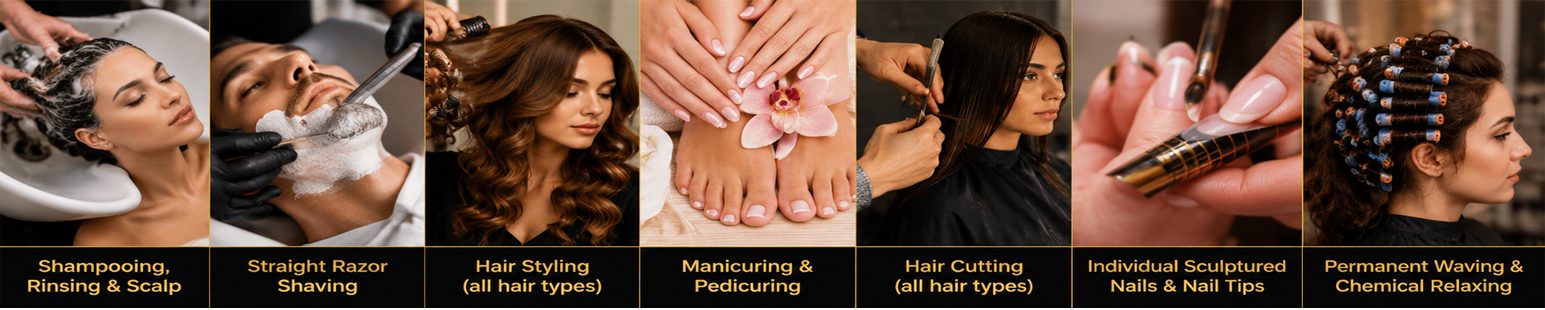
A typical cosmetology curriculum covers:
At AVI Career Training in Vienna, Virginia, the cosmetology program is built around inclusive techniques — meaning students learn to work on all hair textures and all skin tones. This matters more than most schools acknowledge. In a market as racially and ethnically diverse as Northern Virginia and the Tysons Corner corridor, a cosmetologist trained to serve every client sitting in their chair has a real competitive advantage over one who isn’t.
Is Cosmetology School Considered Vocational Training?
Yes — cosmetology school is vocational training by definition. Vocational (or “career and technical”) education prepares students for a specific licensed trade through hands-on skill development rather than broad academic study. Cosmetology fits that description precisely. Programs accredited by the Council on Occupational Education (COE) — like AVI’s — meet rigorous standards for curriculum quality, student outcomes, and institutional integrity.
—
The Real Cost Comparison: Tuition, Time, and Student Debt
The numbers here are stark — and they deserve an honest look rather than a sales pitch.
What a 4-Year Degree Actually Costs
According to national data compiled by the College Board, the total cost of a four-year degree — including tuition, fees, room, board, and living expenses — ranges from roughly $120,000 to $200,000+ depending on whether you attend a public or private institution. That figure doesn’t account for lost wages during those four years of full-time enrollment.
The debt picture is equally sobering. According to the Federal Reserve, approximately 43 million Americans carry federal student loan debt, with average balances that take decades to repay.
And that’s before you factor in the time: four years of school before you ever hold a professional credential.
What Cosmetology School Costs — and How Long It Takes
Most accredited cosmetology programs are completable in 12 to 18 months, depending on whether you attend full-time or part-time. That’s not a marketing claim — it’s a reflection of Virginia’s 1,500-hour requirement and the structured schedules most accredited schools offer.
The tuition investment is significantly lower than a four-year degree. And critically, AVI Career Training students may qualify for:
The opportunity cost calculation shifts dramatically when you realize a cosmetology graduate can be licensed and earning while a traditional college student is still in their sophomore year.
—
Career Outcomes — When Can You Start Earning?

A licensed cosmetologist in Virginia can begin working the moment they pass the Virginia State Board exam — which happens after completing their required 1,500 hours of training.
What Cosmetologists Earn — Nationally and Locally
According to the U.S. Bureau of Labor Statistics (BLS) Occupational Outlook Handbook, the national median annual wage for hairstylists, hairdressers, and cosmetologists is approximately $35,000–$50,000, with the upper end reflecting experienced professionals and higher-earning markets.
Northern Virginia and the DC metro area are consistently among those higher-earning markets. The region’s high cost of living drives compensation upward, and its dense, diverse, and affluent population creates sustained demand for skilled beauty professionals. Licensed cosmetologists working in Tysons Corner, Vienna, Arlington, or DC proper typically see wages that outpace the national median — though exact figures vary by setting, specialization, and whether you’re working as an employee or booth renter.
The Earning Head Start Is Real
Here’s what the numbers mean in practice: a cosmetology graduate who completes their program in 14 months and passes their state board exam immediately can spend years two, three, and four of their career building a clientele, earning income, and gaining real-world experience — while their peers who chose a four-year university are still in class.
Consider Maya, a career-changer from the DC suburbs who enrolled in cosmetology school in her late 20s after a job in retail left her feeling stuck. She completed her 1,500 hours in about 15 months, passed the Virginia State Board exam on her first attempt, and took a position at a salon in Vienna. By the time she would have been finishing a four-year degree, she had two years of professional experience, a growing client list, and was exploring options for booth rental. The math worked in her direction from day one.
Beyond the Entry-Level: Where Cosmetology Careers Can Go
The career ceiling in cosmetology is higher than most people assume — and it doesn’t require a four-year degree to reach. Experienced cosmetologists build into roles like:
None of these paths require a bachelor’s degree. They require skill, experience, and professional reputation — all of which begin building the moment you earn your license.
Start Your Cosmetology Career at AVI →
—
What a 4-Year Degree Offers That Vocational Training Doesn’t
A credible comparison has to acknowledge both sides — so here’s an honest look at where a traditional degree still has the advantage.
When a Four-Year Degree Makes More Sense
A traditional bachelor’s degree is the stronger choice in specific scenarios:
The Honest Trade-Off
The trade-off isn’t “good path vs. bad path.” It’s about alignment. A four-year degree offers breadth, institutional prestige in certain fields, and a longer runway before you specialize. A cosmetology vocational program offers depth in a specific craft, a faster licensing pathway, and the ability to start earning sooner with significantly less debt.
If your goal is a licensed beauty career in Northern Virginia — not a tangentially related corporate role — the vocational path isn’t a compromise. It’s the direct route.
—
How to Decide: Questions to Ask Before You Enroll
The right path depends on your specific situation — not on a general ranking of which option is “better.” Use these questions to cut through the noise and get honest with yourself.
Questions About Your Career Goals
Questions About Your Financial Situation
Questions About Your Timeline
James’s story illustrates this well. A Navy veteran in his early 30s, James used his Post-9/11 GI Bill® benefits to enroll in cosmetology school after separating from service. He’d considered a four-year degree in business, but the timeline and out-of-pocket costs after exhausting his benefits didn’t add up for his family situation. Cosmetology gave him a concrete skill, a state license, and a direct path to entrepreneurship — which was always his real goal. He’s now building toward salon ownership in Northern Virginia, and his military benefits covered a significant portion of his training costs.
If your answers point toward a career in beauty, a faster path to income, and a learning environment built around hands-on skill — cosmetology vocational training is the clearer answer.
—
Frequently Asked Questions
Q: Is cosmetology school considered vocational training?
A: Yes. Cosmetology school is vocational (career and technical) education — a structured, state-regulated program that trains students in a specific licensed trade through hands-on skill development. Programs accredited by the Council on Occupational Education (COE) meet rigorous standards for curriculum quality and student outcomes.
Q: Can you make a good living as a cosmetologist without a 4-year degree?
A: Yes. According to the U.S. Bureau of Labor Statistics, cosmetologists earn a national median in the range of $35,000–$50,000 annually, with experienced professionals and those in high-demand markets like Northern Virginia and the DC metro area often earning above that median. Salon owners, booth renters, and platform artists can exceed these figures significantly.
Q: How long does it take to complete cosmetology school?
A: In Virginia, cosmetology programs require 1,000 hours of training as set by the Virginia Department of Professional and Occupational Regulation (DPOR). Most students complete this in 12 to 18 months depending on their schedule and whether they attend full-time or part-time.
Q: Is it worth going to cosmetology school instead of a traditional college?
A: For students whose goal is a licensed beauty career, cosmetology school typically offers a faster path to licensure, lower total cost, and earlier entry into the workforce than a four-year degree. The “worth it” calculation depends on your specific career goals, financial situation, and timeline.
Q: What are the benefits of vocational training over a traditional degree?
A: Vocational training offers faster completion (12–18 months vs. 4 years), lower tuition costs, direct job-specific skill development, earlier earning potential, and a clear licensing pathway. For career-focused students, the return on investment is often more immediate and measurable than a general four-year degree.
Q: Does AVI Career Training accept financial aid and GI Bill® benefits?
A: Yes. AVI Career Training is COE Accredited and SCHEV Certified, and students may qualify for federal financial aid through FAFSA. AVI also accepts the GI Bill® for eligible veterans and qualifying dependents.
Q: What license do you need to work as a cosmetologist in Virginia?
A: You must pass the Virginia State Board cosmetology licensing exam after completing 1,000 hours of accredited training. The exam is administered through the Virginia Department of Professional and Occupational Regulation (DPOR).
Q: What can you do with a cosmetology license besides working in a salon?
A: Licensed cosmetologists can pursue careers as salon owners, booth renters, platform artists for beauty brands, cosmetology educators, session stylists for editorial and media, and — with additional certifications — professionals in medical esthetics or related fields.
—
Ready to Choose the Faster Path?
If you’ve read this far, you likely already know where your goals point. Cosmetology vocational training — when done at an accredited school with a rigorous, inclusive curriculum — is a legitimate, career-defining investment that doesn’t require four years or six figures in debt to pay off.
AVI Career Training’s Cosmetology Program in Vienna, Virginia gives you exactly what you need: 1,000 hours of hands-on training, preparation for the Virginia State Board exam, and a curriculum built to work on every client who walks through the door. The Northern Virginia and DC metro market is one of the strongest in the country for licensed beauty professionals — and AVI puts you in the best position to compete in it.
Apply to AVI Career Training Today →
Questions before you apply? Call us at (703) 943-9841 or visit our campus at 1595 Spring Hill Rd #720, Vienna, VA 22182. Our admissions team is ready to walk you through your options, financial aid eligibility, and what the program schedule looks like for your situation.
—
About AVI Career Training
AVI Career Training is a COE-accredited, SCHEV-certified beauty and wellness school located in Vienna, Virginia, in the heart of the Northern Virginia / Tysons Corner area. AVI offers hands-on career training in Cosmetology, Basic and Master Esthetics, Nail Technology, Massage Therapy, Electrolysis, and Cosmetic Laser Technology. The school’s curriculum is built around inclusive