Laser Technician Training vs. a 4-Year Degree
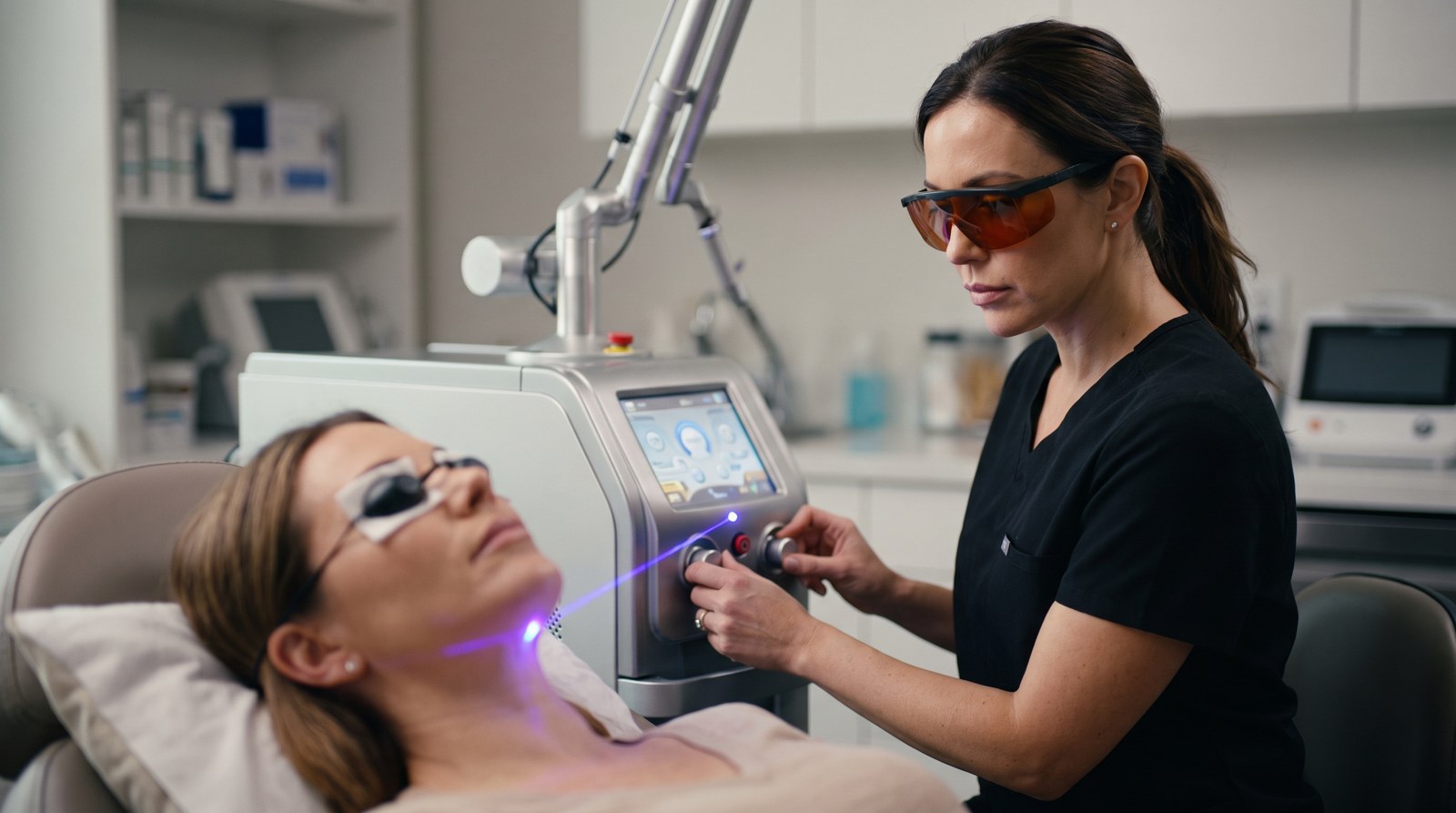
Vocational laser technician training — not a 4-year degree — is the fastest, most cost-effective path into the cosmetic laser industry for the overwhelming majority of people researching this career today.
That’s not a pitch. It’s what the numbers show when you compare program length, total cost, time to first paycheck, and the credentials Virginia employers actually verify at hire.
This article walks you through every meaningful difference between completing a certificate program and earning a bachelor’s degree, anchors that comparison in Virginia’s licensing requirements, and helps you decide which path genuinely fits your situation. If you’re already leaning toward the training route, AVI Career Training’s Cosmetic Laser Technology program in Vienna, Virginia offers a 120-hour, COE-accredited path into this field — but read the full comparison first so you can make that call with confidence.
Apply to AVI’s Laser Program →
—
Key Takeaways
- AVI’s Cosmetic Laser Technology program is 120 hours — completable in weeks, not years.
- A 4-year public university costs $40,000–$110,000+ in total attendance — and still won’t include hands-on laser certification training.
- Laser and light therapy technicians in the Northern Virginia / DC metro market earn a median of $38,000–$60,000+ annually, with top earners exceeding that range (BLS.gov, SOC 39-5094).
- Virginia regulates cosmetic laser practice through the Virginia Department of Professional and Occupational Regulation (DPOR); completing a state-recognized program is the credential employers actually check.
- AVI is COE-accredited and SCHEV-certified, and accepts the GI Bill® — though the Cosmetic Laser Technology program does not qualify for federal financial aid (FAFSA) because it is under 600 hours.
—
What Does a Laser Technician Actually Do?
A laser technician performs non-invasive cosmetic treatments using laser and light-based technology on real clients, every day. Before you compare training paths, it’s worth being specific about the work itself — because “laser technician” covers a wider scope of practice than most people expect.
Core Scope of Practice
On any given shift at a med spa, dermatology office, or laser clinic, a laser technician might perform:
Each of these services requires hands-on competency with specific equipment, an understanding of skin anatomy and Fitzpatrick scale typing, and strict safety protocols — particularly around heat delivery, wavelength settings, and client screening. That’s the skillset employers hire for. It comes from hands-on training, not classroom lecture.
Who Employs Laser Technicians?
The Northern Virginia and DC metro corridor is one of the strongest markets in the country for aesthetic services. The region’s high median household income drives consistent demand for laser treatments at med spas, dermatology practices, plastic surgery offices, and dedicated laser clinics across Tysons, Fairfax County, Arlington, and Washington, DC. If you train and license here, you’re entering a market with real hiring depth.
—
The Case for Vocational Training: Speed, Cost, and Career-Ready Skills
For most people comparing laser technician training vs. a degree, vocational certificate programs win on every practical metric that matters at the start of a career — time, cost, and job-ready competency.
Time to Employment
AVI Career Training’s Cosmetic Laser Technology program (NO FINANCIAL AID FOR THIS PROGRAM) runs 120 hours. Depending on your schedule, that’s completable in weeks — not semesters, not years. Compare that to 4+ years of undergraduate coursework before you ever apply for your first laser clinic job.
Every week you spend in a lecture hall is a week you’re not earning. For career changers with financial obligations — a mortgage, dependents, existing debt — that opportunity cost is enormous. For recent high school graduates weighing trade school against college, 120 hours of targeted training versus 4 years of general education is a difference that compounds over an entire career.
Total Cost
The average 4-year public university runs between $40,000 and $110,000 in total cost of attendance when you factor in tuition, fees, housing, and living expenses over four years, according to College Board data. Private universities push well beyond that ceiling.
Certificate laser programs cost a fraction of that. (AVI’s specific tuition is available directly from our admissions team — we don’t publish figures here because they can change, and we want you to have the most accurate number for your planning.)
What’s clear is the math: spending significantly less to train for a specific career, then starting to earn in that career months sooner, puts certificate graduates years ahead on a net-income basis even if the hourly rate at hire is comparable.
Hands-On Competency Is What Gets You Hired
Med spa hiring managers aren’t screening resumes for bachelor’s degrees. They’re looking for candidates who can operate laser equipment safely, consult clients about contraindications, customize treatment protocols across skin tones, and document results accurately. Those are practical skills built in a clinical training environment — not a university classroom.
AVI’s program is built around hands-on technique from day one. You’ll work with laser and light-based equipment, train on real clients, and graduate with the kind of documented competency that lets you walk into a job interview with confidence.
Mini-Story — The Career Changer:
Marcus was 38, working in IT project management in Reston, Virginia, when he started researching aesthetics as a second career. He’d spent 12 years climbing a corporate ladder he no longer wanted to be on. He needed a realistic path — something with strong local demand, schedule flexibility, and a training commitment that didn’t require him to quit his job entirely before he had income lined up. He found AVI’s Cosmetic Laser Technology program, completed the 120-hour curriculum while managing his transition, and was interviewing at Northern Virginia med spas within weeks of finishing. He didn’t need a biology degree. He needed the certification, the hands-on hours, and the credential Virginia employers recognized. That’s what he got.
—
What a 4-Year Degree Gets You — and What It Doesn’t
A 4-year degree is worth taking seriously as an option — and worth examining honestly for what it actually delivers in the cosmetic laser career path.
Where a Degree Adds Value
A bachelor’s degree in biology, allied health, or a pre-med track can open doors to clinical management roles, medical aesthetics leadership positions, or eventual graduate-level healthcare programs. If your long-term goal is to become a nurse practitioner, physician assistant, or medical director of a laser clinic — a 4-year degree is a necessary step in that longer journey.
For those with leadership ambitions, a degree can also signal readiness for administrative and operational roles at larger aesthetic practices. Some medical spas, particularly those structured as hybrid healthcare facilities, may prefer clinical coordinators or practice managers with formal academic credentials.
Where a Degree Falls Short for This Specific Career
Here’s the honest reality: a biology degree, a health sciences degree, or even a pre-med track does not include hands-on cosmetic laser certification training. You will not graduate from a 4-year program ready to perform laser hair removal or IPL photofacials. Employers know this. They’ll still require you to complete a certified laser training program before you work independently with clients.
That means a degree graduate is looking at:
1. 4+ years of undergraduate study
2. Significant tuition debt (often $40,000–$110,000+ for public universities)
3. Still needing a laser certification program before working in this field
The degree and the certification are separate credentials. A degree does not substitute for the hands-on certification Virginia employers require. If your goal is specifically to become a laser technician — not a clinical manager, not a PA, not a medical director — a degree is a long, expensive detour to the same starting line.
The Opportunity Cost in Real Numbers
Consider two people starting at the same time. One enrolls in a 4-year university program. The other completes AVI’s 120-hour Cosmetic Laser Technology program (NO FINANCIAL AID FOR THIS PROGRAM) and begins working within weeks. By the time the degree candidate graduates, the certificate graduate has potentially accumulated three to four years of professional experience, industry relationships, and earnings — while carrying far less debt.
In a field that rewards experience and a growing book of repeat clients, that head start is meaningful.
—
Virginia Licensing Requirements for Laser Technicians
In Virginia, the credential employers verify at hire is not a diploma — it’s completion of a program from a state-recognized school, combined with compliance with the regulatory framework governing laser practice.
Who Regulates Laser Technicians in Virginia?
Cosmetic laser practice in Virginia falls under the oversight of the Virginia Department of Professional and Occupational Regulation (DPOR) and, more specifically, the Virginia Board of Barbering and Cosmetology. The Board sets the standards for what constitutes qualified training, and it recognizes programs from schools that meet state certification requirements.
Virginia also requires that schools operating career training programs be certified by the State Council of Higher Education for Virginia (SCHEV). AVI Career Training is both COE-accredited — through the Council on Occupational Education — and SCHEV-certified, meaning the Cosmetic Laser Technology program meets the regulatory threshold for recognized training in the Commonwealth.
Supervision Requirements
Virginia law requires that cosmetic laser treatments be performed under appropriate medical supervision, depending on the treatment type and setting. Laser technicians in Virginia typically operate under the oversight of a licensed physician, nurse practitioner, or physician assistant in a med spa or clinical setting. This is standard practice in the industry — and it’s part of the professional environment you’ll enter, not a barrier to employment.
Training at a SCHEV-certified school like AVI prepares you to operate within that supervisory framework competently and professionally.
Why the School You Choose Matters for Licensing
Not all laser training programs are created equal from a regulatory standpoint. Virginia employers hiring for laser technician roles will ask where you trained. A program from a COE-accredited, SCHEV-certified institution carries immediate credibility. A generic online-only course without state recognition does not provide the same standing.
This is one of the most practical reasons to choose AVI’s program specifically if you’re pursuing the laser technician career path in Northern Virginia or the broader DMV area.
—
Laser Tech Salary in Virginia: What You Can Actually Earn
Laser technicians classified under the Bureau of Labor Statistics SOC code 39-5094 (Skincare Specialists) report median annual wages ranging from approximately $38,000 to $60,000+, with significant variation based on experience, setting, and geography. You can verify current national and state figures at BLS.gov.
The Northern Virginia and DC metro market consistently skews above national medians. The region’s high median household income and dense concentration of med spas, dermatology practices, and plastic surgery offices create ongoing demand for trained laser technicians — and that demand puts upward pressure on compensation.
Laser/Light Therapy Technicians
(BLS SOC 39-5094)
— Completable in Weeks
on the 4-Year Degree Path
Experienced laser technicians who develop a loyal client base, add complementary certifications, or advance into lead technician or trainer roles can earn above the median ranges cited above. These aren’t guaranteed outcomes — compensation always depends on individual performance and employer — but they represent realistic upside for skilled, experienced professionals in a strong market.
—
Is Laser Technician Training the Right Move for You?
The answer depends on your specific goals — but for two very common profiles, the math points clearly toward the vocational training path.
If You’re a Career Changer
You’re likely in your 30s, 40s, or 50s. You have financial obligations. You don’t have four years to spend in a classroom before you can start earning in a new field. You want a credential that is specific, recognized, and immediately applicable to a job you can actually get in the Northern Virginia job market.
Ask yourself:
If your answers point toward speed, specificity, and income — vocational training is your path.
Mini-Story — The Recent Grad:
Destiny graduated from a Northern Virginia high school and spent her senior year watching classmates commit to four-year universities they weren’t sure about. She was interested in aesthetics and technology — specifically in the growing laser and light therapy space — but she didn’t want to take on six figures of student loan debt for a general degree that might not lead directly to the career she wanted. She enrolled in AVI’s Cosmetic Laser Technology program (NO FINANCIAL AID FOR THIS PROGRAM), completed the 120-hour curriculum, and started working at a Tysons-area med spa before several of her classmates finished their first year of college. She’s building real client experience, earning income, and has a clear path to advance — without the debt load.
If You’re a Recent Graduate Weighing Trade vs. College
The question isn’t whether a degree has value in the abstract — it’s whether a degree is the right tool for the specific career you want. If you’re drawn to hands-on work with clients, a career in a high-demand aesthetic field, and a path to employment measured in weeks rather than years — a cosmetic laser technician certification is not a fallback. It’s a strategic choice.
A Note on Financial Aid for This Program
AVI accepts the GI Bill® for eligible veterans across many of its programs. However, the Cosmetic Laser Technology program is under 600 hours and does not qualify for federal financial aid (Title IV / FAFSA). If you’re planning your finances, speak directly with AVI’s admissions team about payment plan options and private financing alternatives. We want you to have accurate information before you enroll — not surprises after.
Start Your Application at AVI →
—
Frequently Asked Questions
Q: How long does it take to become a laser technician?
A: At AVI Career Training in Vienna, Virginia, the Cosmetic Laser Technology program runs 120 hours — completable in weeks depending on your schedule. This is dramatically faster than the 4-year degree path, which still requires additional certification training before you can work in the field.
Q: Do you need a degree to work as a laser technician?
A: No. Virginia employers hiring laser technicians verify completion of a recognized certification program — not a bachelor’s degree. A 4-year degree does not include hands-on laser certification training and does not substitute for it. The credential employers check is your program completion from a state-recognized, accredited school.
Q: How much does laser technician training cost vs. a 4-year degree?
A: A 4-year public university costs between $40,000 and $110,000+ in total attendance (College Board). Certificate laser programs cost a fraction of that. Contact AVI directly at (703) 943-9841 or apply online for current program tuition details. The Cosmetic Laser Technology program does not qualify for federal financial aid (FAFSA) because it is under 600 hours.
Q: What can a laser technician do without a medical degree?
A: A trained and certified laser technician can perform laser hair removal, IPL photofacials, skin rejuvenation treatments, and body contouring treatments in a med spa or laser clinic setting — typically under the supervision of a licensed medical professional, as required by Virginia law. A medical degree is not required for these services; a recognized certification and appropriate supervision are.
Q: Is laser technician training worth it?
A: For most people entering this field, yes — particularly in high-demand markets like Northern Virginia and the DC metro area. Median earnings for laser and light therapy technicians range from $38,000 to $60,000+ (BLS.gov, SOC 39-5094), and the Northern Virginia market skews above national medians. Completing a 120-hour program at a COE-accredited, SCHEV-certified school positions you for employment in weeks, not years.
Q: What is AVI Career Training’s Cosmetic Laser Technology program?
A: AVI Career Training’s Cosmetic Laser Technology program in Vienna, Virginia is a 120-hour, hands-on certification curriculum offered by a COE-accredited and SCHEV-certified institution. Students train with laser and light-based equipment, learn client consultation and safety protocols, and graduate with a credential recognized by Virginia employers. The program does not qualify for federal financial aid (FAFSA) as it is under 600 hours. GI Bill® eligibility may apply for qualifying veterans through other AVI programs — contact AVI’s admissions team directly for details.