Laser Technician Training in Virginia: Your Career Guide
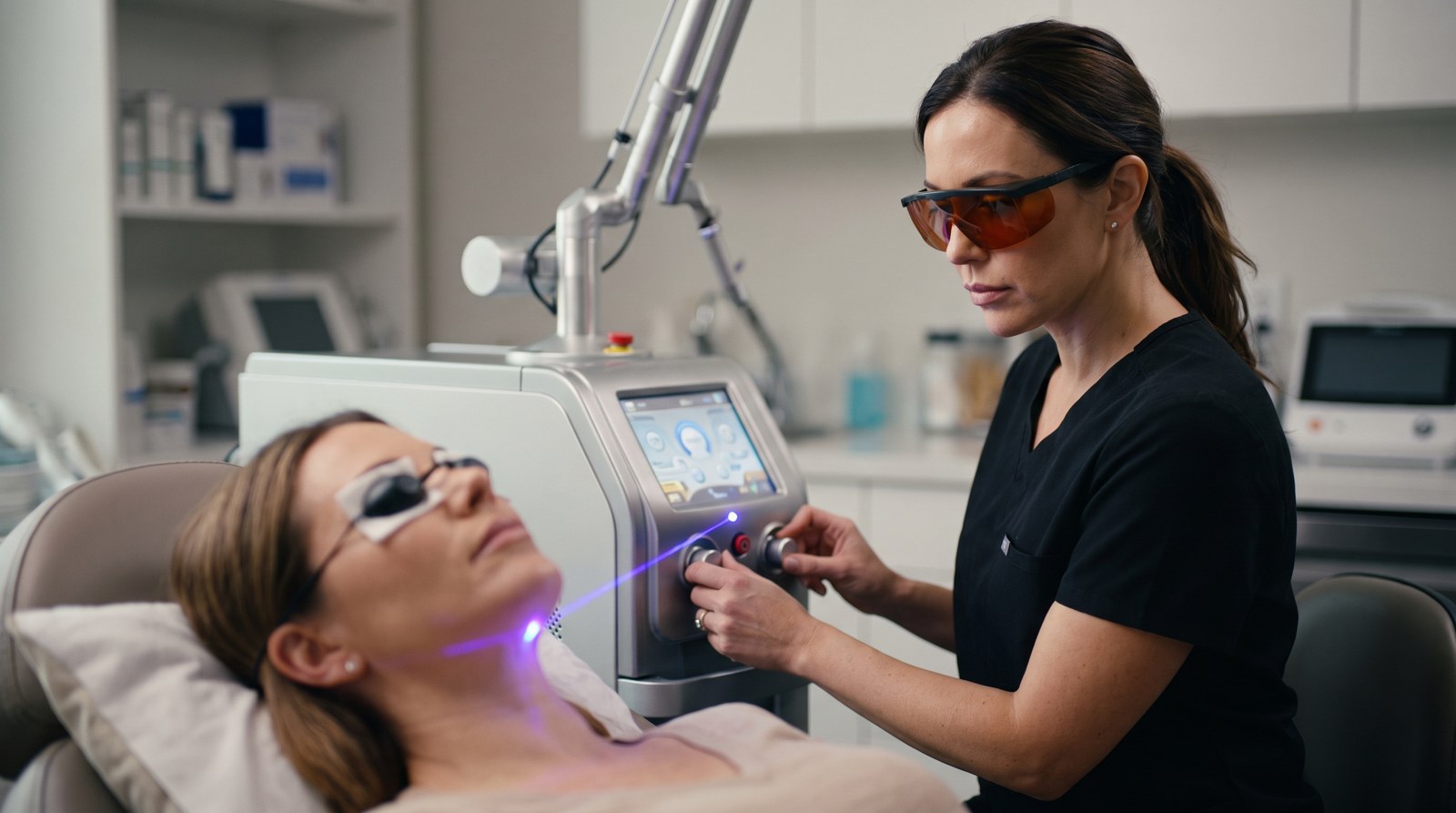
Laser technician training in Virginia qualifies you to operate energy-based aesthetic devices — from laser hair removal to skin rejuvenation — in one of the fastest-growing segments of the beauty and wellness industry. If you’re researching how to enter this field in Northern Virginia or the DC metro area, this guide covers everything: what the job actually involves, what Virginia requires, what to look for in a program, and how AVI Career Training’s Cosmetic Laser Technology program stacks up.
Apply to AVI’s Laser Technology Program →
—
Key Takeaways
- AVI’s Cosmetic Laser Technology program is 120 hours of hands-on training — significantly more clinical depth than the 16–40-hour certificates common at many providers.
- Virginia does not issue a standalone “laser technician license” — most employers require esthetics licensure and/or physician supervision under Virginia Board of Medicine guidelines.
- Laser technicians in the DC metro area earn approximately $45,000–$65,000/year, with medical spa positions in Tysons and Arlington often exceeding that range.
- AVI Career Training is COE Accredited and SCHEV Certified, located in Vienna, VA — serving Northern Virginia and the broader DMV area.
- No federal financial aid (FAFSA/Title IV) is available for this program — it is under 600 hours. Payment plan and private financing options are available.
—
What Does a Laser Technician Actually Do?
A laser technician — sometimes called a laser esthetician or cosmetic laser technician — performs non-surgical aesthetic treatments using laser, light, and energy-based devices. The work sits at the intersection of beauty, skin science, and medical-adjacent technology.
Common Treatments and Modalities
The core service most people associate with this role is laser hair removal, which remains one of the top five non-surgical aesthetic procedures performed in the US. But the scope goes well beyond that. Laser technicians commonly perform:
In practice, the job also involves client consultations, skin assessments, pre-treatment preparation, post-treatment care instructions, and detailed documentation. Strong communication skills matter just as much as technical competence.
Where Laser Technicians Work
Most laser technicians in Northern Virginia and the DMV area work in:
The role is distinct from a traditional esthetician position in that it requires both technical device knowledge and an understanding of skin physiology, contraindications, and laser safety protocols.
—
Virginia Laser Technician Requirements: What You Need to Know
Virginia does not issue a standalone “laser technician license” — this is one of the most common points of confusion for people researching this career path in the state.
How Virginia Regulates Laser Devices
Under Virginia Board of Medicine and Virginia Department of Professional and Occupational Regulation (DPOR) guidelines, the operation of laser and intense pulsed light (IPL) devices for aesthetic purposes typically requires one of the following:
1. Working under physician or licensed practitioner supervision — many med spas structure their services this way, with a supervising physician or nurse practitioner overseeing laser treatments
2. Holding applicable esthetics or cosmetology licensure — Virginia’s regulatory framework treats esthetics licensure as the foundational credential for aesthetic practice
In practical terms, most employers in the Northern Virginia market require candidates to hold a Virginia esthetics license (or cosmetology license) and to have completed formal training on laser and light-based devices. The two-track approach — licensing plus device-specific training — is the industry standard.
> Editorial note: Virginia’s regulatory language in the cosmetic laser space evolves. Verify current guidance from the Virginia Department of Professional and Occupational Regulation (DPOR) and the Virginia Board of Medicine at time of enrollment.
Do You Need a License to Do Laser Hair Removal in Virginia?
Yes — in the practical sense. While Virginia doesn’t issue a specific “laser license,” operating these devices without a supervising licensed practitioner or without appropriate esthetics credentials puts both you and your employer at regulatory risk. Most reputable employers won’t hire untrained or unlicensed operators. Completing a substantive training program — and holding your esthetics license — is how you demonstrate competency and compliance to the employers who matter.
—
—
What to Look for in a Laser Technician Training Program
Not all cosmetic laser technician certification programs are built the same — and the difference in preparation between a 16-hour online certificate and a 120-hour hands-on program is enormous.
Here’s how to evaluate your options before committing.
Hours and Hands-On Clinical Time
Many short-format laser certification courses run 16–40 hours, with limited or no live model practice. That may satisfy a checkbox, but it won’t prepare you to handle diverse clients, troubleshoot contraindications, or adjust protocols for different skin tones confidently. Look for programs that provide substantial clinical hours on real clients, not just lecture and demonstration.
Equipment Variety
The devices you train on matter. A strong program should expose you to multiple laser and light-based modalities — not just a single manufacturer’s equipment. Broad device familiarity makes you more hireable and more adaptable as the industry evolves.
Instructor Credentials
Your instructors should be licensed professionals with real-world clinical experience. Industry credentials — not just teaching credentials — signal that you’re learning current, practical technique rather than outdated theory.
Accreditation and State Approval
Accreditation matters for a simple reason: it means an independent body has evaluated the program and found it meets established educational standards. For laser technician school in Northern Virginia, look for programs approved by SCHEV (Virginia’s State Council of Higher Education) and accredited by a recognized body like the Council on Occupational Education (COE).
Inclusive Skin-Tone Training
This is non-negotiable in the DMV area, where your future clients will represent the full spectrum of skin tones. Laser settings, safety protocols, and treatment outcomes vary meaningfully across the Fitzpatrick scale. A program that only trains on a narrow range of skin types leaves you underprepared — and potentially unsafe — for a large portion of real-world clients.
Ready to see how AVI measures up? Apply today and speak with an admissions advisor.
—
AVI’s Cosmetic Laser Technology Program: 120 Hours, Hands-On Training
AVI Career Training’s Cosmetic Laser Technology program (NO FINANCIAL AID FOR THIS PROGRAM) in Vienna, Virginia is a 120-hour, hands-on training program designed to prepare students for real clinical work — not just a certificate to frame on the wall.
Program Overview
What You’ll Learn
AVI’s curriculum covers the full scope of competencies employers in the DC metro area look for:
Inclusive Curriculum — Every Skin Tone
AVI’s training philosophy is built around one principle: beauty is for everyone, and that starts with learning to serve everyone. The Cosmetic Laser Technology curriculum specifically emphasizes technique, safety protocols, and outcome expectations across the full Fitzpatrick skin tone scale. In a market as diverse as Northern Virginia and the DMV area, that training isn’t optional — it’s essential.
A Student’s Story
Consider a student like Maya — a licensed esthetician from Fairfax who had been performing facials and waxing services for three years. She knew her clients were asking for laser services, but she didn’t have the credentials or confidence to deliver them. After completing AVI’s 120-hour Cosmetic Laser Technology program, she joined a medical spa in Tysons Corner as a laser specialist — expanding her income and her scope of practice without starting her career over from scratch.
Or consider James, a former military service member transitioning out of the Navy and exploring healthcare-adjacent careers. The GI Bill® he earned through service helped cover his tuition at AVI. After completing the Cosmetic Laser Technology program (NO FINANCIAL AID FOR THIS PROGRAM), he secured a position with a dermatology practice in Arlington — a role that fit his interest in precision, protocols, and client outcomes.
Tuition and Financial Aid for This Program
⚠️ Important: Financial Aid Availability
Federal financial aid (Title IV / FAFSA) is NOT available for the Cosmetic Laser Technology program. Because this program is under 600 hours, it does not meet federal eligibility thresholds for Title IV funding. Do not rely on FAFSA or Pell Grant funding for this program.
Options that may be available include: payment plans, private financing, and the GI Bill® for qualifying veterans and service members. Contact AVI’s admissions team to discuss which options apply to your situation.
Apply to AVI’s Laser Technology Program →
—
—
Laser Technician Career Outlook: Earnings and Opportunities in Northern Virginia
The Northern Virginia and DC metro market is one of the strongest in the country for laser esthetician career growth — and the numbers reflect it.
What Laser Technicians Earn in the DC Metro Area
Laser technicians in the DC metro area earn approximately $45,000–$65,000 per year based on salary aggregator data from Indeed and comparable sources. That range reflects base compensation — experienced technicians at high-volume medical spas in Tysons Corner, Arlington, and Bethesda often earn above the midpoint, particularly when tips and commission structures are factored in.
> ⚠️ Salary figures should be verified at time of reading — wage data for this specialty evolves. See BLS.gov for the most current skincare specialist wage data.
Why Northern Virginia Is a Strong Market
The Tysons Corner–Vienna corridor, Arlington, and the broader I-495 beltway area host one of the highest concentrations of medical spas and aesthetic clinics on the East Coast. Several factors drive demand:
Industry Growth Nationally
Laser hair removal consistently ranks among the top five non-surgical aesthetic procedures performed in the United States. The broader medical spa industry has grown substantially since 2020, with laser and energy-based services driving a significant share of revenue growth. The American Med Spa Association (AMWC) and the International Society of Aesthetic Plastic Surgery (ISAPS) track these trends annually — and the trajectory remains strong.
Training now positions you at the front of that curve rather than catching up to it.
What Is the Difference Between an Esthetician and a Laser Technician?
An esthetician performs skin care services — facials, chemical peels, waxing, and related treatments — using manual techniques and topical products. A laser technician uses energy-based devices to achieve deeper or more targeted results: permanent hair reduction, skin resurfacing, vascular treatment, and more. In Virginia, many laser technicians hold an esthetics license as their foundational credential and add device-specific training on top of it — making the two roles complementary rather than competing paths.
—
Frequently Asked Questions
Q: What are the requirements to become a laser technician in Virginia?
A: Virginia does not issue a standalone laser technician license. Most employers require candidates to hold a Virginia esthetics or cosmetology license and to have completed formal laser and light-based device training. Many positions also operate under physician or licensed practitioner supervision per Virginia Board of Medicine guidelines. Completing a substantive program — like AVI’s 120-hour Cosmetic Laser Technology course — is the standard path into the field.
Q: How long does it take to become a certified laser technician?
A: It depends on the program. Short-format courses run 16–40 hours and can be completed in days. AVI Career Training’s program is 120 hours, providing significantly more clinical depth and hands-on practice. Timeline also depends on whether you’re pursuing esthetics licensure concurrently — Virginia’s Basic Esthetics program is 150 hours.
Q: Do you need a license to do laser hair removal in Virginia?
A: Virginia doesn’t issue a specific “laser license,” but operating laser and IPL devices without appropriate credentials or physician supervision puts you and your employer at regulatory risk. Most employers in the Northern Virginia market require esthetics licensure and documented device training before hiring. Check current guidance from the Virginia DPOR and Virginia Board of Medicine at time of inquiry.
Q: How much does a laser technician make in the DC metro area?
A: Laser technicians in the DC metro area earn approximately $45,000–$65,000 per year. Medical spa settings in Tysons Corner, Arlington, and Bethesda often pay above this range, especially for experienced technicians in high-volume practices. Verify current figures at BLS.gov or Indeed for the most up-to-date data.
Q: What is the difference between an esthetician and a laser technician?
A: An esthetician performs skin care services using manual techniques and topical products. A laser technician uses energy-based devices — lasers, IPL, and light therapy systems — to deliver treatments like permanent hair reduction, skin rejuvenation, and vascular therapy. In Virginia, many laser technicians hold an esthetics license as their baseline credential and complete additional device training to expand their scope of practice.
Q: Is financial aid available for AVI’s Cosmetic Laser Technology program?
A: Federal financial aid (FAFSA/Title IV) is NOT available for this program because it is under 600 hours. Qualifying veterans and service members may be able to apply GI Bill® benefits. Payment plans and private financing options may also be available. Contact AVI admissions at (703) 943-9841 to discuss your options before enrolling.
Q: Where is AVI Career Training located?
A: AVI Career Training is located at 1595 Spring Hill Rd #720, Vienna, VA 22182 — in the Tysons Corner area of Northern Virginia, easily accessible from Arlington, Fairfax, Reston, and the broader DMV region.
—