
Financial Aid for Laser Technician School in Virginia
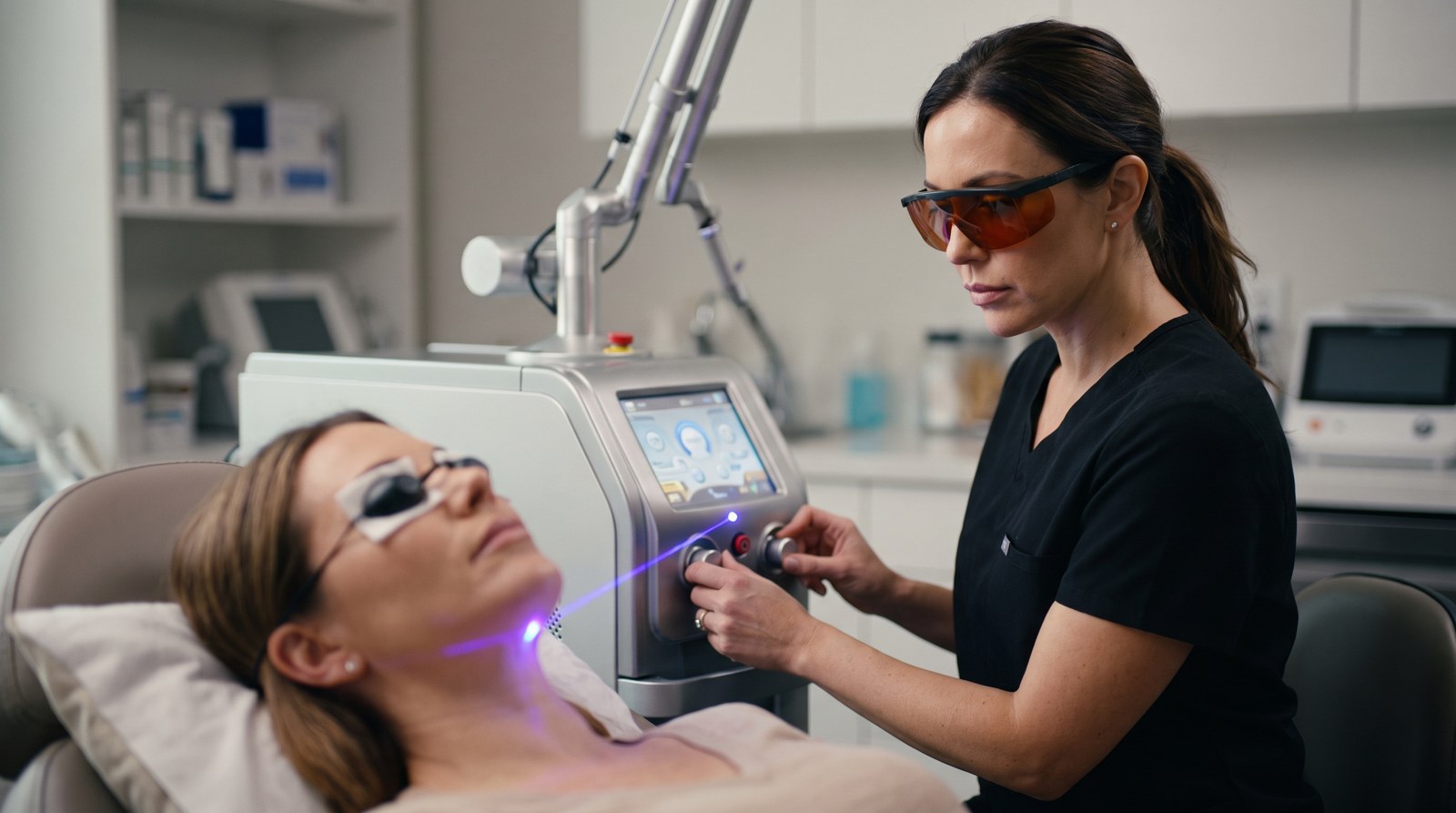
Yes — federal financial aid is not available for AVI’s 120-hour laser technician program, but GI Bill® benefits, payment plans, private financing, and industry scholarships are all real options. The right path depends on your program, your school’s accreditation, and your personal situation. This guide breaks down every funding path available to students at a COE-accredited laser technician school in Virginia, so you can make a confident, informed decision before you enroll.
AVI Career Training’s Cosmetic Laser Technician program (NO FINANCIAL AID FOR THIS PROGRAM — this program is under 600 hours and does not qualify for federal Title IV / FAFSA aid) is a 120-hour hands-on training offered at AVI’s campus in Vienna, Virginia, in the heart of Northern Virginia’s Tysons Corner corridor. Because the program is under 600 hours, federal financial aid does not apply — but that doesn’t mean you’re on your own when it comes to covering tuition. Affordable payment plans, private financing, scholarships, and — for qualifying veterans — GI Bill® benefits can all help make your training accessible.
Key Takeaways
- AVI’s 120-hour Cosmetic Laser Technician program does not qualify for federal financial aid (FAFSA/Title IV) because it is under 600 hours.
- AVI Career Training accepts the GI Bill® — a meaningful benefit for veterans and eligible military family members.
- Payment plans and private financing options are available to make tuition manageable.
- Industry scholarships from organizations like the Professional Beauty Association (PBA) are open to Virginia students pursuing laser and esthetics training.
- AVI is COE Accredited and SCHEV Certified — credentials that signal program quality and career legitimacy, even when a program falls outside federal aid thresholds.
- Laser technicians earn a national median of roughly $40,000–$65,000+ per year depending on setting — a strong return on a short-term investment.
Ready to explore your options? Request information from AVI’s admissions team or call (703) 943-9841 — they’ll walk you through every funding path that applies to your situation.
—
Can You Get Financial Aid for Laser Technician Training in Virginia?
The answer is: it depends on the program’s length and the school’s accreditation status. Federal financial aid eligibility is tied to two things — the school’s accreditation and the program’s clock-hour requirement.
For federal Title IV aid (FAFSA, Pell Grants, federal loans), the U.S. Department of Education requires a program to be at least 600 clock hours. AVI Career Training’s Cosmetic Laser Technician program is 120 hours — well below that threshold. Federal financial aid is not available for this program.
That’s an important distinction many prospective students don’t learn until after they’ve already filled out a FAFSA. Knowing this upfront lets you plan smarter.
What AVI Career Training does offer:
AVI Career Training is COE Accredited by the Council on Occupational Education (COE) and SCHEV Certified through the State Council of Higher Education for Virginia. These credentials matter — they signal to employers, licensing boards, and scholarship organizations that your training meets nationally recognized standards. Even when a program doesn’t trigger federal aid eligibility, attending an accredited school protects the value of your credential.
—
Why FAFSA Doesn’t Cover AVI’s Laser Program — and What That Means for You
This section exists because the question “Does FAFSA cover laser technician school?” is one of the most common questions prospective students ask — and the honest answer deserves a full explanation.
The 600-Hour Rule
Federal Title IV aid — which includes Pell Grants, subsidized loans, and unsubsidized loans — requires that a program clock in at 600 hours or more. The rule exists to ensure that federally funded programs represent a meaningful credential investment.
AVI’s Cosmetic Laser Technician program is 120 hours. It’s an intensive, focused training designed to prepare you for work in medical spas, dermatology clinics, and laser centers — not a longer cosmetology or esthetics program. The shorter format is actually one of its strengths: you can complete training and enter the workforce quickly. But that same efficiency puts it below the federal aid threshold.
What COE Accreditation Does — and Doesn’t — Unlock
AVI’s COE accreditation is a nationally recognized mark of quality. It means the school has been independently evaluated and approved by the Council on Occupational Education — the same body that grants accreditation to many healthcare and career training programs across the country.
COE accreditation is one of the credentials that makes a school eligible to participate in Title IV programs — but only for programs that also meet the 600-hour minimum. For AVI’s 120-hour laser program, accreditation strengthens the school’s overall credibility and the career legitimacy of your certificate, even though it doesn’t open the door to federal aid for this specific course.
The Bottom Line on FAFSA
Do not fill out a FAFSA expecting it to cover AVI’s Cosmetic Laser Technician program. It won’t. What you should do is talk to AVI’s admissions and financial aid team about the payment and financing options that are available — because there are real paths to making this training affordable.
—
—
Payment Plans, Private Financing, and Out-of-Pocket Options
Federal aid being off the table doesn’t make laser technician training unaffordable — it just changes the path you take to get there. AVI Career Training offers structured ways to make tuition work with your budget.
Flexible Payment Plans
AVI’s admissions team works with students to create installment arrangements that spread the cost of tuition over the duration of training. Rather than paying everything upfront, you make regular payments that align with your schedule. This is one of the most practical options for students who have steady income but not a large lump sum available.
Private Financing
Third-party private lenders — separate from federal student loan programs — offer personal loans and financing specifically designed for vocational and career training. These function similarly to a personal loan: you borrow a fixed amount, pay interest, and repay on a set schedule. Terms and rates vary by lender and credit profile, so it’s worth comparing options. AVI’s financial aid team can point you toward resources to get started.
Employer Tuition Assistance
If you’re currently employed at a medical spa, dermatology clinic, or skincare center, ask whether your employer offers tuition reimbursement or professional development funding. Many employers in the aesthetics and wellness industry actively fund continuing education — especially when the training directly benefits the services they offer.
Mini-Story: From Receptionist to Laser Technician
Destiny worked the front desk at a Northern Virginia medical spa for two years before deciding she wanted to be behind the laser, not checking in the clients who used it. Federal aid wasn’t an option for the 120-hour program — but her employer agreed to cover half the tuition cost as a professional development investment. She enrolled at AVI Career Training’s Vienna, VA campus, completed her training in weeks, and transitioned directly into a full-time laser technician role at the same spa. Her hourly rate nearly doubled.
Workforce Development Funding (WIOA)
Virginia’s Workforce Innovation and Opportunity Act (WIOA) funding flows through local American Job Centers and workforce development boards. WIOA support is generally targeted at longer-term training programs for unemployed or underemployed individuals. Short-term programs under 600 hours may not qualify for WIOA funding directly, but it’s worth checking with your local Northern Virginia American Job Center — eligibility rules can vary by county, and some individual training accounts (ITAs) have more flexibility than the standard guidelines suggest.
Contact your local Virginia workforce office for current eligibility details before assuming you do or don’t qualify.
—
Scholarships for Laser and Esthetics Students in Virginia
Industry scholarships are an underused resource — and they’re open to students regardless of whether their program qualifies for federal aid.
Professional Beauty Association (PBA) Scholarships
The Professional Beauty Association offers scholarships for students enrolled in accredited beauty and esthetics programs. Virginia students are eligible. Awards typically range from a few hundred dollars to over $1,000 and require an application demonstrating financial need and career commitment. Deadlines vary by cycle — check the PBA website for current application windows.
American Electrology Association and Laser Industry Groups
Industry associations focused on laser and light-based treatments occasionally offer professional development awards and scholarships. These are worth researching as the field grows. Because laser aesthetics is a specialized niche, competition for these awards is often lower than for general cosmetology scholarships.
Locally Based and Foundation Scholarships
Northern Virginia community foundations, women’s professional organizations, and healthcare workforce development funds sometimes offer awards to students in allied health and aesthetics careers. A targeted search through the Community Foundation for Northern Virginia and similar regional organizations can surface opportunities that aren’t widely advertised.
Tips for Scholarship Applications
—
GI Bill® and Military Benefits for Laser Technician School in Virginia
AVI Career Training accepts GI Bill® benefits — and for veterans and eligible military family members, this is a significant differentiator that can dramatically reduce out-of-pocket training costs.
Which GI Bill® Chapters Apply
The two most commonly used chapters for vocational and career training programs are:
Both chapters can potentially apply to short-term vocational programs at approved schools. AVI’s COE accreditation and SCHEV certification strengthen the school’s position as a qualifying institution for VA education benefits.
MyCAA for Military Spouses
The My Career Advancement Account (MyCAA) scholarship is a workforce development program for eligible military spouses. MyCAA provides up to $4,000 in financial assistance for education and training leading to portable career credentials. Career training in high-demand fields like laser technology may qualify — contact the MyCAA program directly and AVI’s admissions team to confirm current eligibility for this specific program.
Mini-Story: A Veteran’s Path to the Laser Suite
Marcus served eight years in the U.S. Army and transitioned out near Fort Belvoir in Northern Virginia. He’d always been interested in aesthetics — specifically the science behind laser skin treatments. After learning that AVI Career Training in Vienna, VA accepts GI Bill® benefits, he connected with AVI’s admissions team to verify his Chapter 33 eligibility. His training costs were substantially offset by his benefits, and he graduated from the 120-hour Cosmetic Laser Technician program positioned to work in the thriving DMV medical spa market. “I didn’t know beauty school was even an option with the GI Bill,” he said. “It changed everything.”
How to Verify Your GI Bill® Benefits for AVI
The best first step is a direct conversation. Call AVI Career Training at (703) 943-9841 and ask specifically about GI Bill® benefit verification for the Cosmetic Laser Technician program. The admissions team can confirm the school’s VA approval status, walk you through the certification process, and connect you with the VA’s online tools for managing your education benefit.
You can also use the VA’s GI Bill Comparison Tool to research AVI’s approved program status directly.
—
—
About AVI’s Cosmetic Laser Technician Program — and the Career It Unlocks
AVI Career Training’s Cosmetic Laser Technician program (NO FINANCIAL AID FOR THIS PROGRAM — federal Title IV aid is not available for this 120-hour program) is a focused, hands-on training designed for students who want to enter the fast-growing field of medical aesthetics.
What You’ll Learn
The 120-hour curriculum covers laser physics, safety protocols, skin anatomy, and hands-on operation of cosmetic laser equipment used in treatments like hair removal, skin rejuvenation, and pigmentation correction. Instruction is led by licensed industry professionals who bring real clinical experience into the classroom.
Because AVI is COE Accredited and SCHEV Certified, the program meets standards recognized by employers in Virginia’s medical aesthetics industry — including medical spas in Tysons Corner, dermatology practices across Northern Virginia, and laser centers throughout the DMV metro area.
Virginia Licensing Context
Laser technician practice in Virginia is regulated through the Virginia Department of Professional and Occupational Regulation (DPOR). Completing an accredited, structured training program supports your eligibility for state licensing or certification requirements. Confirm current Virginia DPOR requirements directly — regulations can update, and you want to enter the job market fully prepared.
Earning Potential
Laser technicians in the United States earn a national median salary in the range of $40,000–$65,000+ per year, depending on specialization, setting, and experience level. Medical spa environments in high-income markets like Northern Virginia and the DC metro area often trend toward the higher end of that range. (Source: U.S. Bureau of Labor Statistics occupational data for skin care specialists and related roles — verify current figures at BLS.gov.)
The 120-hour program at AVI is designed to get you career-ready fast — without a four-year degree and without the debt load that comes with longer academic programs.
Program Snapshot
- Program: Cosmetic Laser Technician
- Hours: 120 clock hours
- Location: Vienna, Virginia (Tysons Corner / Northern Virginia)
- Accreditation: COE Accredited · SCHEV Certified
- Federal Financial Aid: NOT available (program is under 600 hours)
- GI Bill®: Accepted
- Payment Plans: Available
- Private Financing: Available
—
How to Get Started at AVI Career Training
Taking the next step is straightforward. Here’s exactly how to move from research to enrollment:
Step 1: Request Information
Fill out AVI’s inquiry form at avi.edu/apply or call (703) 943-9841. The admissions team will answer your questions about the program, schedule, and tuition.
Step 2: Discuss Funding Options
Be upfront about your budget and situation. Let the admissions team walk you through payment plans, private financing, scholarship opportunities, and — if applicable — GI Bill® benefit verification. There’s no obligation, and the conversation is free.
Step 3: Complete Your Application
Once you’ve confirmed the program is the right fit, submit your application and secure your spot. Enrollment is limited, and the Vienna, VA campus serves students from across Northern Virginia, Fairfax County, Arlington, and the broader DC metro area.
Step 4: Start Training
In 120 hours, you’ll have the skills, the credential, and the confidence to enter the medical aesthetics field — one of the fastest-growing sectors in beauty and wellness.
Apply to AVI Career Training →
—
Frequently Asked Questions
Q: Can I get financial aid for a laser technician program in Virginia?
A: It depends on the program length and the school. AVI Career Training’s 120-hour Cosmetic Laser Technician program does not qualify for federal financial aid (FAFSA/Title IV) because it is under the 600-hour minimum required by the U.S. Department of Education. However, GI Bill® benefits, payment plans, private financing, and industry scholarships are available to help fund your training.
Q: Does FAFSA cover laser technician school?
A: FAFSA only covers programs at accredited schools that meet the 600-clock-hour minimum. AVI’s Cosmetic Laser Technician program is 120 hours and does not qualify for FAFSA or federal grants and loans. Students should explore GI Bill® benefits, payment plans, and private financing instead.
Q: How long is laser technician training in Virginia?
A: AVI Career Training’s Cosmetic Laser Technician program is 120 clock hours. The focused