Career Change To Esthetician: An Honest January Guide For Fairfax County
Yes, January is one of the best times of year to start your career change to esthetician in Fairfax County — programs like the Basic Esthetics course at AVI Career Training in Vienna, VA can have you job-ready in as few as 600 program hours, and enrollment is open now. If you have been quietly Googling "how do I become an esthetician" between the holidays, this guide is written for you. We will walk through what the career actually looks like, what training involves, what you should expect in Northern Virginia's job market, and how to take a realistic first step.
Key Takeaways
- Virginia requires 600 hours of approved esthetics training before you can sit for your state board exam.
- AVI Career Training's Basic Esthetics program meets that 600-hour requirement at its COE-accredited campus in Vienna, VA.
- A Master Esthetics program (750 hours) is also available for those who want advanced clinical and spa skills.
- Title IV federal financial aid is available for qualifying students — tuition figures vary, so contact AVI directly for current pricing.
- January enrollment is a strategic move: you could complete your hours and be licensed before summer hiring season peaks in the DC metro area.
- Fairfax County's dense population of medical offices, upscale spas, and wellness studios creates strong demand for licensed estheticians year-round.
- AVI Career Training is located at 112 Lawyers Rd NW Suite 3, Vienna, VA 22180, and can be reached at (571) 520-4417.
Why January Is Actually a Smart Month to Make This Move
Most people treat January as a month for intentions. Smart career changers treat it as a month for action. Here is why the timing works in your favor right now.
First, new-year hiring surges in the wellness industry are real. Spas, medspas, and dermatology offices in Fairfax County typically staff up in late spring to prepare for summer demand. If you enroll in a 600-hour program in January, you have a realistic runway to complete training, pass your Virginia Board of Cosmetology exam, and enter the job market just as those positions open up.
Second, January enrollment often means smaller class sizes compared to late summer or fall. That translates to more hands-on time with instructors and clients in a school clinic setting — exactly the kind of practice that makes you job-confident, not just textbook-literate.
Third, if you are leaving a corporate job, retail position, or any field where you feel stuck, waiting until "a better time" usually means waiting forever. The honest truth is that licensing programs have fixed hour requirements. The sooner you start accumulating those hours, the sooner you are employable in a new career you actually chose.
What Does an Esthetician Actually Do Day-to-Day?
Before you invest time and money in training, you deserve a clear-eyed picture of the work itself.
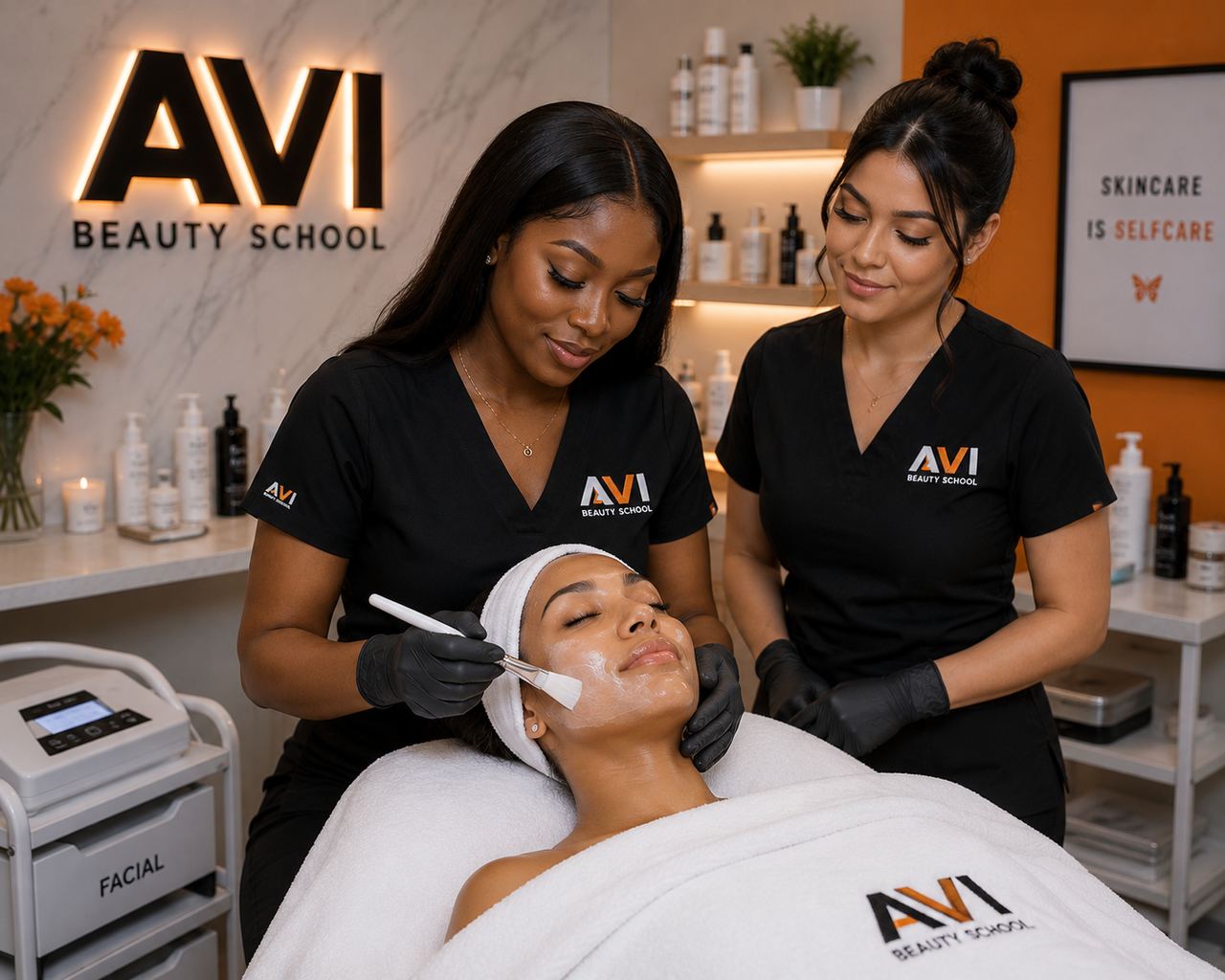
Licensed estheticians provide professional skin care services. On any given day, that might include performing facials, chemical peels, microdermabrasion, waxing, and advanced treatments like dermaplaning. In a medical or medspa setting, the scope can expand to services performed under physician supervision.
The role is genuinely client-facing. If you like building relationships and seeing tangible results for people, esthetics is deeply rewarding. If you are looking for a job where you sit alone at a computer, this is not it — and that is worth knowing now.
Estheticians in Northern Virginia work in a wide range of settings: day spas, resort spas, dermatology and plastic surgery offices, upscale hotel spas, and independent studios. Some eventually build their own clientele and rent booth space. The variety is part of the appeal for career changers who felt boxed in by a single corporate track.
Basic Esthetics vs. Master Esthetics: Which Program Is Right for You?
AVI Career Training offers two distinct esthetics pathways, and choosing between them is one of the first decisions you will make.
Basic Esthetics (600 Hours)
The Basic Esthetics program satisfies Virginia's minimum licensing requirement. It covers foundational skin analysis, facial techniques, hair removal, sanitation protocols, product knowledge, and client consultation skills. This is the right starting point if you want to enter the workforce as quickly as possible and build experience from there. Many estheticians complete their basic license and then pursue additional training on the job or return to school for advanced credentials.
Master Esthetics (750 Hours)
The Master Esthetics program builds on the basic curriculum with more advanced clinical techniques. The additional hours give you deeper preparation for medical spa and clinical environments where employers often prefer candidates with broader technical backgrounds. If your goal is to work in a dermatology office or a high-end medspa in the Tysons or Reston corridor, the master program may help you stand out from the applicant pool right from the start.
Not sure which path fits your goals? The admissions team at AVI can walk you through both options in detail. Start your application or request information here and someone will follow up with you directly.
Financial Aid and the Real Cost Conversation
One of the biggest hesitations for career changers is money. That is completely valid, and we want to be straightforward with you.
AVI Career Training participates in Title IV federal financial aid programs, which means qualifying students may be eligible for federal grants and loans to help cover the cost of their training. Eligibility depends on your individual financial situation and program enrollment status.
We are intentionally not publishing specific tuition figures in this article because program costs can change and we want you to have accurate, current numbers — not a figure you read in a blog post. The right move is to call AVI directly at (571) 520-4417 or visit the campus at 112 Lawyers Rd NW Suite 3, Vienna, VA 22180, so the financial aid office can walk you through what your options actually look like based on your circumstances.
What we can tell you is that the investment in a 600-hour or 750-hour esthetics license is significantly shorter — and in most cases less expensive — than a four-year degree. For someone leaving a field that never quite fit, that efficiency matters.
What Makes AVI Career Training Different in Fairfax County?
AVI Career Training holds accreditation from the Council on Occupational Education (COE), which is meaningful for two practical reasons. First, COE accreditation is recognized by the U.S. Department of Education, which is part of what makes federal financial aid available to students. Second, it signals that the school's programs meet established standards for curriculum, facilities, and outcomes — which matters when you are trusting a school with your career trajectory.
The Vienna, VA location puts AVI squarely in the heart of Fairfax County, accessible from communities across the Northern Virginia region including McLean, Reston, Herndon, Falls Church, and beyond. The campus environment is professional and hands-on, designed for students who are serious about entering the workforce — not just exploring a hobby.
AVI also offers a broader range of programs than most people expect: Cosmetology (1,000 hours), Nail Technology (150 hours), Laser Technician (120 hours), Massage Therapy (625 hours, with Title IV aid available), Medical Assistant (600 hours), and ESL (1,200 hours). This breadth matters because some estheticians discover during training that they want to cross-train in laser services or massage, and having those pathways available at the same campus is a real advantage.
Frequently Asked Questions
How long does it take to become a licensed esthetician in Virginia?
Virginia requires 600 program hours for a basic esthetics license. The time it takes to complete those hours depends on your schedule and how intensively you attend classes. Full-time students can often complete a 600-hour program more quickly than part-time students. Contact AVI directly at (571) 520-4417 to ask about current schedule options and estimated completion timelines for your situation.
Do I need any prior beauty industry experience to enroll?
No. Esthetics programs at AVI Career Training are designed to take students with no prior industry background and build their skills from the ground up. Career changers from completely unrelated fields — healthcare, retail, education, finance — are common and welcome. What matters is your commitment to completing the hours and your genuine interest in skincare and client service.
Is federal financial aid really available for esthetics school?
Yes, Title IV federal financial aid is available for qualifying students enrolled in eligible programs at AVI Career Training. Eligibility is determined on an individual basis. To find out what you may qualify for, you will need to complete the FAFSA and speak with AVI's financial aid team. The admissions process will guide you through that. You can get started here.
What is the job market like for estheticians in Fairfax County specifically?
The Northern Virginia and DC metro area has a strong and consistent demand for licensed estheticians. Fairfax County in particular has a high concentration of medspas, dermatology practices, luxury hotel spas, and wellness studios that hire licensed estheticians on an ongoing basis. The area's high median income also supports a client base that invests in regular skin care services, which contributes to job stability for practitioners in the field.
Can I visit AVI Career Training before I commit to enrolling?
Absolutely, and it is encouraged. Seeing the campus, meeting the instructors, and getting a feel for the environment before you make a decision is a smart move for any career training program. AVI Career Training is located at 112 Lawyers Rd NW Suite 3, Vienna, VA 22180. You can call ahead at (571) 520-4417 to schedule a visit, or submit your information online and the admissions team will reach out to arrange a time that works for you.
Your Next Step: Make January Count
A career change is not a small thing, and nobody is pretending it is. But if you have been sitting with the idea of becoming an esthetician — wondering whether it is too late, whether you are too old, whether you missed your window — January in Fairfax County is as good a starting point as any you will find.
The program exists. The financial aid options exist. The job market is there waiting. The only variable is when you decide to take the first step. If this guide has given you enough information to feel like that step is worth taking, we hope you will take it.
Apply to AVI Career Training or request more information today — the admissions team at (571) 520-4417 is ready to answer your specific questions and help you figure out whether the Basic Esthetics or Master Esthetics program is the right fit for where you want to go.